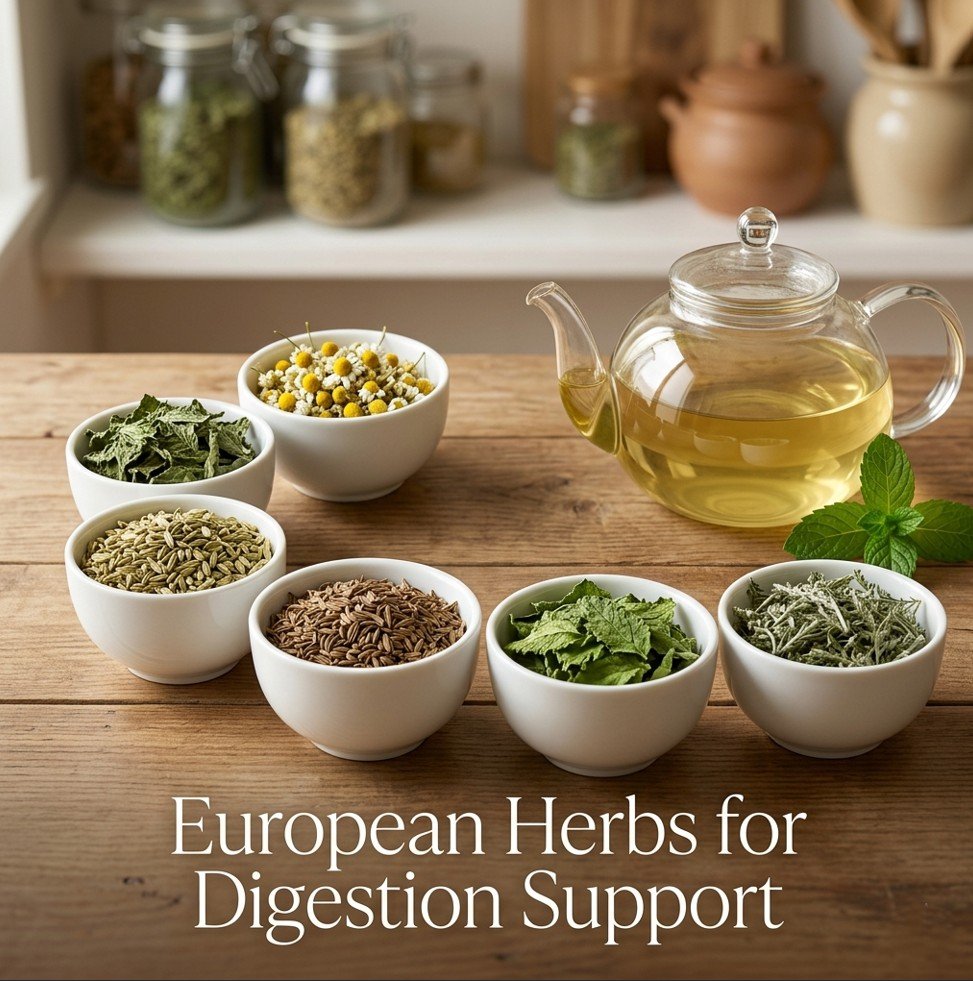
After a rich meal, a bloated evening, or a day of sluggish digestion, many people across Europe have traditionally turned to herbs from their own gardens or local meadows. Peppermint, chamomile, fennel, caraway, lemon balm, and yarrow have all been used for generations — not as cures, but as gentle supporters of digestive comfort.
This article explores the traditional use, modern research, safe preparation, and important limitations of these six European herbs. You will also learn when self-care is appropriate and when a doctor should be consulted.
What Causes Mild Digestive Discomfort?
Digestion is a complex process involving the stomach, intestines, liver, gallbladder, and pancreas. Mild, temporary discomfort can arise from many everyday situations:
- Eating large or rich meals
- Consuming gas-producing foods such as beans, cabbage, or onions
- Eating too quickly or while stressed
- Temporary changes in gut motility
- Menstrual cycle-related digestive changes
In most cases, these symptoms are short-lived and manageable with lifestyle adjustments. However, persistent bloating, pain, changes in bowel habits, or unexplained weight loss require medical investigation — not just herbal support.
Traditional European herbalism has never suggested that herbs replace medical diagnosis. Instead, herbs have been used as supportive measures for mild, self-limiting complaints.
Best European Herbs Traditionally Used for Digestion Support
The following six herbs are well-documented in European pharmacopoeias, folk medicine, and modern research. Each has a distinct profile, preparation method, and safety consideration.
1. Peppermint (Mentha × piperita)
What it is: A natural hybrid of watermint and spearmint, widely cultivated across Europe. The leaves contain menthol and other volatile oils.
Traditional use: Peppermint tea has been drunk after meals throughout Europe to ease bloating and support digestion. In German and British herbal traditions, it is also used for mild cramping.
What modern research suggests: Several clinical trials suggest that enteric-coated peppermint oil capsules may help support comfort in people with irritable bowel syndrome (IBS). However, this article focuses on tea and simple preparations. The evidence for tea is less strong but traditionally well-established.
Best use case: A cup of warm peppermint tea 20–30 minutes after a heavy meal.
Key safety note: Peppermint tea is generally safe. Peppermint oil in concentrated form can cause heartburn in some people and should not be given to young children without professional advice. Peppermint may worsen gastroesophageal reflux disease (GERD) in some individuals.
2. Chamomile (Matricaria chamomilla)
What it is: One of the most widely used medicinal herbs in Europe, particularly in Germany where it is known as “alles zutraut” — capable of everything.
Traditional use: Chamomile tea is used for nervous digestion, mild stomach cramps, and bloating associated with stress. It is also given to children for mild digestive upset in many European countries.
What modern research suggests: Chamomile contains apigenin, a flavonoid with anti-inflammatory and antispasmodic properties in laboratory studies. Human studies are limited, but traditional use is extensive and consistent.
Best use case: After an evening meal when digestion is accompanied by tension or difficulty relaxing.
Key safety note: Chamomile is generally very safe. Rare allergic reactions occur in people sensitive to ragweed or other Asteraceae plants. There is no strong evidence that chamomile causes harm in pregnancy, but many herbalists advise moderation.
3. Fennel (Foeniculum vulgare)
What it is: A flowering plant native to the Mediterranean but now naturalised across Europe. The seeds are the primary medicinal part.
Traditional use: Chewing fennel seeds after meals is common in southern Europe and the Balkans. Fennel tea is used for bloating, trapped gas, and colic in infants (though infant use should always be discussed with a doctor).
What modern research suggests: Small human studies suggest fennel seed extract may help reduce intestinal spasms. The volatile oil anethole is thought to be responsible for its carminative (gas-relieving) effects.
Best use case: A teaspoon of fennel seeds chewed slowly after a gas-producing meal, or a tea made from crushed seeds.
Key safety note: Fennel is generally safe in food amounts. Very high doses of fennel oil may have estrogen-like effects, so people with hormone-sensitive conditions should avoid concentrated extracts.
4. Caraway (Carum carvi)
What it is: A biennial plant native to Europe and western Asia. The seeds are used both as a spice and a medicinal herb.
Traditional use: Caraway is a classic ingredient in heavy European dishes (cabbage, pork, rye bread) precisely because it has been traditionally used to prevent bloating. German herbal medicine has long used caraway for mild digestive spasms.
What modern research suggests: Several controlled trials have found that a combination of caraway oil and peppermint oil may be as supportive as certain pharmaceutical antispasmodics for functional dyspepsia. Caraway alone also shows antispasmodic activity in laboratory models.
Best use case: Caraway tea (one teaspoon of crushed seeds per cup, steeped 10 minutes) before a meal that typically causes bloating.
Key safety note: Caraway is safe in culinary amounts. There are no well-documented serious interactions, but concentrated caraway oil should be used with caution in people with liver conditions.
5. Lemon Balm (Melissa officinalis)
What it is: A lemon-scented perennial herb native to southern Europe and the Mediterranean.
Traditional use: Lemon balm is traditionally used for digestive discomfort that is clearly linked to stress, nervousness, or low mood. It is often combined with chamomile or peppermint.
What modern research suggests: Several human studies confirm that lemon balm has mild calming effects. Its direct digestive effects are less studied, but antispasmodic activity has been observed in laboratory research.
Best use case: A cup of lemon balm tea in the afternoon when both mental tension and mild digestive slowness are present.
Key safety note: Lemon balm is very safe. It may potentiate sedative medications and thyroid hormone replacement, though interactions are rare. People on thyroid medication should consult a doctor before using large amounts regularly.
6. Yarrow (Achillea millefolium)
What it is: A flowering plant found in meadows across Europe. The aerial parts are used.
Traditional use: Yarrow is a bitter herb traditionally used to stimulate digestive secretions before meals. It is also used for mild cramping and bloating in some European traditions, particularly in the Balkans and Alpine regions.
What modern research suggests: Bitter herbs like yarrow stimulate saliva and gastric acid production via taste receptors. Laboratory studies confirm anti-inflammatory and antispasmodic activity, but high-quality human trials are lacking.
Best use case: A few drops of yarrow tincture in water 15 minutes before a meal, or a short-steeped yarrow tea (steep only 3–4 minutes to limit bitterness).
Key safety note: Yarrow is contraindicated in pregnancy because it has traditional use as an emmenagogue (menstrual stimulant). People with ragweed allergies may react to yarrow. Do not use yarrow if you have a bleeding disorder or are taking anticoagulant medication.
How to Use These Herbs at Home
Most digestive herbs are prepared as simple teas (infusions). Here is a basic method that works for peppermint, chamomile, fennel, caraway, and lemon balm:
Standard tea (infusion):
- Use 1–2 teaspoons of dried herb or 2–3 fresh leaves per cup (250 ml)
- Pour boiling water over the herb
- Cover and steep for 5–10 minutes (longer for seeds like fennel and caraway)
- Strain and drink warm, not scalding
For fennel and caraway seeds:
- Lightly crush seeds in a mortar or with the back of a spoon
- Use 1 teaspoon per cup
- Steep for 10–15 minutes
For yarrow (bitter preparation):
- Use only ½ teaspoon of dried yarrow per cup
- Steep for 3–4 minutes (longer steeping makes it very bitter)
- Drink 15 minutes before a meal
Tincture method:
Tinctures (alcohol extracts) are available from reputable herbal suppliers. For yarrow specifically, 1–2 ml (20–40 drops) in water before meals is a typical traditional dose. Always follow product-specific instructions.
When the Season Matters
Fresh herbs are always more aromatic, but dried herbs work perfectly for digestion teas.
- Peppermint, lemon balm, yarrow: Best harvested just before flowering (mid to late summer). Dried leaves retain good quality for one year.
- Chamomile: Flowers are best picked on dry, sunny mornings in summer. Dry immediately.
- Fennel and caraway: Seeds are harvested in late summer when they turn brown. They store well for two years.
- Fresh vs dried: For digestive teas, dried herbs are often more concentrated. Use slightly larger amounts of fresh herbs.
If you are not foraging yourself, buy from reputable European herb suppliers who test for contaminants.
Safety, Interactions, and When to See a Doctor
This article is for educational purposes only and does not replace medical advice, diagnosis, or treatment. Persistent, severe, or unclear symptoms should be discussed with a qualified healthcare professional.
General precautions:
- Do not use any herb if you are allergic to its plant family
- Start with one herb at a time to identify individual reactions
- Use herbs in food-like amounts unless otherwise directed
- Do not give herbs to infants or young children without professional guidance
Known interactions:
- Peppermint oil (concentrated): May interact with cyclosporine and drugs metabolised by the liver (CYP3A4)
- Yarrow: May interact with blood thinners (warfarin, clopidogrel), antiplatelet drugs, and some anticonvulsants
- Chamomile: Rare interaction with warfarin reported; theoretical risk with sedatives
- Lemon balm: May potentiate sedatives and thyroid medication
Pregnancy and breastfeeding:
- Peppermint, chamomile, fennel, caraway, and lemon balm in tea amounts are generally considered low risk, but many herbalists advise moderation
- Yarrow is not recommended during pregnancy due to traditional use as a menstrual stimulant
- Always consult a midwife or doctor before using herbs during pregnancy or breastfeeding
Red flags — when herbs are not enough:
Seek medical attention if you experience:
- Severe or worsening abdominal pain
- Unexplained weight loss
- Blood in stool or vomit
- Persistent nausea or vomiting
- Fever accompanying digestive symptoms
- Difficulty swallowing
- Jaundice (yellowing of skin or eyes)
FAQ
Can I take these herbs together?
Yes, in tea form these herbs are frequently combined. Classic European digestive blends often include peppermint, chamomile, fennel, and caraway together. Start with a single herb to see how you respond, then experiment with blends.
How often can I drink digestive herb teas?
For mild, occasional discomfort, 2–3 cups per day is reasonable. If you find yourself needing herbal teas daily for weeks, consider discussing your symptoms with a doctor.
Are these herbs safe for children?
Chamomile and fennel tea in very small amounts (1–2 tablespoons for toddlers) have traditional use for mild digestive upset. However, always consult a paediatrician before giving any herb to a child under two years. Never give peppermint oil to young children.
Can I use these herbs if I have GERD or heartburn?
Peppermint can worsen GERD because it relaxes the lower oesophageal sphincter. Chamomile or fennel are better options for people with reflux. If you have diagnosed GERD, speak with your doctor before using any herb regularly.
Do I need organic herbs?
Organic certification reduces exposure to pesticides, which is particularly relevant for tea herbs since you consume the plant material. For regular use, organic is worth the small additional cost.
How long do dried herbs stay effective?
Store dried herbs in airtight glass jars away from light and heat. Most leaves and flowers retain good quality for one year. Seeds (fennel, caraway) last up to two years. Replace herbs that have lost their colour and aroma.
Key Takeaways
- Six European herbs — peppermint, chamomile, fennel, caraway, lemon balm, and yarrow — have long traditional use for mild digestive discomfort.
- Peppermint, chamomile, and fennel are the gentlest and best for first-time use.
- Yarrow is a bitter herb best taken before meals; it is not safe in pregnancy.
- Herbal teas are simple to prepare: steep 5–10 minutes, drink warm.
- None of these herbs should replace medical diagnosis or prescribed treatment.
- Persistent, severe, or unusual digestive symptoms require a doctor, not just herbs.
Internal Links Used
- Chamomile: benefits, uses, safety, and how to prepare it — placed in chamomile section
- Lemon balm: calming uses and how to brew it properly — placed in lemon balm section
- Herbal support for bloating and heavy meals — placed in caraway section
- Peppermint: digestive uses and beyond — placed in peppermint safety section
Sources
- European Medicines Agency (EMA) – Community herbal monographs on Matricaria recutita, Mentha x piperita, Foeniculum vulgare, Carum carvi, Melissa officinalis. Available at: www.ema.europa.eu
- World Health Organization (WHO) – Monographs on selected medicinal plants, volumes 1–4.
- Grieve, M. (1931). A Modern Herbal. Dover Publications (historical traditional use).
- German Commission E Monographs – Peppermint, chamomile, caraway, fennel.
- National Center for Complementary and Integrative Health (NCCIH) – Peppermint oil for IBS.
- Madisch, A., et al. (2004). Treatment of functional dyspepsia with a fixed peppermint oil and caraway oil combination preparation. Digestion, 69(4), 245-252.