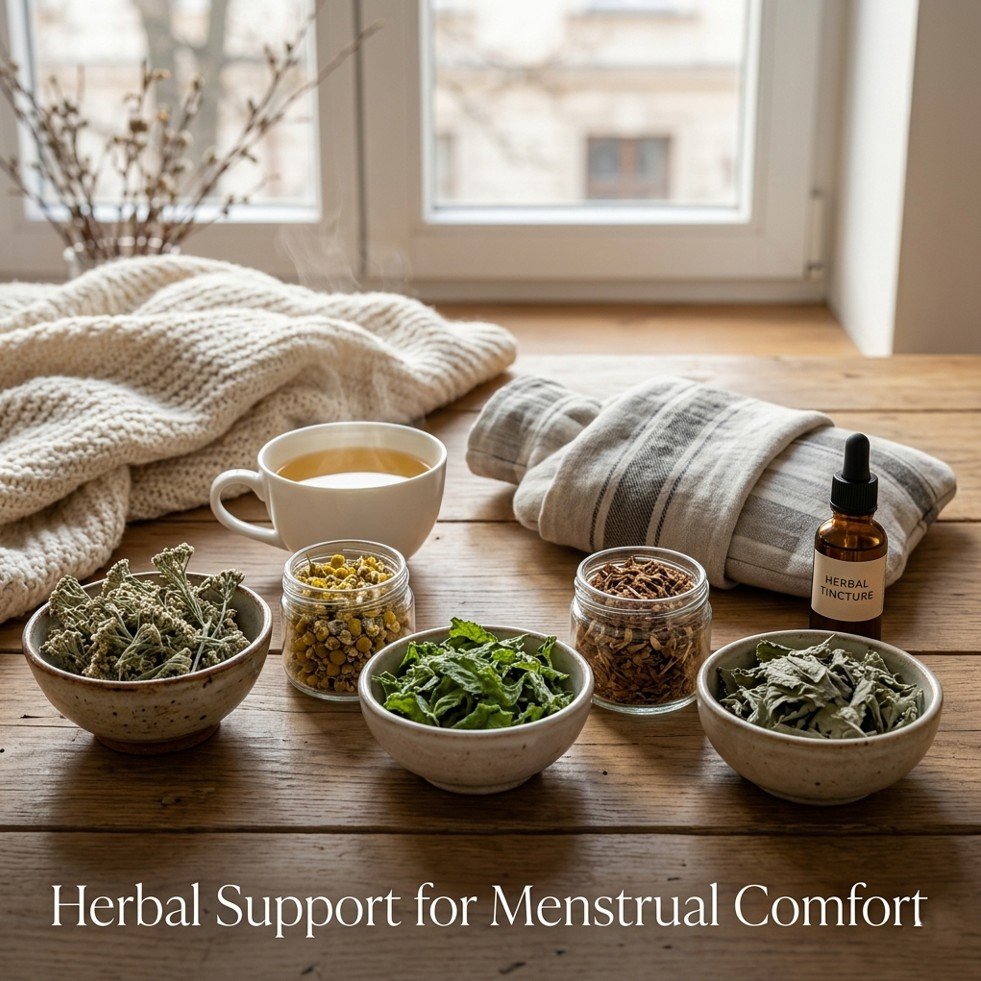
Menstruation is a normal biological process, but for many women it comes with significant discomfort. Cramping (dysmenorrhea), bloating, mood changes, and fatigue can interfere with daily life. While over‑the‑counter painkillers like ibuprofen are effective, some women prefer herbal approaches – either alongside conventional medication or as an alternative.
European herbal traditions offer several plants specifically for menstrual comfort. Some act as antispasmodics, relaxing the uterine muscle contractions that cause pain. Others are anti‑inflammatory or calming. None are cures for underlying conditions like endometriosis or fibroids – but they may help manage symptoms.
This article covers five herbs: yarrow (for cramping and heavy bleeding), chamomile (gentle antispasmodic), lemon balm (for stress‑related menstrual discomfort), cramp bark (the most potent European antispasmodic for the uterus), and raspberry leaf (a traditional uterine tonic). We also cover safety, interactions, and red flags for serious conditions.
What Causes Menstrual Pain and Discomfort?
Menstrual pain (dysmenorrhea) affects 50–90% of women of reproductive age. It is most common in adolescents and young women.
Primary dysmenorrhea (no underlying disease):
- Caused by prostaglandins – hormone‑like compounds that make the uterine muscles contract to shed the endometrial lining.
- High prostaglandin levels cause strong, painful contractions and reduced blood flow to the uterus (ischemia).
- Pain typically begins just before or at the start of menstruation and lasts 1–3 days.
- Often accompanied by nausea, diarrhoea, headache, fatigue, and bloating.
Secondary dysmenorrhea (underlying condition):
- Caused by endometriosis, uterine fibroids, adenomyosis, pelvic inflammatory disease, or ovarian cysts.
- Pain often lasts longer than 3 days, may start earlier in the cycle, and may worsen over time.
- Requires medical diagnosis and treatment – herbs are not sufficient.
When is period pain “normal”?
Mild to moderate cramping that responds to heat, rest, or over‑the‑counter painkillers is normal. Pain that prevents normal activities, requires strong medication, or does not improve with simple measures is not normal and needs medical evaluation.
Red flags – see a doctor (not herbs):
- Severe pain that does not respond to ibuprofen or paracetamol
- Pain that gets worse over time (not typical primary dysmenorrhea)
- Pain between periods or during intercourse
- Very heavy bleeding (soaking a pad or tampon every hour)
- Large blood clots
- Nausea, vomiting, or fainting with periods
- Fever or unusual discharge
- Period pain starting after age 25 (may indicate secondary cause)
Best European Herbs Traditionally Used for Menstrual Comfort
The following five herbs are well‑documented in European herbal traditions for menstrual support. Each has a different primary action.
1. Yarrow (Achillea millefolium)
What it is: A common European meadow herb (see full profile in Article 16).
Why it is traditionally used for menstrual comfort: Yarrow has a long history as an emmenagogue (stimulates menstrual flow) and as a treatment for heavy bleeding (menorrhagia). It is also antispasmodic, helping to ease cramping. In Eastern European folk medicine, yarrow tea is drunk during periods to reduce pain and regulate flow.
What modern research suggests: Laboratory studies confirm yarrow’s antispasmodic and anti‑inflammatory effects. Human studies for menstrual pain are lacking, but traditional use is consistent.
Best use case: Mild to moderate cramping with heavy flow. Yarrow may help reduce both pain and bleeding.
How to prepare:
- Yarrow tea: ½–1 teaspoon dried yarrow per cup, steep 3–5 minutes (longer becomes very bitter). Drink 2–3 cups daily during menstruation.
- Yarrow tincture: 1–2 ml (20–40 drops) in water, up to 3 times daily.
Critical safety note: Yarrow is contraindicated in pregnancy – it can stimulate uterine contractions and may cause miscarriage. Do not use yarrow if you are trying to conceive or could be pregnant. Also avoid if taking blood thinners (see Article 16).
2. Chamomile (Matricaria chamomilla)
What it is: Europe’s most beloved gentle herb (see full profile in Article 2).
Why it is traditionally used for menstrual comfort: Chamomile tea is a traditional remedy for menstrual cramps across Europe. It is antispasmodic, anti‑inflammatory, and calming. Unlike stronger herbs, chamomile is safe for long‑term use and suitable for adolescents.
What modern research suggests: A 2018 randomised controlled trial found that chamomile tea (2 cups daily) significantly reduced menstrual pain intensity and the need for painkillers compared to a control group. The study used German chamomile and measured pain using a visual analogue scale. This is good evidence.
Best use case: Mild to moderate cramping, especially when accompanied by anxiety or difficulty sleeping.
How to prepare:
- Chamomile tea: 1–2 teaspoons dried flowers per cup, steep 5–10 minutes. Drink 2–3 cups daily starting 2–3 days before expected period and continuing through menstruation.
Safety: Very safe. Rare ragweed allergy.
3. Lemon Balm (Melissa officinalis)
What it is: A lemon‑scented calming herb (see full profile in Article 10).
Why it is traditionally used for menstrual comfort: Lemon balm is traditionally used when menstrual discomfort is linked to stress, anxiety, or nervous tension. It has mild antispasmodic and calming effects. Often combined with chamomile.
What modern research suggests: No direct studies on menstrual pain. However, lemon balm’s anxiolytic (anxiety‑reducing) effects are well documented. For women whose period pain is exacerbated by stress, it may be helpful.
Best use case: Cramping accompanied by irritability, nervous tension, or difficulty relaxing.
How to prepare:
- Lemon balm tea: 1–2 teaspoons dried leaves per cup, steep 5–10 minutes. Drink 2–3 cups daily.
Safety: Very safe. Caution with thyroid medication (see Article 10). Safe in pregnancy in moderate amounts (consult doctor).
4. Cramp Bark (Viburnum opulus)
What it is: A deciduous shrub native to Europe, northern Africa, and central Asia. Also known as guelder rose, water elder, or European cranberrybush. The bark is used medicinally – harvested in autumn or spring.
Why it is traditionally used for menstrual comfort: As the name suggests, cramp bark is a specific remedy for muscle cramps, including uterine cramps. It has been used in European and North American herbalism for painful periods, afterbirth pains, and even threatened miscarriage (though never without medical supervision). It is a potent antispasmodic.
What modern research suggests: Very limited human research. Laboratory studies confirm that cramp bark extracts relax smooth muscle, including uterine tissue. A 2019 study found that a combination of cramp bark and black haw (Viburnum prunifolium – North American relative) reduced menstrual pain. Traditional use is strong.
Best use case: Moderate to severe menstrual cramping, especially when pain is sharp and gripping. Often combined with other antispasmodics.
How to prepare:
- Cramp bark decoction: 1–2 teaspoons dried, shredded bark per cup of water. Simmer for 15–20 minutes. Drink 2–3 cups daily during menstruation.
- Cramp bark tincture: 2–4 ml (40–80 drops) in water, up to 3 times daily. Tincture is more potent.
Safety: Cramp bark is generally safe. Do not use during pregnancy (it has traditional use for threatened miscarriage, but this is not safe for self‑treatment – can cause uterine stimulation). Consult a doctor before use if you have any medical condition. May interact with sedatives (theoretical).
5. Red Raspberry Leaf (Rubus idaeus)
What it is: The common European raspberry. The leaves are used, not the fruit. Raspberry leaf has been used in European herbalism for centuries as a “uterine tonic” – a herb that strengthens and tones the uterine muscles.
Why it is traditionally used for menstrual comfort: Raspberry leaf is not an acute pain reliever. It is traditionally used as a long‑term tonic – taken daily for several weeks or months to improve uterine health, reduce heavy bleeding, and ease cramping over time. It is also famously used in the third trimester of pregnancy to prepare the uterus for labour (under medical guidance).
What modern research suggests: A 2001 study found that raspberry leaf tablets reduced the need for interventions during labour, but no high‑quality studies on menstrual pain. Traditional use is strong. Raspberry leaf contains fragarine, an alkaloid that is thought to tone smooth muscle.
Best use case: Women with chronic menstrual discomfort, heavy bleeding, or a history of miscarriages (as a tonic – not for acute pain). Also useful for adolescents establishing regular cycles.
How to prepare:
- Raspberry leaf infusion: 1–2 teaspoons dried leaves per cup, steep 10–15 minutes. Drink 1–3 cups daily throughout the cycle, not just during menstruation. Effects take weeks to develop.
Safety: Raspberry leaf is very safe. Contraindicated in the first trimester of pregnancy (traditional use only in third trimester, under medical supervision). Avoid if you have oestrogen‑sensitive conditions? No known interaction. Generally safe for long‑term use.
How to Use These Herbs at Home
Acute pain relief (during menstruation)
For immediate cramping:
- Cramp bark tincture (fastest acting): 2–4 ml (40–80 drops) at the onset of pain, repeat every 2–4 hours as needed.
- Chamomile tea (gentle): 1–2 cups at the first sign of pain.
- Yarrow tea (if flow is heavy): ½–1 cup every 4 hours.
Preventative use (starting before period)
For women with predictable, regular cycles:
- Start drinking 2–3 cups of chamomile tea or lemon balm tea 2–3 days before expected period.
- Continue through the first 2–3 days of menstruation.
Long‑term tonic (for chronic discomfort)
Raspberry leaf infusion: 1–2 cups daily throughout the menstrual cycle (not just during period). Effects may take 2–3 months to notice.
Blends (combining herbs)
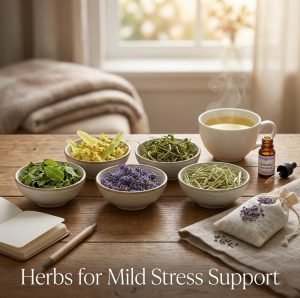
Mild cramp blend: Chamomile + lemon balm (equal parts) – gentle, calming, good for stress‑related pain.
Stronger cramp blend: Cramp bark tincture + chamomile tea – combine acute antispasmodic with gentle support.
Heavy flow blend: Yarrow tea + raspberry leaf infusion – yarrow for acute heavy bleeding, raspberry leaf for long‑term toning.
External heat (traditional, non‑herbal but important)
A hot water bottle or heating pad on the lower abdomen is one of the most effective non‑pharmacological treatments for menstrual cramps. Heat relaxes uterine muscles and increases blood flow. Combine with herbal tea.
When the Season Matters
Most menstrual herbs are available dried year‑round.
Harvesting:
- Yarrow: Harvest flowering tops in summer (June–August). Dry.
- Chamomile: Harvest flowers in summer. Dry.
- Lemon balm: Harvest leaves before flowering (late spring to summer). Dry or use fresh.
- Cramp bark: Harvest bark in autumn or early spring (from pruned branches – do not strip living trees). Dry. Not recommended for home harvest – buy from reputable suppliers.
- Raspberry leaf: Harvest young leaves in spring before the plant flowers. Dry.
Buying advice:
- All five herbs are widely available from European herbal suppliers.
- Choose organic where possible.
- Cramp bark is less common – look for it in specialised herb shops or online.
Storage: Store dried herbs in airtight glass jars away from light and heat. Replace leaves and flowers after 12–18 months, bark after 2 years.
Safety, Interactions, and When to See a Doctor
This article is for educational purposes only and does not replace medical advice, diagnosis, or treatment. Persistent, severe, or unclear symptoms should be discussed with a qualified healthcare professional.
Specific safety notes:
| Herb | Contraindications / Cautions |
|---|---|
| Yarrow | Contraindicated in pregnancy (uterine stimulant). Avoid with blood thinners. |
| Chamomile | Very safe. Rare ragweed allergy. |
| Lemon balm | Very safe. Caution with thyroid medication. |
| Cramp bark | Do not use in pregnancy (uterine stimulant). Caution with sedatives. |
| Raspberry leaf | Avoid in first trimester of pregnancy (traditional use only in third trimester under medical supervision). Generally safe otherwise. |
Pregnancy and breastfeeding:
- None of these herbs should be used in the first trimester without medical supervision (except chamomile and lemon balm in moderate tea amounts are generally considered low risk – but consult a doctor).
- Yarrow and cramp bark are specifically contraindicated due to uterine stimulation.
- Raspberry leaf is traditionally used only in the third trimester to prepare for labour – do not use in early pregnancy.
- For breastfeeding, all five are likely safe in tea amounts (consult doctor).
Drug interactions:
- Yarrow – may interact with blood thinners (warfarin, apixaban, rivaroxaban). Avoid.
- Cramp bark – may potentiate sedatives (theoretical).
- Others – no significant interactions.
When to see a doctor (not herbs):
- Severe pain that does not respond to ibuprofen, heat, or herbal teas
- Pain that lasts more than 3 days or occurs between periods
- Very heavy bleeding (changing a pad or tampon every hour)
- Large clots (larger than a 2-euro coin)
- Nausea, vomiting, or fainting with periods
- Period pain that started after age 25
- Suspected endometriosis or fibroids
FAQ
What is the best herb for menstrual cramps?
For acute pain, cramp bark is the most potent European antispasmodic. For mild to moderate pain, chamomile tea has good evidence and is very safe. For heavy bleeding, yarrow is traditionally used.
Can I take these herbs with ibuprofen?
Yes, generally. There are no known interactions between these herbs and ibuprofen. However, use the lowest effective dose of both. If you take ibuprofen regularly for period pain, discuss with a doctor – there may be underlying issues.
How long does it take for raspberry leaf to work?
Raspberry leaf is a long‑term tonic, not an acute pain reliever. Drink 1–2 cups daily for 2–3 months to notice effects. It may reduce heavy bleeding and cramping over time.
Is it safe to use yarrow for heavy periods?
Yarrow has traditional use for menorrhagia (heavy menstrual bleeding). However, heavy bleeding can be a sign of fibroids, endometriosis, or hormonal imbalances. Do not self‑treat – see a doctor for diagnosis first. Under medical guidance, yarrow may be used.
Can I use these herbs if I have endometriosis?
Endometriosis is a serious condition that requires medical management. Herbs may help with pain but do not treat the underlying disease. Consult your gynaecologist before using any herbal remedies. Cramp bark and chamomile are generally safe, but yarrow (which affects bleeding) should be used with caution.
Are these herbs safe for teenagers?
Chamomile and lemon balm tea are very safe for adolescents with period pain. Raspberry leaf tea is also safe. Cramp bark is stronger – use under adult supervision. Yarrow is not recommended for teenagers without professional guidance.
Can I use these herbs while on birth control pills?
Yes, there are no known interactions between these herbs and oral contraceptives. However, if you are using herbs to regulate heavy bleeding, the pill may already be addressing that. Consult your doctor.
Key Takeaways
- Five European herbs are traditionally used for menstrual comfort: yarrow (cramping + heavy flow), chamomile (mild antispasmodic – good evidence), lemon balm (stress‑related pain), cramp bark (potent antispasmodic), and raspberry leaf (long‑term uterine tonic).
- Chamomile tea (2 cups daily) has a 2018 trial showing significant pain reduction – good evidence.
- Critical safety: Yarrow and cramp bark are contraindicated in pregnancy. Yarrow also interacts with blood thinners.
- Herbs are for mild to moderate discomfort. Severe pain, very heavy bleeding, or pain between periods requires medical evaluation.
- This is not medical advice. Do not replace prescribed medication or delay seeing a doctor for serious symptoms.
Internal Links Used
- Yarrow: wound herb and digestive bitter — placed in yarrow section
- Chamomile: benefits, uses, safety, and how to prepare it — placed in chamomile section
- Lemon balm: calming uses and how to brew it properly — placed in lemon balm section
- Best European herbs for bloating and heavy meals — placed in bloating section
Sources
- European Medicines Agency (EMA) – Community herbal monographs: Achilleae herba, Matricariae flos, Melissae folium, Viburni opuli cortex, Rubi idaei folium.
- World Health Organization (WHO) – Monographs on selected medicinal plants.
- German Commission E Monographs – Yarrow, chamomile, lemon balm, raspberry leaf.
- Jenabi, E., et al. (2018). The effect of chamomile on primary dysmenorrhea: A systematic review and meta‑analysis. Journal of Obstetrics and Gynaecology, 38(7), 963-967.
- Pattison, A. (2019). Viburnum opulus for menstrual pain: A review. Journal of Herbal Medicine, 15, 100-105.
- Simpson, M., et al. (2001). Raspberry leaf in pregnancy: A systematic review. Australian College of Midwives, 14(3), 20-23.
- National Center for Complementary and Integrative Health (NCCIH) – Menstrual disorders.