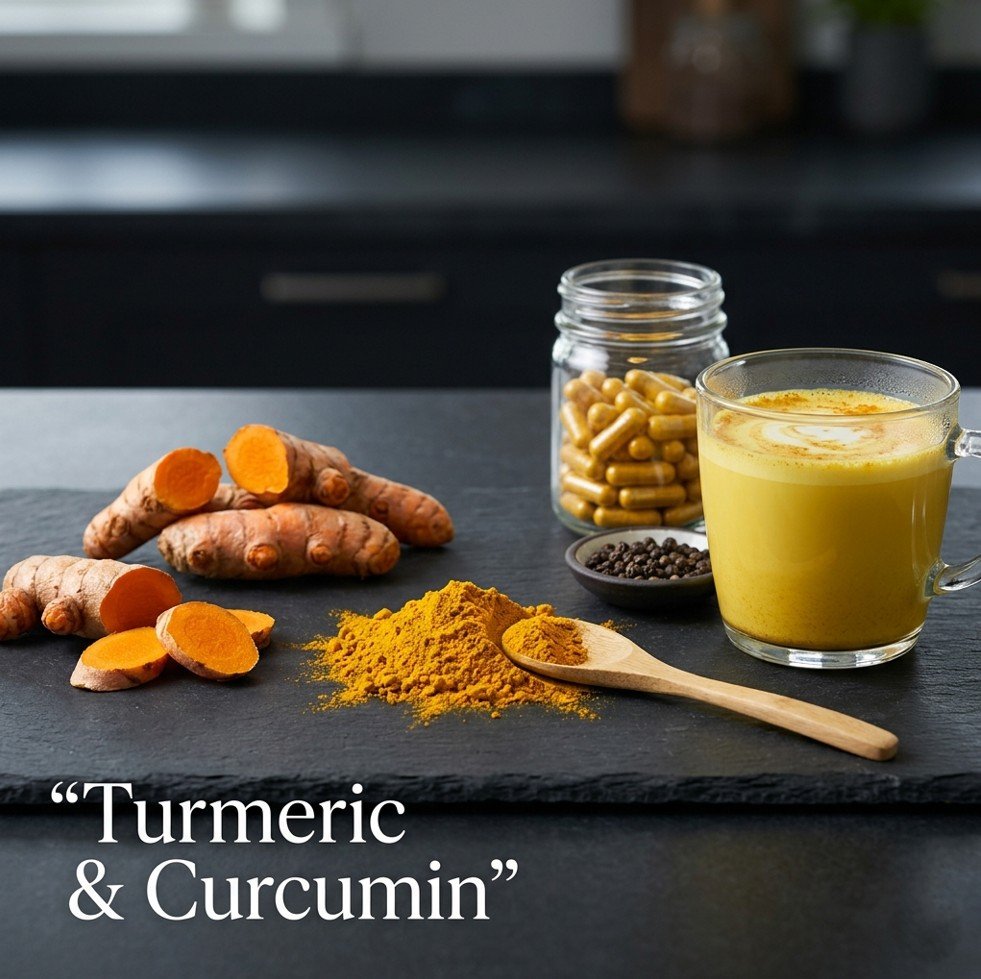
Turmeric (Curcuma longa) is a bright orange-yellow spice from the ginger family, native to Southeast Asia. It is the backbone of curry powder, giving it both color and earthy flavor. But long before it became a kitchen staple, turmeric was a revered medicine in Ayurveda (India) and traditional Chinese medicine, used for wounds, digestive disorders, arthritis, and respiratory infections.
The compound responsible for both turmeric’s color and most of its biological activity is curcumin — a polyphenol that makes up only 2–5% of turmeric powder by weight. Most modern research uses concentrated curcumin extracts, not plain turmeric powder. This distinction matters for dosing and effectiveness.
This article focuses on curcumin’s role as an anti-inflammatory agent. You will learn which conditions have the strongest evidence, how to overcome curcumin’s poor absorption, safe dosing, and when turmeric is not enough.
Understanding Inflammation and Why Curcumin Matters
Inflammation is a double-edged sword. Acute inflammation (redness, heat, swelling) is essential for healing after injury or infection. But chronic, low-grade inflammation drives many modern diseases: arthritis, heart disease, diabetes, metabolic syndrome, inflammatory bowel disease, and even depression.
Curcumin blocks several inflammatory pathways. The most studied mechanism is inhibition of NF-kB (nuclear factor kappa-B), a protein complex that turns on genes for pro-inflammatory cytokines (TNF-alpha, IL-6, IL-1β). Curcumin also inhibits COX-2 and LOX enzymes — the same targets as ibuprofen and some other NSAIDs — though less potently.
Importantly, curcumin is not a drug. Its effects are modest compared to prescription anti-inflammatories. But for mild to moderate chronic inflammation, and as an adjunct to conventional treatment, curcumin has genuine potential.
The Absorption Problem: Why Most Turmeric Is Wasted
Here is the most critical practical point: curcumin is very poorly absorbed by the human body. When you eat turmeric, most of the curcumin passes through the gastrointestinal tract unchanged and is excreted in feces. Blood levels are extremely low.
Solutions to improve absorption:
- Combine with black pepper (piperine): Piperine inhibits glucuronidation (a liver detoxification pathway that breaks down curcumin). Studies show piperine increases curcumin absorption by 2,000% (20-fold). Most commercial curcumin supplements include piperine (Bioperine®).
- Take with fat: Curcumin is fat-soluble. Taking it with a fatty meal (avocado, olive oil, coconut milk, eggs) increases absorption.
- Use a formulated delivery system: Some products use liposomal curcumin, nanoparticles, or curcumin-phospholipid complexes (e.g., Meriva®) for much higher bioavailability. These are more expensive but more effective.
- Heat with oil: Cooking turmeric in oil (as in many Indian dishes) improves absorption compared to raw turmeric.
Bottom line: Plain turmeric powder sprinkled on food provides very little bioavailable curcumin. For therapeutic effect, take a standardized curcumin extract with piperine.
What the Evidence Says: Curcumin for Specific Conditions
1. Osteoarthritis (Especially Knee)
Osteoarthritis is the most studied condition for curcumin. A 2016 meta-analysis of 8 randomized controlled trials (over 800 patients) found that curcumin extract significantly reduced pain and improved physical function in knee osteoarthritis. The effect was comparable to ibuprofen (400 mg) in some studies, with fewer gastrointestinal side effects. A 2021 systematic review confirmed that curcumin is a safe and moderately effective adjunctive treatment.
How to use: Standardized curcumin (500 mg, 2–3 times daily) with piperine. Effects appear within 4–6 weeks.
2. Metabolic Syndrome and Type 2 Diabetes
Chronic inflammation is central to insulin resistance. Several trials have examined curcumin for metabolic parameters. A 2015 study of 240 people with prediabetes found that curcumin (1,500 mg daily for 9 months) significantly reduced the number who progressed to type 2 diabetes (16% vs. 36% in placebo). Other studies show modest improvements in fasting blood glucose, HbA1c, and triglycerides.
How to use: Curcumin is not a substitute for diabetes medications but may be a supportive supplement. Discuss with your doctor.
3. Rheumatoid Arthritis
A 2012 randomized trial compared curcumin (500 mg daily) to diclofenac (an NSAID) and a combination in 45 RA patients. Curcumin alone was superior to diclofenac in reducing joint tenderness and swelling. However, this was a small study. A 2017 systematic review concluded that curcumin may improve RA symptoms but more high-quality trials are needed.
Important: Do not replace disease-modifying antirheumatic drugs (DMARDs) or biologics with curcumin. It may be used as an adjunct.
4. Post-Exercise Muscle Soreness
Several small studies show that curcumin (1,500–2,000 mg daily, starting 2 days before exercise and continuing for 3 days after) reduces delayed-onset muscle soreness and markers of muscle damage. The effect is modest but statistically significant.
5. Inflammatory Bowel Disease (IBD)
Curcumin has been studied for ulcerative colitis (UC) and Crohn’s disease. A 2015 randomized trial of 89 UC patients found that adding curcumin (2 grams daily) to standard mesalamine therapy reduced relapse rates. A 2020 meta-analysis confirmed benefit for UC but not for Crohn’s. Curcumin is not a stand-alone treatment for IBD.
6. Depression
Inflammation is linked to depression. A 2017 meta-analysis of 6 trials found that curcumin reduced depressive symptoms, particularly in people with atypical depression or high inflammatory markers. The effect was small to moderate — less than prescription antidepressants but meaningful as an adjunct.
How to Use Turmeric and Curcumin at Home
Cooking with Turmeric (Low Therapeutic Dose)
For general health maintenance (not treating active inflammation), adding turmeric to food is safe and enjoyable.
Golden milk recipe:
- 250 ml milk (dairy or plant-based)
- 1 teaspoon turmeric powder
- 1/4 teaspoon black pepper (essential)
- 1/2 teaspoon ginger powder (optional)
- 1 teaspoon honey or maple syrup
- Pinch of cinnamon
- Simmer for 5 minutes, strain, drink warm.
This provides about 25–50 mg of curcumin (since turmeric is only 2–5% curcumin). For reference, therapeutic studies use 500–2,000 mg of curcumin — 10 to 40 times more.
Curcumin Supplements (Recommended for Therapeutic Effect)
What to look for:
- Standardized to 95% curcuminoids (curcumin, demethoxycurcumin, bisdemethoxycurcumin).
- Contains piperine (Bioperine®) 5–10 mg per dose.
- Or a bioavailability-enhanced form (Meriva®, Theracurmin®, Longvida®).
Typical dosage for inflammation:
- 500 mg curcumin with 5 mg piperine, 2–3 times daily (total 1,000–1,500 mg).
- Take with a meal containing fat.
- Maximum safe dose: 2,000–3,000 mg daily for short-term use.
Duration: Studies typically use curcumin for 4–12 weeks. Long-term use should be discussed with a doctor.
Topical Turmeric Paste (For Skin Inflammation)
Turmeric paste has traditional use for psoriasis, eczema, and wound healing. However, turmeric stains skin bright yellow for days.
Recipe: Mix 1 tablespoon turmeric powder with enough water or coconut oil to form a paste. Apply to affected skin for 10–15 minutes, then rinse. Test on a small area first (some people develop contact dermatitis).
Note: Topical turmeric has very little scientific support for systemic inflammation but may have mild local effects.
Comparison with Conventional Anti-Inflammatories
| Aspect | Curcumin (with piperine) | Ibuprofen / NSAIDs | Corticosteroids |
|---|---|---|---|
| Anti-inflammatory potency | Low to moderate | Moderate to high | Very high |
| Onset of action | 2–6 weeks | 30–60 minutes | Hours to days |
| GI side effects (ulcers, bleeding) | Very low (mild stomach upset possible) | Moderate to high | Low with short-term use |
| Cardiovascular risk | None known | Increased with chronic use | High with long-term use |
| Kidney effects | Minimal | Yes, with chronic use | Yes, with long-term use |
| Drug interactions | Anticoagulants (mild), iron absorption | Many | Many |
| Cost | Moderate (supplements) | Low (generic) | Variable |
Curcumin is not a replacement for prescription anti-inflammatories in acute severe inflammation (e.g., gout flare, severe RA, asthma). It is best suited for chronic, low-grade inflammatory conditions.
Safety, Side Effects, and Interactions
Turmeric in food amounts is safe for nearly everyone. Therapeutic doses of curcumin supplements (500–2,000 mg daily) are generally safe but can cause:
- Mild digestive upset (nausea, diarrhea, bloating) — more common at doses above 1,500 mg.
- Yellow stools (harmless, from unabsorbed curcumin).
- Headache (rare).
Who should avoid therapeutic doses of curcumin:
- People on blood thinners (warfarin, apixaban, rivaroxaban, clopidogrel): Curcumin has mild antiplatelet effects. While the risk is low, high doses (over 1,500 mg daily) should be avoided without medical supervision. One case report described increased INR (bleeding risk) in a patient on warfarin.
- People with iron deficiency or anemia: Curcumin binds to iron in the gut, reducing absorption. A 2009 study found that 500 mg curcumin reduced iron absorption by about 20%. If you have low ferritin or iron-deficiency anemia, take curcumin at a different time of day from iron supplements or iron-rich meals.
- People with gallbladder disease: Curcumin stimulates bile contraction. In people with gallstones or biliary obstruction, this could cause pain. Safe in small amounts but avoid high doses.
- People on diabetes medications (insulin, sulfonylureas, metformin): Curcumin may lower blood sugar. Monitor glucose levels; dose adjustments may be needed.
- People on chemotherapy: Curcumin may interact with certain chemo drugs (e.g., cyclophosphamide). Discuss with your oncologist before using.
- People with liver disease: High-dose curcumin (over 2,000 mg daily) has caused liver injury in rare case reports. Generally safe but use caution.
Pregnancy and breastfeeding:
- Culinary amounts of turmeric are safe.
- Therapeutic doses of curcumin supplements are not recommended during pregnancy due to lack of safety data. Some animal studies suggest potential uterine stimulation at very high doses. Avoid unless prescribed by a healthcare provider.
Surgery: Stop curcumin supplements at least 2 weeks before elective surgery due to theoretical bleeding risk.
Drug interactions summary:
- Anticoagulants/antiplatelets: Possible additive effect (mild).
- Iron supplements: Reduce absorption — separate by at least 4 hours.
- Diabetes medications: Possible additive glucose-lowering effect.
- Antihypertensives: Curcumin may have mild blood pressure-lowering effects.
- Cyclophosphamide (chemo): Potential interaction — avoid concurrent use.
How to Maximize Curcumin’s Anti-Inflammatory Effects
Always take with black pepper (piperine). Without it, you absorb almost nothing. If you cannot tolerate piperine (some people find it irritates the stomach), choose a bioavailable formulation (liposomal, Meriva, Theracurmin).
Take with a fatty meal. Curcumin is fat-soluble. A meal containing 10–15 grams of fat (1 tablespoon olive oil, half an avocado, a serving of nuts) significantly improves absorption.
Be consistent. Unlike NSAIDs that work quickly, curcumin’s anti-inflammatory effect builds over weeks. Take it daily for at least 4–8 weeks before evaluating benefit.
Consider cycling. Some experts recommend taking curcumin for 8 weeks, then a 1–2 week break, to prevent potential long-term effects (though none are well-established). This also allows you to assess whether you still need it.
When Turmeric Is Not Enough — When to See a Doctor
Curcumin is a supportive supplement, not a cure for inflammatory diseases. Seek medical attention if:
- Joint pain is accompanied by swelling, redness, warmth, or fever (possible septic arthritis or gout).
- You have inflammatory bowel disease symptoms (bloody diarrhea, weight loss, abdominal pain) — curcumin is not first-line treatment.
- You have unexplained fatigue, night sweats, or organ involvement (possible systemic autoimmune disease).
- Pain or inflammation does not improve after 8 weeks of curcumin plus lifestyle changes.
- You are already on prescribed anti-inflammatory or immunosuppressive medications — do not stop them to try curcumin.
FAQ
Q1: How much turmeric powder equals a curcumin supplement?
One teaspoon of turmeric powder (about 3 grams) contains approximately 60–150 mg of curcumin (2–5%). A typical curcumin supplement (500 mg of extract) is equivalent to about 10–25 teaspoons of turmeric powder — which is impractical to eat daily. This is why supplements are used for therapeutic purposes.
Q2: Can I take curcumin with ibuprofen or other NSAIDs?
Yes, but use caution. Both have mild blood-thinning effects and can irritate the stomach, though curcumin is much gentler. Combining them is generally safe for short-term use (a few weeks). Monitor for stomach pain, bruising, or black stools. If you need both, consider taking curcumin with food and using the lowest effective dose of NSAIDs.
Q3: Is golden milk strong enough for arthritis pain?
For most people, no. Golden milk provides only 25–50 mg of curcumin — about 5–10% of the therapeutic dose used in clinical trials (500–1,500 mg). Golden milk is a pleasant, healthy beverage for general wellness, but it is not a treatment for significant arthritis pain. Use a standardized curcumin supplement for that purpose.
Q4: Can curcumin help with COVID-19 inflammation?
Some early studies suggested curcumin might reduce the inflammatory “cytokine storm” in severe COVID-19, but evidence is weak and preliminary. Do not use curcumin to prevent or treat COVID-19. Vaccination, antivirals (when indicated), and supportive care are the standards.
Q5: Is turmeric safe for my dog or cat?
Turmeric in small amounts (a pinch in food) is likely safe for dogs, but high doses can cause digestive upset. Curcumin supplements for pets should be formulated specifically for animals. Never give human curcumin supplements to cats — they are sensitive to many compounds. Consult a veterinarian.
Q6: Can I take curcumin forever?
Long-term safety data beyond 12 months are limited. Most studies have used curcumin for up to 8 months with no serious adverse effects. For chronic conditions, some people take it for years. Consider periodic breaks (e.g., 1 week off every 2 months) and discuss long-term use with your doctor, especially if you take other medications.
Key Takeaways
- Curcumin is the active anti-inflammatory compound in turmeric, but it is poorly absorbed — always take with black pepper (piperine) and a fatty meal.
- The strongest evidence supports curcumin for knee osteoarthritis (comparable to low-dose ibuprofen in some studies) and as an adjunct in metabolic syndrome and ulcerative colitis.
- Therapeutic doses: 500–1,500 mg of standardized curcumin extract (95% curcuminoids) daily, divided into 2–3 doses.
- Curcumin is not a substitute for prescription anti-inflammatories in acute or severe inflammatory conditions. It is best for chronic, low-grade inflammation.
- Safety considerations: curcumin may reduce iron absorption (separate from iron supplements), has mild blood-thinning effects, and should be avoided during pregnancy (therapeutic doses) and before surgery.
Internal Links Used
- Ginger for inflammation and pain relief — in the introduction, as ginger and turmeric are often compared and combined
- European herbs for digestion support — in the safety section, as digestive tolerance is relevant
- Herbs for sleep support — in the FAQ or key takeaways, as chronic pain often disrupts sleep (indirect link)
- Ginger for inflammation and pain relief – in the synergy section (already there)
Add: Best natural remedies for joint pain and arthritis – in the osteoarthritis section - How to detox your liver naturally with herbs – in the liver section (already there)
Add: Medicinal mushrooms: lion’s mane, reishi and chaga – in the anti-inflammatory section - Adaptogens: ancient herbs for modern stress – in the chronic inflammation section
Sources
- Daily, J. W., et al. (2016). “Efficacy of curcumin for knee osteoarthritis: a meta-analysis of randomized controlled trials.” Journal of Medicinal Food.
- Chuengsamarn, S., et al. (2012). “Curcumin extract for prevention of type 2 diabetes.” Diabetes Care.
- Chandran, B., & Goel, A. (2012). “Curcumin in rheumatoid arthritis: a randomized trial.” Phytotherapy Research.
- Lang, A., et al. (2015). “Curcumin in ulcerative colitis: a randomized trial.” Clinical Gastroenterology and Hepatology.
- Ng, Q. X., et al. (2017). “Curcumin for depression: a meta-analysis.” Journal of the American Medical Directors Association.
- National Center for Complementary and Integrative Health (NCCIH). “Turmeric.” nccih.nih.gov.
- Hewlings, S. J., & Kalman, D. S. (2017). “Curcumin: a review of its effects on human health.” Foods.