Registered Chinese Drug PSP from Trametes versicolor (Turkey Tail / Wrośniak różnobarwny) in Cancer Support: History, Evidence, Safe Use, and How to Prepare a Dried Mushroom Decoction at Home
Why This Information Matters for Patients
A cancer diagnosis brings with it an overwhelming search for anything that might help – alongside conventional treatment, many patients look for natural options to support their immune system, reduce side effects, and improve quality of life. Among the most researched natural products is a mushroom you may know as turkey tail, or in Polish Wrośniak różnobarwny. In China, a pharmaceutical-grade extract called PSP (Polysaccharide Peptide) has been a registered drug since 1998, prescribed to thousands of cancer patients as an adjunct to chemotherapy and radiation.
But what if you cannot access this registered drug? What if you only have access to the dried mushroom itself – picked from a forest or bought from a reputable forager? Can you prepare something at home that might offer immune support? And is it safe to do so while undergoing active cancer treatment?
This article answers all those questions. We will cover:
- The full history of this mushroom in traditional Chinese medicine and its journey to becoming a registered drug.
- The scientific evidence for its effectiveness as supportive care in cancer.
- How the registered drug PSP works and how it is dosed.
- A detailed, practical guide to making a decoction (tea) from the dried mushroom – including preparation methods, dosing, and important safety warnings.
- Who should absolutely avoid home preparations, and when to stick with the pharmaceutical version.
Critical reminder: This information is educational. It does not replace medical advice. Always discuss any natural product – whether a registered drug or a home tea – with your oncologist before using it.
Part 1: What Is Trametes versicolor? Botanical and Traditional Identity
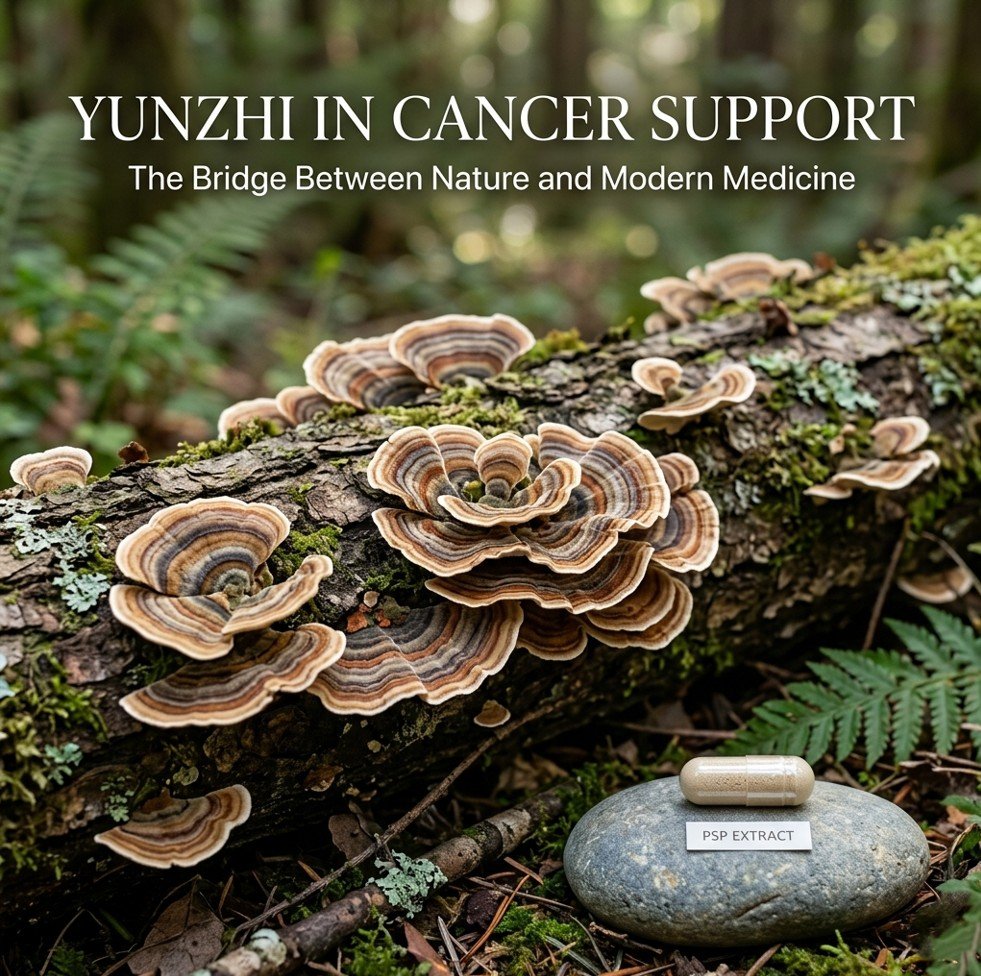
Trametes versicolor (also known as Coriolus versicolor) is a common polypore mushroom found on dead hardwood logs throughout the world, including Poland. Its Polish name, Wrośniak różnobarwny, refers to its colourful, concentric bands of brown, tan, cream, rust, and sometimes blue or green. In English it is called turkey tail, because the bands resemble a wild turkey’s tail feathers.
The mushroom is not edible in the culinary sense – it is tough and leathery, not suitable for frying or eating like a porcini. However, it has a long history as a medicinal tea ingredient.
Traditional Use in China: Yun Zhi – The Cloud Mushroom
In traditional Chinese medicine (TCM), the mushroom is known as Yun Zhi (云芝), meaning “cloud mushroom” – a name derived from its cloud-like concentric rings. The earliest written records appear in the Shennong Bencao Jing (ca. 200 CE), though Yun Zhi became more prominent in later dynasties. By the Ming Dynasty (1368–1644), the famous physician Li Shizhen included Yun Zhi in his Compendium of Materia Medica (Bencao Gangmu), describing it as a tonic to strengthen qi (vital energy), support the spleen, and expel dampness. It was traditionally given to people recovering from prolonged illness, those with chronic fatigue, poor appetite, recurrent infections, and – notably – to patients with what we would today recognise as cancer-related wasting (cancer cachexia).
In TCM philosophy, cancer was often understood as a condition of severe qi deficiency and stasis. Yun Zhi was not used as a direct “cancer killer” but as a supportive herb to restore the body’s own defensive systems (wei qi), improve digestion, and allow the patient to better tolerate other treatments. This traditional framework aligns remarkably well with modern immunology.
Traditional Use Outside China
Similar traditions existed in Japan (where it is called kawaritake or tamamototake) and among some Indigenous peoples of North America, who brewed turkey tail tea for general weakness and immune support. However, the most systematic and documented traditional use comes from China.
Part 2: The Modern History – From Traditional Tea to a Registered Drug
The Japanese Discovery of PSK (Krestin)
The modern story begins in Japan in the 1960s. Researchers at Kureha Chemical Co. isolated a protein-bound polysaccharide from Trametes versicolor and named it PSK (Polysaccharide Krestin). After extensive preclinical and clinical studies, PSK was approved in Japan in the 1970s as an adjunctive cancer therapy. It remains a prescription drug in Japan, covered by national health insurance for certain cancers, particularly gastric and colorectal cancer. PSK is not identical to PSP – the molecular structures differ slightly – but both belong to the same class of beta-glucan-peptide complexes.
The Chinese Development of PSP (1983–1998)
In China, a separate research stream began in the early 1980s. A team at Shanghai Normal University (then Shanghai Teachers University) isolated a different polysaccharide-peptide complex from a specific cultivated strain of Trametes versicolor (strain COV-1). They named it PSP (Polysaccharide Peptide).
- 1983: PSP is successfully isolated and characterised.
- 1987: PSP enters routine clinical practice in several Chinese hospitals, only four years after isolation – an unusually rapid translation from lab to clinic.
- 1990s: More than 40 clinical trials are conducted across China, involving thousands of cancer patients. These trials focus on lung, gastric, esophageal, colorectal, and breast cancers.
- 1998: China’s Ministry of Health grants official production approval for Yunzhi Glycopeptide (Qingkang), registration number (98) Wei Yao Zhun Zi Z-096 – a traditional Chinese medicine patent drug.
- 1999: PSP is designated a national innovative product in the field of traditional Chinese medicine.
Unlike PSK in Japan, PSP in China is classified under the regulatory pathway for traditional Chinese medicines, but it is held to pharmaceutical standards: each batch must contain a consistent percentage of polysaccharides (typically ≥40%) and peptides, with strict quality control.
The Difference Between PSP and a “Supplement”
This is crucial for patients to understand. PSP is a standardised pharmaceutical drug. Every capsule or sachet contains a known, consistent amount of active ingredients. The raw mushroom, or a simple dried powder sold online as a “turkey tail supplement,” is not the same. The concentration of active polysaccharides in wild mushrooms varies dramatically based on season, location, age, and storage. Home preparations cannot match the consistency of a registered drug.
However, many patients cannot access PSP. It is not registered in Europe or North America. In Poland, for example, no pharmacy sells PSP. What is available is dried Wrośniak różnobarwny from herbalists, online shops, or foragers. The question then becomes: can you make an effective immune-supporting tea from the dried mushroom, and is it safe?
We address that in Part 6. But first, let us understand how the mushroom (and its extracts) work.
Part 3: Mechanism of Action – How Does It Support the Immune System?
Neither PSP nor the raw mushroom directly kills cancer cells in the human body (despite some laboratory studies showing direct cytotoxicity at very high concentrations – not achievable with oral intake). Instead, the primary mechanism is immune modulation.
The Active Compounds: Beta-Glucans and Peptides
The key molecules are beta-1,3/1,6-glucans bound to small peptides. These proteoglycans are too large to enter the bloodstream intact. Instead, they interact with receptors on the surface of immune cells in the gut-associated lymphoid tissue (GALT). The most important receptors are:
- Dectin-1
- Toll-like receptor 2 (TLR2)
- Complement receptor 3 (CR3)
What Happens When You Take PSP or Mushroom Tea?
When these receptors are activated, a cascade of immune signals is released. Clinical studies (mostly with PSP and PSK) have shown:
- Increased natural killer (NK) cell activity – NK cells are the body’s first-line defence against abnormal cells, including some cancer cells.
- Increased macrophage phagocytosis – macrophages “eat” debris and pathogens, and also present antigens to T-cells.
- Increased production of cytokines – particularly interleukin-2 (IL-2), interferon-gamma (IFN-γ), and tumour necrosis factor-alpha (TNF-α). These molecules coordinate immune responses.
- Improved T-cell profiles – increases in CD4+ (helper) T-cells and the CD4+/CD8+ ratio, which is often suppressed during chemotherapy.
- Reduced immunosuppression – some research suggests PSP can counteract the suppressive effects of myeloid-derived suppressor cells (MDSCs), which tumours use to hide from the immune system.
Does It Work Directly on Tumours?
A few laboratory studies have shown that PSP can inhibit angiogenesis (blood vessel formation) and induce apoptosis in cancer cell lines. However, these effects occur at concentrations that are not reliably achieved in human blood after oral intake. In living humans, the evidence points overwhelmingly to immune modulation rather than direct anti-tumour activity. This is why PSP is an adjunct – it helps your immune system do its job better, but it does not replace chemotherapy, radiation, or targeted therapy.
Protective Effects During Chemotherapy
Chemotherapy suppresses bone marrow, leading to low white blood cell counts (neutropenia), fatigue, and increased infection risk. Several studies have reported that patients taking PSP or PSK alongside chemotherapy have:
- Higher nadir white blood cell counts.
- Faster recovery of neutrophils.
- Reduced severity of fatigue and appetite loss.
- Fewer treatment delays or dose reductions.
These effects are the main reason Chinese oncologists prescribe PSP: to help patients complete their planned chemotherapy cycles with better quality of life.
Part 4: What the Evidence Says – A Patient-Friendly Summary
A full systematic review of the literature would fill a book. Here we summarise the most clinically relevant findings from human studies.
Cancer Types with the Strongest Evidence
| Cancer Type | Evidence Level | Key Findings |
|---|---|---|
| Gastric (stomach) cancer | Moderate to strong (for PSK) | Several trials show improved survival when PSK is added to chemotherapy after surgery. One meta-analysis reported a hazard ratio of 0.82 (18% reduction in mortality). PSP studies are fewer but consistent with immune benefits. |
| Colorectal cancer | Moderate | Improved immune parameters and quality of life. Some studies suggest reduced recurrence, but data are less robust than for gastric cancer. |
| Non-small cell lung cancer (NSCLC) | Moderate | Multiple small RCTs show improved Karnofsky performance status, reduced fatigue, and better immune cell counts. No survival benefit proven. |
| Esophageal cancer | Limited | One Chinese study showed better immune function and fewer radiation side effects. |
| Breast cancer | Limited | Mostly quality-of-life data: less fatigue, better appetite, maintained white blood cell counts. No survival benefit demonstrated. |
| Liver cancer (HCC) | Preliminary | A few small studies suggest improved immune function, but evidence is weak. |
What the Meta-Analyses Say
A 2012 meta-analysis by Eliza and colleagues (including 11 studies, 1,589 patients) found that Trametes versicolor extracts (PSP and PSK combined) were associated with:
- Improved overall survival (HR 0.82, 95% CI 0.72–0.94)
- Improved disease-free survival (HR 0.79, 95% CI 0.66–0.95)
However, the authors noted significant heterogeneity and methodological limitations in the included studies. A Cochrane review (2012) on PSK and PSP concluded that “PSK may improve survival when added to chemotherapy for gastric cancer” but called for more rigorous trials.
Important Limitations
- Most studies were conducted in China and Japan in the 1990s and early 2000s, with smaller sample sizes and less rigorous blinding than modern trials.
- Many studies used different preparations (PSP vs. PSK, different doses, different durations).
- Few studies compare PSP to placebo in patients receiving modern chemotherapy regimens (e.g., immunotherapies, targeted agents).
- There is no high-quality evidence that PSP alone shrinks tumours or cures cancer.
Bottom line for patients: PSP (and by extension, consistent consumption of a properly prepared mushroom tea) may help support your immune system and reduce some chemotherapy side effects. It is not a cancer cure. It is not a replacement for medical treatment. But as an adjunct – something added to standard care – the evidence is reasonably promising, particularly for quality of life.
Part 5: The Registered Drug PSP – Dosage and Administration (for Reference)
If you are fortunate enough to have access to authentic PSP (only available in China or through specialised integrative oncology clinics), the following information applies. This is provided for comparison with home preparations.
- Form: Capsules (usually 250 mg or 500 mg) or sachets of powder.
- Standard dose in clinical trials: 3 grams per day, divided into 2–3 doses.
- Dose range: 1 to 6 grams per day (6 g is considered the upper safe limit).
- Timing: Take with meals to reduce mild stomach upset.
- Duration: Often given in 1–3 month courses. Long-term use (up to 10 years) has been reported in some patients without serious side effects.
- Cost in China: Relatively inexpensive (a few dollars per day), but not available in Polish pharmacies.
Again, this is the pharmaceutical version. The home preparation described next is not equivalent. It is a lower-potency, less standardised alternative for patients who have no other option – but it should be used with greater caution.
Part 6: Making a Supportive Decoction from the Dried Mushroom – A Practical Guide
This section is added specifically for patients who have access to dried Trametes versicolor mushroom (suszony Wrośniak różnobarwny) and wish to prepare an immune-supporting tea at home, alongside conventional cancer treatment. It is not a recommendation to replace PSP or any medical therapy. It is an educational guide to doing so as safely as possible.
Important Warnings Before You Start
Do not forage for this mushroom yourself unless you are an expert. Many bracket fungi look similar to turkey tail, and some are toxic. The most common dangerous lookalike is Stereum ostrea (false turkey tail), which is not toxic but has no medicinal value. More concerning is confusion with Hymenochaete species, which are woody and harmless but ineffective, or – very rarely – with Ganoderma species that have different properties. For safety, buy dried turkey tail from a trusted, established herbal supplier who guarantees species identification. Do not pick from polluted areas (near roads, industrial sites, or sprayed forests). The mushroom absorbs heavy metals and environmental toxins.
Who Should NOT Use the Dried Mushroom at Home
Home preparation is not safe for everyone. Absolutely avoid if:
- You are receiving immunotherapy (checkpoint inhibitors like pembrolizumab, nivolumab, ipilimumab, etc.) – the immune-stimulating effects could trigger severe autoimmune side effects (colitis, pneumonitis, hepatitis). Do not use without explicit oncologist approval.
- You have an active autoimmune disease (rheumatoid arthritis, lupus, inflammatory bowel disease, multiple sclerosis, etc.) – theoretical risk of flare.
- You are an organ transplant recipient taking immunosuppressants (ciclosporin, tacrolimus, etc.) – the mushroom tea could theoretically reduce drug effectiveness.
- You have a severe acute infection with fever – wait until fever resolves.
- You are pregnant or breastfeeding – no safety data.
Always discuss with your oncologist before starting any home mushroom preparation, even if you fall into none of the above categories. Your oncologist knows your specific cancer type, treatment regimen, and blood counts.
What You Will Need
- Dried Trametes versicolor mushroom – correctly identified, preferably from a reputable source. You need the whole dried mushroom, not a powdered extract (though powdered dried mushroom can also be used – see alternative method).
- Non-reactive pot (stainless steel, glass, or ceramic – not aluminum or cast iron).
- Filtered water (tap water is fine if it is clean).
- Fine mesh strainer, cheesecloth, or coffee filter.
- Storage container (glass jar with lid, refrigerated).
Step-by-Step Decoction Method (Traditional Tea)
This method is adapted from traditional Chinese preparation of Yun Zhi. It extracts both water-soluble polysaccharides and some peptide components.
Ingredients:
- 15–30 grams (approx. 1/2 to 1 ounce) of dried turkey tail mushroom – this is roughly a loosely packed cup of sliced or broken mushroom pieces.
- 1 litre (4 cups) of filtered water.
Instructions:
- Clean the dried mushrooms – If the mushrooms are whole, gently brush off any dirt or debris. Do not wash with soap. A quick rinse under cold water is acceptable, but brief, because you do not want to lose water-soluble compounds prematurely.
- Break or cut the dried mushroom into small pieces (roughly 1–2 cm). This increases surface area for extraction. You can use clean scissors or break by hand. The mushroom is tough – it will snap rather than crumble.
- Place mushroom pieces in the pot and add the 1 litre of water.
- Bring to a boil, then immediately reduce heat to a low simmer (not a rolling boil).
- Simmer uncovered for 2 to 3 hours. The liquid will reduce by about half, turning a dark amber or brown colour. The longer you simmer, the more polysaccharides are extracted. Some traditional sources recommend simmering for 4 hours; 2 hours is a reasonable minimum.
- Strain the liquid through a fine mesh strainer lined with cheesecloth or a coffee filter. This removes fungal particles and any debris. The resulting liquid is your decoction.
- Press or squeeze the mushroom pieces gently to extract remaining liquid – but do not squeeze so hard that fine particles pass through.
- Store the decoction in a clean glass jar in the refrigerator. It will keep for 3–5 days. Discard if it develops an off smell, mould, or cloudiness.
Yield: Approximately 500 ml (2 cups) of concentrated decoction.
Alternative: Decoction from Dried Powdered Mushroom
If you have purchased powdered dried turkey tail (not an extract – just the whole mushroom ground into powder), you can use a simpler method, but straining is more difficult.
Method:
- Use 10–15 grams of powder per 1 litre of water.
- Simmer for 1.5 to 2 hours.
- Strain through a very fine cloth (like a nut milk bag) or several layers of cheesecloth. Some fine particles may remain – this is fine, but if you have a sensitive stomach, let the liquid settle and decant the clearer portion.
- Refrigerate as above.
How Much to Drink (Dosage Guidance for Home Tea)
There is no established pharmaceutical dose for home decoction because the concentration of active compounds varies wildly. The following is a conservative, cautious guideline based on traditional use and the assumption that a home decoction is far weaker than PSP.
- Starting dose: 50–100 ml (about 1/4 to 1/2 cup) once or twice daily.
- Maximum dose (for experienced users with oncologist approval): Up to 200 ml twice daily (total 400 ml/day).
- Cycle: Many patients drink the tea daily for 4–6 weeks, then take a 1–2 week break. Continuous use for months is reported, but there is no long-term safety data for home preparations.
Important: Do not exceed 400 ml (about 1.5 cups) of concentrated decoction per day. More is not better. Overuse may cause digestive upset (diarrhoea, bloating, nausea) and, theoretically, could overstimulate the immune system.
How to Drink It
- Warm or at room temperature – do not drink ice-cold, as some traditional sources say cold weakens the spleen. This is a TCM principle, but practically, warm liquid is gentler on the stomach.
- Drink between meals or with a small amount of food to reduce stomach irritation.
- Avoid drinking within 2 hours of taking oral chemotherapy drugs unless your oncologist says otherwise – the fibre in the decoction might theoretically affect absorption of some drugs (though no major interactions have been reported for most chemotherapies, caution is wise).
What to Expect (Realistic Outcomes)
Do not expect miracles. The home decoction is much less potent than PSP. If you notice any benefit, it will likely be:
- Gradual improvement in energy levels (reduced fatigue) over 3–6 weeks.
- Better appetite.
- Possibly fewer infections (though this is hard to self-assess).
- No change in tumour size or scan results – that is not what this tea does.
If you experience no benefit after 8 weeks, it is reasonable to discontinue. The tea does not work for everyone, and it is not essential to recovery.
Taste and Palatability
The decoction tastes earthy, slightly bitter, and mildly mushroomy – similar to a weak shiitake broth but more astringent. Some people find it pleasant; others do not. You can:
- Add a slice of fresh ginger (simmer with the mushrooms) – ginger may also help with nausea.
- Add a teaspoon of honey after straining (once the tea is below 60°C to preserve honey’s enzymes).
- Add a cinnamon stick or a few cardamom pods during simmering for flavour.
- Mix the tea into a light vegetable broth.
Do not add milk or cream – dairy can interfere with polysaccharide absorption.
Part 7: Safety, Side Effects, and Interactions – Both for PSP and Home Decoction
This section applies to both the registered drug and the home preparation, though side effects may be more common with home decoctions due to variability and potential contaminants.
Common Side Effects (Mild, Usually Temporary)
- Gastrointestinal: Nausea, bloating, loose stools, increased gas. These are more common with the home decoction because of the larger volume of liquid and the presence of indigestible fungal fibres. Taking the decoction with food, or reducing the dose, usually helps.
- Darkening of stool – harmless, due to pigments in the mushroom.
- Rarely: Mild skin rash or itching.
Serious Side Effects (Extremely Rare, but Possible)
- Allergic reaction: If you have a known mushroom allergy (to any edible or medicinal mushroom), avoid entirely. Signs include hives, swelling of lips or throat, difficulty breathing – seek emergency care.
- Autoimmune flare: As mentioned, patients with autoimmune conditions or on immunotherapy are at higher risk. Avoid unless under close medical supervision.
- Liver toxicity: No documented cases from Trametes versicolor in humans, but in theory, a contaminated mushroom (with mould or heavy metals) could cause liver stress. Buy from reputable sources.
Drug Interactions – Critical
| Drug Class | Interaction Risk | Action |
|---|---|---|
| Immunosuppressants (ciclosporin, tacrolimus, mycophenolate, high-dose corticosteroids) | Theoretical reduction in drug effectiveness | Avoid concomitant use |
| Immunotherapy (checkpoint inhibitors: pembrolizumab, nivolumab, ipilimumab, etc.) | Potential for severe autoimmune adverse events (colitis, pneumonitis, hepatitis) | Do not use without explicit oncologist approval and monitoring |
| Anticoagulants (warfarin, apixaban, rivaroxaban, clopidogrel) | Mild antiplatelet effect – theoretical increased bleeding risk | Use with caution; monitor INR if on warfarin |
| Chemotherapy agents (most) | No negative interactions reported; may reduce some side effects | Generally safe, but tell your oncologist |
| Oral targeted therapies (e.g., tyrosine kinase inhibitors) | Unknown – fibre could affect absorption | Separate dosing by at least 2 hours |
When to Stop Immediately and Call Your Doctor
- Fever above 38.5°C (101.3°F) – the tea could theoretically mask or alter immune response.
- Severe diarrhoea (more than 6 loose stools in 24 hours).
- Unexplained bruising or bleeding.
- Yellowing of skin or eyes.
- Severe abdominal pain.
Part 8: Final Practical Takeaways for Patients
- The registered drug PSP is the gold standard – if you can access it (primarily in China), use that. It is standardised, quality-controlled, and evidence-backed. Home decoction is a distant second choice, only for those with no access and under medical supervision.
- Do not replace any prescribed cancer treatment with mushroom tea or PSP. Neither is a cure. Both are adjuncts – they support your body while chemotherapy, radiation, surgery, or immunotherapy does the primary work.
- Home decoction requires care – correct species identification, clean preparation, proper storage, and conservative dosing. Start low (50 ml twice daily) and increase only if no side effects.
- Safety first – Avoid if you are on immunotherapy, have an autoimmune disease, or are an organ transplant recipient. Always inform your oncologist.
- Realistic expectations – You may feel less fatigued, have a better appetite, and experience fewer chemotherapy side effects. You will not see tumours shrink from the tea alone. If that happens, it is due to your conventional treatment.
- If no benefit after 2 months – stop. Not every natural product works for every person. Focus on nutrition, rest, and your medical plan.
Part 9: Frequently Asked Questions (Patient-Focused)
Q1: Can I just eat the dried mushroom raw?
No. Raw dried Trametes versicolor is tough, indigestible, and may contain bacteria or mould. You must extract it with hot water to release the polysaccharides and kill potential pathogens.
Q2: How is the home tea different from PSP?
PSP is a purified, concentrated extract – 3 grams of PSP contains a consistent amount of active proteoglycans. A 200 ml home decoction made from 15 grams of dried mushroom might contain a variable, much lower amount. Think of it as the difference between a prescription medicine and a herbal tea. Both may help, but they are not interchangeable.
Q3: Can I give this tea to a child with cancer?
No. There are no safety studies in children. Do not give any mushroom preparation to a child without paediatric oncology approval.
Q4: Can I freeze the decoction?
Yes. Pour into ice cube trays. Frozen cubes can be stored for months. Thaw in the refrigerator before drinking. Do not reheat repeatedly.
Q5: I am in Poland. Where can I buy dried Wrośniak różnobarwny?
Reputable herbal shops (zielarnie), online stores specialising in medicinal mushrooms, or trusted foragers. Ask for documentation of species identification. Avoid marketplace sellers with no quality guarantees. Never pick from the wild unless you are 100% certain of identification.
Q6: Can I take this tea alongside turmeric, green tea, or other supplements?
Probably yes, but with caution. Adding other immune-modulating supplements (echinacea, astragalus, reishi) could theoretically overstimulate the immune system. Stick to one new thing at a time, and tell your doctor everything you take.
Key Takeaways (Summary for Patients)
- Trametes versicolor (Wrośniak różnobarwny) has traditional use as an immune-supporting tonic and is the source of the registered Chinese drug PSP.
- PSP has evidence for improving quality of life, immune function, and possibly survival in gastric cancer – but it is not a cure and not a replacement for conventional therapy.
- If you cannot access PSP, a home decoction (simmered dried mushroom tea) may provide mild immune support, but it is far less potent and less predictable.
- Do not use if you are on immunotherapy, have an autoimmune disease, or are a transplant recipient. Always consult your oncologist first.
- Start with a low dose (50–100 ml twice daily) and monitor for digestive side effects.
- Do not expect tumour shrinkage. The goal is better energy, appetite, and tolerance of chemotherapy.
Sources
- Li SZ. Compendium of Materia Medica (Bencao Gangmu). 1596. (Traditional description of Yun Zhi).
- National Medical Products Administration (NMPA) China. PSP registration documentation, 1998.
- Chang Y, et al. Preclinical and clinical studies of Coriolus versicolor polysaccharopeptide as an immunotherapeutic in China. Discov Med. 2017;23(127):207-219.
- Eliza WL, Fai CK, Chung LP. Efficacy of Yun Zhi (Coriolus versicolor) on survival in cancer patients: systematic review and meta-analysis. Recent Pat Inflamm Allergy Drug Discov. 2012;6(1):78-87.
- Fritz H, Kennedy DA, Ishii M, et al. Polysaccharide K and polysaccharide peptide for cancer treatment. Cochrane Database Syst Rev. 2012;(11):CD008246.
- Standish LJ, Wenner CA, Sweet ES, et al. Trametes versicolor mushroom immune therapy in breast cancer. J Soc Integr Oncol. 2008;6(3):122-128.
- Wang M, et al. PSP improves immune function in patients undergoing chemotherapy: a meta-analysis. Asian Pac J Cancer Prev. 2012;13(9):4375-4380.
- Habtemariam S. Trametes versicolor (Synn. Coriolus versicolor) Polysaccharides in Cancer Therapy: Targets and Efficacy. Biomedicines. 2020;8(5):135.
- Chinese Ministry of Health. Clinical Guidelines for Yunzhi Glycopeptide (PSP) as Adjuvant Cancer Therapy. Beijing: China Medical Science Press; 1999.
Final medical disclaimer: This article is for educational purposes only. It does not replace professional medical advice, diagnosis, or treatment. Always consult your oncologist before adding any natural product – whether a registered drug or a home tea – to your cancer care regimen. Do not discontinue prescribed treatments. If you experience new or worsening symptoms, seek medical attention promptly.