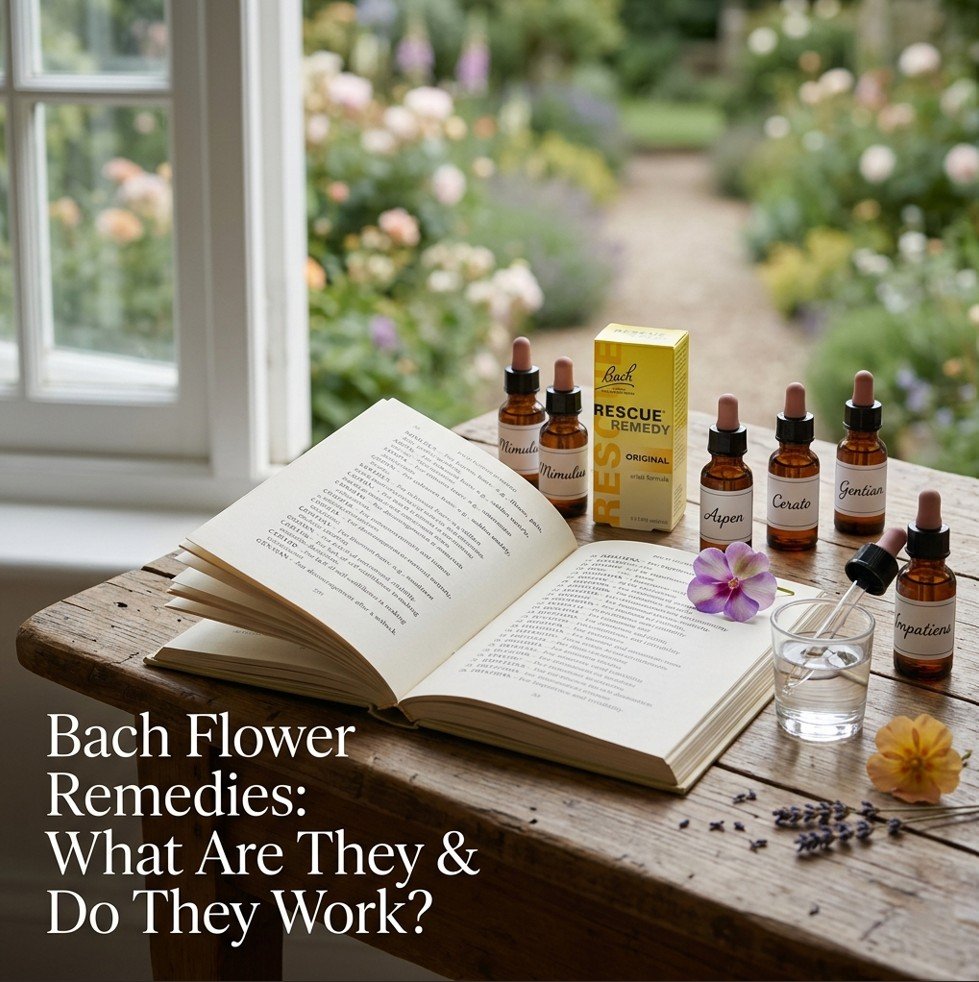
Bach flower remedies are a system of 38 diluted flower essences developed in the 1930s by Dr. Edward Bach, a British physician and homeopath. Each remedy is intended to address a specific negative emotional state — such as fear, uncertainty, loneliness, or despair — with the goal of restoring emotional balance and, by extension, supporting physical health. Bach believed that unresolved emotional conflicts were the root cause of many physical illnesses, and that by treating the emotion, the body would be better able to heal itself.
Today, Bach flower remedies are widely available in health food stores, pharmacies, and online. They are used by millions of people worldwide for stress, anxiety, depression, grief, trauma, and general emotional well-being. However, they remain deeply controversial in the scientific community. Critics point to a lack of plausible biological mechanism and a consistent pattern of placebo effects in clinical trials. Proponents argue that they are safe, gentle, and effective as a form of emotional self-care when used appropriately.
This article provides a clear-eyed, evidence-informed overview of Bach flower remedies: what they are, what the research says, how to use them safely, and whether they have any role in modern healthcare.
What Are Bach Flower Remedies? History and Philosophy
Bach flower remedies were created by Dr. Edward Bach (1886–1936), a British physician, bacteriologist, and homeopath. After a successful career in conventional medicine and later homeopathy, Bach became convinced that physical illness was often the result of unresolved emotional and psychological conflict. He believed that by treating the underlying emotional state — rather than the physical symptoms — the body’s natural healing processes could be restored.
Between 1930 and 1936, Bach identified 38 flower remedies, each associated with a specific negative emotion or personality trait. He also developed a combination remedy — “Rescue Remedy” — which blends five of the 38 remedies and is marketed for acute stress, panic, or emotional crisis.
Key Principles
- Treat the emotion, not the disease: Bach remedies are not intended to treat physical symptoms directly. Rather, they are meant to address the emotional state believed to underlie illness.
- Simplicity and accessibility: Bach intended his system to be simple enough for anyone to use at home for emotional self-care.
- Individualization: The choice of remedy (or blend of remedies) is based on the individual’s current emotional state, not their medical diagnosis.
- Vibrational energy: The remedies are prepared by infusing flowers in water (via sunlight or boiling), then diluting the resulting mother tincture. The final product is so highly diluted that it is unlikely to contain any molecules of the original plant material. Proponents believe that the “vibrational energy” or “imprint” of the flower is transferred to the water and, when ingested, restores emotional harmony.
It is important to note that this “vibrational energy” concept is not supported by any known scientific mechanism and is not accepted by mainstream science.
The 38 Remedies and Rescue Remedy
The 38 Bach flower remedies are grouped into seven emotional categories:
| Category | Example Remedy | Indication |
|---|---|---|
| Fear | Mimulus, Aspen, Rock Rose | Specific known fears (Mimulus); vague, unknown dread (Aspen); terror (Rock Rose) |
| Uncertainty | Cerato, Scleranthus, Gentian | Seeking others’ opinions (Cerato); indecision (Scleranthus); discouragement after setback (Gentian) |
| Lack of interest in present circumstances | Clematis, Honeysuckle, Wild Rose | Daydreaming, escapism (Clematis); living in the past (Honeysuckle); apathy, resignation (Wild Rose) |
| Loneliness | Water Violet, Heather, Impatiens | Aloofness, pride (Water Violet); need to talk about oneself (Heather); impatience, irritability (Impatiens) |
| Oversensitivity to influences and ideas | Centaury, Holly, Walnut | Inability to say no, being taken advantage of (Centaury); jealousy, suspicion, hatred (Holly); protection from outside influences during transition (Walnut) |
| Sadness or despair | Larch, Pine, Elm, Sweet Chestnut | Lack of confidence (Larch); guilt, self-blame (Pine); overwhelmed by responsibility (Elm); extreme mental anguish (Sweet Chestnut) |
| Cares for others at the expense of self | Chicory, Vervain, Vine | Possessive, conditional love (Chicory); over-enthusiasm, fanaticism (Vervain); domineering, inflexible (Vine) |
Rescue Remedy is a proprietary blend of five remedies: Rock Rose (terror), Impatiens (irritability), Clematis (unconsciousness), Star of Bethlehem (shock), and Cherry Plum (fear of losing control). It is marketed for acute stress, panic attacks, emotional crisis, and even physical trauma.
How Are Bach Flower Remedies Prepared and Used?
The traditional method of preparation involves floating flowers in a bowl of spring water and exposing them to sunlight for several hours. The resulting “mother tincture” is then diluted — typically 1 part tincture to 240 parts brandy (preservative). For the final consumer product, the mother tincture is further diluted, usually 2 drops of mother tincture in 30 ml of brandy and water. The final dilution is so extreme that, similar to high-dilution homeopathic remedies, it is unlikely to contain any molecules of the original plant material.
How to Use Them
- Oral drops: The most common method. A few drops (typically 2–4) are placed directly on the tongue or mixed into a glass of water, tea, or juice, and sipped at intervals throughout the day.
- Topical: Some people apply the drops to the lips, wrists, or temples.
- Bath: A few drops can be added to bathwater.
- Spray: Rescue Remedy is also available as a spray.
Alcohol Content
Traditional Bach flower remedies are preserved in brandy and contain approximately 27% alcohol (similar to a strong liqueur). Alcohol-free versions are available for those who wish to avoid alcohol, including children, pregnant women, people with alcohol sensitivity, and those in recovery.
How Are Bach Flower Remedies Proposed to Work? (Plausible vs. Implausible Mechanisms)
Implausible Mechanisms (No Scientific Support)
- Vibrational energy or memory of water: The concept that water retains an “imprint” or “memory” of the original flower after extreme dilution has no scientific basis and contradicts established laws of physics and chemistry.
- Flower essences affecting an “energy field” or “aura”: There is no scientific evidence for the existence of such fields or that flower essences interact with them.
- Remedies treating the “root emotional cause” of physical disease: While emotions can influence physical health (e.g., stress affecting the immune system), there is no evidence that specific flower essences have any effect on specific emotional states beyond placebo.
Plausible Mechanisms (Supported by Research)
- Placebo effect: This is the most well-supported explanation for any benefits people report from Bach flower remedies. The placebo effect is a genuine, measurable physiological phenomenon where a person experiences real improvement in symptoms simply because they believe a treatment will work. The ritual of taking drops, the expectation of benefit, and the attention from a practitioner all contribute to this effect.
- Therapeutic alliance and self-care ritual: The act of consulting with a practitioner, reflecting on one’s emotional state, and engaging in a daily ritual of taking drops may reduce anxiety and improve mood through psychological mechanisms unrelated to the remedy itself.
- Relaxation response: Taking a moment to pause, breathe, and take drops can serve as a mindfulness practice, reducing stress through well-established pathways.
What the Evidence Says: Systematic Reviews and Randomized Controlled Trials
The evidence base for Bach flower remedies has been evaluated in multiple systematic reviews. The overall picture is remarkably consistent: Bach flower remedies do not perform better than placebo in rigorous clinical trials.
1. Anxiety and Psychological Problems (Strongest Evidence, Consistently Negative)
The most comprehensive systematic review to date was published in 2009 in BMC Complementary and Alternative Medicine. The review included four randomized controlled trials: three on examination anxiety in students and one on ADHD in children. The authors concluded that “there is no evidence of benefit compared with a placebo intervention” for these conditions.
A 2014 update of the evidence confirmed the same findings: Bach flower remedies were not more efficacious than a placebo intervention for psychological problems, though they were probably safe.
A 2025 narrative review published in Current Psychiatry Reviews concluded that “the scientific evidence supporting the benefits of Bach flowers for anxiety and depression is still inconclusive, with some studies suggesting potential benefits in reducing anxiety symptoms and other showing no significant effects.” However, the same review noted that the overall findings indicate that the scientific evidence is limited.
2. Stress in Healthcare Professionals (Negative)
A 2024 randomized, placebo-controlled, double-blind clinical trial of Bach flower therapy for perceived stress in 87 primary care nursing professionals found that while there was a significant reduction in stress within both groups (intervention and placebo), there was no significant difference between the groups. The authors concluded that “the floral formula was not more effective than the placebo formula in reducing perceived stress.”
3. Dental Anxiety in Children (Negative)
A 2020 randomized controlled trial comparing Bach flower therapy to music therapy for dental anxiety in children found that while passive distraction with music and Bach flowers did not have a significant effect on physiological and projective measurement tools, a decrease in heart rate was observed in children exposed to Bach flowers. However, this does not constitute evidence of efficacy for anxiety reduction.
4. Anxiety in Overweight or Obese Adults (One Positive Study)
A 2021 randomized, double-blind, placebo-controlled trial of flower therapy (using a blend of six Bach remedies) for anxiety in overweight or obese adults found statistically significant improvements in the intervention group compared to placebo for anxiety, sleep patterns, binge eating, and resting heart rate.
This study is an outlier in an otherwise consistent literature. It is important to note that this trial was relatively small (81 participants), and the authors reported a significant multivariate effect. However, given the weight of the broader evidence (including multiple systematic reviews and other negative trials), this single positive study is insufficient to overturn the conclusion that Bach flower remedies are not more effective than placebo.
5. Food Cravings (Two Studies, Mixed Results)
A 2024 study reported on two trials evaluating Bach flower remedies for controlling food cravings. One study found an effect; the other did not. The authors called for further research.
6. Overall Evidence Quality
The 2009 systematic review rated the quality of the available evidence as “low or very low” due to small sample sizes, risk of bias, and the small number of studies. The 2010 systematic review by Ernst concluded that “the most reliable clinical trials do not show any differences between flower remedies and placebos.”
Bottom line on the evidence: The overwhelming majority of high-quality, placebo-controlled trials show that Bach flower remedies are not more effective than placebo for anxiety, stress, ADHD, or other psychological conditions. A small number of positive studies exist, but they are outweighed by the totality of the evidence and the findings of systematic reviews.
Comparison with Homeopathy
Bach flower remedies are often confused with homeopathy, and while there are similarities, they are distinct systems.
| Feature | Bach Flower Remedies | Homeopathy |
|---|---|---|
| Origin | Dr. Edward Bach (1930s) | Dr. Samuel Hahnemann (1796) |
| Core principle | Treat specific negative emotions; restore emotional balance | “Like cures like” — a substance that causes symptoms in a healthy person can treat similar symptoms in a sick person |
| Preparation | Sunlight infusion of flowers in water, then dilution | Serial dilution with succussion (vigorous shaking) |
| Dilutions | Typically less extreme than homeopathy (e.g., mother tincture diluted 1:240) | Often extremely high dilutions (e.g., 30C, 200C) where no molecules of the original substance remain |
| Remedies | 38 flower essences + Rescue Remedy | Thousands of remedies from plants, minerals, animals, and other sources |
| Diagnostic approach | Identify current negative emotion(s) | Identify totality of symptoms (physical, mental, emotional) to find matching remedy |
| Evidence base | Limited; systematic reviews show no benefit over placebo | Extensive; systematic reviews show no reliable evidence of efficacy for any condition |
How to Use Bach Flower Remedies Safely (Practical Guidance)
If you choose to use Bach flower remedies, the following guidelines can help minimize risks and set appropriate expectations.
Choosing a Remedy
- Self-selection: Many people choose their own remedy based on online questionnaires or books. This is generally safe but not guided by professional training.
- Consulting a practitioner: Some naturopaths, homeopaths, herbalists, and Bach Foundation registered practitioners offer consultations to help select appropriate remedies.
Dosing
- Typical dose: 2–4 drops, 4 times daily. The drops can be placed directly on the tongue, or mixed into a glass of water and sipped at intervals throughout the day.
- Rescue Remedy: 2–4 drops as needed for acute stress or panic.
What to Expect
- Do not expect immediate or dramatic results. If there is any effect, it is likely subtle and gradual.
- Individual responses vary. Some people report feeling calmer or more centered; others notice no difference.
- If you have not noticed any improvement after 4–6 weeks of consistent use, it is unlikely that the remedy is providing benefit beyond placebo.
Best Used As
- Self-care and emotional support: A gentle, low-risk ritual for stress reduction.
- Complementary approach: Alongside — not instead of — evidence-based care for diagnosed mental health conditions (CBT, therapy, medication).
Safety, Side Effects, and Who Should Avoid Bach Flower Remedies
General Safety
Bach flower remedies are generally considered safe for most people. Because they are extremely diluted, they do not contain significant amounts of any pharmacologically active substance. The 2009 systematic review concluded that “based on the reported adverse events in these six trials, BFRs are probably safe.”
Side Effects
- Very few or none: Most studies report no adverse events or only minor, transient effects.
- Reported rare side effects: Some studies have reported headaches and skin eruptions in the intervention group, but these were comparable to the placebo group.
- Alcohol content: Traditional Bach remedies are preserved in brandy and contain approximately 27% alcohol. Alcohol-free versions are available.
Who Should Avoid or Use Caution
- Pregnant and breastfeeding women: Traditional Bach flower remedies contain alcohol, which should be avoided during pregnancy and breastfeeding due to risk of birth defects and developmental harm. Alcohol-free versions are available and are likely safe, but consult a healthcare provider before use.
- Children: Alcohol-free versions are recommended. Consult a pediatrician before giving any supplement to a child, especially young children.
- People with alcohol sensitivity or in recovery from alcohol use disorder: Use alcohol-free formulations.
- People taking disulfiram (Antabuse) or metronidazole (Flagyl): These medications interact with alcohol. Do not use traditional (alcohol-containing) Bach remedies. Alcohol-free versions are safe.
The Most Important Safety Consideration
The greatest risk of Bach flower remedies — as with any complementary therapy — is delaying or replacing evidence-based medical or mental health treatment.
- Do not use Bach remedies as a substitute for professional mental health care for moderate to severe anxiety, depression, panic disorder, or other psychiatric conditions.
- Do not stop prescribed medications (antidepressants, anxiolytics, antipsychotics) to try Bach remedies.
- Do not delay seeking medical attention for serious physical or mental health symptoms.
FAQ
Q1: Do Bach flower remedies work for anxiety?
According to the best available evidence — including multiple systematic reviews and placebo-controlled randomized trials — Bach flower remedies are not more effective than placebo for anxiety. Some individual studies have reported positive results, but the totality of the evidence does not support efficacy beyond placebo.
Q2: Are Bach flower remedies the same as homeopathy?
No. While both systems use extreme dilutions, they are based on different principles. Homeopathy is based on “like cures like”; Bach flower remedies are based on treating specific negative emotions. The preparation methods and the evidence bases also differ.
Q3: Is Rescue Remedy safe for panic attacks?
Rescue Remedy is generally safe for most people (in alcohol-free form). However, there is no evidence that it is effective for panic attacks beyond placebo. If you experience recurrent panic attacks, see a mental health professional — cognitive behavioral therapy and, if needed, medication are evidence-based treatments.
Q4: Can I take Bach flower remedies with my antidepressant medication?
There are no known drug interactions between Bach flower remedies and antidepressant medications because the remedies contain no pharmacologically active ingredients. However, traditional formulations contain alcohol, which may interact with some medications (e.g., disulfiram, metronidazole). Alcohol-free versions are safe. Never stop your antidepressant to try Bach remedies.
Q5: How long does it take for Bach flower remedies to work?
If they have any effect beyond placebo, it is likely subtle and gradual. Most users take the remedies for 2–4 weeks before evaluating whether they have noticed any benefit. If you have not noticed any improvement after 4–6 weeks, it is unlikely that the remedy is providing meaningful benefit beyond placebo.
Q6: Are Bach flower remedies safe for children?
Alcohol-free versions are generally safe for children. However, consult a pediatrician before giving any supplement to a child. Do not use Bach remedies as a substitute for professional mental health care for a child with anxiety, depression, or behavioral concerns.
Key Takeaways
- Bach flower remedies are a system of 38 diluted flower essences developed in the 1930s by Dr. Edward Bach, intended to address specific negative emotional states and restore emotional balance.
- The proposed mechanisms — including “vibrational energy” and “memory of water” — are not supported by science. The most plausible explanation for any perceived benefits is the placebo effect, therapeutic alliance, and the self-care ritual.
- Systematic reviews and the majority of placebo-controlled randomized trials show that Bach flower remedies are not more effective than placebo for anxiety, stress, ADHD, or other psychological conditions.
- Bach flower remedies are generally safe, but traditional formulations contain alcohol (approximately 27%). Alcohol-free versions are available and recommended for children, pregnant and breastfeeding women, and people in recovery.
- The greatest risk is delaying or replacing evidence-based medical or mental health care. Do not use Bach remedies as a substitute for therapy, medication, or emergency care.
- If you choose to use Bach flower remedies, use them as a gentle, low-risk tool for emotional self-care — not as a treatment for medical conditions — and always inform your healthcare providers.
Internal Links Used
- Homeopathy: real treatment or placebo? The evidence — in the comparison with homeopathy section
- Naturopathy vs. conventional medicine: key differences — in the FAQ and safety section
- Natural remedies for anxiety without medication — in the anxiety section, for readers seeking evidence-supported alternatives
- Homeopathy: real treatment or placebo? The evidence – in the comparison section (already there)
Add: Colloidal silver: alternative remedy or dangerous myth? – in the unproven remedies section - Natural remedies for anxiety without medication – in the anxiety section
- Essential oils that relieve stress and anxiety – in the emotional wellness section
Sources
- Ernst, E. (2010). “Bach flower remedies: a systematic review of randomised clinical trials.” Swiss Medical Weekly. PMID: 20734279.
- Thaler, K., et al. (2009). “Bach Flower Remedies for psychological problems and pain: a systematic review.” BMC Complementary and Alternative Medicine. PMID: 19470153.
- WebMD. “Bach Flower Remedies: Uses, Side Effects, and More.”
- Eurekaselect. (2025). “Is there Any Role for Bach Flowers, Lavender Oil and Hypericum in Psychiatry?” Current Psychiatry Reviews.
- Ernst, E. (2024). “Bach Flower Remedies for perceived stress of nurses: a randomized, placebo-controlled, double-blind clinical trial.”
- “Efficacy of Flower Therapy for Anxiety in Overweight or Obese Adults: A Randomized Placebo-Controlled Clinical Trial.” Journal of Alternative and Complementary Medicine. 2021. PMID: 33719435.
- “Bach flower remedies: a systematic review of randomised clinical trials.” Swiss Medical Weekly. 2010.
- “Evaluation of The Role of Music and Bach Flower Remedies in The Management of Anxious Pediatric Dental Patients.” 2024.
- “Do Bach Flower Remedies Work For Anxiety? | Evidence Check Guide.” Well Whisk. 2025.
- “Do Feel Bach! Flower Remedies Work? Science, Placebo & Practitioner Insights.” 2025.