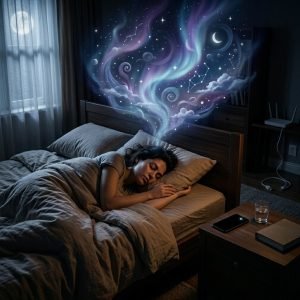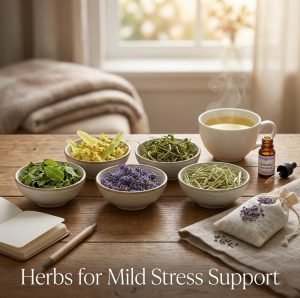
A poor night’s sleep affects everything — mood, concentration, energy, and long‑term health. Before reaching for prescription sedatives, many Europeans have traditionally turned to herbs from their gardens and meadows. Valerian, lemon balm, lavender, linden, and hops have all been used for generations — not as powerful sleeping pills, but as gentle supporters of relaxation and sleep initiation.
This article explores the traditional use, modern evidence, safe preparation, and important limitations of these five European herbs. You will also learn when self‑care is appropriate and when a doctor should be consulted.
What Causes Difficulty Sleeping?
Sleep problems exist on a spectrum. Occasional difficulty falling asleep — after stress, caffeine, or an irregular schedule — is different from chronic insomnia.
Common causes of temporary sleep disruption:
- Stress, worry, or rumination
- Caffeine or alcohol late in the day
- Screen use before bed
- Irregular sleep schedule
- Physical discomfort (pain, indigestion)
- Hormonal changes (menstrual cycle, menopause)
- Environmental factors (noise, light, temperature)
Chronic insomnia (lasting more than 3 months, occurring at least 3 nights per week) requires medical evaluation. It may be linked to anxiety disorders, depression, sleep apnoea, restless legs syndrome, or other medical conditions.
Herbal sleep supports are best suited for mild, occasional, temporary sleep difficulties — not chronic insomnia. They are not a substitute for treating underlying conditions.
Best European Herbs Traditionally Used for Sleep Support
The following five herbs are well‑documented in European folk medicine and have不同程度的 modern research.
1. Valerian (Valeriana officinalis)
What it is: A tall perennial herb native to Europe and Asia. The root — which smells distinctly like old socks — is the medicinal part.
Traditional use: Valerian root has been used since ancient Greece and Rome for restlessness and sleep difficulties. In medieval Europe, it was called “all‑heal”. German Commission E approved valerian for restlessness and sleep disorders.
What modern research suggests: Dozens of clinical trials have examined valerian for sleep. Results are mixed. Some studies show modest improvements in sleep quality and reduced time to fall asleep. Others find no difference from placebo. A 2020 meta‑analysis concluded that valerian may improve sleep quality with few side effects, but evidence is not strong.
Best use case: For people who take a long time to fall asleep (prolonged sleep latency). May work better after 2–4 weeks of regular use.
Key safety note: Valerian is generally safe. Some people feel groggy the next morning. Rarely, it can cause vivid dreams or mild digestive upset. Do not combine with alcohol or sedative medications without medical advice.
2. Lemon Balm (Melissa officinalis)
What it is: A lemon‑scented perennial herb from the mint family, native to southern Europe.
Traditional use: Lemon balm tea has been drunk for centuries to calm nerves and promote sleep, especially when sleeplessness is linked to stress or worry.
What modern research suggests: Several human studies show that lemon balm reduces anxiety and improves mood. Direct sleep studies are fewer, but its calming effects are well‑established. Lemon balm is often combined with valerian — one study found that a valerian‑lemon balm combination improved sleep quality in children with restlessness.
Best use case: When sleep difficulty is clearly driven by rumination, worry, or mild anxiety. Best taken as a tea 30–60 minutes before bed.
Key safety note: Lemon balm is very safe. May potentiate sedative medications and thyroid hormone replacement (rare). People on thyroid medication should consult a doctor before regular use.
3. Lavender (Lavandula angustifolia)
What it is: A fragrant shrub native to the Mediterranean. The flowers are used.
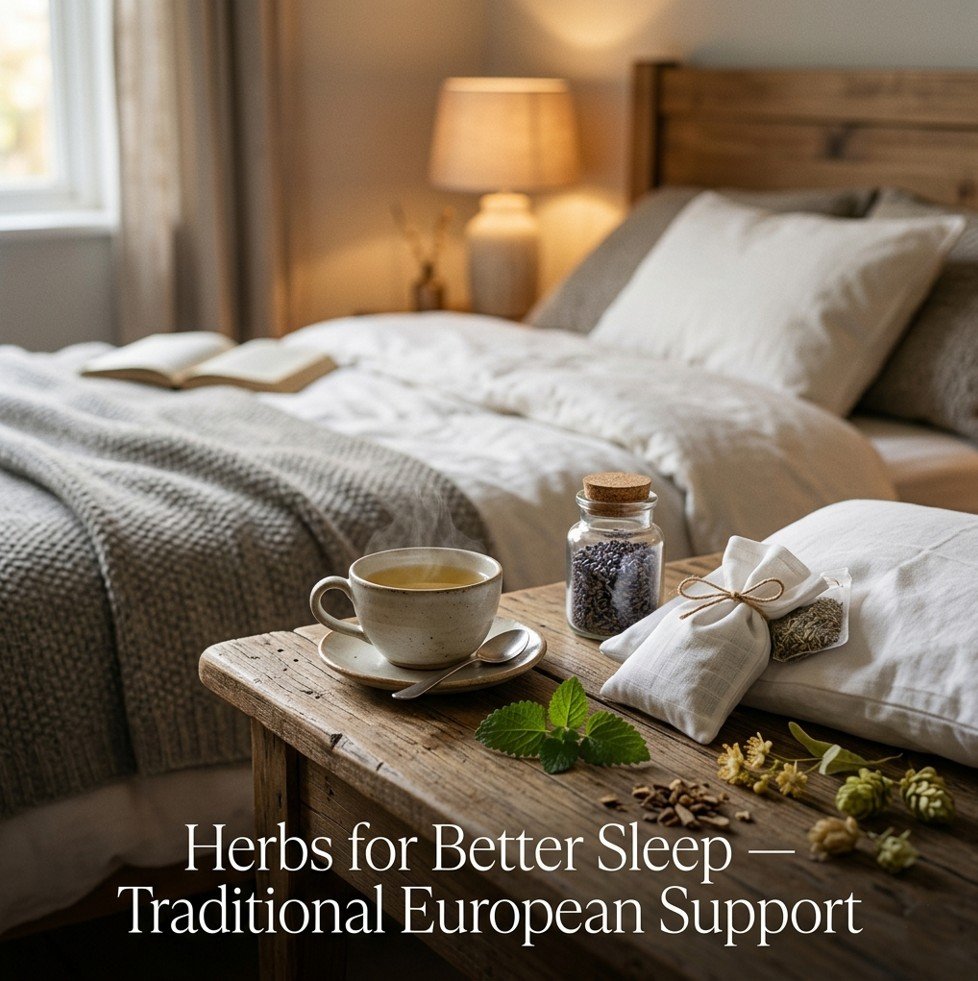
Traditional use: Lavender has been used in European herbalism for nervous exhaustion, headaches, and sleep difficulties. Dried lavender flowers were placed in pillows (“sleep pillows”) to encourage rest.
What modern research suggests: Unlike most herbs, lavender is better studied as an aromatic (inhaled) rather than ingested. Several clinical trials show that lavender essential oil inhalation improves sleep quality in people with mild insomnia and in post‑partum women. Oral lavender oil capsules (Silexan) have been studied for anxiety — with positive results — but oral use for sleep has less evidence.
Best use case: A few drops of lavender essential oil on a tissue near the pillow, or a lavender pillow spray. Also effective as a warm bath with 5–10 drops of oil (mixed with a carrier oil or milk).
Key safety note: Lavender essential oil is for external or inhalation use only. Do not ingest undiluted essential oil. Some people experience skin irritation — always dilute in a carrier oil. Lavender tea (made from dried flowers) is safe but less studied.
4. Linden (Tilia cordata / T. platyphyllos)
What it is: The flowers of the European lime tree (linden or basswood). Not related to the citrus lime.
Traditional use: Linden flower tea (“tilleul” in French) is a classic European bedtime drink, especially in France and Germany. It is traditionally used for nervous tension, mild anxiety, and as a gentle sleep aid for children and the elderly.
What modern research suggests: Very limited. Laboratory studies show that linden contains flavonoids with mild sedative and antispasmodic effects. No high‑quality human trials exist. Traditional use is the main support.
Best use case: A warm cup of linden tea before bed for people who find chamomile too mild but valerian too strong. It has a pleasant, honey‑like sweetness.
Key safety note: Linden is generally very safe. Rare allergic reactions (ragweed cross‑sensitivity). Do not harvest linden flowers from urban trees (pollution). Use only from clean sources.
5. Hops (Humulus lupulus)
What it is: The climbing plant whose female flowers (“cones”) are used to flavour beer. Hops are native to Europe and western Asia.
Traditional use: Beer has a long association with sleep — but the alcohol is not the only factor. Hops have been used as a sedative in European folk medicine since the Middle Ages. Hop‑filled pillows were recommended for insomnia.
What modern research suggests: Hops contain 2‑methyl‑3‑buten‑2‑ol, a compound with sedative properties. Several small human trials (often combining hops with valerian) show modest improvements in sleep quality. A 2012 study found that a non‑alcoholic hop‑containing beer improved sleep in students. Evidence is promising but not strong.
Best use case: As a tea (1 teaspoon dried hops per cup, steep 10 minutes) 30 minutes before bed. The taste is very bitter — honey helps. Often combined with lemon balm or chamomile.
Key safety note: Hops should be avoided by people with oestrogen‑sensitive conditions (breast cancer, endometriosis) because hops have phytoestrogenic activity. Do not use during pregnancy or breastfeeding. May cause drowsiness — avoid driving after use.
How to Use These Herbs at Home
Teas (infusions) — best for most people
Valerian root tea (decoction needed):
- Use 1 teaspoon (2–3 grams) of dried, crushed valerian root per cup (250 ml)
- Simmer in water for 10–15 minutes (not just steep — root requires decoction)
- Strain and drink 30–60 minutes before bed
- Taste is unpleasant (earthy, bitter) — mix with peppermint or lemon balm
Lemon balm tea (simple infusion):
- 1–2 teaspoons dried lemon balm leaves per cup
- Pour boiling water, steep 5–10 minutes
- Drink 30–60 minutes before bed
Lavender tea (infusion):
- 1 teaspoon dried lavender flowers per cup
- Steep 5 minutes (longer becomes soapy)
- Drink 30 minutes before bed — mild, floral flavour
Linden tea (infusion):
- 1–2 teaspoons dried linden flowers per cup
- Steep 8–10 minutes
- Drink warm before bed — naturally sweet
Hops tea (infusion):
- 1 teaspoon dried hops cones per cup
- Steep 10 minutes (covered to retain volatile oils)
- Add honey to mask bitterness
Blends (more pleasant and effective)
Traditional European sleep blends often combine:
- Valerian (for sleep initiation) + Lemon balm (for calming) + Hops (for sedation)
- Linden + Lemon balm + Chamomile (gentle, child‑friendly)
Example blend: 2 parts lemon balm, 1 part linden, 1 part chamomile, ½ part valerian (optional).
Lavender bath
- Add 5–10 drops of lavender essential oil to 1 tablespoon of carrier oil (almond, olive) or a cup of full‑fat milk
- Add to warm bathwater
- Soak for 20 minutes before bed
Sleep pillow (traditional)
- Fill a small cloth bag with dried lavender flowers and hops
- Place inside your pillowcase
- Replace every 2–3 months when scent fades
Tinctures
Commercial tinctures of valerian, lemon balm, and hops are available. Typical doses: 2–4 ml (40–80 drops) 30 minutes before bed. Follow product instructions. Alcohol‑free glycerites are available for children or people avoiding alcohol.
When the Season Matters
Harvesting for home use:
- Valerian root: Dig up roots in autumn of the second year (after flowering). Clean, slice, and dry slowly at low temperature.
- Lemon balm: Harvest leaves just before flowering (mid‑summer). Best used fresh or dried.
- Lavender: Harvest flowers when the bottom third of the spike has opened (mid‑summer). Dry in bunches.
- Linden: Harvest flowers with the pale bracts in early summer (June). Dry quickly in shade.
- Hops: Harvest cones in late summer (August–September) when they are papery and yellow‑green inside.
Buying advice: For sleep herbs, quality matters. Buy organic from reputable European suppliers. Old, stale valerian root loses potency. Good valerian smells strong (like old socks) — that is normal.
Storage: Dried herbs in airtight glass jars away from light and heat. Valerian root retains potency for 1–2 years; leaves and flowers for 1 year.
Safety, Interactions, and When to See a Doctor
This article is for educational purposes only and does not replace medical advice, diagnosis, or treatment. Persistent, severe, or unclear symptoms should be discussed with a qualified healthcare professional.
General precautions for sleep herbs:
- Do not drive or operate machinery after taking sleep herbs until you know how they affect you
- Start with a low dose (half a cup of tea) to test sensitivity
- Do not use sleep herbs every night for more than 2–4 weeks without a doctor’s review
- Do not combine with alcohol (increases sedation risk)
Specific safety notes:
| Herb | Contraindications / Cautions |
|---|---|
| Valerian | Generally safe. May cause morning grogginess. Avoid with sedatives, benzodiazepines, barbiturates. |
| Lemon balm | Very safe. Use caution with thyroid medication and sedatives. |
| Lavender | Essential oil: external only, dilute, not for ingestion. Tea: safe. |
| Linden | Very safe. Avoid urban harvesting (pollution). Rare allergy. |
| Hops | Avoid in oestrogen‑sensitive conditions (breast cancer, endometriosis). Avoid in pregnancy/breastfeeding. |
Pregnancy and breastfeeding:
- Lemon balm tea in moderation is generally considered low risk (consult doctor)
- Lavender tea in small amounts likely safe; essential oil should be avoided (insufficient safety data)
- Valerian — insufficient safety data; avoid or use only under professional guidance
- Linden — insufficient safety data; avoid
- Hops — contraindicated due to hormonal effects
Drug interactions:
- All sedative herbs may potentiate benzodiazepines, Z‑drugs (zolpidem, zopiclone), barbiturates, and alcohol
- Valerian may theoretically interact with certain antidepressants (SSRIs) — rare
- Hops may interact with hormonal medications (birth control, hormone replacement therapy)
Red flags — when herbs are not enough:
See a doctor if you experience:
- Difficulty sleeping most nights for more than 3 weeks
- Waking up gasping, choking, or with a very dry mouth (possible sleep apnoea)
- Uncontrollable leg movements at night (restless legs syndrome)
- Severe daytime fatigue affecting safety (e.g., driving)
- Depression, anxiety, or other mood symptoms alongside insomnia
- Sleep problems that started after a new medication
Important: Do not stop prescribed sleep or anxiety medication to use herbs without medical supervision. Withdrawal from benzodiazepines can be dangerous.
FAQ
What is the best herb for falling asleep?
Valerian has the most research for reducing sleep latency (time to fall asleep), but evidence is mixed. For many people, lemon balm or linden tea is gentler and sufficient. Individual response varies — try one herb at a time.
Can I take sleep herbs every night?
For short periods (2–4 weeks), yes. Long‑term nightly use is not well studied. If you need a sleep aid every night for months, see a doctor to investigate underlying causes.
Do sleep herbs cause next‑day drowsiness?
Valerian can cause morning grogginess in some people, especially at higher doses. Lemon balm, linden, and lavender tea rarely cause next‑day effects. Start with a low dose on a night before you do not need to drive early.
Are these herbs safe for children?
Linden and lemon balm tea in small amounts (1–2 tablespoons for children over 2 years) have traditional use. Chamomile is also gentle. Valerian and hops are not recommended for young children without medical advice. Always consult a paediatrician.
Can I use lavender oil in a diffuser for sleep?
Yes. Diffusing lavender essential oil in the bedroom is safe and has some research support. Use 3–5 drops in a water diffuser. Keep diffusers clean to prevent mould.
Is it safe to combine all five herbs?
Combining multiple sedative herbs increases the risk of excessive drowsiness. A blend of 2–3 is safer. A classic combination is valerian + lemon balm + hops. Start with a low dose.
Key Takeaways
- Five European herbs have traditional use for sleep support: valerian, lemon balm, lavender, linden, and hops.
- Valerian has the most research but mixed results; lemon balm and linden are gentler and very safe.
- Lavender is most effective as an aroma (inhalation or bath), not as a tea.
- Hops are effective but contraindicated in hormone‑sensitive conditions and pregnancy.
- Herbs are for mild, occasional sleep difficulties — not chronic insomnia.
- Persistent sleep problems require medical evaluation, not just herbs.
Internal Links Used
- Chamomile: benefits, uses, safety, and how to prepare it — placed in teas section (chamomile as alternative)
- Best European herbs for digestion support — placed in causes section (digestion and sleep link)
- Lemon balm: calming uses and how to brew it properly — placed in lemon balm section
Sources
- European Medicines Agency (EMA) – Community herbal monographs: Valerianae radix, Melissae folium, Lavandulae flos, Tiliae flos, Lupuli flos.
- German Commission E Monographs – Valerian root, hops, lavender, lemon balm.
- Leach, M. J., & Page, A. T. (2015). Herbal medicine for insomnia: A systematic review and meta‑analysis. Sleep Medicine Reviews, 24, 1-12.
- Shinjyo, N., et al. (2020). Valerian for sleep: A systematic review and meta‑analysis. Journal of Evidence‑Based Integrative Medicine, 25, 1-10.
- Lillehei, A. S., & Halcón, L. L. (2014). A systematic review of lavender oil for sleep. Journal of Alternative and Complementary Medicine, 20(5), A75.
- National Center for Complementary and Integrative Health (NCCIH) – Valerian, lavender.