Deep in Europe’s birch forests grows a fungus that has accompanied humans for thousands of years. Unlike the porcini or chanterelle, the birch polypore is not a kitchen mushroom. It is tough, leathery, and bitterly astringent. Yet our ancestors carried it, stored it, and used it for specific purposes — from treating intestinal parasites to stopping bleeding.
This profile examines Fomitopsis betulina (formerly Piptoporus betulinus), a mushroom native to Europe and parts of North America and Asia. We will explore its identity, traditional European applications, what modern science is investigating, how it is prepared, and — crucially — why you should not forage it without expert guidance.
What Is Birch Polypore?
Scientific name: Fomitopsis betulina (formerly Piptoporus betulinus)
Appearance:
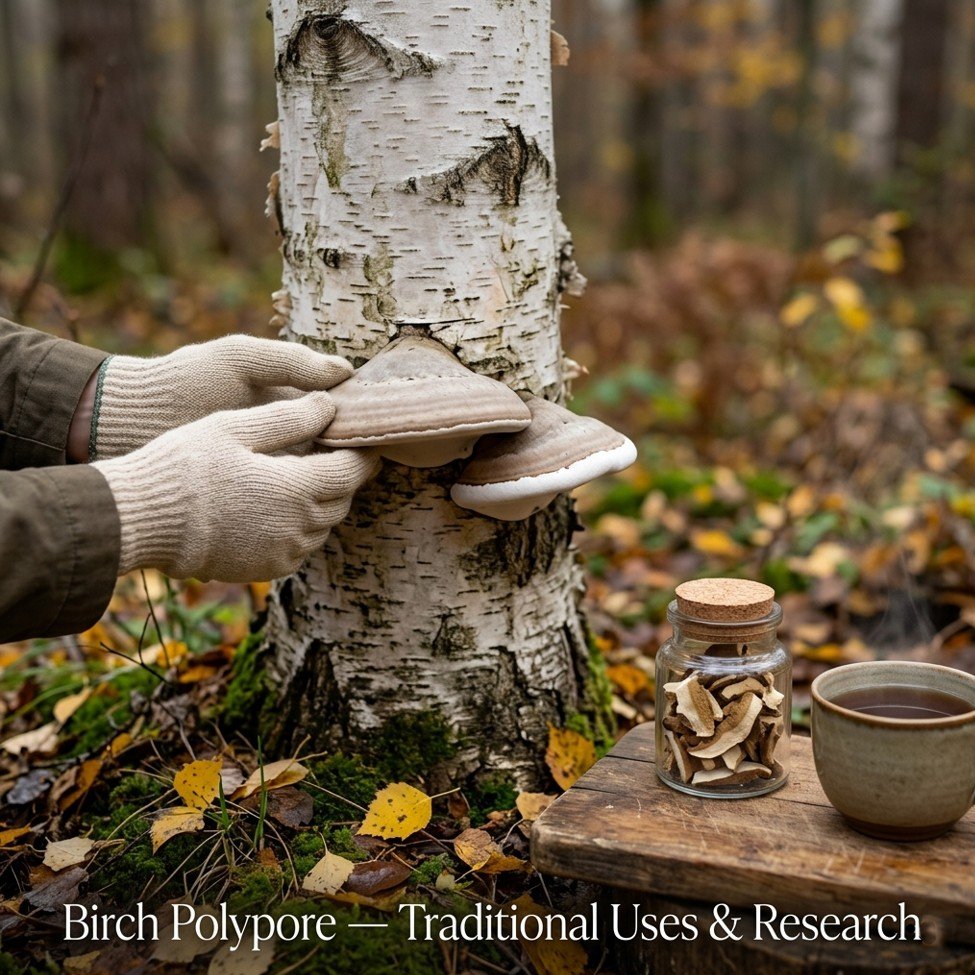
- Bracket fungus (hoof‑ or kidney‑shaped)
- 5–20 cm across, 2–8 cm thick
- Upper surface: smooth, pale grey to brown, with a distinct margin
- Underside (pores): white to cream, very small pores (2–4 per mm)
- Flesh: white, corky, spongy when young, becoming tough and leathery
- Odour: pleasant, mushroomy, sometimes fruity or almond‑like
- Taste: extremely bitter and astringent
Habitat: Grows exclusively on dead, dying, or weakened birch trees (Betula species). It is a parasite that eventually kills its host, then continues to live on the dead wood.
Season: Fruiting bodies appear from late summer to autumn (August–November in Central Europe). Old brackets persist through winter and into the next year.
Distribution: Throughout Europe, especially in birch‑rich forests of Scandinavia, Germany, Poland, the Baltic states, the British Isles, and Russia. Also found in North America where birch grows.
Key identification features:
- Always on birch (never on oak, beech, or pine — that would be a different fungus)
- White porous underside
- No stem (sessile bracket)
- Tough, not fleshy
Traditional Use in Europe
Birch polypore has one of the longest documented histories of any European medicinal fungus.
Ötzi the Iceman (c. 3300 BCE):
The most famous evidence comes from the Tyrolean Alps. Ötzi carried two pieces of birch polypore on a leather thong. Researchers believe they were not food (the mushroom is too bitter and tough) but were used medicinally. Two main theories exist:
- Antiparasitic: Ötzi had whipworm (Trichuris trichiura) eggs in his intestines. Birch polypore contains compounds active against certain intestinal parasites.
- Antibacterial: The fungus could have been used as a styptic (to stop bleeding) or to treat wounds.
European folk medicine (medieval to 19th century):
| Region | Traditional use |
|---|---|
| Germany & Austria | “Birkenporling” – used to stop bleeding, as a styptic powder for wounds, and for intestinal complaints. |
| Britain | “Razor strop fungus” – the tough, leathery flesh was used to sharpen razors. Also used as a styptic for shaving cuts. |
| Scandinavia | Dried and ground into powder for nappy rash and minor skin irritations. Also used as a worm remedy for children. |
| Poland & Eastern Europe | Infusion used for stomach ailments and as a mild laxative. Powder applied to bleeding wounds. |
| Russia | Used in folk veterinary medicine for horses and cattle with digestive parasites. |
Other traditional uses (non‑medicinal):
- Tinder for fire‑starting (the dry flesh catches sparks easily)
- Razor strops (hence the name)
- Hat‑making stiffener (cut into shapes)
- Insect repellent (smouldering brackets)
Important note: Traditional use does not equal proven effectiveness. These historical applications are valuable clues for modern research, but they are not medical recommendations.
What Research Is Exploring
Modern scientific interest in birch polypore began in earnest after Ötzi’s discovery. Research is still early‑stage, and most studies are laboratory (in vitro) or animal models. No high‑quality human trials have been published.
Promising areas of investigation (not confirmed in humans):
1. Antiparasitic activity
- Birch polypore contains polyporenic acid C and other triterpenoids.
- A 2013 study found that extracts inhibited the growth of Trichuris (whipworm) larvae in vitro. This supports the Ötzi hypothesis.
- However, no human studies have tested whether eating or drinking birch polypore eliminates intestinal worms.
2. Antibacterial properties
- Several studies (2015, 2018) have shown that birch polypore extracts inhibit Staphylococcus aureus (including MRSA) and Escherichia coli in petri dishes.
- The active compounds appear to be betulinic acid and related triterpenes.
- Critical caveat: Laboratory activity does not translate directly to human infection treatment. You cannot treat a wound infection by applying raw fungus.
3. Anti‑inflammatory and immune‑modulating effects
- Polysaccharides from birch polypore have shown activity in cell cultures and animal models, reducing markers of inflammation.
- Some researchers speculate about possible support for inflammatory bowel conditions — but this is purely speculative.
4. Antiviral interest
- Preliminary in vitro studies suggest possible activity against certain viruses (influenza, herpes simplex). Evidence is very weak.
What research does NOT show:
- Birch polypore does not cure cancer (despite some sensationalised headlines — ignore them)
- Birch polypore is not a proven treatment for any human disease
- No human trials have established safe or effective doses
Level of evidence overall: Very low. Promising laboratory findings, but no clinical evidence. Birch polypore is a research subject, not a proven medicine.
How It Is Prepared
In European folk tradition, birch polypore was not eaten fresh. It is too tough, bitter, and indigestible. Instead, it was dried and processed.
Traditional preparation methods:
1. Dried powder (styptic)
- Harvest young, white brackets (older ones become too hard)
- Slice thinly and dry completely (in a warm, airy place or low oven <50°C)
- Grind to a fine powder in a mortar or coffee grinder
- Apply directly to minor bleeding wounds (shaving cuts, small abrasions)
- Modern safety note: Unsterilised mushroom powder can introduce bacteria or fungal spores into a wound. Not recommended without medical guidance.
2. Decoction (tea)
- Slice 5–10 grams of dried birch polypore
- Simmer in 500 ml water for 30–60 minutes (not just steep — decoction is needed)
- Strain and drink
- Traditionally used for intestinal complaints or as a laxative
- Modern caution: Extremely bitter. No established safe dose. Not recommended for self‑treatment.
3. Tincture (alcohol extract)
- Some modern herbalists make a tincture using 40–50% alcohol
- Dried, powdered mushroom soaked in alcohol for 4–6 weeks
- Traditional dose not standardised
What you should NOT do:
- Do not eat raw birch polypore (indigestible, may cause gastrointestinal distress)
- Do not apply raw mushroom to open wounds (risk of infection)
- Do not use birch polypore as a substitute for prescribed antiparasitic or antibiotic medication
Important disclaimer: AirPres does not recommend self‑treatment with birch polypore. The evidence is insufficient. If you are interested in its traditional uses, discuss with a qualified herbalist or doctor — but understand that modern medicine offers more reliable alternatives.
Can You Forage It Yourself?
Birch polypore is relatively easy to identify because of its exclusive association with birch trees. However, there are important risks.
Look‑alikes (potential dangers):
| Look‑alike | Differences | Danger level |
|---|---|---|
| Red‑belted conk (Fomitopsis mounceae / F. pinicola) | Grows on conifers (pine, spruce), has a red or orange band on the margin. Not deadly but different chemistry. | Low (not toxic but not the same species) |
| Tinder fungus (Fomes fomentarius) | Grows on beech, birch, and other hardwoods. Grey, hoof‑shaped, much harder. Also used traditionally (different properties). | Low (not toxic, but different uses) |
| Artist’s conk (Ganoderma applanatum) | Grows on many hardwoods, brown upper surface with white pore surface that bruises brown. Not toxic. | Low |
| Inedible bracket fungi (various) | Many bracket fungi are not poisonous but are woody and indigestible. | Low toxicity risk, but misidentification leads to useless harvest |
Main risks of self‑foraging:
- Harvesting from polluted birch trees (roadsides, industrial areas — heavy metal accumulation)
- Mistaking a different, potentially toxic bracket fungus (though serious toxicity is rare in polypores)
- Over‑harvesting (take only from abundant populations, leave most brackets for ecosystem)
Recommendation: If you want to forage birch polypore, go with an experienced mycologist. Never rely on apps alone. And understand that “edible” does not mean “good to eat” — this is a medicinal mushroom, not a food.
Sustainability note: Birch polypore is common across Europe and not threatened. However, it plays a role in forest decomposition. Harvest only dead brackets or take no more than 20% from a single tree.
Safety, Side Effects, and Look‑Alikes
This article is for educational purposes only and does not replace medical advice, diagnosis, or treatment. Never use birch polypore to self‑treat a serious condition without professional guidance.
Known side effects (from traditional use and limited reports):
- Bitter taste may cause nausea in sensitive individuals
- Large amounts may cause diarrhoea (traditional laxative effect)
- Allergic reactions are rare but possible (skin rash, digestive upset)
Who should avoid birch polypore:
- Pregnant or breastfeeding women (no safety data)
- Children (no safety data)
- People with gastrointestinal ulcers or inflammatory bowel disease (may irritate)
- People taking anticoagulant medication (theoretical interaction due to styptic properties — but unstudied)
- People with known mushroom allergies
Potential drug interactions:
- None formally studied. The styptic (blood‑clotting) effect observed in traditional use suggests possible interaction with blood thinners (warfarin, apixaban). Avoid.
What to do if you have adverse effects:
- Discontinue use immediately
- If severe symptoms (vomiting, difficulty breathing, swelling), seek emergency medical care
Important warning about contamination:
Wild mushrooms absorb heavy metals and environmental pollutants. Only harvest from clean, remote birch forests away from roads, agriculture, and industry.
FAQ
Is birch polypore edible?
Technically, it is not toxic, but it is not edible in the culinary sense. It is tough, bitter, and indigestible. It is used as a medicinal preparation (powder, decoction, tincture) — not as food.
Did Ötzi the Iceman really use birch polypore as medicine?
He carried two pieces. The leading hypothesis is medicinal use, either as an antiparasitic (he had whipworm) or as a styptic. It is the oldest evidence of medicinal mushroom use in Europe, but we cannot be 100% certain.
Can birch polypore cure intestinal parasites?
No cure has been proven. Laboratory studies show activity against whipworm larvae in a petri dish, but no human trials exist. Modern antiparasitic drugs are effective and safe. Do not replace them with birch polypore.
Is birch polypore safe for dogs or other pets?
No safety data. Avoid giving any wild mushroom to pets unless under veterinary guidance.
Can I buy birch polypore products?
Yes, some European herbal suppliers sell dried birch polypore powder or tincture. Quality varies. There is no regulatory standard. Be extremely sceptical of health claims.
What is the difference between birch polypore and chaga?
Both grow on birch trees, but they are different fungi. Chaga (Inonotus obliquus) is a black, charcoal‑like sterile conk. Birch polypore is a hoof‑shaped bracket with a white pore surface. Do not confuse them — they have different traditional uses and chemical profiles.
Key Takeaways
- Birch polypore (Fomitopsis betulina) grows exclusively on birch trees and has a 5,300‑year history of use in Europe (Ötzi the Iceman).
- Traditional uses include: styptic (stops bleeding), antiparasitic (intestinal worms), and treatment for minor skin irritations.
- Modern research is preliminary — laboratory studies show antibacterial, antiparasitic, and anti‑inflammatory activity, but no human trials confirm effectiveness.
- Preparation: dried powder (external) or decoction (internal). Raw mushroom is not edible.
- Do not self‑treat with birch polypore. It is a research subject, not a proven medicine. Always consult a doctor for infections or parasites.
- Foraging is possible but requires expert identification and clean habitats. Look‑alikes exist, though most are not highly toxic.
Internal Links Used
- Chaga: traditional uses, preparation, and safety — placed in FAQ comparison section
- Turkey tail mushroom and immune interest — placed in research section
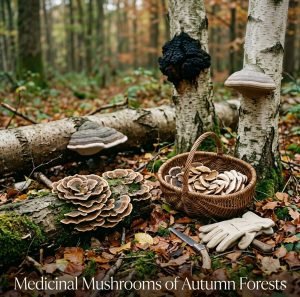
- Medicinal mushrooms of autumn European forests — placed in season/habitat section
Sources
- Peintner, U., et al. (1998). The Iceman’s fungi. Mycological Research, 102(10), 1153-1162.
- Pleszczyńska, M., et al. (2017). Fomitopsis betulina — a review of its biology, chemistry, and medicinal potential. Acta Mycologica, 52(1), 1092.
- Vaz, J. A., et al. (2015). Antimicrobial activity of Fomitopsis betulina extracts. International Journal of Medicinal Mushrooms, 17(6), 567-578.
- Sułkowska‑Ziaja, K., et al. (2018). Triterpenoids from Fomitopsis betulina: Isolation and biological activity. Molecules, 23(8), 1963.
- European Mycological Association – Species fact sheet: Fomitopsis betulina.
- Ötzi Museum (South Tyrol, Italy) – Exhibits and research on the Iceman’s fungal artefacts.