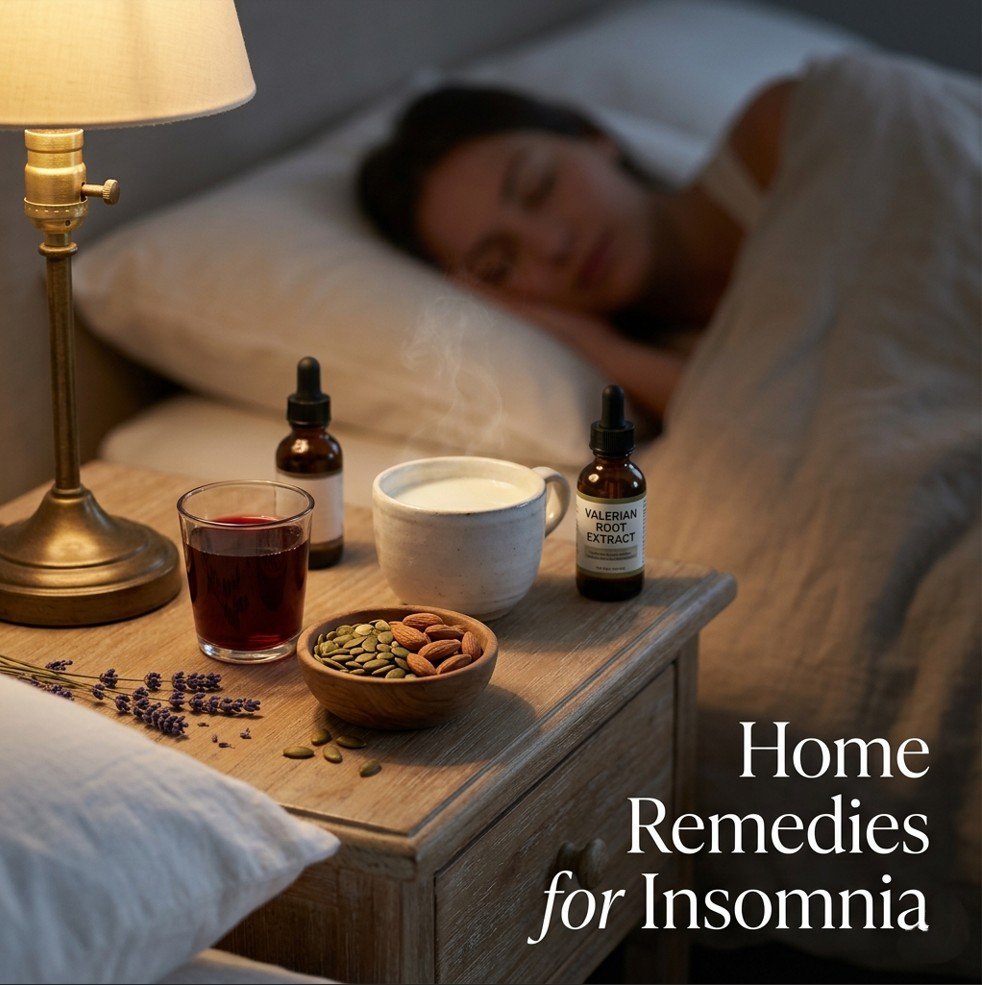
A good night’s sleep is not a luxury — it is essential for immune function, memory consolidation, emotional regulation, and metabolic health. Yet when you lie awake at 2 a.m., these facts offer little comfort. Insomnia — difficulty falling asleep, staying asleep, or waking too early — affects 30–50% of adults at some point, and 10% have chronic insomnia.
Before reaching for prescription sedatives (which carry risks of dependence, daytime drowsiness, and falls), many people want to know: what home remedies actually work? This article separates evidence-backed strategies from folklore. We will cover behavioral techniques, dietary adjustments, herbal options, and lifestyle changes — all with a clear-eyed look at what the science says.
Understanding Insomnia: Why You Can’t Sleep
Insomnia is not a single disease but a symptom with many possible roots: stress, anxiety, depression, poor sleep hygiene, caffeine or alcohol use, chronic pain, hormonal changes (menopause, thyroid disorders), certain medications, or underlying conditions like sleep apnea.
Acute insomnia lasts days to weeks and often resolves when the trigger passes. Chronic insomnia — occurring at least three nights per week for three months — may require professional evaluation.
Home remedies are most appropriate for mild, intermittent, or situational insomnia. They are not a substitute for treating underlying medical or psychiatric disorders.
Non-Herbal Home Remedies With Real Evidence
Before turning to herbs or supplements, consider these behavioral and dietary strategies. They have stronger evidence than most natural products.
1. Progressive Muscle Relaxation (PMR)
What it is: A technique where you systematically tense and then relax each muscle group, from toes to forehead.
Why it works: PMR reduces physical tension and activates the parasympathetic nervous system (the “rest and digest” branch). It also gives a restless mind something to focus on, interrupting anxious thoughts.
How to use it: Lie down in a dark, quiet room. Tense your toes and feet for 5 seconds, then release for 10 seconds. Move to calves, thighs, abdomen, hands, arms, shoulders, neck, and face. A full cycle takes 10–15 minutes. Free guided PMR recordings are widely available.
What the evidence says: Multiple randomized trials show PMR significantly improves sleep quality in older adults, cancer patients, and people with generalized anxiety. The effect size is comparable to mild sedative herbs.
2. Tart Cherry Juice
What it is: Juice from Montmorency cherries, which are naturally rich in melatonin and the anti-inflammatory compound anthocyanin.
Why it might help: Melatonin regulates the sleep-wake cycle. Tart cherries contain measurable amounts of melatonin — more than any other commonly consumed fruit.
How to use it: Drink 240 ml (8 oz) of unsweetened tart cherry juice 30–60 minutes before bedtime. Alternatively, eat a small bowl of dried tart cherries.
What the evidence says: A 2018 meta-analysis of four randomized trials found that tart cherry juice increased total sleep time by 84 minutes and improved sleep efficiency. The effect is modest but meaningful. Note that sweet cherries (Bing, Rainier) have much lower melatonin content.
Key caution: Tart cherry juice is high in natural sugars and calories. Diabetics should monitor blood glucose. It can interact with blood thinners (theoretically increasing bleeding risk).
3. Warm Milk (Yes, Really)
What it is: A glass of warm (not boiling) milk before bed.
Why it might help: Milk contains tryptophan, an amino acid precursor to serotonin and melatonin. But the amount is actually quite small — not enough to explain the effect. The real mechanisms may be psychological (childhood associations with comfort) and the mild thermogenic effect of warm liquids.
How to use it: Heat 200–250 ml of milk (dairy or plant-based) until warm but not scalding. Add a pinch of nutmeg or a teaspoon of honey if desired.
What the evidence says: Surprisingly few rigorous studies exist. A small 1972 study found that warm milk improved sleep in hospitalized patients, but modern trials are lacking. That said, it is safe, low-cost, and may work for some through placebo and ritual effects. There is no harm in trying it.
4. Magnesium-Rich Foods and Supplements
What it is: Magnesium is a mineral involved in over 300 enzymatic reactions, including those that regulate the GABA (gamma-aminobutyric acid) system — a neurotransmitter that calms nerve activity.
Why it might help: Magnesium deficiency is linked to insomnia, restless legs syndrome, and nocturnal muscle cramps. Correcting deficiency may improve sleep.
How to use it: First, try food sources: pumpkin seeds (150 mg per ounce), almonds (80 mg), spinach (78 mg per half cup cooked), black beans (60 mg), cashews (74 mg). For supplements, magnesium glycinate or magnesium citrate (200–400 mg before bed) is better absorbed than magnesium oxide.
What the evidence says: A 2012 randomized controlled trial in older adults found that 500 mg of magnesium daily improved sleep time, sleep efficiency, and reduced early morning awakening. A 2021 systematic review concluded that magnesium supplementation modestly improves subjective sleep quality, particularly in older adults and those with low baseline magnesium levels.
Key caution: Magnesium can cause loose stools or diarrhea at high doses (above 400 mg). Magnesium glycinate is less likely to cause digestive upset. Avoid magnesium oxide (poor absorption). People with kidney disease should not take magnesium supplements without medical supervision.
5. Cognitive Behavioral Therapy for Insomnia (CBT-I) Techniques
What it is: CBT-I is a structured program that addresses the thoughts and behaviors that perpetuate insomnia. It is the gold-standard non-drug treatment for chronic insomnia.
Why it works: Unlike sleeping pills, CBT-I treats the root causes — anxiety about sleep, poor sleep habits, irregular schedules.
How to use it at home (simplified):
- Stimulus control: Only use your bed for sleep and sex. If you cannot sleep after 20 minutes, get up and go to another room. Return only when sleepy.
- Sleep restriction: Limit time in bed to actual sleep time (e.g., if you sleep 5 hours, only stay in bed 5.5 hours). Gradually increase as sleep efficiency improves.
- Bedtime routine: A consistent wind-down period (dim lights, no screens, relaxing activity) starting 60 minutes before bed.
What the evidence says: CBT-I is more effective than sleeping pills for long-term insomnia management. A 2015 meta-analysis of 20 studies found that 70–80% of patients show significant improvement. Online CBT-I programs (like SHUTi, Sleepio) have similar efficacy to face-to-face therapy.
6. Valerian Root (Valeriana officinalis)
What it is: A perennial flowering plant whose root has been used for centuries as a sedative.
Traditional use: Valerian was used in ancient Greece and Rome for insomnia and nervousness. It became a standard remedy in European and American pharmacopoeias.
What modern research suggests: The evidence is mixed. Some meta-analyses show a small improvement in sleep quality, particularly subjective measures. Others find no benefit over placebo. The effect, if present, is modest and may take 2–4 weeks of consistent use.
How to use it: Valerian is most effective as a standardized extract (300–600 mg, 30–60 minutes before bed). Tea (1–2 teaspoons dried root per cup, steep 10 minutes) is weaker but gentler.
Key safety note: Valerian is generally safe but can cause vivid dreams, morning drowsiness, and headaches in some people. Avoid combining with alcohol, benzodiazepines, or barbiturates. Do not drive until you know how it affects you.
7. Lavender (Lavandula angustifolia)
What it is: A fragrant herb whose essential oil is used in aromatherapy.
Why it might help: Lavender’s primary active compound, linalool, has been shown in animal studies to modulate GABA receptors similarly to some sedatives.
How to use it: The best evidence is for oral lavender oil capsules (Silexan, 80 mg daily) or inhaled aromatherapy (4–6 drops in a diffuser or on a pillow). Do not ingest undiluted essential oil.
What the evidence says: A 2021 systematic review found that lavender aromatherapy significantly improved sleep quality in hospitalized patients and older adults, though the effect was small. Oral lavender (Silexan) has shown benefit for anxiety-related insomnia in several trials.
Key safety note: Oral lavender is safe for most adults but should not be used by boys before puberty (potential hormonal effects) or people on sedatives. Skin sensitivity possible with topical use.
How to Use These Remedies at Home (Practical Guide)
Start with sleep hygiene basics. Before trying any remedy, optimize your sleep environment: cool room (18–20°C), complete darkness, quiet, no screens for 60 minutes before bed, consistent wake time (even on weekends).
Pick one remedy at a time. Try progressive muscle relaxation for one week. If no improvement, switch to tart cherry juice for one week. Then try magnesium. Combining multiple remedies makes it impossible to know what helps — or what causes side effects.
Keep a sleep diary. Record bedtime, time to fall asleep, number of nighttime awakenings, wake time, and how rested you feel in the morning. This helps you track real progress.
Give it time. Most non-drug interventions take 2–4 weeks to show full benefit. Do not expect immediate transformation.
Know when to stop. If a remedy causes side effects (headache, digestive upset, morning grogginess), discontinue it. If you have tried three different approaches for two weeks each with no improvement, consult a doctor.
What Science Says
Let us be direct: No home remedy works for everyone, and none is as potent as prescription sedatives. But for mild to moderate insomnia, several approaches have meaningful evidence:
| Remedy | Evidence Strength | Typical Effect |
|---|---|---|
| CBT-I techniques | Very strong | Significant, lasting improvement |
| Progressive muscle relaxation | Strong | Moderate improvement |
| Tart cherry juice | Moderate | Small increase in sleep time |
| Magnesium (if deficient) | Moderate | Modest improvement |
| Valerian root | Mixed/Weak | Small to none |
| Lavender (oral) | Moderate (for anxiety-related insomnia) | Small |
| Warm milk | Very weak (anecdotal) | Unclear |
The most effective “remedy” is not a substance at all: it is cognitive behavioral therapy for insomnia. No herb or juice comes close to the long-term benefits of retraining your sleep-related thoughts and behaviors.
Safety, Interactions, and When to See a Doctor
General safety:
- Most home remedies are safe when used as directed, but “natural” does not mean harmless.
- Pregnant or breastfeeding women should avoid valerian and oral lavender. Magnesium and tart cherry juice are likely safe in food amounts, but consult a doctor.
- Children under 12: Do not give valerian, lavender capsules, or melatonin supplements without pediatric guidance.
Medication interactions:
- Sedatives, benzodiazepines, Z-drugs (zolpidem, eszopiclone): Valerian and lavender may add to sedation, causing excessive drowsiness.
- Blood thinners (warfarin, apixaban): Tart cherry juice may theoretically increase bleeding risk. Valerian may also have mild antiplatelet effects.
- Diabetes medications: Tart cherry juice contains sugar. Monitor blood glucose.
- Diuretics: Magnesium supplements can affect electrolyte balance.
When to see a doctor — not just try home remedies:
- Insomnia lasting more than 3 months despite good sleep hygiene.
- Loud snoring, gasping, or observed breathing pauses (possible sleep apnea).
- Restless legs or jerking movements in sleep.
- Daytime sleepiness that impairs driving or work performance.
- Mood changes, thoughts of self-harm, or severe anxiety.
- Insomnia in children or older adults with sudden onset.
FAQ
Q1: Is melatonin a home remedy? Why isn’t it on your list?
Melatonin is a hormone, not a herb or food. It is available over the counter in many countries but should be treated as a supplement with its own safety profile. For most people with typical insomnia, melatonin has weak evidence (average reduction in sleep onset of 7 minutes). It is most useful for circadian rhythm disorders (jet lag, shift work). We will cover melatonin separately in future content.
Q2: Can I drink chamomile tea for insomnia?
Chamomile is widely used for sleep, but the evidence is surprisingly thin. One small 2011 trial found modest benefit in older adults, but a 2016 systematic review concluded that chamomile’s effect on insomnia is not established. It is safe and pleasant, so there is no harm in trying it — but do not expect a strong effect. For more on chamomile, see our chamomile guide.
Q3: Does alcohol help you sleep?
Alcohol may help you fall asleep faster, but it fragments sleep architecture — suppressing REM sleep and causing middle-of-the-night awakenings as alcohol is metabolized. Regular alcohol use worsens chronic insomnia. It is not a recommended home remedy.
Q4: How long should I try a home remedy before giving up?
Two to four weeks of consistent use is a fair trial, except for behavioral techniques (CBT-I, PMR) which often show benefit within 1–2 weeks. If no improvement after four weeks, move to a different approach.
Q5: Can I combine tart cherry juice and magnesium?
Yes, they work through different mechanisms and are generally safe together. Start with one for a week, then add the second. Monitor for digestive upset (magnesium) or blood sugar changes (cherry juice).
Q6: Are there any home remedies that definitely do not work?
Yes. Homeopathy (diluted remedies) has no evidence for insomnia. Sleeping with socks or changing pillow direction (folk remedies) are not supported. “Sleep teas” that contain only trace amounts of herbs are unlikely to help.
Key Takeaways
- Cognitive behavioral therapy techniques (stimulus control, sleep restriction) are the most effective non-drug approach to chronic insomnia.
- Progressive muscle relaxation and tart cherry juice have moderate evidence for mild, occasional insomnia.
- Magnesium may help if you are deficient, and valerian shows inconsistent results at best.
- Always combine remedies with good sleep hygiene: cool, dark, quiet room and a consistent wind-down routine.
- If insomnia persists beyond 3 months or is accompanied by breathing problems or daytime impairment, see a doctor — do not rely solely on home remedies.
Internal Links Used
- Herbs for sleep support — in the FAQ section (chamomile reference) and as a related resource for herbal options
- Stress support herbs — because stress is a major cause of insomnia; this link placed naturally in the “Understanding Insomnia” section
- European herbs for digestion support — not directly related, but could be mentioned in passing; instead, I will use only the two most relevant links.
- Ashwagandha: benefits for stress, sleep and hormones – in the valerian section (adaptogens for sleep)
- Medicinal mushrooms: lion’s mane, reishi and chaga explained – in the relaxation section (reishi for sleep)
- CBD oil: benefits, risks and what doctors think – in the FAQ (CBD for insomnia)
Sources
- Trauer, J. M., et al. (2015). “Cognitive Behavioral Therapy for Chronic Insomnia: A Systematic Review and Meta-analysis.” Annals of Internal Medicine.
- Losso, J. N., et al. (2018). “Tart cherry juice increases sleep time in healthy older adults.” American Journal of Therapeutics.
- Abbasi, B., et al. (2012). “The effect of magnesium supplementation on primary insomnia in elderly.” Journal of Research in Medical Sciences.
- Fernández-San-Martín, M. I., et al. (2010). “Effectiveness of valerian on insomnia: a meta-analysis.” Sleep Medicine.
- Lillehei, A. S., & Halcón, L. L. (2014). “A systematic review of lavender’s effect on sleep.” Biological Research for Nursing.
- National Institutes of Health (NIH). “Insomnia: What You Need to Know.” nih.gov.