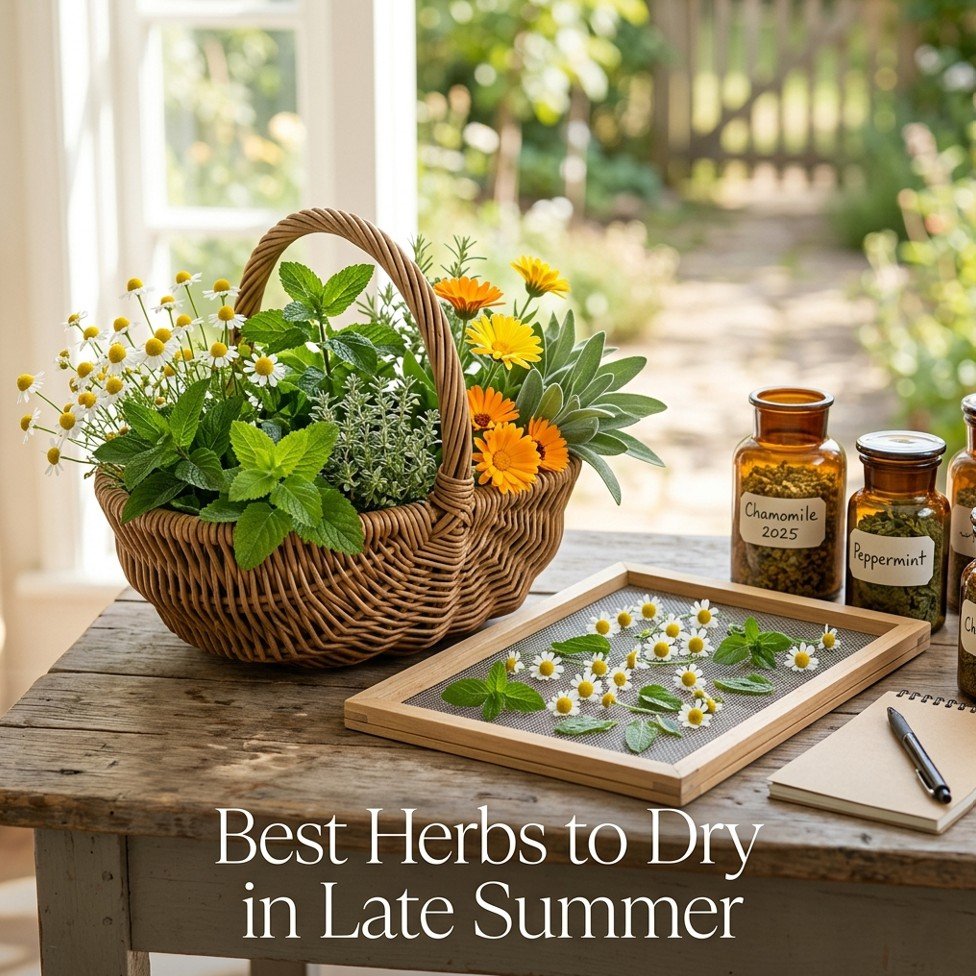
The days are still warm, but the light is changing. Late summer – August and early September – is the peak harvesting season for many European medicinal herbs. The flowers are fully open, the leaves are rich in essential oils, and the plants have not yet begun to decline.
If you want to have chamomile tea in January, peppermint for winter digestion, or thyme for coughs, now is the time to dry. Drying is the oldest and most reliable preservation method. When done correctly, dried herbs retain their colour, aroma, and active compounds for a year or more.
This guide covers the best herbs to dry in late summer, how to harvest them, three reliable drying methods (air drying, dehydrator, oven), storage techniques, and how to tell if your dried herbs are still good.
Which Herbs Are Best for Drying in Late Summer?
Not all herbs dry equally well. Some (like basil and parsley) lose flavour quickly. Others (like chamomile and peppermint) dry beautifully and retain potency.
Excellent for drying – harvest in late summer
| Herb | Part to dry | Harvest timing | Peak condition |
|---|---|---|---|
| Chamomile | Flower heads | Late June – August | Flowers fully open, yellow centres bright |
| Peppermint | Leaves (and flowering tops) | Just before flowering (July–August) | Leaves dark green, strong menthol smell |
| Lemon balm | Leaves | Just before flowering (July) | Leaves bright green, strong lemon scent |
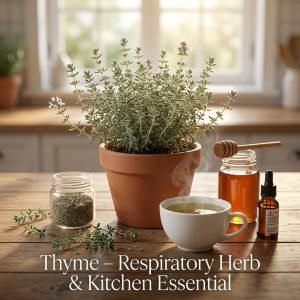
| Thyme | Leaves and flowering tops | Mid‑summer (July–August) | Leaves green, flowers just opening |
| Sage | Leaves | Late summer (August) | Leaves grey‑green, velvety, aromatic |
| St. John’s wort | Flowering tops | Late June – July (peak flowering) | Yellow flowers, red‑staining buds |
| Yarrow | Flowering tops | July – August | White flower heads, feathery leaves |
| Calendula | Flower heads | All summer – peak August | Bright orange/yellow petals fully open |
| Nettle | Leaves (spring is better, but late summer leaves can be dried) | Spring (April–May) is best; late summer leaves are coarser | Young, bright green leaves |
| Linden | Flowers with bract | Early summer (June–July) | Pale yellow, sweet fragrance |
| Plantain | Leaves | Spring – early summer; late summer leaves are tougher | Young, bright green leaves |
Note: Spring‑harvested herbs (nettle, plantain) are best dried in spring, not late summer. For late summer, focus on flowers and leaves that peak now.
Not recommended for drying (better preserved by freezing or as syrup)
| Herb | Reason | Alternative preservation |
|---|---|---|
| Elderflower | Delicate aroma fades quickly; dried flowers are acceptable but inferior | Freeze whole clusters, or make cordial/syrup |
| Rosehips | Dried hips are fine but lose vitamin C over time; better frozen or made into syrup | Freeze whole, or make rosehip syrup |
| Fresh basil, parsley, dill (culinary) | Low essential oil content; flavour degrades | Freeze in oil or as pesto |
| Ivy leaf (medicinal) | Fresh leaves toxic; always use commercial preparations | Buy commercial ivy leaf syrup |
When and How to Harvest for Drying
Timing is everything. Harvesting at the wrong time – too early, too late, or after rain – leads to poor quality.
Best time of day
- Morning, after dew has evaporated (9–11 am)
- Essential oil content is highest in the morning
- Avoid harvesting after rain or irrigation – wet herbs mould during drying
Best stage of growth
- Leaves: Harvest just before the plant flowers, when essential oils are peak
- Flowers: Harvest when fully open, on a dry day
- Flowering tops (St. John’s wort, yarrow): Harvest when about half the flowers are open
Tools
- Clean, sharp scissors or secateurs
- A basket or paper bag (not plastic – plastic traps moisture)
- Gloves (for St. John’s wort – stains hands red; for yarrow – some people react)
Harvesting guidelines
- Take only the top 10–15 cm of the plant (leaves and flowers)
- Leave enough plant to regrow (at least 50–70%)
- Do not harvest from roadsides, sprayed areas, or dog‑walking paths
- Harvest only healthy, pest‑free plants
Drying Methods – Step by Step
There are three reliable methods. Choose based on your climate, equipment, and volume.
Method 1: Air drying (traditional – best for most herbs)
Best for: Leaves and flowers (chamomile, peppermint, lemon balm, thyme, sage, yarrow, calendula, linden)
Equipment: Drying screens (wooden frames with mesh) or paper bags, or string for hanging
Steps:
- Prepare the herbs: Remove any damaged or discoloured leaves. Do not wash herbs before drying (unless very dirty – then gently rinse and pat dry thoroughly). Washing adds moisture and increases mould risk.
- Arrange: Spread herbs in a single layer on drying screens. Do not overlap. For small bunches, tie stems together and hang upside down in a dry, airy room.
- Environment: Place screens in a warm (20–30°C), dry, well‑ventilated, shaded location. Direct sunlight degrades essential oils and bleaches colour.
- Turn: Gently turn leaves or flowers every day to ensure even drying.
- Duration: 3–10 days depending on humidity. Leaves are ready when they crumble easily. Flowers are ready when petals are papery and the centre feels dry.
- Final check: Break a leaf – it should snap crisply, not bend. If it bends, it needs more time.
Pros: No special equipment, gentle on volatile oils. Cons: Slow, requires dry weather, takes space.
Method 2: Food dehydrator (fast, consistent)
Best for: Most herbs, especially in humid climates
Equipment: Electric food dehydrator with temperature control
Steps:
- Set temperature to 35–40°C (95–105°F). Do not exceed 40°C – high heat drives off volatile oils and can “cook” the herbs.
- Spread herbs in a single layer on dehydrator trays (use fine mesh liners for small flowers).
- Dry for 2–6 hours, checking frequently.
- Herbs are done when they crumble easily.
Pros: Fast, reliable, good for humid climates. Cons: Requires equipment, can over‑dry if not monitored.
Method 3: Oven drying (not recommended but possible)
Best for: Resilient herbs like thyme, sage (not for delicate flowers like chamomile)
Equipment: Oven with lowest temperature setting (ideally below 50°C / 120°F)
Steps:
- Preheat oven to its lowest setting (many ovens cannot go below 50°C – this is too hot for most herbs).
- Spread herbs in a single layer on a baking sheet lined with parchment paper.
- Prop the oven door open slightly (use a wooden spoon) to allow moisture to escape.
- Check every 10–15 minutes. Drying takes 30–90 minutes.
- Remove as soon as herbs are dry – they can burn easily.
Pros: Fast, no special equipment. Cons: High risk of overheating, loss of volatile oils, uneven drying. Not suitable for chamomile, lemon balm, linden, or St. John’s wort.
What NOT to do:
- Do not dry in direct sunlight – UV destroys active compounds
- Do not dry in a humid basement or kitchen (steam from cooking) – mould risk
- Do not dry on newspaper – ink can transfer
- Do not use a microwave – destroys herbs
How to Tell When Herbs Are Perfectly Dry
The snap test (for leaves):
- Pick a leaf and try to crumble it between your fingers.
- If it crumbles into small pieces easily, it is dry.
- If it bends or feels leathery, it needs more time.
The rub test (for flowers):
- Rub a flower head between your palms.
- If petals and centres break apart easily into powder, it is dry.
- If they feel soft or clump together, they are still moist.
Warning signs of incomplete drying:
- Herbs feel cool to the touch (moisture evaporates, cooling the surface)
- Herbs are darker than they should be (retained moisture causes darkening)
- Musty smell (mould is starting – discard immediately if mouldy)
How to Store Dried Herbs for Maximum Potency
Even perfectly dried herbs can degrade quickly if stored poorly.
Storage containers – what to use
| Container | Rating | Reason |
|---|---|---|
| Amber glass jar with airtight lid | Best | Blocks light, airtight, inert |
| Clear glass jar in a dark cupboard | Good | Airtight, but light reaches when cupboard is open |
| Tin or stainless steel container | Good | Blocks light, but metal can react with some herbs (rare) |
| Plastic bag | Poor | Not airtight, can leach chemicals, static attracts herb dust |
| Plastic container | Poor | Not fully airtight, some plastics absorb essential oils |
Storage conditions – the enemies
| Enemy | Effect | Solution |
|---|---|---|
| Light | Degrades volatile oils and flavonoids | Store in dark cupboard or amber glass |
| Heat | Accelerates chemical breakdown | Store at 15–20°C, away from stove/radiator |
| Moisture | Causes mould, loss of potency | Store in airtight jar; avoid opening in steamy kitchen |
| Oxygen | Oxidises compounds | Fill jars as full as possible; vacuum seal if available |
Step‑by‑step storage
- Cool completely: Never put warm herbs into a jar – condensation will form.
- Crush or leave whole? Store leaves whole and crush just before use – whole leaves retain essential oils longer.
- Fill jar: Pack loosely – do not compress. Leave 1–2 cm headspace.
- Label clearly: Include herb name and drying date. Example: “Chamomile – Aug 2025”
- Store in a cool, dark, dry cupboard – not above the stove, not in the refrigerator (refrigerators are humid).
Shelf life
| Herb type | Shelf life (proper storage) |
|---|---|
| Leaves (peppermint, lemon balm, thyme, sage, plantain) | 12–18 months |
| Flowers (chamomile, calendula, linden) | 12 months (loses aroma after 6–8 months) |
| Flowering tops (St. John’s wort, yarrow) | 12–18 months |
| Roots (valerian, marshmallow) | 2 years |
| Seeds (fennel, caraway) | 2–3 years |
Replace herbs when:
- They lose their colour (brown instead of green)
- They have no smell (aromatic herbs should smell)
- They taste flat or like hay
- There is any sign of mould (discard immediately – do not use)
Common Drying Mistakes and How to Avoid Them
| Mistake | Consequence | Solution |
|---|---|---|
| Harvesting after rain | Mould during drying | Wait for 2–3 dry days |
| Washing herbs before drying | Prolonged drying time, mould | Only wash if necessary; pat dry thoroughly |
| Drying in direct sunlight | Brown, lifeless herbs, no smell | Dry in shade with good airflow |
| Overcrowding drying screens | Uneven drying, mould | Single layer, no overlap |
| Drying at too high temperature | Loss of volatile oils, “cooked” smell | Use 35–40°C max |
| Storing before fully dry | Mould in the jar | Test with snap test – if in doubt, dry longer |
| Using clear glass jars in light | Herbs fade, lose potency | Use amber glass or store in dark cupboard |
What to Do With Dried Herbs – Winter Uses
Dried herbs are not as potent as fresh, but they are reliable and convenient.
Tea (infusion): Use 1–2 teaspoons of dried herb per cup. Steep 5–10 minutes. Dried herbs often need slightly longer steeping than fresh.
Tincture: Dried herbs can be used for tinctures. Fill jar ⅓–½ full with dried herb (not packed), cover with alcohol. Dried herbs absorb liquid, so you may need to top up.
Culinary: Dried thyme, sage, and peppermint are excellent in cooking. Crush just before adding.
Baths and compresses: Add dried chamomile or calendula to a muslin bag for a herbal bath.
Potpourri: Dried lavender, rose petals, and lemon balm can be mixed for natural room fragrance.
Seasonal Herbal Rituals – Late Summer
Lammas (August 1): In some European traditions, the first harvest of grains and herbs was celebrated. Drying herbs for winter was part of the preparation.
St. John’s Eve (June 24): St. John’s wort is traditionally harvested at this time, but late summer is also a good time for a second cut.
Autumn equinox (late September): By now, most herbs should be dried and stored. It is a time to take stock of the herbal pantry.
These traditions are cultural, not medical.
Safety and Quality Notes
- Do not dry mouldy herbs – discard them. Mould can produce mycotoxins that are not destroyed by drying.
- Do not mix different herbs on the same drying screen – they may dry at different rates, and aromas can cross.
- Do not dry herbs from roadsides, industrial areas, or sprayed fields – they can contain heavy metals, pesticides, or other contaminants.
- If you have ragweed or Asteraceae allergies, be cautious when drying chamomile, yarrow, calendula, or St. John’s wort – pollen can become airborne.
FAQ
Can I dry herbs in a microwave?
Not recommended. Microwaves heat unevenly, can burn herbs, and destroy essential oils. Some sources claim you can dry herbs in a microwave between paper towels, but the results are poor.
How do I dry herbs if I live in a humid climate?
Use a food dehydrator (set to 35–40°C) or an oven with the door propped open. Air drying in high humidity (above 60%) is risky – mould is likely.
Can I dry frozen herbs?
No – freezing changes the cell structure, and thawed herbs become mushy. Dry herbs before freezing, or freeze fresh herbs directly (e.g., pesto, oil cubes).
My dried chamomile has lost its apple smell – is it still usable?
It will still have some medicinal properties, but the volatile oils (which give the smell and some of the calming effects) have degraded. It is fine for tea but less potent. Replace with fresh dried herbs next season.
How do I know if my dried herbs have gone bad?
Signs of spoilage: musty or mouldy smell, visible mould (white, grey, black fuzz), clumping (moisture), brown colour (herbs that should be green). Discard immediately – do not use.
Can I dry herbs in a car on a hot day?
A closed car on a sunny day can reach 50–60°C (120–140°F) – too hot. The herbs will “cook” and lose potency. Also, the car interior may have chemical fumes. Not recommended.
Key Takeaways
- Late summer (August–early September) is the peak time to dry many European herbs: chamomile, peppermint, lemon balm, thyme, sage, St. John’s wort, yarrow, calendula.
- Harvest on a dry morning after dew has evaporated. Do not wash herbs before drying.
- Drying methods: air drying (shaded, well‑ventilated – best for most herbs), food dehydrator (35–40°C – fast, consistent), oven (lowest setting, door propped – risk of overheating).
- Herbs are dry when leaves crumble easily and stems snap. Store in airtight glass jars in a cool, dark, dry place. Label with name and date.
- Properly stored dried herbs last 12–18 months. Discard if mouldy, brown, or no smell.
- This is practical advice – not medical guidance. Always consult a doctor for health concerns.
Internal Links Used
- Summer medicinal flowers to gather responsibly — placed in harvest section
- Winter herbal pantry: what to use when fresh herbs disappear — placed in storage and winter use section
- Chamomile: benefits, uses, safety, and how to prepare it — placed in chamomile section
- Calendula: skin-soothing and lymphatic support — placed in calendula section
Sources
- European Medicines Agency (EMA) – Guidelines on quality of herbal medicinal products (storage stability).
- World Health Organization (WHO) – Guidelines on good agricultural and collection practices for medicinal plants.
- Grieve, M. (1931). A Modern Herbal – sections on drying and storing herbs.
- Hoffmann, D. (2003). Medical Herbalism: The Science and Practice of Herbal Medicine. Healing Arts Press.
- Royal Botanic Gardens, Kew – Plant preservation and storage fact sheets.