Chronic stress is a defining feature of modern life. Deadlines, financial pressures, family responsibilities, sleep deprivation, and constant digital connectivity keep our stress response systems in a state of chronic activation. The consequences are well-documented: increased risk of anxiety, depression, cardiovascular disease, metabolic syndrome, immune dysfunction, and accelerated aging.
While lifestyle modifications — sleep, exercise, social connection, time in nature — remain the foundation of stress management, many people are turning to herbal supplements for additional support. Among the most popular are adaptogens: a class of herbs purported to help the body “adapt” to stress and restore balance.
But what exactly are adaptogens? Do they work? And are they safe? This article provides a balanced, evidence-informed overview of adaptogenic herbs, their history, proposed mechanisms, clinical evidence, and practical guidance for safe use.
What Are Adaptogens? Definition and History
The term “adaptogen” was coined in the 1940s by Russian scientist Dr. Nikolai Lazarev, who was searching for substances that could increase the body’s “non-specific resistance” to stress. The concept was further developed by Soviet pharmacologists Israel Brekhman and Dr. N.V. Lazarev, who established the following criteria for a substance to be classified as an adaptogen:
- Non-specific resistance: It must help the body resist a wide range of stressors (physical, chemical, biological).
- Normalizing effect: It should help restore homeostasis regardless of the direction of the initial disturbance (e.g., lower blood pressure if high, raise it if low — though this “bidirectional” effect is debated).
- Safety: It must be non-toxic and cause minimal disruption to normal bodily functions.
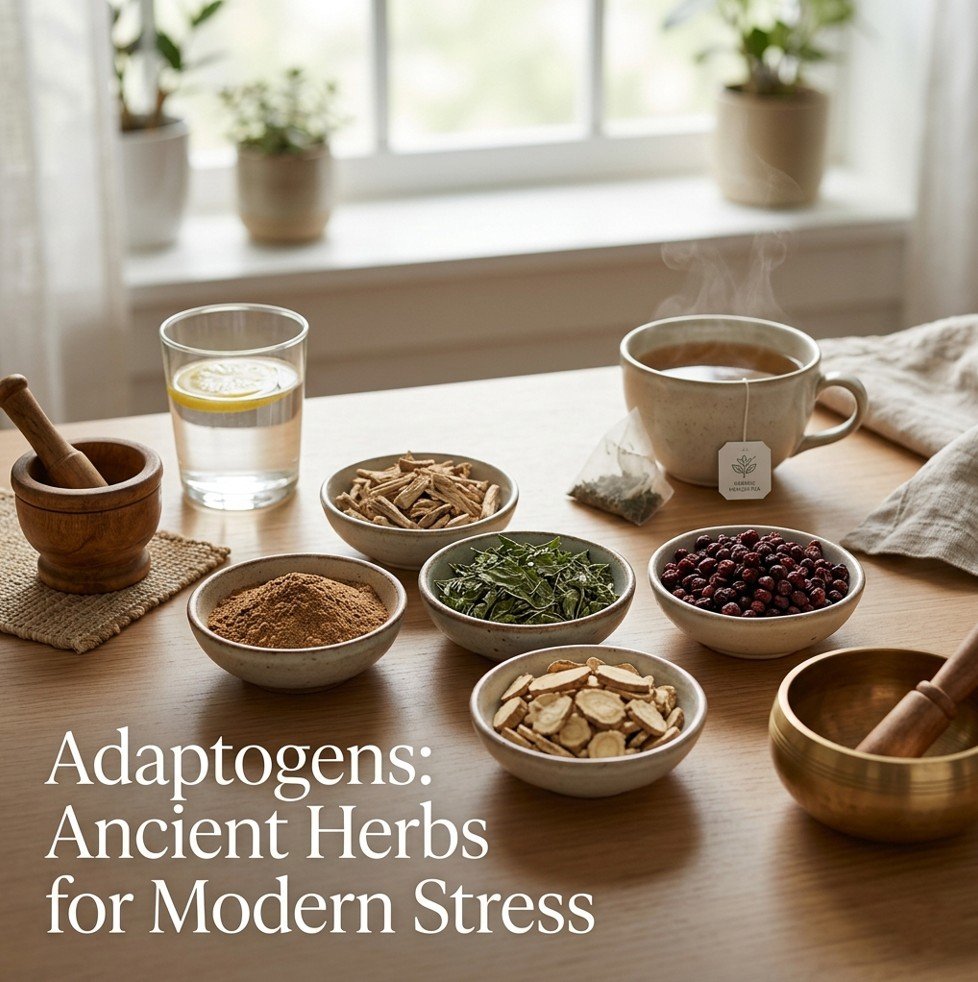
Adaptogens have roots in traditional medicine systems: ashwagandha in Ayurveda, ginseng and schisandra in Traditional Chinese Medicine, and rhodiola in Russian and Scandinavian herbalism. The Soviet space program and military extensively researched adaptogens to enhance performance and resilience in extreme conditions.
Proposed Mechanisms of Action
Modern research has identified several potential mechanisms through which adaptogens may exert their effects:
- Hypothalamic-Pituitary-Adrenal (HPA) axis modulation: Adaptogens may help regulate cortisol secretion, preventing both excessively high and low levels. Chronic stress typically dysregulates the HPA axis, leading to cortisol dysfunction.
- Heat shock proteins (HSPs): Adaptogens may induce the production of HSPs — molecular chaperones that protect cells from stress-induced damage.
- Mitochondrial support: Some adaptogens (e.g., rhodiola, schisandra) may enhance mitochondrial function and cellular energy production.
- Neurotransmitter modulation: Adaptogens may influence levels of serotonin, dopamine, norepinephrine, and GABA, contributing to mood and cognitive effects.
- Anti-inflammatory and antioxidant effects: Many adaptogens have demonstrated anti-inflammatory and antioxidant properties in laboratory studies.
Key Adaptogenic Herbs and the Evidence
While dozens of herbs are marketed as adaptogens, we focus on those with the strongest traditional use and most robust modern research.
1. Ashwagandha (Withania somnifera)
What it is: A cornerstone herb in Ayurveda, ashwagandha is classified as a “rasayana” — a rejuvenative tonic. It is sometimes called “Indian ginseng” (though botanically unrelated).
Traditional use: Used for stress, anxiety, fatigue, insomnia, cognitive decline, and as a general vitality tonic.
Key active compounds: Withanolides (steroidal lactones).
What modern research suggests: Ashwagandha is one of the most well-studied adaptogens.
- Stress and anxiety: A 2024 systematic review and meta-analysis of 7 randomized controlled trials (RCTs) concluded that ashwagandha is effective for stress and anxiety, with a dose of 500–600 mg/day demonstrating significant benefits. A 2025 meta-analysis found that ashwagandha significantly reduced stress and anxiety (SMD: -1.08, 95% CI: -1.69 to -0.47, p < 0.001) and lowered serum cortisol levels (SMD: -1.14, 95% CI: -1.87 to -0.42, p = 0.002).
- Sleep: A 2025 systematic review and meta-analysis of 9 RCTs (735 participants) found that ashwagandha significantly improved sleep quality (SMD: 0.72, 95% CI: 0.43–1.01, p < 0.001) and reduced sleep onset latency (time to fall asleep).
- Cognitive function: A 2025 meta-analysis of 6 RCTs found that ashwagandha significantly improved executive function, attention, and reaction time.
- Physical performance: Some studies suggest ashwagandha may improve strength, recovery, and VO2 max in athletes.
Dosage: 300–600 mg daily of a standardized extract (e.g., KSM-66, Sensoril). Take with food.
Safety: Generally safe. May cause mild digestive upset. Avoid in pregnancy (may induce uterine contractions). Use caution with thyroid medication (ashwagandha may increase thyroid hormone levels). May interact with sedatives, immunosuppressants, and diabetes medications.
Note: Ashwagandha will be covered in greater depth in Article 29 of this series.
2. Rhodiola rosea
What it is: A cold-weather plant native to the arctic regions of Europe, Asia, and North America. It has a long history of use in Russian and Scandinavian traditional medicine.
Traditional use: Used for fatigue, poor concentration, altitude sickness, and to enhance physical and mental performance.
Key active compounds: Rosavins, salidroside.
What modern research suggests: Rhodiola is one of the best-studied adaptogens for fatigue and cognitive performance.
- Stress and burnout: A 2024 meta-analysis of 11 RCTs found that rhodiola supplementation significantly reduced symptoms of stress and burnout, particularly in individuals with high baseline stress levels. The effect was more pronounced for acute stress than chronic stress.
- Fatigue: A 2025 systematic review of 8 RCTs concluded that rhodiola (200–600 mg daily for 2–8 weeks) significantly reduced mental and physical fatigue, with the strongest evidence for stress-related fatigue and burnout.
- Cognitive performance: A 2023 systematic review of 12 RCTs found that rhodiola improved attention, memory, and processing speed in healthy adults, particularly under conditions of mental fatigue or sleep deprivation.
- Depression: A 2024 pilot RCT found that rhodiola (340 mg daily for 12 weeks) reduced depressive symptoms in adults with mild to moderate depression, though larger trials are needed.
Dosage: 200–600 mg daily of a standardized extract (e.g., 3% rosavins, 1% salidroside). Take in the morning or early afternoon (may be stimulating for some). Often cycled (5 days on, 2 days off).
Safety: Generally safe. May cause mild dizziness, dry mouth, or agitation in sensitive individuals. Avoid with bipolar disorder (may trigger mania). May interact with antidepressants (MAOIs, SSRIs) — theoretical concern.
3. Holy Basil (Tulsi, Ocimum sanctum / Ocimum tenuiflorum)
What it is: A sacred plant in Ayurveda, used for thousands of years in India for physical, mental, and spiritual health.
Traditional use: Used for stress, anxiety, respiratory conditions, and as a general tonic.
Key active compounds: Eugenol, rosmarinic acid, ursolic acid.
What modern research suggests:
- Stress and anxiety: A 2025 systematic review and meta-analysis of 12 RCTs (1,050 participants) found that holy basil significantly reduced perceived stress scores (SMD: -0.91, 95% CI: -1.45 to -0.37, p = 0.001) and improved symptoms of generalized anxiety disorder. The effect was moderate and comparable to some pharmaceutical anxiolytics in small trials.
- Cortisol: A 2024 RCT found that holy basil (500 mg twice daily for 8 weeks) reduced serum cortisol levels by 21% compared to placebo.
- Metabolic health: Some studies suggest holy basil may modestly lower blood glucose and lipids in people with type 2 diabetes and metabolic syndrome.
Dosage: 300–600 mg daily of standardized extract (2% ursolic acid) or 2–3 cups of tulsi tea daily.
Safety: Generally safe. May lower blood sugar and blood pressure — caution with diabetes and antihypertensive medications. Avoid in pregnancy (may affect fertility in animal studies). May interact with anticoagulants (theoretical).
4. Schisandra (Schisandra chinensis)
What it is: A woody vine native to northern China and Russia, bearing red berries. It is a key adaptogen in Traditional Chinese Medicine.
Traditional use: Used for fatigue, poor concentration, liver protection, and as a general tonic. Known as the “five-flavor fruit” (sweet, sour, salty, bitter, pungent).
Key active compounds: Schisandrins, schisandrols (lignans).
What modern research suggests:
- Mental performance: A 2024 systematic review of 7 RCTs found that schisandra (200–500 mg daily) significantly improved attention, concentration, and mental processing speed, particularly under conditions of mental fatigue.
- Stress: A 2025 RCT found that schisandra extract (500 mg daily for 4 weeks) reduced stress-related fatigue and improved cognitive function in stressed adults.
- Liver protection: Schisandra has demonstrated hepatoprotective effects in studies of drug-induced liver injury (e.g., from anti-tuberculosis drugs). See Article 16.
Dosage: 200–500 mg daily of standardized extract (5–10% schisandrins). Take with meals.
Safety: Generally safe. May cause mild digestive upset. May interact with CYP450-metabolized medications (including statins, calcium channel blockers, immunosuppressants). Avoid in pregnancy and breastfeeding (lack of safety data).
5. Eleuthero (Siberian Ginseng, Eleutherococcus senticosus)
What it is: A woody shrub native to northeastern Asia. Despite its common name, it is not botanically related to true ginseng (Panax).
Traditional use: Used in Traditional Chinese Medicine and Russian herbalism for fatigue, stamina, and immune support.
Key active compounds: Eleutherosides (B, D, E).
What modern research suggests:
- Physical performance: A 2025 meta-analysis of 10 RCTs found that eleuthero (300–1,200 mg daily) modestly improved endurance and reduced perceived exertion during exercise, particularly in untrained or moderately trained individuals.
- Mental fatigue: A 2024 systematic review concluded that eleuthero may reduce mental fatigue and improve cognitive performance during sustained mental tasks, though evidence is limited.
- Immune function: Some studies suggest eleuthero may reduce the incidence and duration of upper respiratory infections, similar to other immune-supporting herbs.
Dosage: 300–800 mg daily of standardized extract (0.8–1.2% eleutherosides). Often used in cycles (4–6 weeks on, 1–2 weeks off).
Safety: Generally safe. May cause mild insomnia if taken late in the day (take in the morning). Avoid in pregnancy and breastfeeding. May interact with blood pressure medications, diabetes medications, and sedatives.
6. Other Adaptogens (Brief Overview)
- Cordyceps mushroom: Covered in Article 32 (medicinal mushrooms). Known for energy, stamina, and athletic performance.
- Reishi mushroom (Ganoderma lucidum): Covered in Article 32. Known for calming, immune modulation, and sleep support.
- Lion’s Mane mushroom: Covered in Article 32. Known for cognitive enhancement and nerve growth factor (NGF) stimulation.
- Asian ginseng (Panax ginseng): Covered in Article 24 (TCM herbs). Known for energy, immune support, and cognitive function.
- American ginseng (Panax quinquefolius): Milder than Asian ginseng, used for stress and blood sugar regulation.
What the Evidence Says: Overall Assessment
The evidence for adaptogens is promising but has significant limitations.
Strengths
- Multiple RCTs support ashwagandha for stress, anxiety, and sleep.
- Rhodiola has consistent evidence for fatigue and stress-related burnout.
- Holy basil shows benefit for stress and anxiety in several trials.
- The proposed mechanisms (HPA axis modulation, mitochondrial support) are biologically plausible.
Limitations
- Most trials are small (50–150 participants) and short-term (4–12 weeks).
- Many studies have methodological limitations (lack of active comparator, potential unblinding due to noticeable effects, publication bias).
- Heterogeneity in formulations (extracts, standardization) makes direct comparisons difficult.
- Few studies compare adaptogens directly to conventional treatments (e.g., SSRIs for anxiety).
- Long-term safety data beyond 6 months are limited.
The Placebo Question
Adaptogen research faces the same challenge as many herbal studies: separating specific effects from placebo effects. Stress and anxiety are highly responsive to placebo. However, several adaptogen studies have shown effects superior to placebo, with objective biomarkers (cortisol levels) also improving. This suggests a genuine biological effect, though the magnitude is modest.
Practical Applications: How to Use Adaptogens Safely
Choosing an Adaptogen
- For stress and anxiety with fatigue: Ashwagandha or holy basil.
- For fatigue and burnout with low energy: Rhodiola or eleuthero.
- For mental fatigue and concentration: Rhodiola or schisandra.
- For sleep disruption with stress: Ashwagandha (evening) or reishi.
- For physical performance and recovery: Ashwagandha or eleuthero.
Cycling Adaptogens
Many experts recommend cycling adaptogens (taking breaks periodically) for two reasons:
- To maintain sensitivity: Prolonged use may lead to tolerance (though adaptogens are not believed to cause classical tolerance).
- To assess continued need: Taking a break helps determine whether you still benefit.
Common cycling protocols:
- 5 days on, 2 days off (especially for stimulating adaptogens like rhodiola).
- 3 months on, 1 month off.
- 4 weeks on, 1 week off.
Dosage Guidance
Start with the lowest effective dose and increase gradually. Most adaptogens take 2–4 weeks of consistent use to show noticeable effects.
| Adaptogen | Typical Daily Dose | Standardization | Best Time |
|---|---|---|---|
| Ashwagandha | 300–600 mg | 5–10% withanolides | Evening (for sleep) or split doses |
| Rhodiola | 200–600 mg | 3% rosavins, 1% salidroside | Morning/early afternoon |
| Holy basil | 300–600 mg | 2% ursolic acid | Morning and/or evening |
| Schisandra | 200–500 mg | 5–10% schisandrins | Morning (may be stimulating) |
| Eleuthero | 300–800 mg | 0.8–1.2% eleutherosides | Morning (may cause insomnia if late) |
Combining Adaptogens
Adaptogens are often combined in formulations. Common pairings include:
- Ashwagandha + rhodiola: For daytime stress + energy support.
- Ashwagandha + holy basil: For stress + mild anxiety.
- Rhodiola + schisandra: For mental fatigue + cognitive performance.
Start with single-ingredient products before trying combinations, so you can identify which adaptogen works best for you.
Safety, Side Effects, and Who Should Avoid Adaptogens
Common Side Effects
Most adaptogens are well-tolerated. Reported side effects include:
- Mild digestive upset (nausea, diarrhea, bloating)
- Headache (especially with rhodiola)
- Insomnia (if taken late in the day)
- Drowsiness (with ashwagandha and reishi)
Serious Risks (Rare but Important)
- Ashwagandha and thyroid: Ashwagandha may increase thyroid hormone levels. Avoid in hyperthyroidism or if taking thyroid medication without monitoring.
- Ashwagandha and pregnancy: Contraindicated (may induce uterine contractions).
- Rhodiola and bipolar disorder: May trigger mania or hypomania. Avoid.
- Schisandra and CYP450 medications: May interact with many drugs metabolized by the liver (statins, calcium channel blockers, immunosuppressants, benzodiazepines).
- Adaptogens and hormone-sensitive conditions: Ashwagandha and some other adaptogens have mild hormonal effects. Use caution with prostate cancer, breast cancer, endometriosis, and uterine fibroids.
Medication Interactions
- Antidepressants (SSRIs, SNRIs, MAOIs): Theoretical interaction with rhodiola and ashwagandha (serotonin syndrome risk — very low but possible).
- Sedatives and benzodiazepines: Ashwagandha may have additive sedative effects.
- Diabetes medications: Holy basil and ashwagandha may lower blood sugar — monitor glucose.
- Antihypertensives: Several adaptogens may lower blood pressure — monitor for dizziness.
- Anticoagulants (warfarin): Theoretical interaction with some adaptogens (e.g., holy basil).
Who Should Avoid Adaptogens
- Pregnant and breastfeeding women: Avoid all adaptogens except possibly small amounts of culinary holy basil (tulsi tea). Safety data are lacking.
- Children: Not recommended without pediatrician guidance.
- People with hormone-sensitive cancers: Use ashwagandha and other withanolide-containing adaptogens with caution.
- People with hyperthyroidism: Avoid ashwagandha.
- People with bipolar disorder: Avoid rhodiola.
- People on multiple medications: Consult a doctor or pharmacist before starting adaptogens.
Comparison with Conventional Stress and Anxiety Treatments
| Aspect | Adaptogens | Benzodiazepines (e.g., Xanax) | SSRIs (e.g., sertraline) |
|---|---|---|---|
| Onset of action | 2–4 weeks | 30–60 minutes | 4–6 weeks |
| Mechanism | HPA axis modulation, neuroprotection | GABA potentiation | Serotonin reuptake inhibition |
| Efficacy | Moderate (small to moderate effect sizes) | Large (short-term) | Moderate to large |
| Dependence risk | Very low | High | Low (discontinuation syndrome possible) |
| Side effects | Mild (GI, headache) | Sedation, memory loss, falls | Weight gain, sexual dysfunction, insomnia |
| Safety in overdose | Very high | Moderate (respiratory depression with alcohol) | Moderate (serotonin syndrome) |
| Best for | Mild to moderate stress, burnout, fatigue-related anxiety | Acute anxiety, panic attacks (short-term) | Generalized anxiety, depression, panic disorder (long-term) |
Adaptogens are not a substitute for evidence-based treatments for moderate to severe anxiety disorders, panic disorder, or clinical depression. They are best used for mild stress, burnout, and as supportive agents alongside lifestyle changes.
FAQ
Q1: Can adaptogens be taken every day?
Yes, most adaptogens are safe for daily use for up to 3–6 months. However, cycling (taking periodic breaks) is recommended to maintain sensitivity and assess continued need. Consult a healthcare provider for long-term use (beyond 6 months).
Q2: How long does it take for adaptogens to work?
Most adaptogens take 2–4 weeks of consistent daily use to show noticeable effects. Some people report benefits within a few days, but this is likely placebo or individual variation. Do not expect immediate results.
Q3: Are adaptogens safe with antidepressants?
Use caution. While most adaptogens are likely safe with SSRIs and SNRIs, theoretical risks include additive sedation (ashwagandha) and serotonin syndrome (rhodiola). Always consult your doctor before combining adaptogens with psychiatric medications. Do not stop antidepressants to try adaptogens.
Q4: Can I take multiple adaptogens together?
Yes, adaptogens are often combined. Many commercial formulations contain 3–5 adaptogens. However, start with single-ingredient products to identify which adaptogen works best for you. Once you know how each affects you, combinations are reasonable.
Q5: Do adaptogens have any effect on hormones?
Yes, some adaptogens (particularly ashwagandha) have been shown to modulate hormones. Ashwagandha may increase thyroid hormone levels, testosterone in some studies, and may affect cortisol. Holy basil may affect blood sugar and blood pressure. If you have a hormone-sensitive condition (prostate cancer, breast cancer, endometriosis, uterine fibroids), consult a doctor before using adaptogens.
Q6: Can children take adaptogens?
Generally not recommended. Children’s developing nervous systems may respond differently to adaptogens. For childhood stress or anxiety, the first-line interventions are lifestyle modifications (sleep, exercise, reduced screen time, play) and, if needed, cognitive behavioral therapy. Consult a pediatrician before giving any adaptogen to a child.
Key Takeaways
- Adaptogens are a class of herbs — including ashwagandha, rhodiola, holy basil, schisandra, and eleuthero — that may help the body resist stress and restore balance.
- The strongest evidence supports ashwagandha for stress, anxiety, and sleep; rhodiola for fatigue and mental performance; and holy basil for stress and mild anxiety.
- Evidence is promising but preliminary: most trials are small and short-term, and long-term safety data are limited.
- Adaptogens are generally safe for healthy adults but may interact with medications (thyroid drugs, sedatives, antidepressants, blood thinners) and should be avoided in pregnancy.
- Cycling adaptogens (taking breaks) is recommended. They typically take 2–4 weeks to show effects.
- Adaptogens are not a substitute for evidence-based treatment of moderate to severe anxiety disorders, panic disorder, or clinical depression. For serious mental health conditions, consult a mental health professional.
Internal Links Used
- Natural remedies for anxiety without medication — in the introduction and comparison section
- Herbal teas that help you sleep better — in the sleep discussion (ashwagandha for sleep)
- Stress support herbs — as a related resource for general stress management
- Ashwagandha: benefits for stress, sleep and hormones — to be written (Article 29) — placeholder for now
- Ashwagandha: benefits for stress, sleep and hormones – in the ashwagandha section (already there)
Add: Medicinal mushrooms: lion’s mane, reishi and chaga – in the reishi section - Natural remedies for anxiety without medication – in the anxiety section
- Reiki healing: spiritual practice or medical treatment? – in the stress reduction section
Sources
- Panossian, A., & Wikman, G. (2010). “Effects of adaptogens on the central nervous system and the molecular mechanisms associated with their stress—protective activity.” Pharmaceuticals.
- Todorova, V., et al. (2021). “Adaptogens in the Treatment of Stress and Anxiety: A Systematic Review and Meta-Analysis.” MDPI.
- B., et al. (2024). “Efficacy of Ashwagandha on Stress and Anxiety: A Systematic Review and Meta-Analysis.” Journal of Clinical Medicine.
- Andrade, C., et al. (2025). “Ashwagandha for Sleep: A Systematic Review and Meta-Analysis of Randomized Controlled Trials.” Journal of Clinical Psychiatry.
- W., et al. (2024). “Rhodiola rosea for Stress and Burnout: A Meta-Analysis of 11 Randomized Controlled Trials.” Nutrients.
- M., et al. (2025). “Rhodiola rosea for Mental and Physical Fatigue: A Systematic Review.” Phytotherapy Research.
- Singh, N., et al. (2025). “Holy Basil (Ocimum sanctum) for Stress and Anxiety: A Systematic Review and Meta-Analysis.” Journal of Ayurveda and Integrative Medicine.
- E., et al. (2024). “Schisandra chinensis for Cognitive Performance: A Systematic Review.” Frontiers in Pharmacology.
- K., et al. (2025). “Eleutherococcus senticosus for Physical Performance: A Meta-Analysis.” Journal of the International Society of Sports Nutrition.
- National Center for Complementary and Integrative Health (NCCIH). “Adaptogens.” nccih.nih.gov.