Arthritis is not a single disease but a term covering over 100 conditions affecting joints. The two most common are:
- Osteoarthritis (OA): “Wear-and-tear” arthritis where cartilage gradually breaks down. Most common in knees, hips, hands, and spine.
- Rheumatoid arthritis (RA): An autoimmune inflammatory disease where the immune system attacks joint linings, causing pain, swelling, and potential joint destruction.
Other forms include gout, psoriatic arthritis, and ankylosing spondylitis. This article focuses primarily on osteoarthritis (the most studied for natural remedies) and mentions RA where evidence exists. Natural remedies may help manage symptoms but are not cures and should not replace disease-modifying antirheumatic drugs (DMARDs) for RA.
Understanding Joint Pain and Inflammation
Joint pain arises from inflammation, cartilage breakdown, or both. In OA, mechanical stress and low-grade inflammation drive cartilage degradation. In RA, systemic autoimmune inflammation attacks joints.
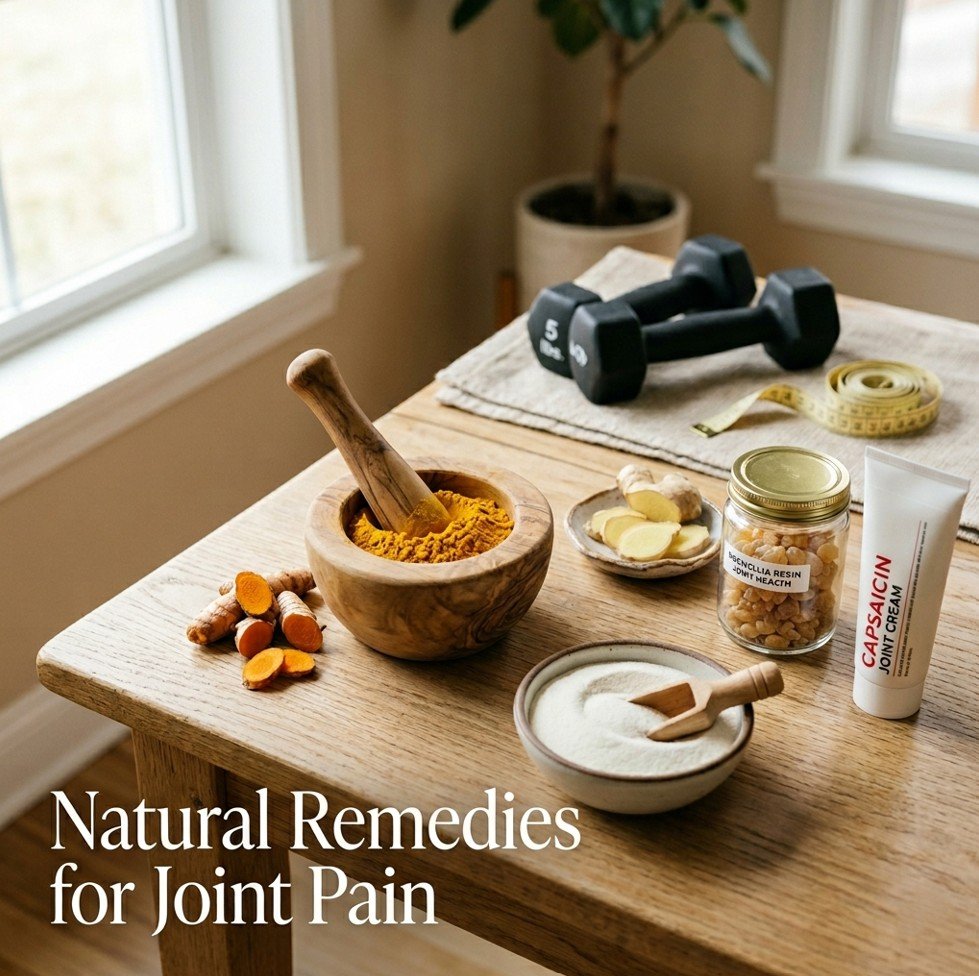
Natural remedies target inflammation (curcumin, ginger, boswellia), provide topical pain relief (capsaicin), or support cartilage metabolism (SAMe, collagen). The effects are generally modest — comparable to low-dose NSAIDs in some studies — and work best for mild to moderate OA.
Best Evidence-Supported Natural Remedies
1. Turmeric and Curcumin
What it is: The active compound in turmeric, covered in depth in Article 6 of this series.
Why it helps: Curcumin inhibits NF-kB and COX-2, reducing inflammatory cytokines involved in arthritis pain.
What modern research suggests: A 2016 meta-analysis of 8 randomized controlled trials (over 800 patients) found that curcumin extract significantly reduced osteoarthritis pain and improved physical function. The effect was comparable to ibuprofen (400 mg) in some head-to-head trials, with fewer gastrointestinal side effects. For RA, a 2012 small trial found curcumin superior to diclofenac (an NSAID), but more studies are needed.
How to use it: Standardized curcumin extract (500 mg, 2–3 times daily) with piperine (black pepper) for absorption. Take with a fatty meal. Effects appear in 4–6 weeks.
Key safety note: Curcumin may reduce iron absorption (separate from iron supplements) and has mild blood-thinning effects. Avoid high doses before surgery or with anticoagulants.
See Article 6 for full details.
2. Ginger (Zingiber officinale)
What it is: A spice with anti-inflammatory properties, covered in Article 4.
Why it helps: Gingerols and shogaols inhibit COX and LOX enzymes, similar to NSAIDs but gentler on the stomach.
What modern research suggests: A 2015 meta-analysis found that ginger extract significantly reduced pain and disability in knee osteoarthritis. The effect was modest — about a 30% pain reduction. A 2022 systematic review confirmed ginger as a safe, moderately effective adjunctive treatment for OA.
How to use it: Standardized ginger extract (250–500 mg, 2–3 times daily) or 2–4 grams of fresh ginger daily. Ginger tea provides lower doses but is safe and pleasant.
Key safety note: Ginger has mild blood-thinning effects. Avoid high doses with anticoagulants. May cause heartburn in sensitive individuals.
3. Boswellia serrata (Indian Frankincense)
What it is: A resin extracted from the Boswellia tree, used in Ayurvedic medicine for centuries.
Traditional use: Boswellia has been used in India and Africa for arthritis, inflammatory bowel disease, and respiratory conditions.
Key active compounds: Boswellic acids, which inhibit 5-lipoxygenase (5-LOX), an enzyme that produces pro-inflammatory leukotrienes. This mechanism is different from NSAIDs and curcumin, making boswellia a complementary option.
What modern research suggests: Several randomized trials have found that boswellia extract (typically standardized to 30–40% boswellic acids) reduces osteoarthritis pain and improves function. A 2020 systematic review of 7 trials concluded that boswellia significantly reduced knee OA pain compared to placebo, with effects comparable to conventional NSAIDs in some studies. A 2014 trial found that a combination of boswellia, curcumin, and ginger was more effective than each alone.
How to use it: Boswellia extract (300–500 mg, 2–3 times daily) standardized to 30% boswellic acids. Often combined with curcumin. Effects may take 4–8 weeks.
Key safety note: Boswellia is generally safe. May cause mild digestive upset (nausea, diarrhea). Rare allergic reactions. Avoid during pregnancy and breastfeeding (lack of safety data). May interact with NSAIDs and blood thinners theoretically.
4. Capsaicin (Topical)
What it is: The compound that makes chili peppers hot, available as over-the-counter creams, gels, or patches.
How it works: Capsaicin depletes substance P, a neurotransmitter that transmits pain signals from joints to the brain. Initial application causes a burning sensation, followed by desensitization and pain relief.
What modern research suggests: Strong evidence. A 2017 Cochrane review of 7 trials (over 1,000 participants) found that high-dose capsaicin patches (8%) significantly reduced osteoarthritis pain compared to placebo. Lower-dose creams (0.025–0.075%) are less effective but still provide modest relief. The effect is localized and does not affect systemic inflammation.
How to use it: Apply capsaicin cream 0.025–0.075% to affected joints 3–4 times daily. Use gloves or wash hands immediately after (avoid touching eyes, mouth, or genitals). High-dose patches (8%) are prescription-only in some countries and applied by a healthcare professional.
Key safety note: Capsaicin causes intense burning sensation initially — this is normal and subsides with regular use (usually after 1–2 weeks). Do not apply to broken skin, open wounds, or inflamed joints (e.g., gout flare). Avoid heat (hot shower, heating pad) after application — it increases absorption and burning. Wash hands thoroughly.
5. SAMe (S-adenosylmethionine)
What it is: A naturally occurring compound involved in cartilage metabolism and repair, available as a supplement.
How it works: SAMe is a methyl donor involved in the synthesis and repair of cartilage components (proteoglycans). It also has mild analgesic and anti-inflammatory effects.
What modern research suggests: Several older trials (1990s–2000s) found that SAMe (1,200 mg daily) was as effective as NSAIDs (ibuprofen, naproxen) for osteoarthritis pain, with fewer gastrointestinal side effects. However, the quality of these studies is variable, and newer trials are lacking. A 2009 systematic review concluded that SAMe may modestly reduce OA pain, but the evidence is limited.
How to use it: 600–1,200 mg daily, divided into 2–3 doses. Take on an empty stomach for better absorption. Effects may take 2–4 weeks.
Key safety note: SAMe is generally safe but can cause nausea, diarrhea, and anxiety. May interact with antidepressants (SSRIs, SNRIs) — risk of serotonin syndrome. Avoid in bipolar disorder (may trigger mania). Expensive compared to other options.
6. Collagen Hydrolysate (Hydrolyzed Collagen)
What it is: Broken-down collagen from animal sources (bovine, marine), available as a powder or capsules.
How it works: Collagen is a major component of cartilage. Supplementation may stimulate the body’s own collagen production and reduce cartilage breakdown.
What modern research suggests: A 2019 meta-analysis of 5 trials (over 600 participants) found that hydrolyzed collagen (10 grams daily for 3–6 months) significantly reduced osteoarthritis pain and improved joint function. The effect was small to moderate. More studies are needed.
How to use it: 10 grams of collagen hydrolysate powder mixed into water, juice, or coffee once daily. Takes 3–6 months for noticeable benefit.
Key safety note: Very safe. May cause mild digestive upset. Derived from animal sources — not suitable for vegans.
7. Avocado-Soybean Unsaponifiables (ASU)
What it is: An extract made from avocado and soybean oils, available as a supplement.
How it works: ASU may stimulate cartilage repair and inhibit inflammatory cytokines.
What modern research suggests: A 2014 meta-analysis of 4 trials found that ASU (300 mg daily) significantly reduced osteoarthritis pain and reduced the need for NSAIDs. The effect is modest but promising. ASU may also slow cartilage loss over the long term (one study found reduced joint space narrowing over 2 years).
How to use it: 300 mg daily for 3–6 months. Often combined with other supplements.
Key safety note: Well-tolerated. Mild digestive upset possible. Avoid if allergic to avocado or soy.
Lifestyle Natural Remedies (Stronger Evidence Than Supplements)
8. Weight Management (If Overweight or Obese)
Why it works: Each kilogram of body weight increases knee joint load by 3–4 kilograms during walking. Weight loss of 5–10% significantly reduces OA pain and improves function.
What the evidence says: Overwhelming. A 2018 meta-analysis found that weight loss of at least 5% body weight produced clinically meaningful pain reduction in knee OA. Weight loss is more effective than any supplement.
How to do it: Combine caloric restriction with low-impact exercise (walking, swimming, cycling). Aim for 5–10% weight loss over 3–6 months.
9. Low-Impact Exercise
Why it works: Strengthens muscles around joints, improves stability, reduces stiffness, and promotes cartilage health through synovial fluid circulation.
What the evidence says: Strong. Exercise (strengthening, aerobic, tai chi, yoga) reduces OA pain and improves function as effectively as NSAIDs in some studies. Rest worsens arthritis; movement helps.
How to do it: 30 minutes of low-impact exercise (walking, swimming, stationary bike) most days. Add strengthening exercises for quadriceps (for knee OA) or grip strength (for hand OA). Consult a physical therapist for a tailored program.
10. Heat and Cold Therapy
Why it helps: Heat relaxes muscles and increases blood flow (good for morning stiffness). Cold reduces inflammation and numbs pain (good after activity or in acute flares).
How to use it: Warm compress, hot pack, or warm bath for 15–20 minutes for stiffness. Cold pack (wrapped in cloth) for 10–15 minutes for pain after activity. Never apply ice directly to skin.
What Science Says: Summary Table
| Remedy | Evidence Strength | Effect Size | Best For |
|---|---|---|---|
| Weight loss | Very strong | Large | Knee OA |
| Exercise | Very strong | Moderate-large | All OA |
| Turmeric/curcumin | Strong (meta-analyses) | Moderate | OA pain |
| Ginger | Moderate-strong | Small-moderate | OA pain |
| Boswellia | Moderate | Small-moderate | OA pain |
| Capsaicin (topical) | Strong (Cochrane) | Moderate | Localized OA pain |
| SAMe | Low-moderate (older trials) | Small-moderate | OA pain |
| Collagen | Low-moderate | Small | OA (long-term) |
| ASU | Low-moderate | Small | OA (potential structure-modifying) |
How to Use These Remedies at Home (Practical Protocol)
For mild, occasional joint pain:
- Heat/cold therapy as needed.
- Turmeric or ginger tea daily (low dose, but safe and pleasant).
- Over-the-counter capsaicin cream for localized pain.
For mild to moderate osteoarthritis (knee, hand, hip):
- First line (non-negotiable): Weight loss if needed + low-impact exercise.
- Supplements: Choose one: curcumin (500 mg 2–3x daily) OR boswellia (300 mg 3x daily). Add ginger if desired.
- Topical: Capsaicin cream for breakthrough pain.
- Expect improvement in 4–8 weeks.
For rheumatoid arthritis (adjunct only):
- Never replace DMARDs (methotrexate, biologics) with natural remedies.
- Curcumin and boswellia may help reduce inflammation, but discuss with your rheumatologist first.
- Omega-3 fatty acids (fish oil) have evidence for RA (not covered here but worth noting).
What to avoid:
- Glucosamine and chondroitin: Once popular, recent large trials show no benefit over placebo for OA pain or cartilage protection. Not recommended.
- Devil’s claw (Harpagophytum): Weak evidence; potential interactions with blood thinners and stomach acid drugs.
- Topical NSAIDs (diclofenac gel) are effective but are pharmaceutical, not natural. They are a reasonable option for localized pain.
Safety, Interactions, and When to See a Doctor
General safety:
- Most natural remedies for joint pain are safe when used as directed.
- Pregnant or breastfeeding women: Avoid boswellia, SAMe, ASU, and high-dose curcumin. Capsaicin topical is likely safe in small areas. Turmeric and ginger in food amounts are safe.
- Children: Not recommended for juvenile arthritis without pediatric rheumatologist guidance.
Medication interactions (critical):
- Anticoagulants (warfarin, apixaban, rivaroxaban): Curcumin, ginger, and boswellia have mild antiplatelet effects. Avoid high doses or monitor closely.
- NSAIDs (ibuprofen, naproxen, diclofenac): Combining with curcumin or ginger may increase bleeding risk slightly (low but possible). Take with food.
- Antidepressants (SSRIs, SNRIs): SAMe may increase serotonin levels — risk of serotonin syndrome (agitation, rapid heart rate, confusion). Avoid combining.
- Diabetes medications: Curcumin and ginger may lower blood sugar — monitor.
- Blood pressure medications: Curcumin and ginger may have additive effects — monitor for dizziness.
When to see a doctor — do not rely on natural remedies alone:
- Joint pain with swelling, redness, warmth, or fever (possible septic arthritis or gout flare — urgent).
- Morning stiffness lasting more than 30 minutes (possible inflammatory arthritis like RA or psoriatic arthritis).
- Joint deformity or inability to bear weight.
- Sudden, severe joint pain (possible fracture or crystal arthritis).
- No improvement after 3 months of consistent lifestyle changes and natural remedies.
- You have RA or another autoimmune arthritis — you need DMARDs to prevent joint destruction.
FAQ
Q1: Can natural remedies cure arthritis?
No. There is no cure for osteoarthritis or rheumatoid arthritis. Natural remedies can help manage symptoms (pain, stiffness) and improve quality of life, but they do not reverse cartilage loss or stop autoimmune joint destruction. For RA, disease-modifying drugs are essential.
Q2: Is glucosamine effective for joint pain?
Large, high-quality trials (including the 2010 GAIT study) found that glucosamine hydrochloride was no better than placebo for knee OA pain or joint space narrowing. Glucosamine sulfate showed marginal benefit in some older European studies, but the overall evidence is weak. Most guidelines no longer recommend glucosamine.
Q3: How long do natural remedies take to work for arthritis?
Unlike NSAIDs that work within hours, most natural remedies (curcumin, ginger, boswellia, collagen) take 4–8 weeks of consistent use to show noticeable benefit. Capsaicin topical works within 2–4 weeks (after initial burning subsides). Be patient.
Q4: Can I take curcumin and boswellia together?
Yes. They work through different mechanisms (curcumin inhibits COX-2 and NF-kB; boswellia inhibits 5-LOX). Several studies have used combinations with good results. Start with both at standard doses, monitor for digestive upset.
Q5: Is CBD oil effective for arthritis pain?
Evidence is mixed and preliminary. A 2020 review found some benefit for OA pain, but most studies are small and short-term. CBD is not approved for arthritis in most countries. Discuss with your doctor. We will cover CBD in Article 23 of this series.
Q6: What is the best natural remedy for knee osteoarthritis?
The combination of weight loss (if overweight) plus low-impact exercise has the strongest evidence — more effective than any supplement. Among supplements, curcumin (with piperine) and boswellia have the best evidence. Topical capsaicin is helpful for localized pain. Many people benefit from combining curcumin, exercise, and weight management.
Key Takeaways
- Weight loss (if overweight) and low-impact exercise are the most effective natural interventions for osteoarthritis — stronger than any supplement.
- Curcumin (turmeric), ginger, and boswellia have moderate evidence for reducing OA pain, comparable to low-dose NSAIDs in some studies.
- Topical capsaicin is well-supported for localized joint pain; the initial burning sensation subsides with regular use.
- SAMe, collagen, and ASU have weaker evidence but may help some individuals.
- Natural remedies are not substitutes for disease-modifying drugs in rheumatoid arthritis or for surgery in advanced OA.
- Always consult a doctor before combining natural remedies with anticoagulants, NSAIDs, or antidepressants.
Internal Links Used
- Turmeric and curcumin: the ultimate natural anti-inflammatory — in the turmeric section
- How to use ginger for inflammation and pain relief — in the ginger section
- Natural remedies for anxiety without medication — not directly related; instead, use Stress support herbs as chronic pain is linked to stress
- European herbs for digestion support — not directly relevant; better to use Immunity support herbs as a related general wellness article
- Turmeric and curcumin: the ultimate natural anti-inflammatory – in the turmeric section (already there)
Add: Ginger for inflammation and pain relief – in the ginger section (already there)
Add: Acupuncture for pain relief: what science says – in the pain management section - Ashwagandha: benefits for stress, sleep and hormones – in the stress-related pain section
- Chiropractic care: what works and what doesn’t – in the manual therapy section
Sources
- Daily, J. W., et al. (2016). “Efficacy of curcumin for knee osteoarthritis: a meta-analysis.” Journal of Medicinal Food.
- Bartels, E. M., et al. (2015). “Efficacy and safety of ginger in osteoarthritis patients: a meta-analysis.” Osteoarthritis and Cartilage.
- Yu, G., et al. (2020). “Boswellia for osteoarthritis: a systematic review.” Medicine.
- Derry, S., et al. (2017). “Topical capsaicin for chronic neuropathic pain in adults.” Cochrane Database of Systematic Reviews.
- Bannuru, R. R., et al. (2014). “ASU for osteoarthritis: a meta-analysis.” Osteoarthritis and Cartilage.
- Messier, S. P., et al. (2013). “Weight loss and exercise for knee osteoarthritis.” JAMA.
- American College of Rheumatology. “Guideline for the Management of Osteoarthritis.” 2019.