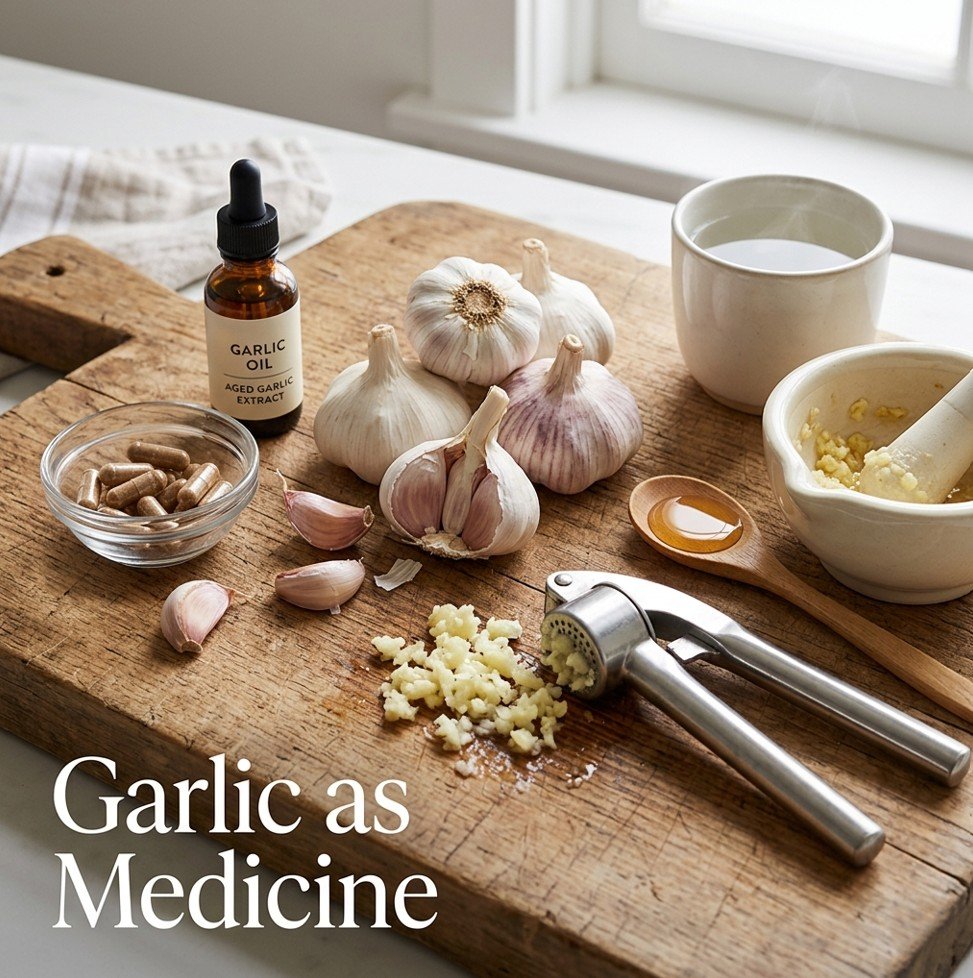
Garlic (Allium sativum) is a bulb vegetable belonging to the onion family (Alliaceae). It is one of the most widely used medicinal plants in human history, mentioned in the Ebers Papyrus (Egypt, 1550 BCE), Hippocratic writings, and traditional medicine systems from Europe to Asia. Today, garlic is both a culinary staple and a popular dietary supplement.
This article focuses on the evidence-supported health benefits of garlic, distinguishing between what is well-established (cardiovascular effects, immune support), what is promising but preliminary (cancer prevention), and what is overstated (garlic as a potent antibiotic). You will also learn practical preparation methods to maximize allicin, the key bioactive compound.
Understanding Garlic’s Active Compounds
Raw garlic contains a sulfur-containing amino acid called alliin. When garlic cloves are crushed, chopped, or chewed, an enzyme called alliinase converts alliin into allicin — the compound responsible for garlic’s characteristic pungent odor and most of its biological activity. Allicin is unstable and rapidly converts into other sulfur compounds (ajoene, diallyl sulfides, S-allylcysteine) depending on preparation and processing.
Key fact: Allicin is only produced when raw garlic is damaged. Whole, intact cloves contain no allicin. Cooking garlic immediately inactivates alliinase, preventing allicin formation. This is why raw or briefly heated garlic has medicinal properties, while fully cooked garlic does not.
Traditional Use and Historical Background
Garlic has an exceptionally long medicinal history:
- Ancient Egypt: Garlic was given to pyramid builders to increase strength and endurance. It was used for infections, digestive disorders, and as a general tonic.
- Ancient Greece and Rome: Hippocrates recommended garlic for respiratory infections, parasites, and poor digestion. Roman soldiers ate garlic for courage and health.
- Traditional Chinese Medicine (TCM): Garlic is considered warming and used for coughs, diarrhea, and colds.
- European herbalism: Garlic was used for high blood pressure, atherosclerosis, and as a “blood purifier.”
- World War I and II: Garlic was applied to wounds as an antiseptic when antibiotics were unavailable.
Modern research has focused on garlic’s cardiovascular, immune, antimicrobial, and anticancer properties.
What Modern Research Suggests
1. Cardiovascular Health: Blood Pressure and Cholesterol
This is the strongest area of evidence for garlic.
Blood pressure: A 2020 meta-analysis of 12 randomized controlled trials (553 participants) found that garlic supplements reduced systolic blood pressure by an average of 8–10 mmHg and diastolic by 5–6 mmHg in people with hypertension. The effect was greater in those with higher baseline pressure. Aged garlic extract appeared more effective than raw garlic or other preparations.
Cholesterol: A 2016 meta-analysis of 22 trials (1,560 participants) found that garlic (particularly aged garlic extract) reduced total cholesterol by about 8–10 mg/dL and LDL (“bad”) cholesterol by 5–8 mg/dL. HDL and triglycerides were not significantly affected. The effect is modest — comparable to a small dose of a statin but much weaker than therapeutic statin doses.
Mechanism: Garlic’s sulfur compounds inhibit HMG-CoA reductase (the same enzyme targeted by statins, though less potently), reduce oxidative stress, and increase nitric oxide production (which relaxes blood vessels).
2. Immune Function and Cold Prevention
Garlic has been traditionally used to ward off infections. A 2014 Cochrane review (the highest evidence standard) found that people taking garlic supplements (180 mg of alliin daily for 12 weeks) had fewer colds (24 vs. 65 in placebo group) and recovered faster when they did get sick. However, only one high-quality trial met inclusion criteria, so the evidence is limited but promising.
How it works: Garlic appears to enhance immune cell function (natural killer cells, macrophages) and has mild antiviral activity.
Practical takeaway: Garlic may reduce the frequency and duration of colds, but the effect is small. It is not a substitute for flu vaccination or other preventive measures.
3. Antimicrobial Effects (Limited to Topical or High Concentrations)
Garlic extracts show antibacterial, antiviral, and antifungal activity in laboratory studies. Allicin is active against a wide range of bacteria, including some antibiotic-resistant strains (MRSA, E. coli).
However: The concentrations needed to kill bacteria in a petri dish are much higher than what can be achieved in the human body after oral consumption. Garlic is not a reliable treatment for internal bacterial infections (sinusitis, pneumonia, UTIs). It may have a supportive role for minor topical issues (diluted garlic oil for fungal skin infections) but should not replace prescription antibiotics.
For more on natural antibiotics, see our natural antibiotics article.
4. Cancer Prevention (Preliminary Evidence)
Epidemiological studies have found that people who consume high amounts of raw or cooked garlic have a lower risk of certain cancers, particularly colorectal and stomach cancer. A 2019 meta-analysis of 17 observational studies found a 30% reduction in colorectal cancer risk with high garlic intake. However, these are observational studies (not randomized trials), and confounding factors (other diet and lifestyle variables) cannot be ruled out. Garlic is not a proven cancer treatment and should never replace conventional cancer therapy.
Mechanism: Garlic’s sulfur compounds may inhibit carcinogen activation, reduce oxidative DNA damage, and induce apoptosis (cell death) in cancer cells in laboratory models.
5. Other Potential Benefits (Less Evidence)
- Blood thinning (antiplatelet effect): Garlic reduces platelet aggregation modestly. This may help prevent blood clots but also increases bleeding risk.
- Antioxidant: Garlic reduces oxidative stress markers in several trials.
- Athletic performance: Ancient Olympians used garlic, but modern studies are lacking. One small study found garlic oil reduced exercise-induced fatigue.
- Heavy metal detox: A 2012 trial found that garlic (1,200 mg daily for 4 weeks) reduced blood lead levels by 19% in battery workers. Interesting but not a general recommendation.
How to Use Garlic as Medicine at Home
Raw Garlic (Most Potent)
Preparation: Crush or chop 1–2 fresh cloves, then let sit for 10 minutes before swallowing or mixing with food. The 10-minute wait allows alliinase to convert alliin to allicin. Do not chew raw garlic for prolonged periods — it can burn the mouth.
How to take it: Swallow crushed garlic with water, mix into a spoonful of honey or yogurt, or add to cold or lukewarm food (heat over 60°C / 140°F destroys alliinase). Do not cook immediately.
Dose: 1–2 raw cloves daily (about 2–4 grams). Start with 1 clove to assess digestive tolerance.
Raw garlic is strong and can cause heartburn or bad breath.
Aged Garlic Extract (Supplement)
Aged garlic extract is made by fermenting garlic slices in ethanol for up to 20 months. This process converts allicin into more stable, odorless compounds (S-allylcysteine). Aged garlic extract is better tolerated, does not cause bad breath, and is the form used in most clinical trials for blood pressure and cholesterol.
Dose: 600–1,200 mg daily (standardized to 1–2% S-allylcysteine). Follow product instructions.
Garlic Powder (Dehydrated)
Garlic powder (in capsules or as a seasoning) has lower allicin potential because the enzyme is less active. Some commercial garlic supplements are enteric-coated to deliver allicin to the intestines. Look for products standardized to allicin potential (e.g., 3,600 mcg of allicin per tablet).
Dose: 300–500 mg of garlic powder extract 2–3 times daily.
Garlic Oil (Maceration)
Garlic oil (olive oil infused with crushed garlic) is used topically for fungal infections (athlete’s foot, ringworm) and earaches (never inside the ear canal — only on the outer ear). Do not use garlic oil internally for medicinal purposes; its allicin content is low.
Topical use: Dilute 1 part garlic oil with 3 parts carrier oil. Apply to affected skin twice daily. Discontinue if irritation occurs.
Cooking with Garlic (Flavor Only, Minimal Medicine)
Cooked garlic adds wonderful flavor but has little medicinal value because heat inactivates alliinase. However, if you crush garlic and let it sit for 10 minutes before cooking, some allicin forms, but most is still destroyed by high heat. For immune or cardiovascular benefits, use raw or aged extract.
What Science Says: Summary Table
| Health Claim | Evidence Strength | Effect Size | Recommended Form |
|---|---|---|---|
| Blood pressure reduction (hypertension) | Moderate-strong (meta-analyses) | 8–10 mmHg systolic | Aged garlic extract |
| LDL cholesterol reduction | Moderate (meta-analyses) | 5–10 mg/dL | Aged garlic extract |
| Cold prevention/duration | Low-moderate (Cochrane) | Small | Raw garlic or supplement |
| Antimicrobial (internal) | Weak (lab only) | Not clinically meaningful | Not recommended |
| Cancer prevention | Low (observational) | Not quantified | Dietary garlic only |
| Topical antifungal | Low (anecdotal) | Unclear | Diluted garlic oil |
Safety, Side Effects, and Interactions
Common Side Effects
- Bad breath (halitosis) and body odor: The sulfur compounds are excreted through breath and sweat.
- Heartburn, nausea, bloating, diarrhea: Especially from raw garlic or high doses.
- Skin irritation: Topical garlic can cause chemical burns if left on skin.
- Bleeding: Garlic has mild antiplatelet effects.
Who Should Avoid Therapeutic Doses of Garlic
- People on blood thinners (warfarin, apixaban, rivaroxaban, clopidogrel): Garlic may increase bleeding risk. Small culinary amounts are fine, but high-dose supplements should be avoided or used only with medical supervision.
- People about to have surgery: Stop high-dose garlic supplements at least 2 weeks before elective surgery.
- People with bleeding disorders (hemophilia, thrombocytopenia): Avoid high doses.
- People on certain HIV medications (saquinavir): Garlic supplements can reduce drug levels significantly.
- People with GERD or sensitive stomachs: Raw garlic can worsen heartburn.
- Pregnant and breastfeeding women: Culinary amounts are safe. High-dose supplements (more than 1–2 cloves daily or concentrated extracts) lack safety data — avoid unless directed by a doctor.
- Infants: Do not give raw garlic to infants under 12 months (digestive irritation).
Medication Interactions (Critical)
- Anticoagulants / antiplatelets: Additive effect. Monitor INR if on warfarin.
- HIV protease inhibitors (saquinavir): Garlic reduces levels by up to 50%. Avoid.
- Diabetes medications (insulin, metformin, sulfonylureas): Garlic may lower blood sugar. Monitor glucose.
- Antihypertensives: Additive blood pressure lowering — monitor for hypotension.
- Statins (atorvastatin, simvastatin): No significant interaction reported, but both affect cholesterol; no contraindication.
Comparison with Pharmaceutical Drugs
| Aspect | Garlic (aged extract, 600–1,200 mg) | Statins (e.g., atorvastatin 10 mg) | Antihypertensives (e.g., lisinopril 10 mg) |
|---|---|---|---|
| LDL reduction | 5–10 mg/dL (modest) | 30–50 mg/dL (strong) | Not indicated for cholesterol |
| BP reduction | 8–10 mmHg (modest) | Minimal | 10–15 mmHg (moderate) |
| Side effects | Mild (breath, GI) | Muscle pain, liver enzymes | Cough, kidney effects |
| Cost | Low-moderate | Low (generic) | Low (generic) |
| Evidence quality | Moderate | Very high | Very high |
Conclusion: Garlic is not a substitute for prescription medications for hypertension or hyperlipidemia in people with moderate to severe conditions. It may be helpful for those with borderline readings or as an adjunct, but always under medical supervision.
FAQ
Q1: How much raw garlic should I eat per day for health benefits?
For cardiovascular benefits, 1–2 raw cloves (2–4 grams) daily is a reasonable dose. Start with 1 clove to assess tolerance. Do not exceed 4 raw cloves daily without medical advice. For supplements, follow product labeling (typically 600–1,200 mg aged garlic extract).
Q2: Is it safe to take garlic supplements every day?
For most healthy adults, aged garlic extract (600–1,200 mg daily) is safe for long-term use (studies up to 12 months). Raw garlic daily may cause digestive upset over time. Consider taking a break of 1 week every 2–3 months. Always discuss with your doctor if you take other medications.
Q3: Does garlic interact with blood pressure medication?
Yes, garlic may have additive blood-pressure-lowering effects. If you take antihypertensives (ACE inhibitors, ARBs, calcium channel blockers, beta-blockers), monitor your blood pressure closely when starting garlic. Dizziness or lightheadedness may indicate pressure that is too low. Your doctor may need to adjust your medication dose.
Q4: Can garlic cure a cold?
No, garlic does not cure colds. Some evidence suggests it may reduce the frequency of colds and shorten duration by a day or so. It is a supportive measure, not a treatment. For more on immune support, see our immunity support herbs article.
Q5: Is black garlic healthier than raw garlic?
Black garlic is made by fermenting whole garlic bulbs at high temperature (60–90°C) for weeks. This process increases certain antioxidant compounds (S-allylcysteine) and reduces pungency. Some studies suggest black garlic has stronger antioxidant activity, but cardiovascular evidence is much weaker than for aged garlic extract. It is a food, not a standardized medicine.
Q6: Can I put raw garlic on a wound?
No. Raw garlic can cause chemical burns, severe irritation, and blistering. Do not apply raw garlic directly to skin. For minor wound care, use medical-grade honey or diluted tea tree oil instead.
Key Takeaways
- Garlic’s medicinal benefits come from allicin, which forms only when raw garlic is crushed and allowed to sit for 10 minutes before consumption.
- The strongest evidence supports aged garlic extract for modest reductions in blood pressure (8–10 mmHg) and LDL cholesterol (5–10 mg/dL).
- Garlic may reduce the frequency and duration of colds, but the evidence is limited.
- Garlic is not a substitute for antibiotics, statins, or antihypertensive drugs in moderate to severe disease.
- Safety: Avoid high-dose garlic supplements if you take blood thinners, have a bleeding disorder, or are scheduled for surgery. Culinary amounts are safe for most people.
- For therapeutic use, aged garlic extract is better tolerated and more evidence-supported than raw garlic.
Internal Links Used
- Natural antibiotics: plants that fight infections — in the antimicrobial section, linking to related content on garlic as a natural antibiotic
- Immunity support herbs — in the immune function section
- European herbs for digestion support — in the traditional use section, as garlic is a European medicinal herb
- Natural antibiotics: plants that fight infections – in the antimicrobial section (already there)
Add: 10 herbs that naturally lower blood pressure – in the blood pressure section (already there)
Add: Best natural remedies for joint pain and arthritis – in the anti-inflammatory section - Medicinal mushrooms: lion’s mane, reishi and chaga – in the immune section
- How to detox your liver naturally with herbs – in the liver protection section
Sources
- Ried, K. (2020). “Garlic lowers blood pressure in hypertensive subjects: systematic review and meta-analysis.” Journal of Nutrition.
- Ried, K. (2016). “Garlic for cholesterol: a meta-analysis.” Nutrition Reviews.
- Lissiman, E., et al. (2014). “Garlic for the common cold.” Cochrane Database of Systematic Reviews.
- Lawson, L. D. (2006). “Garlic: a review of its medicinal effects and active compounds.” Phytomedicine.
- National Center for Complementary and Integrative Health (NCCIH). “Garlic.” nccih.nih.gov.
- American Heart Association. “Garlic and heart health.” heart.org.