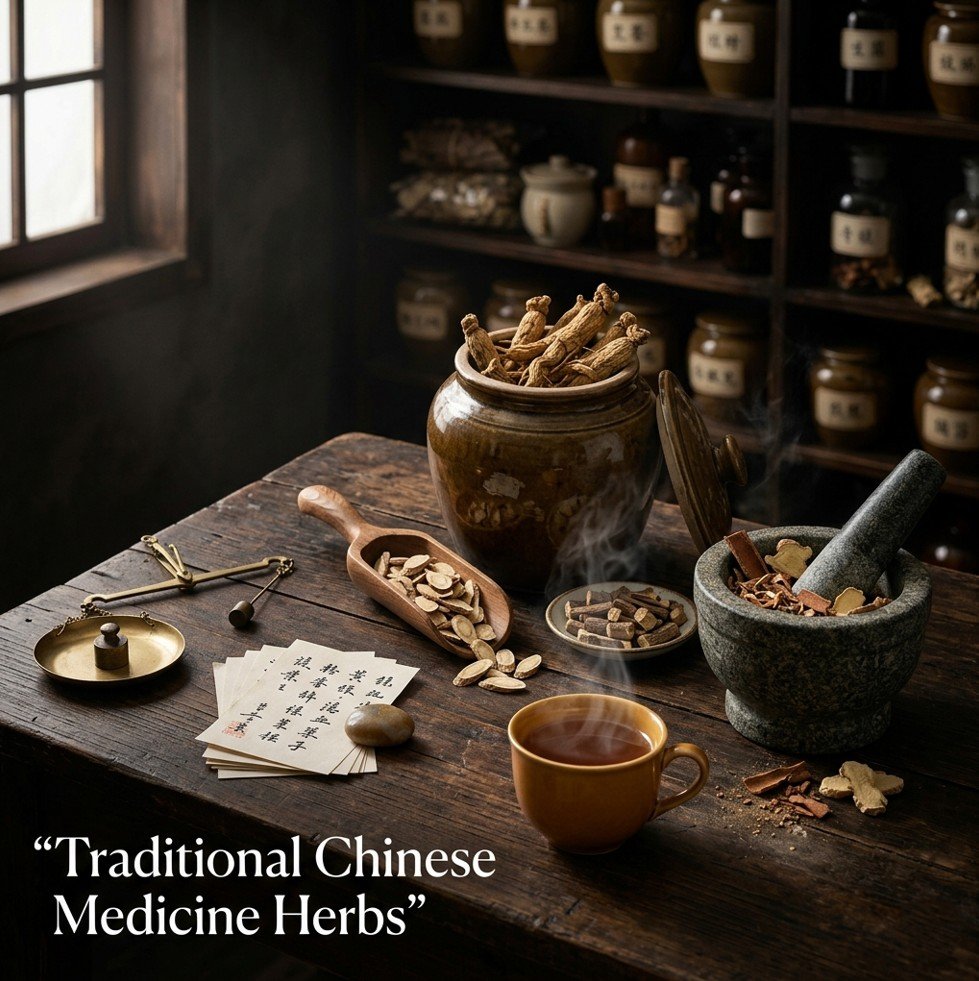
Traditional Chinese Medicine (TCM) is a complete medical system that has evolved over more than 2,000 years. At its heart is a sophisticated herbal pharmacopoeia comprising thousands of plant, mineral, and animal ingredients, which are almost always used in multi-herb formulas rather than as single agents. These formulas are designed according to TCM theories of pattern differentiation (辨证论治), aiming to restore balance within the body.
In recent decades, TCM herbs have gained significant popularity worldwide, both as over-the-counter supplements and as objects of intensive scientific investigation. This article provides an evidence-informed introduction to TCM herbs: what they are, how they are used, what the research says, and most importantly, the safety concerns that both consumers and clinicians should be aware of.
What Is Traditional Chinese Medicine (TCM) Herbalism?
TCM herbalism is a distinct therapeutic tradition with its own diagnostic framework. Rather than treating a Western disease label (e.g., hypertension), a TCM practitioner identifies a specific “pattern” (e.g., Liver Yang Rising or Kidney Yin Deficiency) and selects an herbal formula to address that pattern.
- Single herbs (单味药): While individual herbs have been studied, TCM emphasizes that their effects are modified and enhanced when combined in formulas.
- Formulas (方剂): These are carefully balanced combinations of herbs, usually containing 4–12 ingredients. The classic structure includes an “emperor” (principal) herb, “minister” (adjuvant) herbs, “assistant” herbs to moderate toxicity or enhance action, and “envoy” (guide) herbs to target the formula to a specific area.
- Preparation: Herbs are traditionally decocted as a tea (汤剂), but today are also available as granules (颗粒剂), pills, capsules, and tinctures.
The TCM materia medica (本草学) categorizes herbs by their properties (temperature, taste), their tropism (meridian affinity), and their functions (e.g., “tonify qi,” “clear heat,” “move blood”).
Commonly Used TCM Herbs and Their Modern Research
While dozens of herbs are frequently used, a few have garnered significant modern research attention. We will focus on those with substantial clinical data.
1. Ginseng (Panax ginseng, Ren Shen)
What it is: Perhaps the most famous TCM herb, ginseng is considered a powerful “qi tonic,” used to combat fatigue, weakness, and poor immune function. The most researched form is Korean Red Ginseng (steamed and dried).
Key active compounds: Ginsenosides (also known as panaxosides), a group of over 40 different steroid-like saponins.
What modern research suggests: A 2025 meta-analysis of 44 randomized controlled trials (RCTs) found that ginseng supplementation significantly reduced levels of the inflammatory marker interleukin-6 (IL-6), suggesting an anti-inflammatory effect. However, the same analysis found no significant effects on body weight, body mass index (BMI), waist circumference, blood pressure, or lipid profiles. A comprehensive 2025 systematic review on cardiovascular disease risk factors noted that while results are not yet conclusive, ginseng supplementation has been linked to improvements in inflammatory markers, liver function, and oxidative stress. A systematic review of RCTs on ginseng concluded that while encouraging beneficial effects have been observed, the effects in general only ranged from mild to moderate.
Safety: Ginseng is generally well-tolerated but can cause insomnia, nervousness, and gastrointestinal upset. It has potential estrogenic effects and may interact with blood thinners (e.g., warfarin), diabetes medications, and monoamine oxidase inhibitors (MAOIs). Long-term use may be associated with “ginseng abuse syndrome” (hypertension, nervousness, insomnia).
2. Astragalus (Astragalus membranaceus, Huang Qi)
What it is: One of the most important “qi tonics” in TCM, astragalus is used to strengthen the immune system, protect the heart, and combat fatigue.
Key active compounds: Polysaccharides (astragalans), flavonoids (e.g., calycosin), and saponins (astragalosides).
What modern research suggests: A 2025 randomized, double-blind, placebo-controlled trial of 90 adults with functional knee joint pain found that a standardized astragalus root extract (480 mg daily for 28 days) produced a significant 30% reduction in knee pain, with no serious adverse events reported. A 2024 systematic review and meta-analysis of 19 RCTs (1,565 patients) found that astragalus, when added to conventional treatment for heart failure with reduced ejection fraction (HFrEF), significantly improved left ventricular ejection fraction (LVEF), reduced inflammatory markers (TNF-α, IL-6, hs-CRP), and improved functional capacity (6-minute walk distance). Other studies suggest astragalus may have immunomodulatory and anti-allergic effects.
Safety: Astragalus is very safe for most people. It may interact with immunosuppressants (theoretically reducing their effect) and lithium (may increase levels). Avoid in people with autoimmune diseases, as it may stimulate the immune system.
3. Licorice Root (Glycyrrhiza glabra, Gan Cao)
What it is: One of the most frequently used herbs in TCM formulas, licorice is known as the “harmonizing” herb, added to nearly every formula to moderate the actions of other herbs and protect the digestive system.
Key active compound: Glycyrrhizic acid (GA), which is responsible for both its sweet taste and its pharmacological activity — and most of its toxicity.
What modern research suggests: Licorice has demonstrated anti-inflammatory, antiviral, and hepatoprotective effects in laboratory studies. It is commonly used in TCM for coughs, digestive ulcers, and to “harmonize” formulas.
Critical safety warning: Excessive licorice consumption can cause a well-characterized syndrome of pseudohyperaldosteronism due to GA inhibiting the enzyme 11β-HSD2, leading to sodium retention, potassium wasting, and hypertension. Symptoms include the triad of hypertension, hypokalemia (low potassium), and metabolic alkalosis. A 2024 case report described a patient who developed severe hypokalemia (2.4 mEq/L) and a prolonged QT interval after consuming 3–4 capsules (900 mg each) of licorice root extract daily. The European Medicines Agency has warned that daily intake of GA exceeding 100 mg can raise blood pressure; a typical cup of strong licorice tea may contain 30–50 mg.
Safe use: Deglycyrrhizinated licorice (DGL) has GA removed and is safe for long-term use. Do not consume high doses of regular licorice root for more than 2–4 weeks. Avoid in people with hypertension, kidney disease, heart disease, or low potassium.
4. Ginger (Zingiber officinale, Sheng Jiang) and Other Common Herbs
Ginger is used in TCM for its warming properties, to treat nausea, vomiting, and to “release the exterior.” Turmeric (Jiang Huang) is used to move blood and relieve pain. Cinnamon (Rou Gui) is a warming herb used for cold conditions. These herbs have been covered in detail in previous articles in this series.
What the Evidence Says: Systematic Reviews on TCM Formulas
Beyond single herbs, modern systematic reviews have evaluated the efficacy of complex TCM formulas for various conditions.
- Acute exacerbation of chronic obstructive pulmonary disease (AECOPD): A 2025 systematic review and network meta-analysis of 132 RCTs (13,177 participants) found that all ten TCM formulas studied (when added to conventional therapy) were more effective than conventional therapy alone. The certainty of the evidence, however, was rated as “very low” by the GRADE framework, meaning caution is warranted in interpreting these findings.
- Coronary heart disease with cerebral ischemic stroke: A 2025 meta-analysis of 18 trials (2,202 patients) found that TCM formulas significantly improved overall effective rate, ECG performance, lipid profiles, and neurological function scores, with a safety profile comparable to conventional medicine alone.
- Refractory gastroesophageal reflux disease (rGERD): A 2025 network meta-analysis of 19 RCTs found that TCM formulas, as an adjunct to proton pump inhibitors (PPIs), improved treatment outcomes for rGERD, though the authors noted that the quality of future RCTs needs to be improved.
- Non-alcoholic fatty liver disease (NAFLD): An overview of systematic reviews from 2025 mapped the evidence for TCM in NAFLD, focusing on metabolic outcomes, but the authors called for a methodological framework to standardize TCM systematic reviews.
The bottom line on the evidence: While many systematic reviews suggest that TCM formulas can be beneficial as adjunctive therapies, the overall quality of the primary RCTs is often low, with high risk of bias. There is a pressing need for more rigorous, large-scale, high-quality RCTs to validate these preliminary findings.
Safety, Hepatotoxicity, and Herb-Drug Interactions
TCM herbs are not without risk. Two areas of safety concern have been well documented in the medical literature.
1. Hepatotoxicity (Liver Injury)
A major 2025 review in the Journal of Ethnopharmacology analyzed 481 articles reporting 571 cases of TCM-induced liver injury worldwide. The review identified 265 TCMs implicated, with single herbs accounting for 26.97% and herbal formulas for 73.03%. Hepatocellular injury was the most common type of damage. The most frequently implicated single herbs were Polygonum multiflorum Thunb. (He Shou Wu), Psoralea corylifolia L. (Bu Gu Zhi), and Gynura japonica Thunb. Juel (Tu San Qi). Mechanisms include mitochondrial dysfunction, endoplasmic reticulum stress, disruption of bile acid homeostasis, and idiosyncratic immune responses.
Key takeaway: While most TCM herbs are safe when used appropriately under professional guidance, certain herbs have a well-documented potential for hepatotoxicity. Consumers should avoid long-term, high-dose use of unverified products, especially those containing the herbs listed above.
2. Herb-Drug Interactions (Cytochrome P450 and Warfarin)
Many TCM herbs are metabolized by or can modulate the activity of cytochrome P450 (CYP) enzymes, the same liver enzymes responsible for metabolizing about 75% of all pharmaceutical drugs. This can lead to either dangerously high or subtherapeutic levels of conventional medications.
- Warfarin (Coumadin): A 2021 review in Frontiers in Pharmacology found that TCM herbs can either enhance or diminish the anticoagulant effect of warfarin through complex mechanisms, leading to fluctuations in the international normalized ratio (INR) and an increased risk of bleeding or clotting. Clinical use of TCM with warfarin needs to be cautious.
- CYP3A4 substrates: Many TCM phytochemicals can inhibit or induce CYP3A4, affecting the metabolism of numerous drugs, including many statins, calcium channel blockers, antihistamines, and immunosuppressants.
Practical Applications: How to Use TCM Herbs Safely
If you are considering TCM herbs, it is essential to approach them with the same respect and caution as you would a pharmaceutical drug.
- Consult a qualified practitioner: TCM herbalism is a complex medical system. A qualified practitioner with formal training (e.g., a licensed acupuncturist with herbal certification) can select an appropriate formula and monitor for side effects.
- Source herbs carefully: Choose products from reputable manufacturers that provide certificates of analysis for purity and the absence of heavy metals, adulterants, and microbial contaminants.
- Disclose TCM use to your doctor: Always inform your physician and pharmacist about any TCM herbs you are taking, as they can interact with prescription medications.
- Watch for warning signs: If you develop jaundice (yellowing of the skin or eyes), dark urine, severe fatigue, nausea, or abdominal pain while taking TCM herbs, stop immediately and seek medical attention.
- Start low, go slow: Do not self-prescribe high doses of concentrated extracts, especially for long periods.
Comparison with Conventional Herbalism
| Feature | TCM Herbalism | Conventional Herbalism (Western) |
|---|---|---|
| Core approach | Pattern differentiation (syndrome-based), formula synergy | Single herb or simplified extract for a disease label |
| Herbal use | Multi-herb formulas, decoctions, granules | Single-herb capsules, teas, tinctures |
| Diagnostic system | TCM diagnostics (tongue, pulse, pattern identification) | Standard medical diagnosis or self-selection |
| Evidence base | Extensive traditional use; growing but low-quality RCTs | Variable; some herbs have strong RCT data |
| Safety monitoring | Requires practitioner oversight; well-documented toxicities | Similar; some herbs have known hepatotoxicity |
FAQ
Q1: Are TCM herbs safe?
Many are safe when used appropriately under the guidance of a qualified practitioner. However, certain herbs (e.g., He Shou Wu, Bu Gu Zhi) have well-documented hepatotoxicity, and all TCM herbs can interact with prescription medications. Do not self-prescribe.
Q2: Can TCM herbs replace my blood pressure medication?
No. TCM herbs are generally used as adjunctive therapy alongside conventional medicine, not as a replacement. Do not stop prescribed medications to try TCM herbs without close medical supervision.
Q3: What is the difference between a single TCM herb and a formula?
TCM emphasizes that the therapeutic effect of a formula is greater than the sum of its parts. Herbs are combined to balance each other’s actions, enhance efficacy, and reduce toxicity. Single herbs are rarely used in TCM.
Q4: How do I find a qualified TCM herbalist?
Look for a practitioner who is licensed or certified by a recognized body (e.g., NCCAOM in the US, or registration with a national board in China, Japan, or Korea). Ask about their training, experience, and whether they carry liability insurance.
Q5: Is it true that some TCM herbs can damage the liver?
Yes. A 2025 review identified 571 published cases of TCM-induced liver injury, with herbs like Polygonum multiflorum, Psoralea corylifolia, and Gynura japonica most frequently implicated. This is why professional oversight is essential.
Q6: Can I take TCM herbs if I am already taking warfarin (blood thinner)?
You should exercise extreme caution. TCM herbs can interact with warfarin, either increasing or decreasing its effect, which can lead to dangerous bleeding or clotting. Always inform your doctor and your TCM practitioner about all medications and supplements you are taking.
Key Takeaways
- Traditional Chinese Medicine herbalism is a sophisticated system that uses multi-herb formulas tailored to individual “patterns,” not just single herbs for disease labels.
- Modern research, including systematic reviews and meta-analyses, suggests that TCM formulas may offer benefits as adjunctive therapies for conditions like COPD, heart disease, and NAFLD, but the overall quality of evidence is low.
- Ginseng has shown modest anti-inflammatory effects; astragalus has demonstrated pain relief for knee joint pain and improved heart function in HFrEF.
- Safety is paramount: Well-documented risks include hepatotoxicity from certain herbs (e.g., Polygonum multiflorum) and significant herb-drug interactions, particularly with warfarin and other CYP450-metabolized drugs.
- Always consult a qualified TCM practitioner and inform your physician of any TCM herb use. Never self-prescribe high doses for long periods.
Internal Links Used
- What is Ayurveda and can it really heal your body? — in the introduction, as a related traditional medicine system
- How to use ginger for inflammation and pain relief — in the section on common TCM herbs
- Turmeric and curcumin: the ultimate natural anti-inflammatory — in the section on common TCM herbs
- What is Ayurveda and can it really heal your body? – in the introduction (already there)
Add: Ginger for inflammation and pain relief – in the ginger section - Adaptogens: ancient herbs for modern stress – in the adaptogen section
- Acupuncture for pain relief: what science says – in the TCM section
Sources
- Yu, E., et al. (2025). “Comparative effectiveness of ten traditional Chinese herbal formulas for acute exacerbation of chronic obstructive pulmonary disease: a systematic review and Bayesian network meta-analysis.” Frontiers in Pharmacology.
- Du, R., et al. (2025). “Therapeutic potential of Chinese herbal medicine for coronary heart disease patients with cerebral ischemic stroke: a systematic review and meta-analysis.” Frontiers in Pharmacology.
- Zhang, R., et al. (2025). “The positive role of Chinese herbal medicine as an adjunctive therapy for refractory gastroesophageal reflux disease: A systematic review and network meta-analysis.” Medicine.
- Jafari, A., et al. (2025). “The effect of ginseng supplementation and health outcomes: A GRADE-assessed systematic review and meta-analysis of randomized controlled trials.” ScienceDirect.
- Jafari, A., et al. (2025). “The Effect of Ginseng Supplementation on Cardiovascular Disease Risk Factors: A Comprehensive Systematic Review and Dose-Response Meta-Analysis.” British Journal of Nutrition.
- “Astragalus membranaceus extract reduces functional knee joint pain: a randomized, double-blinded, placebo-controlled trial.” DOAJ. (2025).
- Han, X., et al. (2024). “Effect of Astragalus membranaceus on left ventricular remodeling in HFrEF: a systematic review and meta-analysis.” Frontiers in Pharmacology.
- Wu, J., et al. (2025). “Review on traditional Chinese medicine-induced liver injury.” Journal of Ethnopharmacology.
- Wu, J. J., et al. (2012). “Interactions between phytochemicals from traditional Chinese medicines and human cytochrome P450 enzymes.” Current Drug Metabolism.
- Zhuang, W., et al. (2021). “Interaction Between Chinese Medicine and Warfarin: Clinical and Research Update.” Frontiers in Pharmacology.
- Gill, G., et al. (2024). “5074 Licorice Root Supplement As A Cause Of Hypokalemic Hypertension.” Journal of the Endocrine Society.
- “The Dark Side of Licorice Consumption.” (2025). Annals of Internal Medicine: Clinical Cases.