
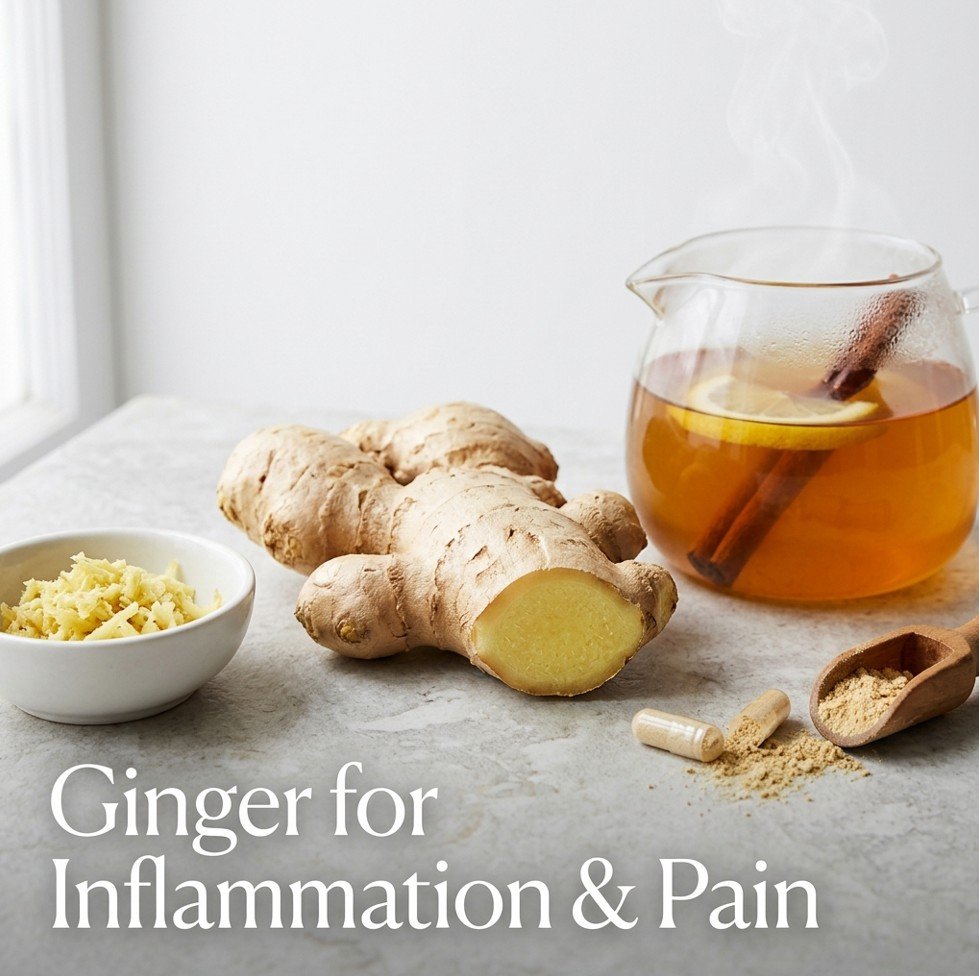
For thousands of years, ginger (Zingiber officinale) has been a cornerstone of traditional medicine systems — Ayurveda, traditional Chinese medicine, and European herbalism — for treating inflammatory conditions, joint pain, digestive complaints, and respiratory infections. Modern science has begun to validate many of these uses, identifying the bioactive compounds responsible for ginger’s effects and testing them in clinical trials.
This article focuses specifically on ginger’s role in inflammation and pain relief. You will learn which types of pain respond best to ginger, how to prepare and dose it correctly, and what the research says about its effectiveness compared to conventional pain relievers.
Understanding Inflammation and Pain: Why Ginger May Help
Inflammation is the body’s natural response to injury or infection — acute inflammation (redness, heat, swelling) is protective. But chronic, low-grade inflammation contributes to arthritis, cardiovascular disease, diabetes, and persistent pain.
Ginger contains over 100 bioactive compounds, but the most studied are gingerols (found primarily in fresh ginger) and shogaols (formed when ginger is dried or heated). These compounds inhibit the production of pro-inflammatory molecules (prostaglandins, leukotrienes, cytokines) by blocking the enzymes cyclooxygenase-2 (COX-2) and lipoxygenase (LOX) — similar to how NSAIDs like ibuprofen work, but generally with fewer gastrointestinal side effects.
Ginger also acts as an antioxidant, reducing oxidative stress that fuels inflammation. The effect is modest compared to pharmaceutical NSAIDs, but for mild to moderate pain, ginger can be a useful supportive option.
Forms of Ginger and Their Anti-Inflammatory Potency
Not all ginger is equal. The preparation method dramatically affects its chemical profile:
- Fresh ginger root: Highest in gingerols. Best for acute inflammation and nausea. Can be grated, juiced, or brewed as tea.
- Dried ginger powder: Gingerols convert partially to shogaols, which are more potent anti-inflammatory agents in some studies. Dried ginger is common in supplements.
- Cooked ginger: Heat reduces gingerol content. Light cooking (sautéing) preserves some activity; boiling for long periods reduces potency.
- Ginger extract (standardized): Supplements standardized to 5% gingerols or 10% shogaols provide consistent dosing. These are the most researched forms for clinical pain trials.
What the Evidence Says: Ginger for Specific Pain Conditions
1. Osteoarthritis (especially of the knee)
Osteoarthritis is the most studied condition for ginger’s pain-relieving effects. A 2015 meta-analysis of five randomized controlled trials involving 593 patients found that ginger extract significantly reduced pain and disability in people with knee osteoarthritis. The effect was modest — about a 30% reduction in pain scores — comparable to low-dose ibuprofen or acetaminophen in some studies. A 2022 systematic review concluded that ginger is a safe and moderately effective adjunctive treatment for osteoarthritis.
How to use: Standardized ginger extract (250–500 mg, 2–3 times daily) or 2–4 grams of fresh ginger daily. Effects may take 2–4 weeks to become noticeable.
2. Muscle Soreness After Exercise (Delayed Onset Muscle Soreness)
Several trials have examined ginger for exercise-induced muscle pain. A 2010 randomized trial found that daily supplementation with raw (2 grams) or heated (2 grams) ginger reduced muscle pain after eccentric exercise (lowering weights) by 25–30% compared to placebo. A 2016 meta-analysis confirmed a small but significant reduction in muscle soreness.
How to use: Take ginger 24–48 hours before exercise and continue for 2–3 days afterward. Fresh ginger (grated into food or tea) or capsules (500–1000 mg) are both effective.
3. Menstrual Pain (Primary Dysmenorrhea)
Dysmenorrhea affects up to 90% of menstruating women. Ginger has been compared to ibuprofen and mefenamic acid in several trials. A 2018 systematic review of 7 randomized trials (including over 600 women) found that ginger (500–2000 mg daily during the first 3–4 days of menstruation) reduced pain severity as effectively as NSAIDs in some studies, with fewer side effects. The effect was dose-dependent.
How to use: Take ginger capsules (250 mg every 6 hours) or drink strong ginger tea (1 tablespoon of fresh grated ginger per cup, steeped 15 minutes) starting at the onset of menstruation for 3–4 days.
4. Rheumatoid Arthritis
Evidence for rheumatoid arthritis (an autoimmune inflammatory arthritis) is weaker. One small 2005 trial found that ginger powder reduced pain and swelling in some patients, but subsequent studies have been inconsistent. Ginger is not a substitute for disease-modifying antirheumatic drugs (DMARDs) but may be used as an adjunct.
How to use: If you have RA, discuss ginger with your rheumatologist before starting. Do not replace prescribed medication.
5. Lower Back Pain and General Chronic Pain
There are few high-quality trials specifically on lower back pain. A 2016 study found that a combination of ginger and cinnamon reduced pain in people with chronic low back pain, but ginger alone has not been well-studied. For general chronic pain, the evidence is extrapolated from osteoarthritis and muscle soreness studies.
How to Use Ginger for Inflammation and Pain at Home
Fresh Ginger Tea (Best for Acute Pain or Nausea)
Ingredients: 2–3 cm (1 inch) fresh ginger root, 500 ml water, optional honey and lemon.
Instructions:
- Peel the ginger and slice thinly (do not grate — slices release flavor more slowly).
- Bring water to a boil, add ginger slices, reduce heat to low.
- Simmer for 10–15 minutes (longer = stronger and more shogaols).
- Strain, add honey and lemon to taste.
- Drink 2–4 cups daily.
Ginger Compress (For Localized Joint or Muscle Pain)
Ingredients: Fresh ginger root (grated), warm water, a clean cloth.
Instructions:
- Grate 2 tablespoons of fresh ginger.
- Wrap in a thin cloth or cheesecloth, tie closed.
- Dip the bundle in warm water (not boiling) for 30 seconds.
- Apply directly to the painful joint (knee, shoulder, lower back) for 15–20 minutes.
- Repeat twice daily.
Ginger Paste or Oil (Topical Application)
Ingredients: Fresh ginger juice (grated ginger squeezed through a cloth) mixed with a carrier oil (coconut, jojoba, or almond oil) at a 1:3 ratio.
Instructions:
- Grate fresh ginger and press through a fine strainer to extract juice.
- Mix 1 part ginger juice with 3 parts carrier oil.
- Massage into painful area (knees, hands, muscles).
- Wash hands thoroughly afterward (ginger can irritate eyes).
Note: Topical ginger may cause mild warming sensation or skin irritation. Test on a small area first.
Ginger Capsules (For Consistent Dosing)
If you prefer supplements, choose a product that:
- Is standardized to 5% gingerols or 10% shogaols.
- Lists the total ginger content and active compound percentage.
- Has third-party testing (USP, NSF, or ConsumerLab approved).
Typical dose for pain: 500–1000 mg of ginger extract daily, divided into 2–3 doses. Do not exceed 4 grams total (fresh equivalent) per day.
Comparison with Conventional Pain Relievers
| Aspect | Ginger (therapeutic doses) | Ibuprofen / NSAIDs |
|---|---|---|
| Pain reduction (osteoarthritis) | ~30% | ~40–50% |
| Onset of action | 1–4 weeks | 30–60 minutes |
| Gastrointestinal side effects | Very low (mild heartburn possible) | Moderate to high (ulcers, bleeding) |
| Kidney effects | Minimal | Potential with long-term use |
| Cardiovascular risk | None known | Increased risk with chronic use (except low-dose aspirin) |
| Drug interactions | Anticoagulants (mild), diabetes meds | Many (antihypertensives, diuretics, anticoagulants) |
Ginger is not a replacement for prescription pain management in moderate to severe arthritis, post-surgical pain, or acute injuries. It is best suited for mild to moderate chronic pain or as an adjunct to reduce NSAID dosage.
Safety, Side Effects, and Interactions
Ginger is generally recognized as safe (GRAS) by the FDA when used in food amounts. Therapeutic doses (2–4 grams daily) are safe for most healthy adults but can cause:
- Mild heartburn, belching, or stomach upset (take with food)
- Diarrhea (at very high doses above 5 grams)
- Mouth or throat irritation (from raw ginger)
Who should avoid therapeutic doses of ginger:
- People on blood thinners (warfarin, apixaban, rivaroxaban, clopidogrel): Ginger has mild antiplatelet effects. While the risk of bleeding is low at standard doses, high doses (over 4 grams) should be avoided without medical supervision. One case report described bleeding after excessive ginger intake.
- People about to have surgery: Stop high-dose ginger at least 2 weeks before elective surgery.
- People with gallstones: Ginger stimulates bile flow and could theoretically cause pain in obstructive gallstone disease. Safe in small amounts but consult a doctor.
- Pregnant women: Ginger is likely safe for morning sickness at doses up to 1 gram daily (about 1 teaspoon of fresh ginger). Higher doses for pain are not recommended during pregnancy unless supervised by an obstetrician. Do not use ginger for pain in the third trimester without medical advice.
- Breastfeeding women: Small amounts (culinary use) are safe. High-dose supplements lack safety data.
- People with bleeding disorders: Caution advised.
Medication interactions (moderate to high doses):
- Anticoagulants/antiplatelets: Potential additive effect.
- Diabetes medications (insulin, metformin, sulfonylureas): Ginger may lower blood sugar. Monitor glucose levels.
- Antihypertensive drugs (calcium channel blockers, ACE inhibitors): Ginger may have mild additive blood pressure-lowering effects.
- NSAIDs (ibuprofen, naproxen): Combining with ginger may increase bleeding risk slightly, but the combination is generally safe for short-term use. Monitor for bruising.
How to Maximize Ginger’s Anti-Inflammatory Effects
Combine with black pepper: Piperine (in black pepper) increases the absorption of gingerols by up to 200%. Add a pinch of black pepper to ginger tea or take supplements that include piperine.
Pair with turmeric: Ginger and turmeric have synergistic anti-inflammatory effects. A 2016 trial found that a combination was more effective than either alone for knee osteoarthritis.
Use consistently: Unlike NSAIDs that work within an hour, ginger’s anti-inflammatory effect builds over days to weeks. Take it daily for at least 4 weeks before evaluating its benefit.
Choose the right form: For osteoarthritis, dried ginger powder (in capsules) may be more potent due to higher shogaol content. For muscle soreness, fresh ginger appears equally effective.
When Ginger Is Not Enough — When to See a Doctor
Ginger is a supportive remedy, not a cure for inflammatory diseases. Seek medical attention if:
- Joint pain is accompanied by swelling, redness, warmth, or fever (possible septic arthritis or gout).
- You have sudden, severe pain or pain after trauma.
- Pain interferes with daily function despite 4 weeks of consistent ginger use.
- You have unexplained weight loss, night sweats, or fatigue with pain (possible inflammatory or malignant conditions).
- You are already on prescribed anti-inflammatory or immunosuppressive medications — do not stop them to try ginger.
FAQ
Q1: How much fresh ginger should I eat per day for inflammation?
For therapeutic effect, aim for 2–4 grams of fresh ginger daily. One thumb-sized piece (about 5 cm) weighs approximately 10–15 grams, so 1–2 cm per day is sufficient. Do not exceed 4 grams (about a 5 cm piece) without medical supervision.
Q2: Can I take ginger with ibuprofen or other NSAIDs?
Yes, but use caution. Both have mild blood-thinning effects and can irritate the stomach. Taking them together increases the risk of gastrointestinal bleeding, though this risk is low for short-term use (a few days). If you need both, take ginger with food and limit the duration. If you develop stomach pain or notice dark or bloody stools, stop both and see a doctor.
Q3: Is ginger better than turmeric for pain?
They work differently. Some studies suggest ginger is slightly more effective for muscle pain and menstrual cramps, while turmeric (curcumin) has stronger evidence for osteoarthritis and general inflammation. Many people benefit from combining them. See our turmeric article (coming soon in this series) for more details.
Q4: Can ginger help with nerve pain (neuropathy)?
There is no strong evidence that ginger helps with neuropathic pain (diabetic neuropathy, post-herpetic neuralgia). Some animal studies suggest potential, but human trials are lacking. Stick to proven treatments (gabapentin, pregabalin, duloxetine) and discuss any supplement use with your doctor.
Q5: How long does it take for ginger to work for arthritis pain?
Most clinical trials show measurable improvement after 2–4 weeks of daily use. Do not expect immediate relief. If you have not noticed any benefit after 6–8 weeks, ginger is unlikely to help your specific pain.
Q6: Is ginger safe for long-term daily use?
Yes, for most people. Traditional use spans millennia. Modern studies have used ginger for up to 6 months with no serious adverse effects. However, long-term use of any supplement should be periodically reviewed with a healthcare provider. Consider taking a 1-week break every 2–3 months to assess whether you still need it.
Key Takeaways
- Ginger reduces inflammation by inhibiting COX-2 and LOX enzymes, similar to NSAIDs but with fewer gastrointestinal side effects.
- The strongest evidence supports ginger for knee osteoarthritis, menstrual cramps, and exercise-induced muscle soreness.
- Fresh ginger (highest in gingerols) and dried ginger powder (higher in shogaols) are both effective; choose based on convenience.
- Therapeutic doses: 2–4 grams of fresh ginger or 500–1000 mg of standardized extract daily, divided into 2–3 doses.
- Ginger is not a replacement for prescription medications in moderate to severe inflammatory conditions. Always consult your doctor before combining ginger with blood thinners, diabetes medications, or NSAIDs.
Internal Links Used
- European herbs for digestion support — in the introduction, as ginger is also a European herbal remedy for digestion, linking to related content
- Sore throat herbs — in the “Forms of Ginger” section, as ginger tea is mentioned for sore throat relief
- Stress support herbs — in the FAQ or safety section, as chronic pain is linked to stress, offering a related resource
- Turmeric and curcumin: the ultimate natural anti-inflammatory – in the synergy section (already there – add another)
Add: Best natural remedies for joint pain and arthritis – in the osteoarthritis section - Acupuncture for pain relief: what science says – in the chronic pain section
- Ashwagandha: benefits for stress, sleep and hormones – in the stress-related inflammation section
Sources
- Bartels, E. M., et al. (2015). “Efficacy and safety of ginger in osteoarthritis patients: a meta-analysis of randomized controlled trials.” Osteoarthritis and Cartilage.
- Black, C. D., et al. (2010). “Ginger (Zingiber officinale) reduces muscle pain caused by eccentric exercise.” The Journal of Pain.
- Daily, J. W., et al. (2015). “Efficacy of ginger for treating nausea and vomiting: a systematic review.” Integrative Medicine Insights.
- Negi, R., et al. (2018). “Ginger for primary dysmenorrhea: a systematic review and meta-analysis.” Evidence-Based Complementary and Alternative Medicine.
- Mashhadi, N. S., et al. (2013). “Anti-inflammatory and anti-oxidative effects of ginger.” International Journal of Preventive Medicine.
- National Center for Complementary and Integrative Health (NCCIH). “Ginger.” nccih.nih.gov.