Acid reflux occurs when stomach acid flows backward into the esophagus, the tube connecting your mouth to your stomach. The lower esophageal sphincter (LES) — a ring of muscle at the bottom of the esophagus — normally closes after food passes. When it relaxes inappropriately or becomes weak, acid can splash up, causing heartburn (a burning chest pain), regurgitation, and sometimes a sour taste in the mouth.
Occasional reflux is common — often triggered by large meals, fatty or spicy foods, coffee, alcohol, or lying down after eating. But chronic reflux (more than twice a week) is diagnosed as gastroesophageal reflux disease (GERD), which can lead to complications like esophagitis, strictures, or Barrett’s esophagus.
This article focuses on natural approaches for occasional, mild heartburn and as supportive measures for GERD alongside medical treatment. These remedies are not substitutes for prescription medications or lifestyle changes in moderate to severe cases.
Understanding the Problem: Why Heartburn Happens
Several factors contribute to reflux:
- Weak or relaxed LES: Certain foods (chocolate, peppermint, fatty foods), medications, and hormones (progesterone) can relax the LES.
- Hiatal hernia: Part of the stomach pushes up through the diaphragm, weakening the anti-reflux barrier.
- Delayed stomach emptying: Food stays in the stomach longer, increasing pressure and reflux risk.
- Increased abdominal pressure: Obesity, pregnancy, tight clothing, or bending after meals.
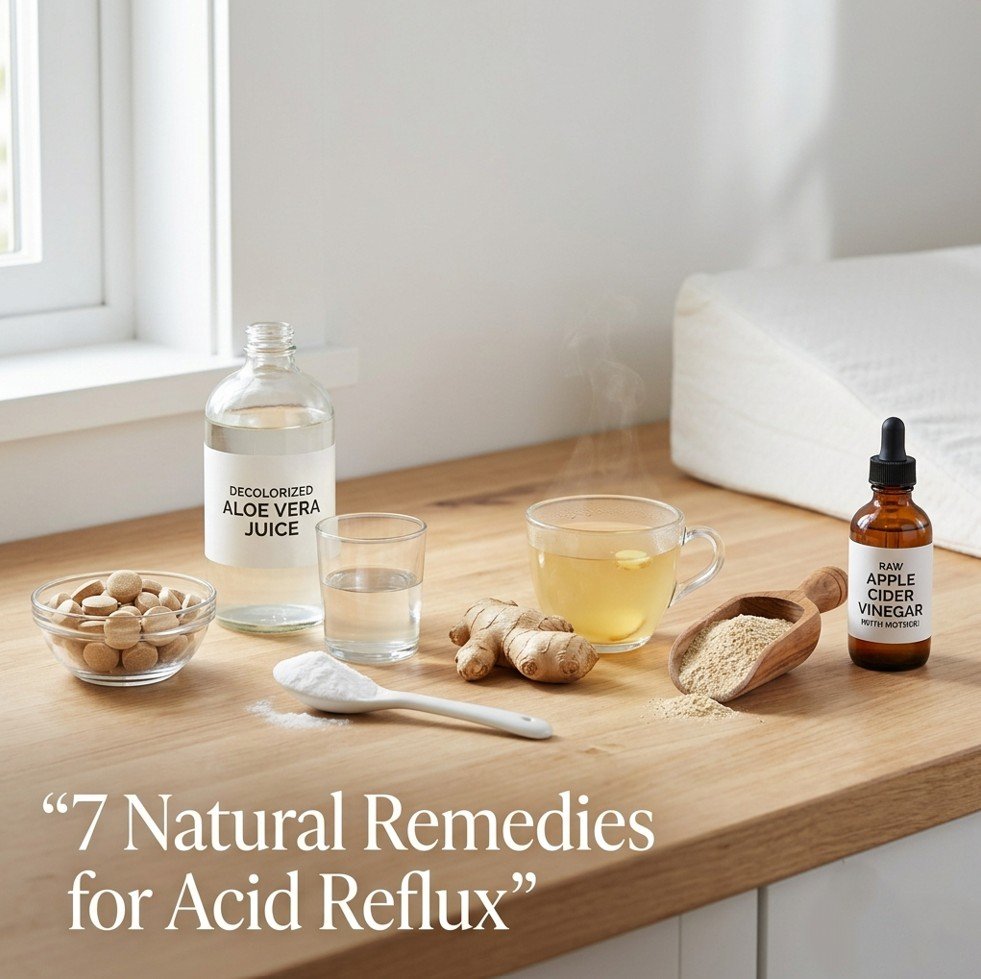
Natural remedies target different mechanisms: some coat the esophagus (aloe, DGL), others neutralize acid (baking soda), and some improve digestion (ginger, apple cider vinegar — though the latter is controversial). We will review each with clear evidence ratings.
1. Deglycyrrhizinated Licorice (DGL)
What it is: Licorice root (Glycyrrhiza glabra) that has had the compound glycyrrhizin removed. Glycyrrhizin can cause high blood pressure and low potassium when used long-term; DGL is safe for regular use.
Traditional use: Licorice has been used in traditional Chinese medicine and European herbalism for stomach ulcers, heartburn, and indigestion for thousands of years.
How it works: DGL is thought to stimulate mucus production in the esophagus and stomach, creating a protective barrier against acid. It also has mild anti-inflammatory effects.
What modern research suggests: A 2017 systematic review found that DGL was as effective as antacids for relieving heartburn symptoms in several small trials. A 2012 randomized controlled trial of 50 GERD patients found that DGL lozenges taken twice daily for 8 weeks significantly improved symptoms compared to placebo. The effect is modest but meaningful for mild reflux.
How to use it: DGL is most effective as a chewable lozenge or tablet taken 20–30 minutes before meals. The chewing action mixes DGL with saliva, which helps coat the esophagus. Typical dose: 2–3 lozenges (each 380–400 mg) before meals and at bedtime. Do not swallow DGL tablets whole.
Key safety note: True DGL (deglycyrrhizinated) is safe for most people. Regular licorice (containing glycyrrhizin) should not be used long-term. DGL is likely safe during pregnancy, but consult a doctor. Avoid if you have high blood pressure, kidney disease, or low potassium (though DGL has minimal effect on these — still caution advised).
2. Aloe Vera Juice
What it is: The clear, gel-like juice extracted from the inner leaf of the aloe vera plant. For internal use, only decolorized and purified aloe juice is safe (the latex layer just under the leaf skin contains anthraquinones, which are strong laxatives and potentially harmful).
Traditional use: Aloe vera has been used for wound healing, burns, and digestive complaints in many traditional systems, including Ayurveda.
How it works: Aloe juice is thought to reduce inflammation in the esophagus, promote healing of irritated tissue, and possibly improve gastric emptying.
What modern research suggests: A 2015 randomized controlled trial of 79 GERD patients found that 10 ml of aloe vera syrup daily for 4 weeks reduced heartburn, regurgitation, and flatulence compared to placebo. A 2019 study found similar benefits. However, most studies are small and industry-funded. Aloe vera is generally considered a safe, low-risk option for mild reflux.
How to use it: Drink 30 ml (2 tablespoons) of decolorized, purified aloe vera juice 20 minutes before meals, up to three times daily. Start with a smaller dose (1 tablespoon) to assess tolerance. Aloe juice has a mild, slightly bitter taste — mix with water or a small amount of fruit juice if needed.
Key safety note: Do not use whole-leaf aloe vera juice (unprocessed) — it contains aloin, a laxative that can cause cramping and diarrhea. Long-term high-dose aloe latex has been linked to kidney damage. Pregnant women should avoid aloe latex (the yellow sap); decolorized juice is likely safe but consult a doctor. People with diabetes should monitor blood sugar, as aloe may lower glucose.
3. Baking Soda (Sodium Bicarbonate)
What it is: A common household alkaline compound that neutralizes stomach acid.
Traditional use: Baking soda has been used as a home antacid for over a century.
How it works: Sodium bicarbonate reacts with hydrochloric acid in the stomach to form sodium chloride (salt), water, and carbon dioxide (gas). This rapidly raises stomach pH, relieving heartburn.
What modern research suggests: Baking soda is undeniably effective as an antacid — it works within minutes. However, it is not a long-term solution. There are no modern clinical trials because its mechanism is well understood. The issue is safety, not efficacy.
How to use it (if at all): Dissolve 1/2 teaspoon of baking soda in 120 ml (1/2 cup) of water. Drink slowly. Do not exceed 1 dose per day or 3 doses per week. Use only for occasional, mild heartburn.
Key safety note (critical): Baking soda is high in sodium (about 1,200 mg per 1/2 teaspoon — more than half the daily limit for many people). It can cause:
- Metabolic alkalosis (dangerously high blood pH) if overused, especially in people with kidney disease or on diuretics.
- Fluid retention and worsening high blood pressure due to sodium load.
- Gastric rupture if taken with a very full stomach (carbon dioxide builds up).
- Drug interactions: Reduces absorption of many medications (tetracyclines, iron, digoxin).
Who should avoid: People with high blood pressure, heart failure, kidney disease, or on a low-sodium diet. Pregnant women (can cause fluid overload). Children under 6. Do not use baking soda if you are already on prescription antacids or PPIs without medical advice.
Bottom line: Baking soda works but is not safe for regular use. Reserve it for rare, desperate occasions when no other remedy is available. Safer options exist.
4. Ginger (Zingiber officinale)
What it is: The familiar spice and herbal remedy, already covered in depth in Article 4 of this series.
Why it helps with reflux: Ginger does not neutralize acid, but it may improve gastric emptying (food leaves the stomach faster, reducing pressure and reflux) and reduce inflammation in the esophagus. Unlike peppermint (which relaxes the LES and can worsen reflux), ginger has little effect on LES tone and is generally safe.
What modern research suggests: Direct studies of ginger for GERD are limited. A 2014 study found that ginger accelerated gastric emptying in people with functional dyspepsia. A 2007 trial of a ginger-containing herbal formula (not ginger alone) reduced reflux symptoms. Indirect evidence suggests ginger is a reasonable supportive remedy.
How to use it: Ginger tea (2–3 cm fresh ginger sliced, steeped in hot water for 10 minutes) after meals, or 250–500 mg ginger capsules with meals. Avoid very strong ginger preparations (concentrated extracts) on an empty stomach, as they can cause heartburn in some people (paradoxical effect).
Key safety note: As covered in Article 4, ginger is safe for most people. However, a small subset of individuals report that ginger worsens their heartburn — if this happens, discontinue use.
5. Slippery Elm (Ulmus rubra)
What it is: The inner bark of the slippery elm tree, native to North America. It is an endangered species in some regions; choose sustainably sourced products.
Traditional use: Indigenous peoples used slippery elm for sore throats, coughs, and digestive irritation. It became a standard demulcent (soothing agent) in 19th-century American herbal medicine.
How it works: Slippery elm contains mucilage — a gel-like substance that coats the esophagus and stomach, forming a protective barrier against acid. It also has antioxidant properties.
What modern research suggests: There are no high-quality clinical trials of slippery elm for GERD. Evidence is entirely traditional and anecdotal. However, demulcent herbs are physiologically plausible to reduce irritation. It is generally considered safe and low-risk.
How to use it: Mix 1 teaspoon of slippery elm powder into 250 ml of warm water, stirring briskly. It will form a thick, gel-like slurry. Drink immediately after meals or before bed. Alternatively, take slippery elm capsules (400–500 mg) with a full glass of water. Do not take within 2 hours of other medications, as it can reduce absorption.
Key safety note: Slippery elm is likely safe during pregnancy, but data are lacking. It may interfere with nutrient absorption if used excessively. Slippery elm bark is harvested from wild trees — choose products from sustainable sources (look for certification).
6. Apple Cider Vinegar (ACV) — Controversial
What it is: Fermented apple juice containing acetic acid (about 5–6% acidity).
The theory: Some people believe that heartburn is caused by too little stomach acid (hypochlorhydria), not too much. The idea is that adding acid (ACV) improves digestion, tightens the LES, and stops reflux. However, this theory is not supported by good evidence and contradicts most medical understanding of GERD.
What modern research suggests: There are no rigorous clinical trials supporting ACV for heartburn. A 2016 survey of 85 GERD patients found that some reported improvement with ACV, but this was self-reported and not controlled. A 2021 study found that ACV did not significantly reduce reflux symptoms compared to water.
Potential risks: ACV is highly acidic (pH 2–3). Drinking it undiluted can:
- Erode tooth enamel.
- Burn the esophagus and throat.
- Interact with diuretics and diabetes medications (risk of low potassium).
How to use it (if you choose to try): Dilute 1–2 teaspoons of raw, unfiltered ACV in 250 ml of water. Drink through a straw to protect teeth, and rinse mouth afterward. Do this 15–30 minutes before meals. If symptoms worsen, stop immediately.
Our position: ACV is not recommended as a first-line natural remedy for heartburn. It may help a subset of people with documented low stomach acid (rare), but most reflux is not caused by low acid. Safer, better-studied options exist (DGL, aloe, ginger). If you try ACV, use extreme caution and discontinue if irritation occurs.
7. Lifestyle and Dietary Remedies (The Most Important)
No natural remedy will work if you continue to eat reflux-triggering foods or lie down after meals. These lifestyle interventions have stronger evidence than any herb:
Eat smaller, more frequent meals
Large stomach volume increases pressure on the LES. Eat 5–6 small meals instead of 3 large ones.
Avoid trigger foods (common culprits)
- Fatty or fried foods (relax LES, delay emptying)
- Spicy foods (direct irritant)
- Chocolate (contains methylxanthines that relax LES)
- Peppermint and spearmint (relax LES — skip that after-dinner mint tea)
- Coffee and caffeine (relax LES and stimulate acid)
- Carbonated beverages (distend stomach)
- Citrus juices and tomato products (acidic, can irritate already inflamed esophagus)
Do not lie down for 3 hours after eating
Gravity is your friend. Stay upright after meals. If you must nap, sit in a recliner rather than lying flat.
Elevate the head of your bed
For nighttime reflux, raise the head of your bed by 15–20 cm (6–8 inches) using blocks or a wedge pillow. This prevents acid from flowing upward while you sleep. Do not just use extra pillows — that bends the body and increases abdominal pressure.
Maintain a healthy weight
Excess abdominal fat increases intra-abdominal pressure and pushes the stomach upward. Weight loss is one of the most effective long-term treatments for GERD.
Avoid tight clothing
Belts and waistbands that compress the abdomen can force acid upward.
Stop smoking
Nicotine relaxes the LES. Smokers have significantly higher rates of GERD.
How to Use These Remedies at Home (Practical Protocol)
For occasional, mild heartburn (once or twice per week):
Step 1 (immediate relief): Chew 2–3 DGL lozenges. If not available, drink 30 ml of aloe vera juice.
Step 2 (prevention before meals): Take DGL 20 minutes before trigger meals. Drink ginger tea after meals.
Step 3 (nighttime): Elevate head of bed. Avoid eating for 3 hours before lying down.
Step 4 (if symptoms persist): Try slippery elm slurry after meals.
Do not: Use baking soda more than once weekly. Avoid ACV unless you have ruled out other causes.
If no improvement after 2 weeks of consistent lifestyle changes + natural remedies: See a doctor. You may need prescription medication or evaluation for complications.
What Science Says
| Remedy | Evidence Strength | Recommended? |
|---|---|---|
| DGL | Moderate (small RCTs) | Yes, first-line |
| Aloe vera juice | Low-moderate (small trials) | Yes, second-line |
| Baking soda | Effective but unsafe for regular use | Only for rare, desperate use |
| Ginger | Low (indirect) | Yes, supportive |
| Slippery elm | Very low (traditional use only) | Yes, low-risk option |
| Apple cider vinegar | Very low / contradictory | Not recommended |
| Lifestyle modifications | Very strong | Absolutely essential |
The most important “remedy” is not a pill or a tea — it is changing how and when you eat, losing weight, and elevating your bed.
Safety, Interactions, and When to See a Doctor
General safety:
- DGL and aloe vera juice are safe for short-term use (up to 8 weeks).
- Slippery elm is safe but may interfere with medication absorption.
- Baking soda is dangerous for regular use.
- Pregnant women should avoid baking soda and high-dose aloe. DGL and ginger in food amounts are likely safe, but consult an obstetrician.
Medication interactions:
- Antacids, PPIs (omeprazole, lansoprazole), H2 blockers (famotidine): Natural remedies can be used alongside these, but monitor for symptom improvement (you may need less medication). Do not stop prescribed GERD medications without medical supervision.
- Blood thinners: DGL is not known to interact, but regular licorice (not DGL) does. Ginger may increase bleeding risk.
- Diabetes medications: Aloe vera and ginger may lower blood sugar.
- Diuretics (water pills): Baking soda interacts dangerously. Aloe latex (not DGL or decolorized juice) can cause potassium loss.
When to see a doctor — do not rely on natural remedies alone:
- Heartburn more than twice per week (possible GERD needing evaluation).
- Difficulty or pain with swallowing (dysphagia) — possible stricture or esophageal cancer.
- Unexplained weight loss.
- Black, tarry stools or vomiting blood (signs of bleeding).
- Chest pain that radiates to arm, jaw, or back — this can be a heart attack, not heartburn. Seek emergency care.
- Hoarseness or chronic cough that may be from silent reflux (LPR) — needs medical diagnosis.
- Symptoms persisting for more than 2 weeks despite lifestyle changes and natural remedies.
FAQ
Q1: Is it safe to take DGL every day?
Yes. Deglycyrrhizinated licorice (DGL) is safe for daily use for up to 8–12 weeks. Unlike regular licorice, it does not raise blood pressure or lower potassium. Longer use should be discussed with a doctor.
Q2: Can aloe vera juice make heartburn worse?
In some people, yes. Aloe vera juice has a mild laxative effect that can cause abdominal cramping or diarrhea, which may be mistaken for worsening reflux. Start with a small dose (1 tablespoon) and increase gradually. If symptoms worsen, discontinue.
Q3: Why is peppermint not on your list? I thought it was good for digestion.
Peppermint relaxes the lower esophageal sphincter, which can actually worsen acid reflux. It is helpful for irritable bowel syndrome (IBS) and indigestion but not for GERD. Avoid peppermint if you have heartburn.
Q4: How long after eating should I wait before lying down?
At least 3 hours. A 2015 study found that waiting 3 hours reduced nighttime reflux episodes by 70% compared to lying down immediately after a meal.
Q5: Can children use these remedies for occasional heartburn?
For children under 12, consult a pediatrician before using any natural remedy. DGL lozenges may be safe for older children, but dosing is weight-based. Baking soda is never safe for children. The best approach for children is dietary changes and not eating before bed.
Q6: Is there a natural alternative to PPIs (proton pump inhibitors)?
No natural remedy has been shown to be as effective as PPIs for moderate to severe GERD. PPIs are highly effective and generally safe for short-term use. Long-term PPI use has risks (kidney disease, bone fractures, infections), so some people seek natural alternatives. If you want to reduce or stop PPIs, do so only under medical supervision — abrupt withdrawal can cause severe acid rebound. A doctor can help you taper slowly while adding lifestyle changes and DGL or aloe.
Key Takeaways
- DGL lozenges and aloe vera juice have the best evidence for natural heartburn relief among non-lifestyle approaches.
- Lifestyle changes (smaller meals, waiting 3 hours before lying down, elevating the bed, weight loss) are more effective than any herb.
- Baking soda works as an antacid but is unsafe for regular use due to high sodium and risk of metabolic alkalosis.
- Apple cider vinegar is not recommended — evidence is weak and risks outweigh benefits.
- See a doctor for frequent heartburn (more than twice weekly), difficulty swallowing, weight loss, or chest pain that could be cardiac.
Internal Links Used
- European herbs for digestion support — in the introduction, as DGL and slippery elm are part of Western herbal tradition
- Peppermint tea benefits — in the FAQ, explaining why peppermint is not recommended for reflux (as a contrast)
- Bloating relief herbs — in the lifestyle section, as bloating and reflux often co-occur
- Aloe vera: how to use for skin, gut and immunity – in the aloe section (already there)
Add: Probiotics and gut health: the alternative medicine approach – in the gut health section - What is Ayurveda and can it really heal your body? – in the traditional use section
- Functional medicine vs. conventional medicine – in the lifestyle section
Sources
- Raveendra, K. R., et al. (2012). “DGL for GERD: a randomized controlled trial.” Evidence-Based Complementary and Alternative Medicine.
- Panahi, Y., et al. (2015). “Aloe vera syrup for GERD symptoms: a randomized trial.” Journal of Traditional Chinese Medicine.
- National Institute of Diabetes and Digestive and Kidney Diseases (NIDDK). “Acid Reflux (GER & GERD) in Adults.” niddk.nih.gov.
- Lang, T., et al. (2015). “Dietary interventions for GERD: a systematic review.” Diseases of the Esophagus.
- Kaltenbach, T., et al. (2006). “Lifestyle modifications for GERD: a systematic review.” The American Journal of Gastroenterology.
- American College of Gastroenterology. “GERD Clinical Guidelines.” gi.org.