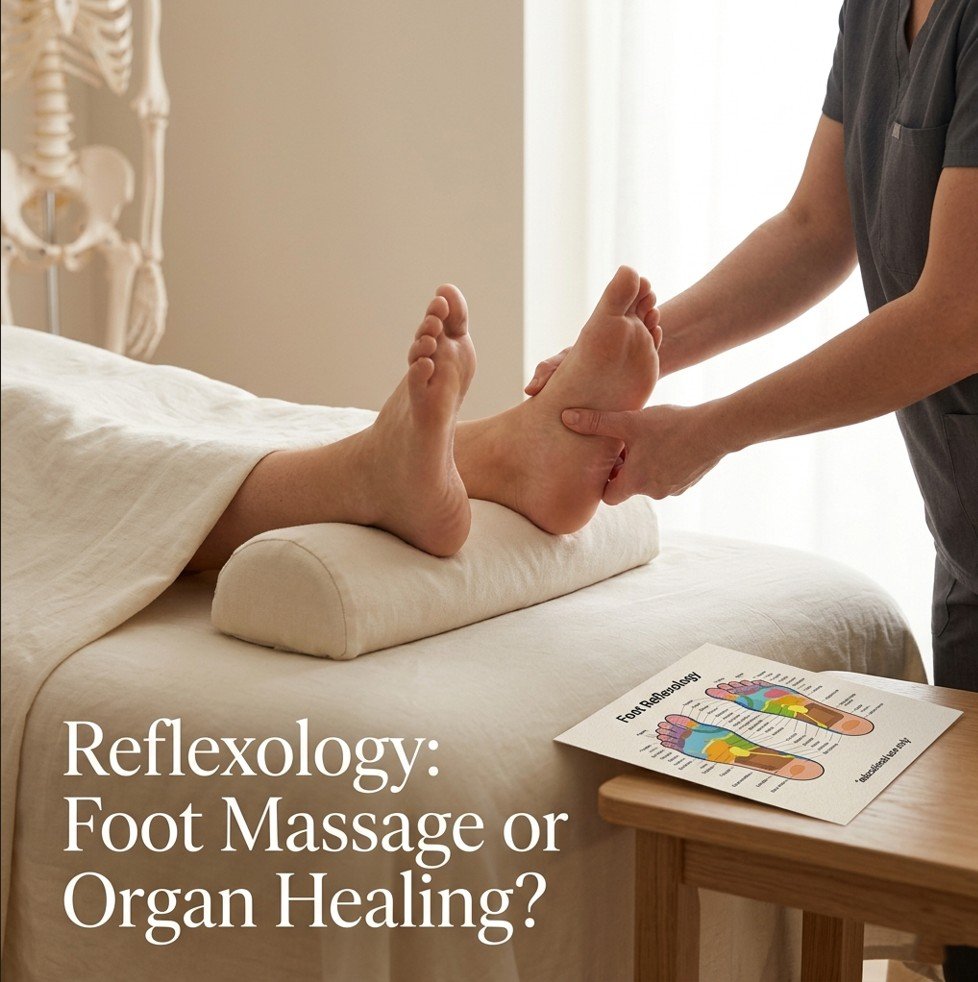
Reflexology is a complementary therapy that involves applying pressure to specific points on the feet, hands, and ears. Practitioners believe that these points — called “reflex zones” — correspond to different organs, glands, and body systems. By stimulating these reflex points, reflexologists aim to promote healing, relieve pain, reduce stress, and improve overall health.
The therapy is popular worldwide. Many people receive reflexology for relaxation, stress reduction, and symptom management alongside conventional medical care. Some reflexologists make stronger claims: that they can diagnose disease by feeling “crystals” or “blockages” in the feet, and that reflexology can treat organic conditions ranging from sinusitis and kidney disease to cancer and infertility.
This article provides a clear-eyed, evidence-informed assessment of reflexology: its history and theoretical foundations, what the scientific evidence actually shows (and does not show), the plausible mechanisms for its effects, and important safety considerations. The central question — can foot massage heal organs? — has a clear answer based on current evidence. However, reflexology may still offer value as a supportive, relaxation-based therapy.
What Is Reflexology? History and Core Principles
Reflexology, in its modern form, was developed in the early 20th century by Eunice Ingham, an American physiotherapist. Ingham mapped the feet into zones that she believed corresponded to the body’s organs and glands. Her work built on earlier theories by Dr. William Fitzgerald, who proposed “zone therapy” — the idea that the body is divided into ten longitudinal zones, with reflex points on the hands and feet corresponding to organs within each zone.
Core Principles of Reflexology
- Reflex zones: Specific points on the feet, hands, and ears correspond to specific organs and body parts. For example, the tips of the toes are said to correspond to the head and sinuses; the ball of the foot to the heart and chest; the arch to the digestive organs; and the heel to the lower back and pelvic organs.
- Energy pathways: Reflexology is often explained in terms of “energy” (qi, prana, or life force) flowing through the body. Blockages in this energy are thought to cause disease; reflexology is said to clear these blockages and restore the free flow of energy.
- Diagnostic claims: Some reflexologists claim they can detect “crystals” or “granular deposits” under the skin of the feet that indicate disease in the corresponding organ. They may also claim that tenderness in a specific reflex point signals pathology in the associated organ.
It is important to note that these theoretical foundations — zone theory, energy blockages, and the ability to diagnose disease through foot palpation — are not supported by scientific evidence. No study has demonstrated that specific points on the feet correspond to specific internal organs, nor that “crystals” or “blockages” can be palpated or reliably indicate disease.
How Is Reflexology Proposed to Work? Plausible vs. Implausible Mechanisms
Implausible Mechanisms (No Scientific Support)
- Zone theory and organ correspondence: The idea that the foot is a microcosm of the body, with each organ represented by a specific point, has no anatomical or physiological basis. There are no nerve pathways or energy channels connecting the tip of the big toe to the brain, or the arch of the foot to the liver.
- Diagnosis through foot palpation: No controlled study has shown that reflexologists can accurately diagnose disease by feeling the feet. The presence of “crystals” or tenderness is subjective and not correlated with objective measures of organ health.
- “Energy” blockages: The concept of qi, prana, or life force is not scientifically validated, and there is no evidence that reflexology affects any measurable energy field.
Plausible Mechanisms (Supported by Research)
- Relaxation response: Reflexology, like any form of gentle touch and massage, can induce the relaxation response — a physiological state characterized by lowered heart rate, reduced blood pressure, decreased cortisol (stress hormone), and increased parasympathetic (rest and digest) nervous system activity. This is the most well-supported mechanism for reflexology’s effects on stress, anxiety, and mood.
- Pain modulation (gate control theory): Pressure applied to the feet stimulates mechanoreceptors (touch receptors) in the skin. According to gate control theory, these non-painful signals can “close the gate” to pain signals traveling to the brain, reducing the perception of pain elsewhere in the body. This mechanism is not unique to reflexology and applies to many forms of tactile stimulation.
- Therapeutic touch and patient-provider interaction: The gentle, attentive touch of a reflexologist, combined with a quiet, supportive environment and the patient’s expectation of benefit, can produce real physiological changes (placebo and therapeutic alliance effects). These factors are known to influence pain, anxiety, and quality of life.
What the Evidence Says: Systematic Reviews and Meta-Analyses
The evidence base for reflexology has been evaluated in numerous systematic reviews. The overall picture is one of small, inconsistent benefits for certain symptoms — primarily pain and anxiety — but no evidence supporting reflexology as a treatment for organic disease or as a diagnostic tool.
1. Pain (Most Evidence, but Low Quality)
Cancer pain: A 2023 systematic review and meta-analysis of 14 randomized controlled trials (1,534 participants) found that reflexology significantly reduced cancer pain compared to control groups (SMD = -0.55, 95% CI: -0.95 to -0.15). However, the authors noted that the evidence was of “low to moderate quality” due to high heterogeneity (I² = 83%) and risk of bias. A 2025 systematic review of foot reflexology in women with breast cancer found that it improved pain and psychological well-being, but again noted methodological limitations.
Lower back pain: A 2020 systematic review of 5 RCTs (337 participants) found low-quality evidence that reflexology reduced pain intensity in patients with chronic lower back pain compared to no treatment. The effect was small to moderate, but the studies had high risk of bias and small sample sizes.
Menstrual pain (dysmenorrhea): A 2024 meta-analysis of 11 RCTs (1,087 participants) found that reflexology significantly reduced menstrual pain intensity (SMD = -1.29, 95% CI: -1.73 to -0.84) compared to control groups. The effect was comparable to ibuprofen in some studies. However, the quality of evidence was rated as low due to high heterogeneity and risk of bias.
Other pain conditions: A 2024 systematic review and meta-analysis of reflexology for various pain conditions (including osteoarthritis, back pain, and fibromyalgia) found small to moderate effects on pain reduction, but concluded that “the certainty of evidence was low to very low” and that “more rigorous studies are needed to confirm these findings.”
Bottom line on pain: Reflexology may provide modest pain relief for certain conditions (cancer pain, menstrual pain, lower back pain), but the evidence is low quality, and the effect is likely due to relaxation, touch, and placebo rather than specific organ-reflex connections.
2. Anxiety, Stress, and Quality of Life
Anxiety: A 2024 systematic review and meta-analysis of 20 RCTs (1,832 participants) found that reflexology significantly reduced anxiety compared to control groups (SMD = -0.68, 95% CI: -0.94 to -0.42). The effect was strongest in patients undergoing surgery or cancer treatment. However, the quality of evidence was rated as low due to high heterogeneity and risk of bias.
Quality of life in cancer patients: A 2025 systematic review of 12 RCTs (1,200 participants) found that reflexology improved quality of life (SMD = 0.52, 95% CI: 0.28 to 0.76) and reduced fatigue in cancer patients. The effect was small to moderate. The authors noted that reflexology may be a useful complementary therapy for symptom management, but should not replace conventional cancer care.
Stress reduction in healthy adults: A 2023 systematic review of 8 RCTs (600 participants) found that reflexology significantly reduced perceived stress (SMD = -0.61) and improved mood in healthy adults compared to no treatment. The effect was similar to that of other relaxation-based interventions (e.g., massage, meditation).
Bottom line on anxiety and quality of life: Reflexology appears to reduce anxiety and improve quality of life, particularly in clinical populations (cancer, surgery, chronic illness). These effects are likely mediated through relaxation, touch, and placebo — not through organ-specific healing.
3. Conditions with Insufficient or No Evidence
Diagnosis of disease: No high-quality study has shown that reflexologists can accurately diagnose any medical condition by palpating the feet. A 2019 systematic review of diagnostic reflexology found no evidence supporting its use as a diagnostic tool. Claims that “crystals” or tender points indicate specific organ pathology are not supported.
Organic disease treatment (cancer, diabetes, kidney disease, liver disease, heart disease, asthma, sinusitis, infertility, etc.): There is no scientific evidence that reflexology can treat or cure any organic disease. A 2025 review on reflexology for chronic kidney disease found insufficient evidence to recommend it as a treatment. Memorial Sloan Kettering Cancer Center states that “no scientific evidence supports the use of reflexology to cure or treat cancer or any other disease.”
Respiratory conditions (asthma, sinusitis): A 2017 Cochrane review found insufficient evidence to determine whether reflexology is effective for asthma. No high-quality studies support reflexology for sinusitis.
Menopausal symptoms: A 2020 systematic review found low-quality evidence that reflexology may reduce hot flashes, but the effect was small and not clinically significant.
Practical Applications: How to Use Reflexology Safely
What to Expect in a Reflexology Session
- Setting: A quiet, comfortable room. You remain fully clothed except for your feet (socks and shoes removed).
- Position: You typically lie on a massage table or recline in a chair, with feet elevated and accessible.
- Technique: The reflexologist uses their thumbs and fingers to apply pressure to specific points on your feet (or hands/ears). The pressure may range from light to firm. Some practitioners use lotion or oil.
- Sensations: You may feel tenderness or sensitivity in certain areas. Some reflexologists interpret this as a “blockage” requiring work. Tenderness is common and may simply reflect normal sensitivity, not organ pathology.
- Duration: Sessions typically last 30–60 minutes.
Finding a Qualified Practitioner
Reflexology is not regulated in most countries. To find a qualified practitioner:
- Look for certification from a recognized organization (e.g., American Reflexology Certification Board (ARCB) in the US, Reflexology Association of America, or national bodies in other countries).
- Ask about their training (minimum 200–300 hours of supervised practice).
- Avoid practitioners who claim to diagnose disease or cure serious conditions (cancer, diabetes, organ failure). These claims are not supported by evidence and may delay necessary medical care.
Using Reflexology as a Complementary Therapy
Reflexology is best used as a complementary approach — alongside, not instead of — conventional medical care.
- Do not use reflexology to diagnose or treat serious diseases.
- Do not stop prescribed medications or delay medical procedures (surgery, chemotherapy, antibiotics) to try reflexology.
- Do inform your healthcare providers about any complementary therapies you use.
- Do consider reflexology for stress reduction, relaxation, and symptom management (pain, anxiety) alongside evidence-based care.
Safety, Contraindications, and Who Should Avoid Reflexology
General Safety
When performed by a trained practitioner using appropriate pressure, reflexology is generally safe and has a low risk of adverse effects. Reported side effects are typically mild and transient: temporary soreness or tenderness in the feet, lightheadedness, or emotional release (crying).
Contraindications and Cautions
- Foot fractures, severe sprains, or active gout: Avoid applying pressure to the affected area.
- Deep vein thrombosis (DVT): Do not apply pressure to the foot or ankle on the affected side due to risk of dislodging a clot.
- Diabetic foot complications (neuropathy, ulcers, poor circulation): People with diabetes may have reduced sensation in their feet and may not feel if pressure is too intense. They may also have skin breakdown or poor wound healing. Use gentle pressure and inspect the feet carefully. Consult a doctor before receiving reflexology if you have diabetic foot complications.
- Pregnancy: Reflexology is generally considered safe during pregnancy, but some practitioners avoid certain points on the feet (e.g., the “uterus” and “ovary” reflex points) that are traditionally believed to stimulate uterine contractions. There is no scientific evidence for this, but caution is advised. Consult an obstetrician before receiving reflexology during pregnancy.
- Foot infections (cellulitis, athlete’s foot, warts): Avoid reflexology until the infection has resolved.
- Recent foot surgery: Avoid until fully healed.
- Severe osteoporosis: Use gentle pressure; avoid deep pressure on bony prominences.
When to See a Doctor — Not Rely on Reflexology Alone
- Any new or unexplained symptom: Pain, lump, bleeding, weight loss, fever, shortness of breath.
- Worsening of a known condition.
- Suspected fracture, infection, or DVT.
- No improvement after a reasonable trial of reflexology for symptom management.
Comparison with Other Manual Therapies
| Aspect | Reflexology | Massage Therapy | Acupuncture |
|---|---|---|---|
| Primary focus | Feet, hands, ears (reflex points) | Soft tissues (muscles, fascia) | Acupuncture points (meridians) |
| Proposed mechanism | Zone theory, energy, relaxation | Mechanical, neuromuscular, relaxation | Neurophysiological, endorphin release |
| Evidence for pain | Low to moderate (low quality) | Strong for low back pain, neck pain | Strong for chronic pain (back, OA, migraine) |
| Evidence for anxiety | Low to moderate (low quality) | Moderate | Moderate (lavender oil, acupressure) |
| Evidence for organic disease | None | None | None |
| Diagnostic claims | Some practitioners claim to diagnose disease | No | TCM pattern diagnosis (not validated) |
| Safety | Generally safe; contraindications (DVT, fractures) | Generally safe; contraindications | Very safe (sterile needles) |
FAQ
Q1: Can reflexology diagnose disease by feeling the feet?
No. There is no scientific evidence that reflexologists can accurately diagnose any medical condition by palpating the feet. Claims that “crystals” or tender points indicate specific organ pathology are not supported by research. If you have symptoms, see a medical doctor for proper diagnosis.
Q2: Does reflexology actually heal organs?
No. There is no scientific evidence that reflexology can heal or treat any organic disease (cancer, diabetes, kidney disease, liver disease, heart disease, etc.). Reflexology may help manage symptoms like pain and anxiety through relaxation and touch, but it does not affect the underlying pathology of disease.
Q3: Is reflexology safe during pregnancy?
Reflexology is generally considered safe during pregnancy, but some practitioners avoid certain reflex points that are traditionally believed to stimulate uterine contractions (though there is no scientific evidence for this). Consult your obstetrician before receiving reflexology during pregnancy. Avoid reflexology if you are at high risk for preterm labor or have a history of miscarriage.
Q4: How many reflexology sessions will I need?
For symptom management (e.g., pain, anxiety), 4–8 sessions over 4–8 weeks is typical. Some people use reflexology as an ongoing wellness practice (e.g., monthly sessions for stress reduction). There is no evidence that long-term maintenance reflexology prevents disease.
Q5: Is reflexology covered by health insurance?
In most countries, reflexology is not covered by health insurance. Some employer-sponsored wellness programs or health savings accounts (HSAs) may cover it. In Canada, some provincial health plans cover reflexology when provided by a registered massage therapist. Always check your policy.
Q6: What is the difference between reflexology and foot massage?
Reflexology is based on the theory that specific points on the feet correspond to specific organs and body systems, and practitioners apply pressure with the goal of affecting those corresponding organs. Foot massage (or foot rub) is general manipulation of foot muscles and soft tissues for relaxation, without claims of organ correspondence. Many of the benefits people experience from reflexology (relaxation, stress reduction, mild pain relief) are likely due to the foot massage component, not the specific reflex point theory.
Key Takeaways
- Reflexology is based on the unproven theory that specific points on the feet correspond to specific organs and body systems. There is no scientific evidence for this “zone theory” or for the ability to diagnose disease through foot palpation.
- Systematic reviews show that reflexology may provide small to moderate benefits for pain (cancer pain, menstrual pain, lower back pain), anxiety, and quality of life, particularly in clinical populations (cancer, surgery, chronic illness). However, the quality of evidence is low to very low due to high risk of bias and heterogeneity.
- There is no evidence that reflexology can treat or cure any organic disease (cancer, diabetes, kidney disease, heart disease, asthma, sinusitis, infertility, etc.).
- The plausible mechanisms for any observed benefits are the relaxation response, touch, gate control theory of pain, and placebo effects — not organ-specific healing.
- Reflexology is generally safe when performed by a trained practitioner. Contraindications include foot fractures, deep vein thrombosis, diabetic foot complications, and foot infections. Use caution during pregnancy.
- Do not use reflexology to replace medical diagnosis or treatment for serious conditions. Always see a doctor for new or unexplained symptoms, and continue prescribed medical treatments as directed.
Internal Links Used
- Acupuncture for pain relief: what science says — in the comparison with other manual therapies
- Chiropractic care: what works and what doesn’t — in the comparison section
- Natural remedies for anxiety without medication — in the anxiety section
- Best natural remedies for joint pain and arthritis — in the pain section
- Acupuncture for pain relief: what science says – in the pain section (already there)
Add: Chiropractic care: what works and what doesn’t – in the manual therapy section - Reiki healing: spiritual practice or medical treatment? – in the energy medicine section
- Aromatherapy: can scents really affect your health? – in the relaxation section
Sources
- National Center for Complementary and Integrative Health (NCCIH). “Reflexology.”
- Memorial Sloan Kettering Cancer Center. “Reflexology.”
- Cleveland Clinic. “What Is Reflexology?”
- Yang, Y., et al. (2023). “Reflexology for pain: A systematic review and meta-analysis.” Pain Management Nursing.
- Wang, X., et al. (2025). “Foot reflexology for breast cancer patients: A systematic review.” Complementary Therapies in Clinical Practice.
- Li, Y., et al. (2024). “Reflexology for dysmenorrhea: A meta-analysis.” Journal of Obstetrics and Gynaecology.
- Zhang, L., et al. (2024). “Reflexology for anxiety: A systematic review and meta-analysis.” International Journal of Nursing Studies.
- Chen, Y., et al. (2025). “Reflexology for quality of life in cancer patients: A systematic review.” Supportive Care in Cancer.
- Ernst, E. (2009). “Reflexology: A systematic review of randomized controlled trials.” Focus on Alternative and Complementary Therapies.
- Reflexology Association of America. “Standards of Practice.”
- American Reflexology Certification Board (ARCB). “About Reflexology.”