Chaga has become a darling of the wellness industry – served in trendy coffee shops as “chaga latte” and sold as a powder for smoothies. But behind the marketing is a real medicinal mushroom with a long history in Northern and Eastern Europe.
The chaga fungus is a parasite of birch trees. It forms a sterile conk – a hard, black, cracked mass that can grow for 10–20 years before the tree dies. Unlike most bracket fungi, chaga does not produce its fruiting body on the surface; the spore‑producing structure appears only after the tree dies. The black conk is the medicine.
This profile covers Inonotus obliquus: its identity, traditional use in European folk medicine (especially Russian, Polish, Finnish, and Baltic traditions), what modern research actually shows, how to prepare it (decoction – not tea), and the serious safety concerns that many commercial sellers downplay.
What Is Chaga?
Scientific name: Inonotus obliquus (formerly Fuscoporia obliqua)
Common names: Chaga, clinker polypore, birch canker fungus, czaga (Polish), čaga (Russian), pakuri (Finnish), Schiefporling (German)
Appearance:
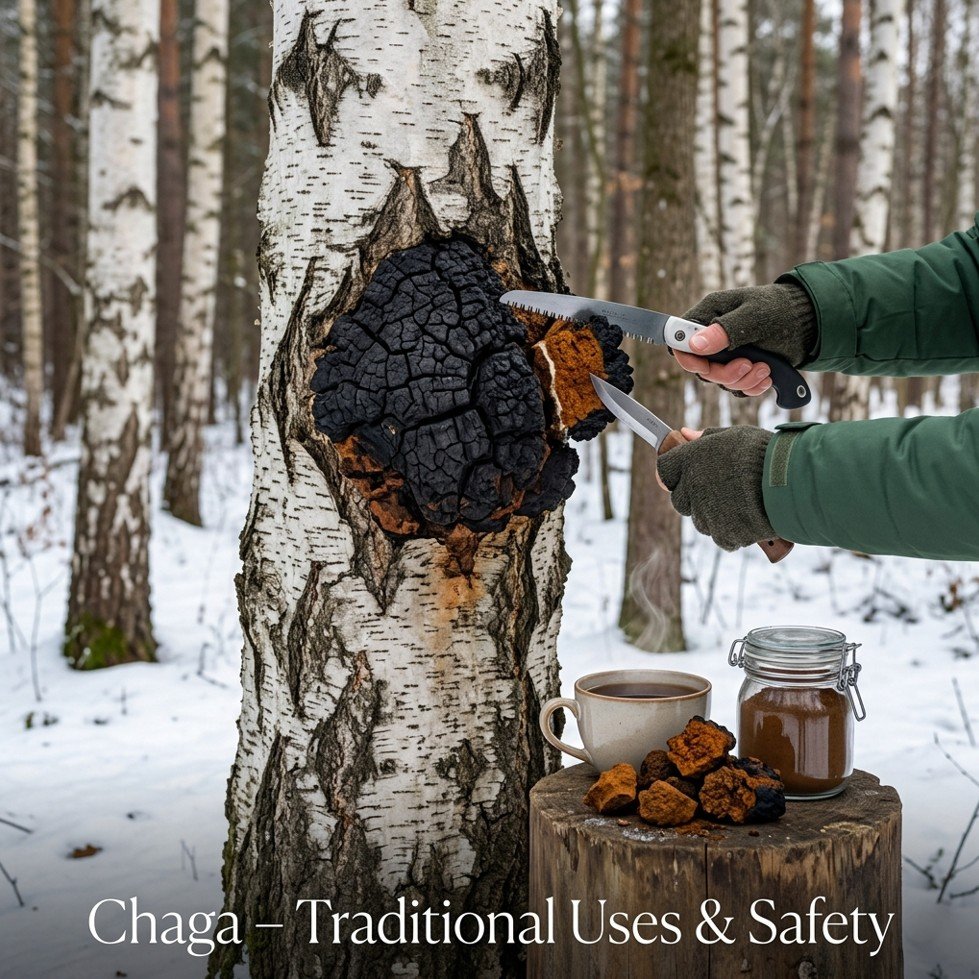
- Sterile conk: irregular, lumpy, cracked, 10–40 cm across, resembling a clump of burnt charcoal or a black, crusty mass
- Surface: black, deeply cracked, hard (resembles burnt wood)
- Interior: rust‑brown to amber‑brown, corky, with a granular texture (mycelial mass)
- Fruiting body (rarely seen): crust‑like, thin, white to grey, forms under the bark after the tree dies – not collected
- Odour: earthy, mushroomy, slightly sweet
- Taste: bitter, vanilla‑like (when brewed)
Habitat: Grows exclusively on birch trees (Betula species) – especially silver birch and downy birch – in cold northern climates. Found in Scandinavia (Finland, Sweden, Norway, northern Russia), Poland, the Baltic states (Estonia, Latvia, Lithuania), Siberia, and northern North America.
Season: Harvestable year‑round, but best in late autumn and winter when the tree’s sap is down and the conk is most concentrated. It persists on living and dead trees.
Parts used: The sterile conk – the black, cracked mass. The interior rust‑brown mycelial mass is the medicinal part; the black outer layer is also used but is harder.
Distinction from other birch fungi: Chaga is often confused with:
- Birch polypore (Fomitopsis betulina) – hoof‑shaped, white underside, not black. Chaga is black and lumpy.
- Burnt birch bark – obvious by appearance.
- Black knot fungus (on cherry/plum trees) – different host.
Why “chaga”? The word comes from the Russian чага (chaga), which is borrowed from the Komi language (a Uralic people in northeastern Europe). It has been used in Russian and Siberian folk medicine for centuries.
Traditional Use in Europe
Chaga’s traditional use is strongest in Eastern Europe – Russia, Poland, the Baltic states – and Finland. It is less known in Western European folk medicine, but its use has spread with modern interest.
Traditional European applications:
| Region | Traditional use |
|---|---|
| Russia (Komi, Khanty peoples) | Chaga decoction was used for gastrointestinal disorders (ulcers, gastritis), cancer (as a supportive measure), tuberculosis, and as a general tonic. |
| Poland | Used in folk medicine for digestive complaints and as a “blood purifier”. Gained popularity through Russian influence. |
| Finland | Used as a coffee substitute (roasted, ground, brewed like coffee) and as a remedy for stomach problems. |
| Baltic states (Estonia, Latvia, Lithuania) | Used similarly to Russia – for digestive issues, liver problems, and as a general health tonic. |
Historical note: The most famous traditional use of chaga comes from a 12th-century Russian text, the Chronicle of Kievan Rus, which describes a chaga decoction being used to treat a lip tumour in Grand Duke Vladimir Monomakh. This has led to claims that chaga “cures cancer” – but a single historical anecdote is not evidence.
Other traditional uses:
- Tinder – chaga holds an ember well; used for fire‑starting.
- Dye – produces brown, beige, or greyish colours.
- Tea substitute – roasted chaga has a bitter, vanilla‑like flavour, used as a coffee substitute during shortages.
Important note: Traditional use does not equal proven effectiveness. Chaga’s modern fame far exceeds its historical footprint. It is a useful fungus, but not a miracle cure.
What Research Is Exploring
Chaga has attracted significant scientific interest, particularly for its antioxidant and immunomodulatory properties. However, almost all research is laboratory (in vitro) or animal studies. No high‑quality human trials have demonstrated that chaga treats or prevents any disease.
What laboratory and animal studies show (not confirmed in humans):
1. Antioxidant activity
Chaga is exceptionally high in antioxidants – particularly melanin and polyphenols (including betulinic acid derived from birch). Laboratory studies show that chaga extracts scavenge free radicals more effectively than many other mushrooms. This is the basis for its “superfood” reputation. However, antioxidant effects in a petri dish do not necessarily translate to human health benefits.
2. Immune modulation
Several animal studies suggest that chaga extracts stimulate immune cells (macrophages, natural killer cells, cytokines). A 2017 study found that chaga polysaccharides enhanced immune function in mice with suppressed immunity. Human data are lacking.
3. Anti‑inflammatory effects
Chaga extracts have reduced inflammatory markers in animal models of colitis and arthritis. Again, no human trials.
4. Antitumour activity (in vitro)
Many laboratory studies have shown that chaga extracts inhibit the growth of cancer cells in petri dishes (e.g., colon, breast, liver, lung cancer cells). This is often misinterpreted as “chaga kills cancer”. It does not. In vitro activity is a starting point for research, not evidence of human effectiveness. No human studies have shown that chaga reduces tumour size or improves survival.
5. Blood sugar and cholesterol
A few small animal studies suggest chaga may lower blood glucose and LDL cholesterol. One very small human study (n=15) found that chaga extract improved insulin resistance in people with metabolic syndrome. This is extremely preliminary and not reproducible.
What research does NOT show:
- Chaga does not cure cancer
- Chaga does not replace chemotherapy or radiation
- Chaga is not an approved treatment for any disease in Europe
- No human trials have established safe and effective doses for any condition
Level of evidence overall: Very low for any clinical use. Promising laboratory findings, but no human evidence. Chaga is a research subject, not a proven medicine.
How It Is Prepared
Chaga is not edible in the culinary sense. It is extremely hard and woody. It must be prepared as a decoction (long simmering) or as a powder.
Traditional decoction (the only proper method)
Ingredients:
- 5–10 grams of dried chaga pieces (about 1–2 tablespoons)
- 500 ml (2 cups) of water
Method:
- Break or cut dried chaga into small pieces (pea‑sized or smaller). A hammer or heavy knife may be needed – it is very hard.
- Place chaga pieces in a pot with cold water.
- Bring to a boil, then reduce heat and simmer for 45–90 minutes (longer is better). Do not just steep – decoction is essential.
- The water will turn dark brown to black.
- Strain into a cup. The chaga pieces can be reused 2–3 times (they still contain active compounds).
- Drink warm. The taste is earthy, bitter, with notes of vanilla – not unpleasant.
Dosage: Traditional use suggests 1–2 cups per day. No standardised dose exists.
Powdered chaga (for smoothies, coffee blends)
- Grind dried chaga pieces in a high‑powered blender or coffee grinder
- The powder is very fine and dark brown
- Add 1 teaspoon to smoothies, coffee, or hot water
- Important: Even as a powder, it is best to simmer it in hot liquid for 10–15 minutes – simply stirring into cold liquid does not extract the compounds effectively
Chaga “coffee” (roasted)
- Roast chaga pieces in an oven at 150°C (300°F) for 10–15 minutes until they become darker and aromatic
- Grind to a powder
- Brew like coffee (add hot water, steep 5–10 minutes)
- Tastes similar to coffee with a bitter, earthy note
What to avoid:
- Do not eat raw chaga chunks – indigestible, may cause gastrointestinal distress
- Do not use chaga as a substitute for medical treatment
- Do not use chaga if you have certain medical conditions (see safety section)
Can You Forage It Yourself?
Chaga is relatively easy to identify because of its exclusive association with birch trees and its distinctive black, cracked appearance. However, sustainable harvesting requires care.
Identification tips:
- Host tree must be birch – not oak, not beech, not pine. Look for white or silver birch (Betula pendula, B. pubescens).
- Chaga looks like a burnt, black clump – not a bracket fungus.
- Cut a small piece: the interior should be rust‑brown to amber‑brown, not white or black throughout.
- No pores on the surface – chaga is a sterile conk.
Look‑alikes (potential confusions):
| Look‑alike | Differences | Danger level |
|---|---|---|
| Burnt birch bark | Superficially similar but falls off, no interior mycelium | Harmless |
| Black knot fungus (Apiosporina morbosa) | Grows on cherry, plum, and other Prunus trees – not birch | Not toxic but different species |
| Cinder conk (on other trees) | Different host, different interior colour | Low risk |
Harvesting guidelines:
- Harvest chaga from living birch trees – this is where it is most potent. Dead trees may have degraded compounds.
- Do not harvest the entire conk. Leave at least 30–50% so the fungus can regrow and the tree can survive longer.
- Use a sharp knife or saw to cut the conk close to the tree bark, but do not damage the tree’s cambium layer (inner bark).
- Harvest only from clean, remote forests – not from trees near roads, agriculture, or industrial sites (heavy metal accumulation).
Sustainability note: Chaga is not endangered, but over‑harvesting is a concern in some regions (e.g., parts of Poland and the Baltic states). Do not strip trees completely. If every forager takes the whole conk, the fungus cannot regenerate. Leave some behind.
Legal note: In some European countries, harvesting chaga from protected forests or without a permit may be restricted. Check local regulations. On private land, seek permission.
Safety, Side Effects, and Look‑Alikes
This article is for educational purposes only and does not replace medical advice, diagnosis, or treatment. Never use chaga to self‑treat serious illness without professional guidance.
Serious safety concerns (not to be ignored):
1. Blood thinners (anticoagulants) – major interaction
Chaga is high in oxalates and contains compounds that may have antiplatelet activity (like aspirin). Do not use chaga if you take warfarin, apixaban, rivaroxaban, clopidogrel, or other blood thinners. There are case reports of bleeding complications (including a fatal brain haemorrhage) in people taking chaga with anticoagulants. This is not a theoretical risk – it is documented.
2. Kidney disease and kidney stones
Chaga is extremely high in oxalates. Oxalates can accumulate in the kidneys, leading to kidney stones and, in severe cases, kidney failure. There is a documented case of a woman who developed oxalate nephropathy (kidney damage) after taking chaga powder for 6 months. Do not use chaga if you have kidney disease, a history of kidney stones, or are at risk for oxalate stones. If you have healthy kidneys, use chaga in moderation and drink plenty of water.
3. Diabetes medication (insulin, metformin, sulfonylureas)
Chaga may lower blood sugar. In theory, combining chaga with diabetes medication could cause hypoglycaemia (dangerously low blood sugar). Monitor blood sugar closely. Do not use chaga as a substitute for prescribed diabetes treatment.
4. Autoimmune diseases (rheumatoid arthritis, lupus, multiple sclerosis, Crohn’s disease)
Chaga stimulates the immune system. In people with autoimmune diseases, this could theoretically worsen the condition (flare). Avoid unless under medical supervision.
5. Pregnancy and breastfeeding
No safety data. Avoid.
6. Surgery
Discontinue chaga at least 2 weeks before scheduled surgery due to potential bleeding risk.
Common side effects (reported with high doses):
- Mild digestive upset (nausea, diarrhoea)
- Dizziness (rare)
Drug interactions summary:
| Medication class | Interaction risk | Recommendation |
|---|---|---|
| Anticoagulants (warfarin, apixaban, rivaroxaban) | High (bleeding risk – documented) | Do not combine |
| Antiplatelet drugs (aspirin, clopidogrel) | Moderate (additive effect) | Avoid |
| Diabetes medication (insulin, metformin, sulfonylureas) | Moderate (hypoglycaemia risk) | Monitor blood sugar |
| Immunosuppressants (cyclosporine, tacrolimus, corticosteroids) | Theoretical (immune stimulation may reduce effectiveness) | Avoid |
When to see a doctor – not chaga:
- Any cancer diagnosis – do not replace conventional treatment with chaga
- Unexplained bleeding or bruising
- Signs of kidney problems: flank pain, blood in urine, decreased urine output
- Any symptom that worries you
FAQ
Is chaga a mushroom or a fungus?
It is a fungus. Chaga is the sterile conk (mycelial mass) of Inonotus obliquus. It does not look like a typical mushroom because it does not produce a fruiting body on the surface (the fruiting body is a crust that forms under the bark after the tree dies).
Does chaga cure cancer?
No. No mushroom cures cancer. Some laboratory studies show that chaga extracts inhibit cancer cells in petri dishes, but this is a long way from treating cancer in humans. No human trials have shown that chaga reduces tumour size or improves survival. If you have cancer, follow your oncologist’s advice. Chaga is not a substitute for chemotherapy, radiation, or surgery.
Is chaga safe for everyone?
No. Do not use chaga if you take blood thinners, have kidney disease, or have a history of kidney stones. These are serious, documented risks. Also avoid if pregnant, breastfeeding, or have an autoimmune disease.
Can I drink chaga tea every day?
For healthy adults with no contraindications, short‑term daily use (2–4 weeks) is likely safe. Long‑term daily use (months) is not recommended due to oxalate accumulation risk. Take breaks (e.g., 1 week on, 1 week off). Do not exceed 1–2 cups per day.
Is chaga the same as birch polypore?
No. Birch polypore (Fomitopsis betulina) is a hoof‑shaped bracket fungus with a white pore surface. Chaga is a black, lumpy, charcoal‑like mass. They grow on the same host tree (birch) but are completely different fungi with different chemistry and traditional uses. Do not confuse them.
Can I make chaga tea from a dead tree?
Yes, but the quality may be lower. Chaga from a living tree is considered more potent. If the tree has been dead for a long time, the chaga may be dried out and degraded. Still usable, but less active.
Where can I buy chaga?
Chaga is available as dried chunks, powder, or tinctures from European herbal suppliers, health food stores, and online. Look for organic certification and testing for heavy metals (chaga can accumulate contaminants). Be sceptical of extravagant health claims – they are marketing, not medicine.
Key Takeaways
- Chaga (Inonotus obliquus) is a black, charcoal‑like fungus that grows on birch trees in Northern and Eastern Europe. It has traditional use in Russian, Polish, Finnish, and Baltic folk medicine for digestive issues, general tonic, and cancer support (as a complementary measure, not a cure).
- Modern research is entirely laboratory and animal studies – showing antioxidant, immune‑modulating, and anti‑inflammatory activity. No human trials confirm any clinical benefit.
- Preparation: decoction (simmer 45–90 minutes) – not a simple tea. Powder can be used but should still be simmered.
- Critical safety: Chaga interacts with blood thinners (documented bleeding risk). It is high in oxalates and can cause kidney stones or kidney failure. Avoid if you have kidney disease, kidney stones, or take anticoagulants.
- Chaga is not a cure for cancer or any disease. Do not replace medical treatment with chaga.
- This is not medical advice. Consult a doctor before using chaga, especially if you have any medical condition or take medication.
Internal Links Used
- Birch polypore: traditional uses, research, and safety — placed in distinction section
- Turkey tail mushroom: immune interest and European use — placed in immune modulation section
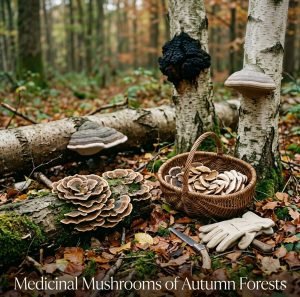
- Medicinal mushrooms of autumn European forests — placed in habitat section
Sources
- European Mycological Association – Species fact sheet: Inonotus obliquus.
- Szychowski, K. A., et al. (2021). Chaga – a review of its traditional use, phytochemistry, and pharmacology. Food Research International, 139, 109-846.
- Lee, S. H., et al. (2019). Antioxidant and immunomodulatory activities of Inonotus obliquus polysaccharides. Journal of Medicinal Food, 22(6), 589-598.
- Lemieszek, M. K., et al. (2018). Antitumour effects of chaga in vitro – a systematic review. Journal of Ethnopharmacology, 212, 135-145.
- Gajda, R., et al. (2020). Oxalate nephropathy associated with chaga mushroom consumption – a case report. American Journal of Kidney Diseases, 76(3), 452-455.
- National Center for Complementary and Integrative Health (NCCIH) – Chaga (note: limited information).