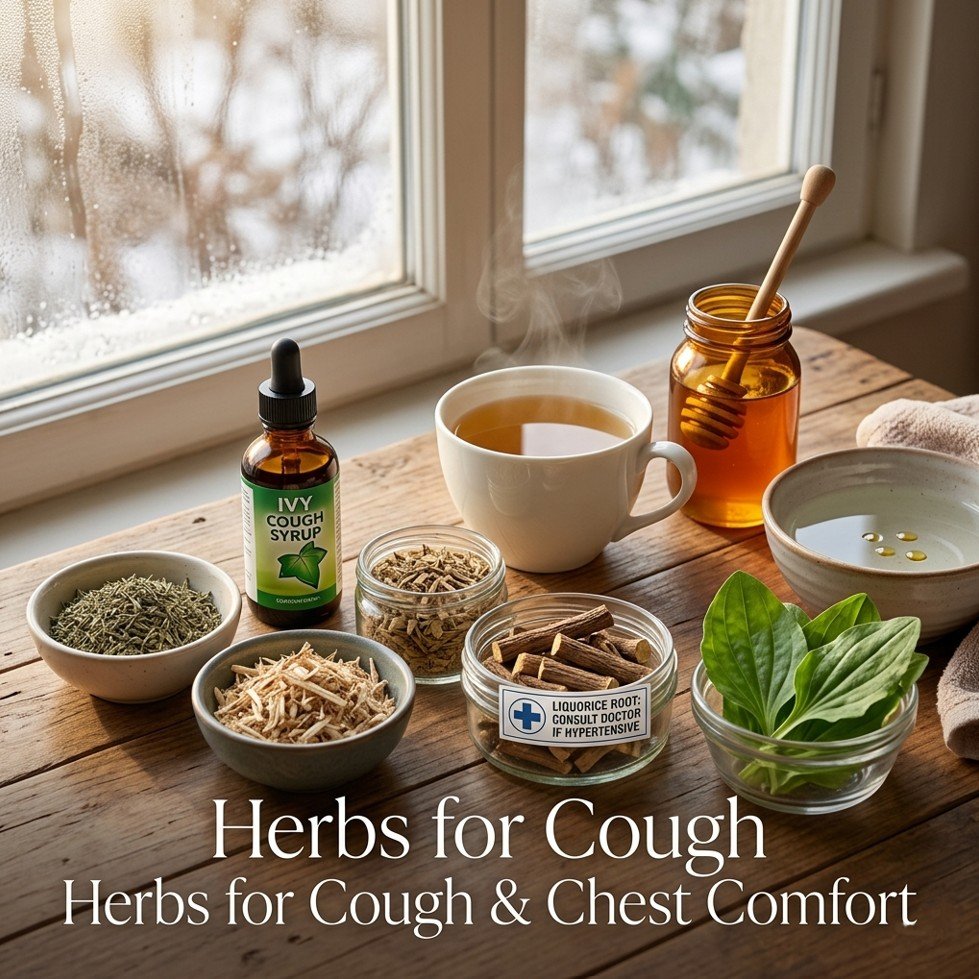
Coughing is a natural reflex – it clears the airways of mucus, irritants, and pathogens. But when a cough becomes persistent, painful, or disruptive, it is natural to seek relief. European herbal medicine offers a range of plants that have been used for centuries to ease coughs and support respiratory health.
Some herbs are expectorants – they help loosen and expel mucus (thyme, ivy leaf). Others are demulcents – they coat and soothe irritated mucous membranes (marshmallow root, plantain). And some have antispasmodic properties, relaxing the bronchial muscles (liquorice – with cautions).
This article covers five European herbs for cough and chest comfort. You will learn which herb is best for dry cough, which for wet cough, how to prepare them safely, and – critically – when a cough is not something to treat at home.
What Causes Cough and Chest Congestion?
Coughing can be triggered by many conditions. Understanding the cause helps choose the right herb.
Common causes of cough:
| Cause | Characteristics | Herbal approach |
|---|---|---|
| Viral upper respiratory infection (common cold) | Dry or wet cough, runny nose, mild fever, self‑limiting (7–10 days) | Supportive – expectorants, demulcents |
| Acute bronchitis | Wet cough with yellow/green mucus, chest tightness, often post‑viral | Expectorants (thyme, ivy leaf) |
| Post‑nasal drip | Tickly cough, worse at night, from allergies or sinusitis | Address underlying cause; demulcents for throat |
| Asthma (cough variant) | Dry cough, worse at night or with exercise | See doctor – herbs are not primary treatment |
| GERD (acid reflux) | Dry cough, worse after meals or lying down | See doctor – herbs for reflux are different |
| Pneumonia | Fever, productive cough with coloured mucus, shortness of breath | Emergency – do not use herbs |
| Whooping cough (pertussis) | Severe, paroxysmal cough with “whoop” sound | See doctor – medical treatment required |
Red flags – see a doctor (not herbs):
- Cough lasting more than 3 weeks
- Fever above 38.5°C (101.3°F)
- Coughing up blood (haemoptysis) or rust‑coloured mucus
- Shortness of breath, wheezing, or chest pain
- Whooping sound after coughing (possible pertussis)
- Cough in an infant, elderly person, or immunocompromised person
- Unintended weight loss, night sweats (possible tuberculosis)
Best European Herbs Traditionally Used for Cough and Chest Comfort
The following five herbs have well‑documented traditional use in Europe for respiratory conditions. Each has a different primary action.
1. Thyme (Thymus vulgaris)
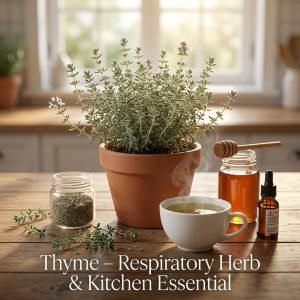
What it is: A Mediterranean aromatic shrub (see also Article 12). The leaves and flowering tops are used.
Why it is traditionally used for cough: Thyme is a classic European expectorant – it helps loosen mucus so it can be coughed up. It also has antispasmodic properties, relaxing the bronchial muscles. The German Commission E approves thyme for bronchitis and whooping cough.
What modern research suggests: Several clinical trials have examined thyme for cough and acute bronchitis. A 2006 study found that a thyme‑ivy combination significantly reduced cough frequency and severity compared to placebo. A 2020 systematic review concluded that thyme preparations are effective for acute bronchitis. This is good evidence.
Best use case: Wet, productive cough with chest congestion. Also useful for dry cough with bronchial spasm.
How to prepare:
- Thyme tea: 1–2 teaspoons dried thyme per cup, steep 10 minutes, strain. Drink 2–3 cups daily.
- Thyme syrup: Simmer 20 g dried thyme in 500 ml water for 20 minutes, strain, add 250 g honey, reduce to syrup. Take 1 teaspoon as needed.
- Thyme inhalation: Add 2–3 drops of thyme essential oil to a bowl of hot water, inhale steam (eyes closed). Or use dried thyme in a steam inhalation.
Safety: Very safe in tea and food amounts. Thyme essential oil is concentrated – do not ingest. Pregnancy: tea amounts safe; medicinal doses avoid.
2. Ivy Leaf (Hedera helix)
What it is: A common European climbing evergreen vine. The leaves are used medicinally. Ivy leaf is less familiar than thyme but has strong evidence for coughs, particularly in children.
Why it is traditionally used for cough: Ivy leaf has a long history in European folk medicine for respiratory conditions – coughs, bronchitis, and asthma. It contains saponins (hederacoside C) that act as expectorants and antispasmodics.
What modern research suggests: Ivy leaf is one of the best‑studied herbs for cough. Multiple randomised controlled trials have shown that ivy leaf extract reduces cough frequency and severity in children with acute bronchitis. A 2016 meta‑analysis (8 trials, 1,000+ patients) found ivy leaf effective and safe for acute respiratory tract infections. Strong evidence.
Best use case: Acute bronchitis, productive cough, especially in children (over 2 years). Also effective for dry, irritating cough.
How to prepare:
- Ivy leaf tea: Not recommended – the saponins are better extracted in alcohol or as a commercial extract. Home‑made tea can be bitter and inconsistently dosed.
- Commercial ivy leaf syrup or drops: Available in European pharmacies (e.g., Prospan, Hedelix). Follow product instructions. Typical children’s dose: 2–3 ml syrup 3 times daily (age‑dependent).
- Ivy leaf tincture: Available commercially.
Critical safety note: Raw fresh ivy leaves are toxic – they contain falcarinol and other compounds that can cause skin irritation and gastrointestinal distress. Do not harvest and use fresh ivy leaves at home. Only use commercially prepared, standardised ivy leaf products. The processing removes the toxic compounds while retaining the beneficial saponins.
Who should avoid: Do not use ivy leaf if allergic to ivy or other Araliaceae plants. Children under 2 years – only under medical supervision. Pregnancy/lactation: insufficient safety data – avoid.
3. Marshmallow Root (Althaea officinalis)
What it is: A European perennial herb (see Article 15). The root contains mucilage – a gel‑like substance that coats and soothes mucous membranes.
Why it is traditionally used for cough: Marshmallow root is a demulcent – it is not an expectorant. It does not loosen mucus. Instead, it forms a protective film over the throat and upper airways, reducing irritation and the urge to cough. It is especially useful for dry, hacking, tickly coughs.
What modern research suggests: Limited human research. The mechanism is physical (coating), not chemical. Small studies suggest marshmallow root reduces cough frequency in dry cough. Traditional use is strong.
Best use case: Dry, irritating, unproductive cough. Sore throat from coughing. Also useful for coughs caused by post‑nasal drip.
How to prepare:
- Marshmallow root cold infusion (best for mucilage): 1 tablespoon dried, shredded root per cup of cold water. Steep for 4–8 hours (or overnight) at room temperature. Strain. Warm gently (do not boil). Drink 2–3 cups daily.
- Marshmallow root warm infusion: 1 tablespoon dried root per cup of warm (not boiling) water, steep 30 minutes. Boiling water destroys mucilage.
Safety: Very safe. May slow absorption of other medications – separate by 1 hour. Pregnancy: safe in tea amounts (consult doctor).
4. Liquorice Root (Glycyrrhiza glabra)
What it is: A leguminous plant native to southern Europe and Asia (see Article 15). The root is used. Note: confectionery “licorice” is often flavoured with anise – real liquorice root is medicinal.
Why it is traditionally used for cough: Liquorice root is a demulcent (soothing) and expectorant (mucus‑loosening). It also has anti‑inflammatory and antispasmodic properties. It is a traditional ingredient in cough mixtures across Europe.
What modern research suggests: Several studies confirm that liquorice root extract reduces cough frequency and severity in acute pharyngitis and bronchitis. A 2019 study found that liquorice gargle reduced post‑operative sore throat. The active compound glycyrrhizin is responsible for both benefits and serious side effects.
Best use case: Dry, irritating cough or sore throat from coughing. Often combined with thyme or marshmallow.
How to prepare (with extreme caution):
- Liquorice tea: 1 teaspoon dried, sliced root per cup, simmer 10 minutes (decoction), strain. Drink 1 cup daily for up to 5 days.
- Liquorice tincture: 1–2 ml (20–40 drops) in water, up to 2 times daily for short periods.
Critical safety warning – read carefully:
Liquorice root contains glycyrrhizin, which can cause:
- High blood pressure (hypertension)
- Low potassium (hypokalaemia) – leading to muscle weakness, heart arrhythmias
- Fluid retention (oedema)
Who should avoid liquorice root:
- People with high blood pressure, heart disease, kidney disease
- People taking diuretics (water pills), blood pressure medication, corticosteroids, or digoxin
- Pregnant women (linked to preterm birth)
- People with low potassium
Safe use: Use only for short periods (3–5 days). Do not exceed 1 cup of tea per day. Do not use if you have any contraindications. Consider deglycyrrhizinated liquorice (DGL) – this form has glycyrrhizin removed and is safe for most people, but DGL is less effective for cough because glycyrrhizin has anti‑inflammatory activity.
Safer alternative for cough: Thyme, ivy leaf, or marshmallow root.
5. Plantain (Plantago lanceolata / P. major)
What it is: A common European “weed” (see Articles 12 and 15). The leaves are used.
Why it is traditionally used for cough: Plantain leaves contain mucilage, tannins, and aucubin. It is traditionally used for dry, tickly coughs and as a gentle expectorant. The mucilage soothes, while the tannins have mild astringent effects.
What modern research suggests: Very limited human research. Laboratory studies confirm anti‑inflammatory and antimicrobial activity. Traditional use is strong across Europe. It is considered safe and effective by many herbalists.
Best use case: Dry, irritating cough, especially in children (mild flavour). Also useful for coughs associated with post‑nasal drip.
How to prepare:
- Plantain tea: 1–2 teaspoons dried leaves per cup, steep 10 minutes, strain. Drink 2–3 cups daily.
- Plantain syrup (traditional): Fill a jar with fresh plantain leaves, cover with honey. Stir daily for 2–3 weeks, strain. Take 1 teaspoon as needed.
- Fresh leaf chew: A fresh plantain leaf can be chewed (spit out the fibrous residue) for immediate soothing – traditional remedy.
Safety: Very safe. Avoid harvesting from polluted areas (roadsides, lawns treated with chemicals). Pregnancy: safe in tea amounts (consult doctor).
How to Use These Herbs at Home – Matching Cough Type
For wet, productive cough (with mucus)
Best herbs: Thyme, ivy leaf
Preparation:
- Thyme tea: 2–3 cups daily
- Ivy leaf syrup: Follow commercial product instructions
- Thyme honey: 1 teaspoon as needed
Combination: Thyme + ivy leaf (commercial syrups often combine them)
For dry, tickly, irritating cough
Best herbs: Marshmallow root, plantain, liquorice (short‑term, with caution)
Preparation:
- Marshmallow cold infusion: 2–3 cups daily
- Plantain syrup: 1 teaspoon as needed
- Liquorice tea: 1 cup daily for up to 5 days (only if no contraindications)
For cough with sore throat
Best herbs: Plantain syrup, marshmallow tea, liquorice (cautious)
Add honey: Honey alone (1 teaspoon) has evidence for night‑time cough in children.
For cough with bronchial spasm (tight chest)
Best herbs: Thyme, ivy leaf (both have antispasmodic properties)
Preparation: Thyme tea or ivy leaf syrup
Steam inhalation (for all cough types, non‑herbal but effective)
- Add 2–3 drops of thyme essential oil OR a handful of dried thyme leaves to a bowl of hot water
- Lean over the bowl with a towel over your head
- Inhale steam for 5–10 minutes, eyes closed
- Helps loosen mucus and soothe airways
What to avoid:
- Do not give honey to infants under 12 months (risk of botulism)
- Do not use liquorice root for more than 5 days or if you have contraindications
- Do not harvest fresh ivy leaves – use only commercial preparations
- Do not suppress a productive cough unnecessarily – coughing clears mucus
When the Season Matters
These herbs are most useful in autumn and winter – cold and flu season.
Harvesting for home use:
- Thyme: Harvest leaves before flowering (late spring to summer). Dry.
- Ivy leaf: Do not harvest fresh – buy commercial products.
- Marshmallow root: Dig roots in autumn of the second year. Most people buy dried root.
- Liquorice root: Harvest roots in autumn after 3–4 years. Most people buy.
- Plantain: Harvest leaves from spring to autumn. Best when young. Dry or use fresh for syrup.
Buying advice:
- Thyme, marshmallow root, plantain: available dried from herbal suppliers.
- Ivy leaf: buy standardised syrups or drops from pharmacies (e.g., Prospan, Hedelix).
- Liquorice root: available dried, but use with extreme caution.
Storage: Dried herbs in airtight glass jars away from light. Thyme and plantain: 12–18 months. Marshmallow root: 2 years.
Safety, Interactions, and When to See a Doctor
This article is for educational purposes only and does not replace medical advice, diagnosis, or treatment. Persistent, severe, or unclear symptoms should be discussed with a qualified healthcare professional.
Specific safety notes:
| Herb | Contraindications / Cautions |
|---|---|
| Thyme | Very safe as tea. Essential oil toxic internally. |
| Ivy leaf | Do not use fresh leaves – toxic. Use only commercial preparations. Safe as directed. |
| Marshmallow root | Very safe. May slow absorption of other medications – separate by 1 hour. |
| Liquorice root | Major cautions: Hypertension, heart disease, kidney disease, pregnancy, low potassium, diuretics, corticosteroids, digoxin. Use max 5 days. |
| Plantain | Very safe. Avoid polluted harvest sites. |
Pregnancy and breastfeeding:
- Thyme: Tea amounts likely safe; medicinal doses avoid.
- Ivy leaf: Avoid (insufficient safety data).
- Marshmallow root: Likely safe in tea amounts (consult doctor).
- Liquorice root: Contraindicated (linked to preterm birth).
- Plantain: Safe in tea amounts (consult doctor).
Drug interactions:
- Liquorice root: Major interactions with diuretics, antihypertensives, corticosteroids, digoxin. Do not combine.
- Marshmallow root: May reduce absorption of oral medications – separate by 1 hour.
- Others: No significant interactions.
Red flags – see a doctor (not herbs):
- Cough lasting more than 3 weeks
- Fever above 38.5°C (101.3°F)
- Coughing up blood or rust‑coloured mucus
- Shortness of breath, wheezing, or chest pain
- Whooping sound after coughing
- Cough in an infant, elderly person, or immunocompromised person
- Unintended weight loss, night sweats
FAQ
What is the best herb for a dry cough?
Marshmallow root (as a cold infusion) or plantain syrup. These coat and soothe the throat. Liquorice root also works but has serious safety limitations – use only if no contraindications and for short periods.
What is the best herb for a wet, chesty cough?
Thyme tea or ivy leaf syrup. Both are expectorants that help loosen and expel mucus. Thyme has good evidence; ivy leaf has strong evidence, especially in children.
Is ivy leaf safe for children?
Yes – commercial ivy leaf syrups (e.g., Prospan, Hedelix) are widely used for children over 2 years with acute bronchitis. Follow age‑specific dosing instructions. Do not use fresh ivy leaves – they are toxic.
Can I take thyme and ivy leaf together?
Yes – many commercial cough syrups combine them. Thyme and ivy leaf work well together for acute bronchitis. Follow product instructions.
How long does it take for herbs to work for a cough?
Thyme and ivy leaf may reduce cough frequency within 2–3 days. Marshmallow root provides immediate soothing but does not treat the underlying cause. If no improvement after 5–7 days, see a doctor.
Is honey better than herbs for a cough?
Honey has evidence for night‑time cough in children (better than some OTC cough medicines). Herbal honey syrups (thyme honey, plantain honey) combine the benefits of both. For adults, either is fine.
Can I use liquorice root for a cough if I have high blood pressure?
No. Liquorice root raises blood pressure and can cause serious complications. Use thyme, ivy leaf, or marshmallow root instead.
Key Takeaways
- Five European herbs are traditionally used for cough and chest comfort: thyme (expectorant – good evidence), ivy leaf (expectorant – strong evidence, but only commercial preparations), marshmallow root (demulcent for dry cough), liquorice root (effective but serious safety cautions), and plantain (gentle demulcent).
- For wet, productive cough: thyme tea or ivy leaf syrup. For dry, tickly cough: marshmallow cold infusion or plantain syrup.
- Critical safety: Ivy leaf fresh leaves are toxic – use only commercial products. Liquorice root is contraindicated in hypertension, heart disease, kidney disease, and pregnancy.
- Herbs are for mild, acute coughs. See a doctor for cough lasting >3 weeks, fever, blood in mucus, or difficulty breathing.
- This is not medical advice. Do not replace prescribed medication with herbs.
Internal Links Used
- Best European herbs for seasonal immunity support — placed in introduction
- Herbs traditionally used for sore throat comfort — placed in marshmallow and liquorice sections
- Thyme: respiratory herb and kitchen essential — placed in thyme section
- Winter herbal pantry: what to use when fresh herbs disappear — placed in syrup preparation section
Sources
- European Medicines Agency (EMA) – Community herbal monographs: Thymi herba, Hederae helicis folium, Althaeae radix, Glycyrrhizae radix, Plantaginis lanceolatae folium.
- World Health Organization (WHO) – Monographs on selected medicinal plants.
- German Commission E Monographs – Thyme, ivy leaf, marshmallow root, liquorice root, plantain.
- Gruenwald, J., et al. (2006). Thyme‑ivy combination for acute bronchitis. Advances in Therapy, 23(6), 907-919.
- Schiffelholz, A., et al. (2016). Ivy leaf extract for acute bronchitis in children: A meta‑analysis. Phytomedicine, 23(13), 1704-1711.
- Agarwal, A., et al. (2019). Liquorice gargle for post‑operative sore throat. Journal of Anaesthesiology Clinical Pharmacology, 35(2), 230-234.
- National Center for Complementary and Integrative Health (NCCIH) – Cough and cold remedies.