
LEAD: An international collaboration of 118 scientists has published the largest-ever genetic study of blood proteins, identifying more than 4,000 genome regions that control circulating proteins and revealing a concrete opportunity to repurpose an existing psoriasis drug for rheumatoid arthritis.
The Architecture of Blood: Why Proteins Matter
Every human cell depends on proteins. They build tissue, drive metabolism, carry signals, and fight infection. If DNA is the blueprint, proteins are the machinery. Yet, despite decades of genetic research—hundreds of genome-wide association studies (GWAS) involving hundreds of thousands of participants—the translation of genetic discoveries into actual treatments has been frustratingly slow. The reason is a persistent gap: knowing that a gene variant is associated with a disease does not reveal which protein it affects, in which tissue, or through what mechanism.
Blood proteins offer a bridge across that gap. They are dynamic, accessible through a simple blood draw, and reflect real-time physiological states. But until now, no study had systematically mapped how genetic variation controls the entire circulating proteome at scale. The new research, published in Cell on May 6, 2026, changes that.
The study—titled “Multi-cohort proteogenomic analyses reveal genetic effects across the proteome and diseasome”—is a meta-analysis of unprecedented scope. Across 38 cohorts and 78,000 participants, researchers measured more than 1,000 blood proteins and cross-referenced them with millions of genetic variants. The result: 4,000-plus genomic regions that govern when, where, and in what quantity these proteins appear in the bloodstream. This is the largest blood protein genetics study ever conducted.
In doing so, the team—led by the Precision Healthcare University Research Institute (PHURI) at Queen Mary University of London and the Berlin Institute of Health (BIH) at Charité—has constructed what amounts to a molecular wiring diagram of human physiology. For researchers working at the frontier of AI-driven diagnostics, this kind of multi-layered biological data is the raw material on which tomorrow’s predictive tools will be built.
From Psoriasis to Rheumatoid Arthritis: A Concrete Repurposing Candidate
Beyond the sheer scale of the dataset, the study delivers a tangible clinical lead. The researchers marshaled multiple lines of evidence—genetic, proteomic, and biomedical—showing that TYK2 inhibitors, a drug class currently approved for psoriasis, could be repurposed for rheumatoid arthritis.
TYK2 (Tyrosine Kinase 2) is an enzyme that helps regulate immune signaling. Drugs blocking TYK2 already modulate inflammation in psoriasis patients. The new proteogenomic data reveal that the same genetic pathways influencing TYK2-related proteins are also implicated in rheumatoid arthritis, an autoimmune condition affecting roughly 1% of the global population. This is not a hypothetical connection: the study’s machine-learning models, trained on integrated genetic and proteomic data, identified shared molecular signatures across the two diseases.
“This gives us an opportunity to gain a molecular view into diverse diseases, with the potential to significantly accelerate the rate of discovery for new drug targets or drug repurposing opportunities,” said Dr. Mine Koprulu, senior postdoctoral researcher at PHURI and lead author of the study.
Drug repurposing—finding new uses for existing, approved drugs—carries enormous appeal. Developing a novel drug from scratch takes, on average, 10 to 15 years and costs upwards of $2.6 billion, with a failure rate exceeding 90% in clinical trials. Repurposing a drug with an established safety profile can cut both timelines and costs dramatically. Earlier breakthroughs in gene therapy for sickle cell disease have shown how molecular-level understanding can lead to curative approaches; proteogenomics may extend that precision to common, complex diseases.
Professor Claudia Langenberg, senior study lead and Director of PHURI, emphasized that this study “is a powerful demonstration of how human molecular data can deliver new opportunities for precision medicine when generated at scale and integrated with clinical knowledge”.
Machine Learning Meets the Diseasome
A key innovation of the study is methodological. Previous genetic studies often identified disease-associated variants but could not determine which protein they affected or in which direction. By layering proteomic measurements onto genetic data and applying machine learning algorithms, the team was able to trace causal chains: genetic variant → protein level change → disease risk.
Professor Maik Pietzner, senior co-lead and Professor of Health Data Modeling at BIH, highlighted two achievements: “Firstly, combining our genetic work with machine learning enabled us to better understand how human biology works, and secondly, provided evidence to help getting the right drug to the right patient”.
The concept of the “diseasome”—a network map linking molecular traits to clinical phenotypes—is not new, but the scale and resolution achieved here represent a step change. By charting how genetic effects propagate across the proteome and intersect with disease pathways, the study provides a multidimensional framework for predicting susceptibility, prognosis, and treatment response.
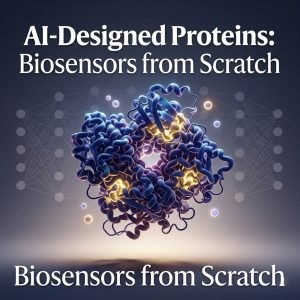
This approach parallels recent advances in AI-designed proteins for biosensing, where computational design of biological molecules is opening entirely new diagnostic possibilities. The convergence of large-scale proteomics, machine learning, and clinical data is accelerating the transition from reactive to predictive medicine—though that transition remains uneven and incomplete.
Frequently Asked Questions
What is proteogenomics?
Proteogenomics is the integration of proteomic data (measurements of proteins) with genomic data (DNA sequences and variants). It allows researchers to connect genetic changes directly to protein-level effects, revealing the functional mechanisms behind disease associations that genetic studies alone cannot resolve.
How can a blood protein study help find new uses for existing drugs?
By mapping which proteins are controlled by which genetic variants in which diseases, researchers can identify cases where a drug targeting a specific protein in one disease might also work in another disease sharing the same protein pathway. The TYK2 inhibitor example—psoriasis to rheumatoid arthritis—illustrates this approach.
Is this study’s drug repurposing finding ready for clinical use?
No. The TYK2 inhibitor finding is based on genetic and proteomic evidence, not a completed clinical trial in rheumatoid arthritis patients. It provides a strong rationale for further investigation and clinical testing, but additional studies—including randomized controlled trials—would be needed before any treatment recommendation could be made.
Editor’s Analysis
Deep Reflections
Beyond the headline, the deeper question this study raises is not about any single drug or protein, but about how biological knowledge is constructed. For decades, medical research has operated largely in silos: geneticists studied genes, biochemists studied proteins, and clinicians studied symptoms. The proteogenomic approach represented here dissolves those boundaries. It reveals that the unit of biological understanding is not the gene or the protein, but the relationship between them—and between them and the whole organism.
This is not merely a technical refinement. It is an epistemological shift. When the “diseasome” is understood as a network rather than a list, the very concept of a “disease” becomes fluid. Psoriasis and rheumatoid arthritis begin to look less like separate conditions and more like different manifestations of shared molecular circuitry. That insight is both humbling and powerful: it suggests that the classification systems medicine has relied on for centuries may be surrogates for deeper organizing principles we are only beginning to grasp.
Critical Analysis
The evidence deserves a harder look. The study is a meta-analysis—observational by design, not interventional. It identifies associations and uses Mendelian randomization to infer causal directions, but causal inference from observational data carries inherent limitations. The 78,000 participants, while substantial, are predominantly of European ancestry, which limits generalizability to other populations. The proteomic platforms capture only a fraction of the human proteome—roughly 1,000 of an estimated 20,000-plus proteins—so the map, detailed as it is, remains partial.
The TYK2 repurposing finding is compelling but preliminary. Genetic evidence of shared pathways does not guarantee clinical efficacy. The psoriasis-to-rheumatoid-arthritis hypothesis requires prospective testing, and the history of drug repurposing is littered with promising genetic leads that failed in trials. Statistical significance in a meta-analysis is not the same as clinical relevance in a patient. These limitations do not diminish the study’s importance, but they should temper expectations about how quickly it will translate into approved therapies.
Cui Bono
The institutional incentives are just as important. Queen Mary University of London, the Berlin Institute of Health, and the Charité hospital system gain substantial reputational capital from a Cell publication of this magnitude. The Precision Healthcare University Research Institute, relatively new, solidifies its standing in the competitive field of precision medicine. The inclusion of Pfizer researchers among the co-authors—Åsa K. Hedman and colleagues from Pfizer Research and Development in Stockholm—signals pharmaceutical interest in the proteogenomic approach for target identification and drug repositioning.
This is not to suggest impropriety; industry-academic collaboration is standard and often productive. But it is worth noting who stands to benefit: academic institutions seeking funding and prestige, pharmaceutical companies seeking efficient paths to new indications for existing drugs, and investors in precision-medicine startups. The 78,000 study participants, who “generously dedicated their time to research to benefit others,” receive no direct benefit from the findings, a structural asymmetry common to nearly all large-scale biomedical research.
Distraction Analysis
At the same time, this story may be crowding out a larger problem. The promise of precision medicine—matching the right drug to the right patient—is genuinely exciting. But it is also a convenient narrative for health systems that have failed to deliver the basics: access to existing treatments, preventive care, and equitable trial enrollment. A proteogenomic atlas will not help a rheumatoid arthritis patient who cannot afford a biologic drug, or who lives in a region without rheumatologists. The enthusiasm for molecular-level precision can distract from the stark imprecision of healthcare delivery.
Moreover, the study’s focus on drug repurposing—while scientifically elegant—reflects a broader imbalance in medical research priorities. Repurposing existing drugs is faster and cheaper than developing new ones, but it also tends to favor conditions prevalent in wealthy populations, where existing drugs already exist. Diseases that primarily affect low-income countries, where the pharmaceutical market is thin, attract less proteogenomic attention.
Who Does This Not Serve?
And perhaps most importantly, this does not serve patients waiting for treatments now. The path from a Cell publication to a regulatory approval is measured in years, often a decade or more. The TYK2 inhibitor hypothesis, even if validated, would require phase III trials, regulatory review, and pricing negotiations before reaching patients. In the interim, people with rheumatoid arthritis continue to rely on existing therapies that are effective for some but inadequate for others.
It also does not serve populations underrepresented in genomic databases. The study’s 38 cohorts are predominantly European. If proteogenomic insights are to inform drug development globally, they must be validated across ancestrally diverse populations. Otherwise, precision medicine risks becoming precision medicine for the few—a molecularly sophisticated enterprise built atop the same structural inequities that have long characterized biomedical research.
Key Takeaways
- The largest-ever blood protein genetics study mapped more than 4,000 genomic regions controlling over 1,000 circulating proteins across 78,000 participants.
- The study identified TYK2 inhibitors, currently used for psoriasis, as strong candidates for repurposing in rheumatoid arthritis—a finding grounded in proteogenomic evidence, not yet a clinical trial.
- Machine learning integration of genetic and proteomic data enabled causal tracing from genetic variant to protein change to disease risk, constructing a “diseasome” network of unprecedented resolution.
- The study is observational (meta-analysis), the drug repurposing finding is preliminary, and the participant cohorts are predominantly European, limiting global applicability.
- The findings exemplify both the transformative potential of multi-omics research and the persistent gap between molecular discovery and equitable healthcare delivery.
Internal Links Used
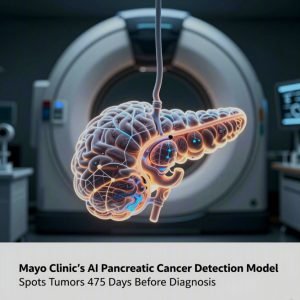
- AI-driven pancreatic cancer detection research — placed in “The Architecture of Blood” section — relevant to AI-powered medical diagnostics and precision medicine
- Gene therapy breakthrough for sickle cell disease — placed in “From Psoriasis to Rheumatoid Arthritis” section — relevant to molecular-level therapeutic approaches
- AI-designed proteins for cortisol biosensors — placed in “Machine Learning Meets the Diseasome” section — relevant to computational protein science and diagnostics
- mRNA cancer vaccine breakthrough — placed in “Editor’s Analysis: Deep Reflections” section — relevant to precision medicine and molecular therapeutics
Sources
- Multi-cohort proteogenomic analyses reveal genetic effects across the proteome and diseasome — Primary peer-reviewed study published in Cell, May 6, 2026 (open access) — Primary source
- Largest study on genetics of blood proteins uncovers new disease mechanisms and drug repurposing opportunities — Official press release from Queen Mary University of London — Primary institutional source
- Largest study on genetics of blood proteins uncovers new disease mechanisms and drug repurposing opportunities — EurekAlert (AAAS) news release summarizing the study — High-credibility science news platform
- Largest study on the genetics of blood proteins highlights new disease mechanisms and drug repurposing opportunities — Research in Germany / IDW press release, May 7, 2026 — Official research communication platform
- Groundbreaking Genetic Study of Blood Proteins Reveals Novel Disease Pathways and Potential for Drug Repurposing — Bioengineer.org analysis — Science news outlet
- Largest blood protein genetics study reveals new precision medicine opportunities — News-Medical.net, May 6, 2026 — Health and medicine news platform