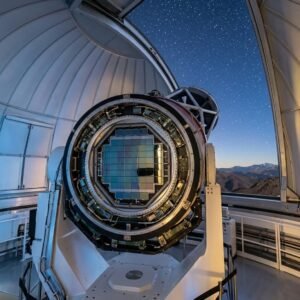

In early April 2026, scientists at Fermilab announced the completion of major detector installation for the Mu2e experiment, marking a critical milestone in the quest to uncover physics beyond the Standard Model through precise measurement of muon-to-electron conversion.
Background: The Hunt for Charged Lepton Flavor Violation
The Mu2e experiment at Fermi National Accelerator Laboratory represents one of the most sensitive searches ever devised for charged lepton flavor violation (CLFV), a process that would provide unambiguous evidence of new physics. According to the experiment’s design, Mu2e aims to detect the coherent, neutrino-less conversion of a negative muon into an electron in the field of an aluminum nucleus—a phenomenon forbidden in the Standard Model of particle physics but predicted by many theoretical extensions including supersymmetry and leptoquark models.
Originally conceived in the late 2000s with research and development beginning in 2009, the project received Critical Decision 1 approval from the Department of Energy in July 2012. After years of delays, the experiment is now approaching completion, with construction progressing steadily toward its goal of improving sensitivity on the conversion signal by four orders of magnitude beyond previous experiments. This would enable Mu2e to reach an unprecedented single event sensitivity of 3 × 10⁻¹⁷ on the conversion rate, requiring the experiment to stop approximately 10¹⁸ muons on its target—a number comparable to all the grains of sand on Earth.
The experimental setup relies on cutting-edge infrastructure including a dedicated muon beamline comprising three superconducting magnets: the Production Solenoid (PS), Transport Solenoid (TS), and Detector Solenoid (DS), spanning 25 meters in total. The TS, built by Italian company ASG Superconductors, was installed in 2024, followed by the PS in early August 2025. The DS installation, scheduled for March 2026, completes the magnet system essential for creating the precise muon beam needed for the experiment’s sensitive measurements.
Core Milestone: Detector Installation Completed
In a significant development reported in early April 2026, the Mu2e collaboration announced the successful installation and integration of all major detector components within the experimental hall. This milestone follows the February 2026 achievement where researchers moved the final subdetector—the tracker—into position, as noted by Stefano Miscetti, co-spokesperson for the experiment and researcher at INFN Frascati National Laboratories.
The detector system consists of two primary subsystems: a high-precision tracker made from approximately 20,000 straw tubes and an electromagnetic calorimeter composed of around 1,500 pure cesium iodide (CsI) crystals arranged in two disks and readout by UV-extended silicon photomultipliers (SiPMs). Both components were primarily designed and built by the Italian collaboration, with INFN Frascati National Laboratories leading the technical and management aspects. The calorimeter’s completion was previously reported in October 2025 as a “significant step forward,” while the tracker installation in February 2026 marked the placement of the final subdetector.
Critically, the experiment requires extraordinary precision during installation, with component positions needing to meet a +/-2 mm tolerance within the detector solenoid. To achieve this, the collaboration employed finite element analysis and specialized tooling during the clean room assembly process. Transport of the fully functioning detector disks from the assembly area to their position on the experimental hall rails was completed successfully in September 2025, setting the stage for the recent integration milestone.
With detector installation now complete, the Mu2e experiment is undergoing final commissioning procedures. The collaboration plans to begin testing with cosmic rays to calibrate signals before introducing the muon beam. Once operational, the experiment will produce intense muon pulses that stop on an aluminum target within the detector solenoid, where the rare conversion process would occur if it exists in nature. The secondary particles would then traverse the tracker and calorimeter systems for precise momentum and energy measurement.
Global Impact and Scientific Anticipation
The completion of Mu2e’s detector installation has generated considerable excitement within the international particle physics community, representing a significant advancement in the global search for physics beyond the Standard Model. The experiment is part of a coordinated international effort that includes complementary projects such as the COMET experiment under construction at JPARC in Japan and the MEG upgrade at the Paul Scherrer Institute in Switzerland, all targeting charged lepton flavor violation through different experimental approaches.
A positive signal in Mu2e would constitute a groundbreaking discovery with profound implications for our understanding of fundamental physics. Such observation would immediately rule out the Standard Model as a complete description of nature and point toward new particles or forces operating at high energy scales. Theoretical models predicting observable CLFV rates often connect to explanations for dark matter, neutrino mass generation, or the matter-antimatter asymmetry in the universe, making Mu2e a potential gateway to addressing multiple major mysteries in physics.
The experiment’s sensitivity goals position it to test a wide range of theoretical scenarios. For instance, in supersymmetric models with specific flavor structures, Mu2e could detect signals from virtual particle loops involving heavy superpartners. Similarly, leptoquark models or extended Higgs sectors could produce observable conversion rates within Mu2e’s reach. Even in the absence of a detection, the experiment will set stringent new constraints that will guide theoretical development and future experimental designs.
Financially, the Mu2e project represents a substantial investment, with costs estimated around 300 million dollars, reflecting the scale and complexity of modern precision physics experiments. However, the potential return on investment—both in scientific knowledge and technological spin-offs—is considerable. Technologies developed for Mu2e’s ultra-precise tracking systems, cryogenic magnet systems, and SiPM-based photon detection have already found applications in medical imaging, homeland security, and materials science.
Editor’s Conclusions: A New Era of Precision Physics Awaits
The completion of detector installation for the Mu2e experiment marks more than just a technical milestone; it signifies the threshold of a new discovery window in particle physics that could reshape our understanding of the universe’s fundamental laws. As we stand in April 2026 with the experiment poised to begin physics operations, several key implications emerge for both the scientific landscape and broader society.
First, the timing of Mu2e’s readiness coincides with an inflection point in high-energy physics. While the Large Hadron Collider continues its exploration of the TeV scale through direct production of new particles, experiments like Mu2e probe complementary territory through indirect precision measurements of rare processes. This dual approach—combining high-energy collisions with ultra-sensitive rare event searches—provides a more comprehensive strategy for discovering physics beyond the Standard Model. Should the LHC fail to produce direct evidence of new particles in its current run, precision experiments like Mu2e become increasingly vital as alternative discovery pathways.
Second, the Mu2e experiment exemplifies the growing importance of international collaboration in big science. With significant contributions from Italian institutions (INFN Frascati leading detector construction), Japanese partners (through the COMET experiment), and Swiss researchers (MEG upgrade), the project demonstrates how pooling expertise and resources across borders enables achievements that would be impossible for any single nation. This model of cooperation is particularly crucial as experiments grow more complex and expensive, suggesting that future breakthroughs in fundamental physics will increasingly rely on such multinational efforts.
Third, the technological innovations developed for Mu2e have tangible societal benefits beyond pure research. The experiment’s tracker system, utilizing thousands of straw tubes with precise gas mixtures and advanced electronics, has influenced developments in radiation detection for medical imaging. The SiPM photodetectors used in both tracker and calorimeter applications are finding use in positron emission tomography (PET) scanners and light detection for neutron scattering experiments. Furthermore, the cryogenic systems developed for the superconducting solenoids contribute to advancements in quantum computing and magnetic resonance imaging technologies.
Looking ahead, the Mu2e collaboration anticipates beginning physics data-taking in 2026, with an initial run planned before the Fermilab accelerator complex undergoes a proton beam upgrade scheduled for completion around 2029. This stntum computing and magnetic resonance imalowed by an upgrade-enhanced second phase—mirrors strategies employed at other major facilities and allows for early scientific returns while preparing for even more sensitive future measurements.
From a societal perspective, experiments like Mu2e remind us that fundamental research, while often seemingly abstract, drives long-term technological progress and cultivates critical problem-solving skills applicable across sectors. The patience required for such projects—spanning over a decade from conception to operation—contrasts with today’s instant-gratification culture but delivers enduring value through knowledge creation and human capital development. As the Mu2e experiment prepares to switch on its search for the elusive muon-to-electron conversion, it carries the hopes of physicists worldwide for a potential glimpse into the deeper laws governing our universe.ntum computing and magnetic resonance ima
Executive Summary
- The Mu2e experiment at Fermilab has completed installation of its detector systems, including tracker and calorimeter, positioning it to begin physics operations in 2026
- The experiment aims to detect muon-to-electron conversion with unprecedented sensitivity (3 × 10⁻¹⁷), testing for charged lepton flavor violation as a signal of physics beyond the Standard Model
- A discovery would revolutionize particle physics, while even a null result will set stringent new constraints on theoretical models guiding future research
Sources
- Mu2e reaches major milestone with tracker move – Fermilab Newsroom — Official U.S. Department of Energy laboratory report detailing the February 4, 2026 installation of the final subdetector, providing authoritative firsthand information from the experiment’s collaboration.
- A Major Milestone for the Mu2e Experiment at Fermilab – INFN-LNF — Technical update from the Italian National Institute of Nuclear Physics describing the electromagnetic calorimeter completion and installation, offering expert insight into a key detector subsystem from the international collaboration partner.
- Status of the Mu2e experiment – PoS Proceedings — Scientific proceedings document presenting the experiment’s construction status and timeline for physics data-taking, providing peer-reviewed perspective on project readiness from high-energy physics conference material.