LEAD: On 12 June 2026, the European High Performance Computing Joint Undertaking inaugurated the JUPITER exascale supercomputer at Forschungszentrum Jülich, marking the EU’s entry into the exascale era and reshaping the geopolitics of computational science.
JUPITER Arrives: Inside the Machine That Thinks a Billion Billion Times a Second
The official switch-on of JUPITER exascale supercomputer represents the culmination of a multi-billion-euro effort by the EuroHPC Joint Undertaking, a collaboration of 32 European states and private partners. The system, housed in a purpose-built wing of the Jülich Supercomputing Centre in North Rhine-Westphalia, delivers a peak performance of approximately 1.2 exaflops — meaning it can perform over 1.2 × 10¹⁸ floating-point operations per second. To put that in perspective, one hour of JUPITER’s calculations surpasses what a standard desktop machine could achieve in several millennia.
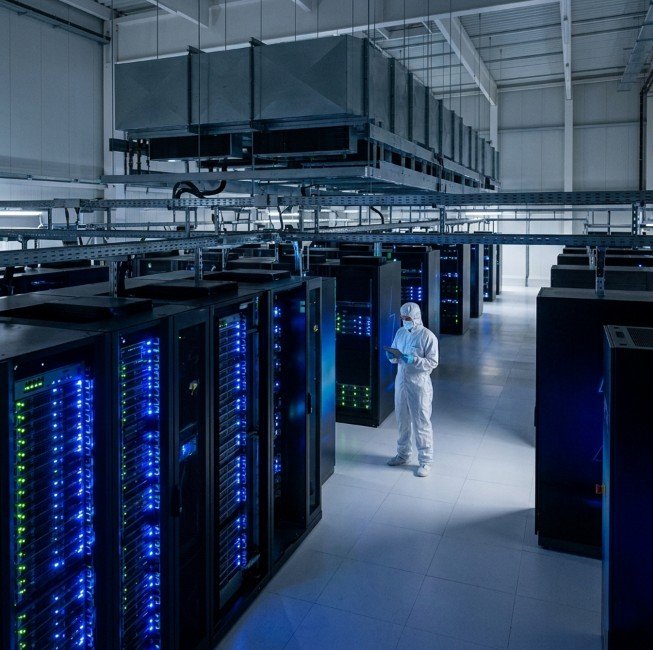
JUPITER is built on a modular architecture that integrates general-purpose computing with extreme acceleration. The central component is the BullSequana XH3000 platform from Eviden, using SiPearl’s Rhea ARM-based processors alongside high-bandwidth memory nodes. For the heavy lifting — especially in AI training and molecular dynamics — the machine relies on thousands of next-generation NVIDIA GPUs, tightly coupled via a high-speed interconnect. This hybrid design allows researchers to dispatch different parts of a workload to the most suitable hardware, maximising both efficiency and throughput.
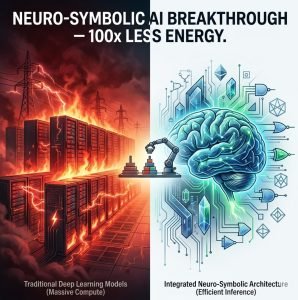
The formal inauguration on 12 June included demonstrator simulations that underlined the machine’s promise: a global climate model resolving cloud formation at 1-kilometre grid spacing, an AI-driven screening of 200 million candidate molecules for antiviral activity, and a digital twin of an entire regional energy grid adapting to fluctuating renewable supply in real time. These demos were not mere spectacle; they signalled the scientific domains that JUPITER will serve from day one. In an era when massive computational resources increasingly dictate the pace of discovery, the EU now possesses a facility that can hold its own against Frontier in the United States and a new generation of Chinese exascale systems. Readers who followed earlier AI hardware breakthroughs, such as the neuro-symbolic AI design that cut energy use by 100 times, will recognise why energy-efficient supercomputing is a strategic priority — JUPITER’s power draw, in excess of 15 megawatts, is managed by a dedicated water-cooling loop and an on-site renewable power agreement.
Strategic Sovereignty: Why One Supercomputer Matters to the Whole Continent
The language around JUPITER’s inauguration was unmistakably geopolitical. European Commission President Ursula von der Leyen, speaking at the event, described the supercomputer as “a declaration of strategic independence,” explicitly linking it to the EU’s goal of reducing reliance on non-European cloud providers and AI platforms. That framing is not hyperbolic. In the current landscape, most of the world’s largest AI training runs happen on infrastructure owned or controlled by a handful of US and Chinese technology conglomerates. For Europe’s researchers and small-to-medium enterprises, access to such resources often comes with restrictive terms, data sovereignty risks, and geopolitical vulnerability.
JUPITER changes that equation — at least partially. By embedding the supercomputer within a European legal and regulatory framework, the EU ensures that data processed on the machine remains subject to GDPR and the upcoming AI Act rules. Moreover, access is governed by scientific merit review rather than corporate negotiation. The first call for proposals, already heavily oversubscribed, attracted over 450 applications from 37 countries, with successful projects including a pan-European digital twin of the human heart and a multi-institutional study of next-generation fusion reactor materials. At the same time, the EU has committed that 20 percent of the available computing time will be reserved for small research teams and start-ups, a deliberate attempt to democratise access in a field notorious for concentrating power among well-resourced labs.
This development aligns with broader EU technology investment trends, such as Microsoft’s $10 billion AI infrastructure push into Japan, which illustrates how governments and corporations are scrambling to secure domestic computing capacity. JUPITER is the European answer to this scramble — but it is a single machine, and whether it can truly meet continental demand remains an open question.
Reactions, Limitations, and the Energy Question
The global supercomputing community reacted positively but with measured caution. The TOP500 list, which ranks the world’s most powerful computers, is expected to place JUPITER among the top three systems at its next update. Researchers at institutions such as CEA in France and CSCS in Switzerland, both partners in the project, expressed optimism that the machine would radically accelerate complex simulations in materials science and climate modelling. However, scientists from newer EU member states in Central and Eastern Europe noted that while the machine is open for applications, the reality of utilising exascale computing requires substantial home-institution infrastructure — fast networks, skilled support staff, and local data storage — that is not yet evenly distributed across the Union.
The energy footprint, too, cannot be ignored. Operating at an estimated average power of 18 megawatts, JUPITER will consume approximately 157,680 megawatt-hours of electricity per year — equivalent to the annual power use of roughly 45,000 average European households. Although the Jülich centre has contracted for 100 percent renewable power and uses a closed-loop warm-water cooling system that recovers waste heat for a nearby campus, the environmental calculus of large-scale computing is under increasing scrutiny. The question of whether the climate science enabled by JUPITER justifies its own carbon footprint is a tension that the supercomputing community has yet to fully resolve. This mirrors the conundrum explored in discussions of energy-efficient AI chips that recently demonstrated 70 percent power savings, where the promise of efficiency must be weighed against the sheer scale of deployment.
Frequently Asked Questions
What is an exascale supercomputer?
An exascale supercomputer is a machine capable of performing at least one exaflop — one billion billion (10¹⁸) floating-point operations per second. It represents a thousand-fold increase over petascale systems and enables simulations and AI training at a scale previously impossible, from whole-earth climate models to detailed molecular dynamics.
Why is the JUPITER supercomputer important for Europe?
JUPITER gives European scientists and companies a domestic, sovereign computing resource that rivals the most powerful machines in the US and China. It reduces dependency on foreign cloud services, ensures data remains under EU jurisdiction, and is accessible through open scientific merit review rather than corporate contracting.
What will JUPITER actually be used for?
The initial projects include ultra-high-resolution climate forecasting, AI-driven drug discovery, materials design for fusion reactors, digital twins of human organs, and energy grid optimisation. A dedicated allocation of 20 percent of the machine’s time is reserved for start-ups and smaller research groups.
Editor’s Analysis
Deep Reflections: The Cathedral and the Bazaar of Computation
JUPITER is a monument — a cathedral of silicon and cooling pipes, erected by a consortium of nations to pursue truth. In an age when computation has become the third pillar of science alongside theory and experiment, the existence of such a machine signals that Europe refuses to be a tenant farmer on land owned by Silicon Valley or Shenzhen. Yet the cathedral metaphor carries a warning. Cathedrals concentrate resources, talent, and symbolic power. They can also centralise inquiry in ways that discourage smaller, nimbler, more eccentric forms of investigation. The deeper question is whether JUPITER will become a genuinely open commons — a bazaar of scientific curiosity — or whether its governance will replicate the familiar hierarchies of big science, where access flows to those who already possess the cultural and institutional capital to navigate complex proposal systems. Exascale computing changes what questions we can ask; the harder challenge is to ensure it changes who gets to ask them.
Critical Analysis: A Machine Is Only as Good as Its Ecosystem
The hardware numbers are real and impressive, but the success of an exascale system depends at least as much on the software stack, the training of users, and the data infrastructure that feeds it. Europe has historically lagged in the development of commercial AI frameworks and processor architectures; JUPITER runs on a mix of European-designed general-purpose cores and American-designed accelerators, a dependency that limits strategic sovereignty more than official speeches admit. The scientific results will be subject to the usual constraints of supercomputer simulation: models, no matter how fine-grained, still rely on parameterisations and approximations. The climate model running at 1-kilometre grid resolution does not eliminate uncertainty — it shifts it. And the peer-reviewed publication pipeline that will judge the output is itself slow and subject to its own biases. What remains unknown, and will take years to evaluate, is whether the large-scale computing delivered by JUPITER translates into genuinely novel discoveries rather than incrementally more precise confirmations of existing theory.
Cui Bono: Who Stands to Gain?
The immediate institutional winners are clear. Forschungszentrum Jülich gains prestige and a steady stream of visiting researchers. The industrial partners — Eviden, SiPearl, NVIDIA, and the subsystem suppliers — secure high-profile reference accounts that strengthen their position in the global HPC market. Germany and France, the two largest national contributors, enhance their standing within the EU’s research landscape and gain leverage in negotiations over future funding cycles. At the policy level, the European Commission can point to JUPITER as a tangible deliverable in an otherwise slow-moving digital agenda. Less visible, but equally significant, are the academic groups at major universities who already have the administrative machinery to write winning proposals. The gap between these elite research clusters and the would-be users in smaller countries or less research-intensive institutions is likely to persist, because having access to an exascale machine is not the same as having the trained personnel, data pipes, and co-funding required to exploit it.
Distraction Analysis: The Supercomputer That Blinds Us to the Digital Divide
The inauguration of a flagship supercomputer is an excellent media spectacle, but it can crowd out a more mundane and stubborn problem: the persistent digital and educational divides within Europe itself. While Jülich now hums with a machine capable of exascale feats, school laboratories in rural Bulgaria or community colleges in southern Italy often struggle to obtain basic broadband connections and modern equipment. The grand narrative of technological sovereignty risks becoming a fig leaf for widening inequality in scientific capacity. Moreover, the political capital spent on a billion-euro machine could be a fraction of what is needed to meaningfully invest in digital literacy, open data curation, and academic positions for early-career researchers across the continent. Exascale computing is a shining tower; the risk is that its brilliance makes us forget the darkened streets below.
Who Does This Not Serve?
The communities least served by this milestone are the ones furthest from the machine’s glow: undergraduate institutions without supercomputing curricula, researchers in the humanities and social sciences who might benefit from computational methods but are excluded from the predominantly physics-and-engineering proposal culture, and citizens whose energy bills are marginally affected by the industrial-scale power draw even when renewables are used. Taxpayers across Europe have funded this instrument, but the tangible benefits will flow predominantly to a narrow slice of the scientific workforce, at least in the early years. If Europe is serious about digital justice, it must pair investments like JUPITER with deliberate programmes to distribute computational literacy, build regional data centres, and fund positions that connect exascale science to societal challenges — not only to high-impact journals.
Key Takeaways
- The JUPITER exascale supercomputer, inaugurated on 12 June 2026, is Europe’s first machine capable of over one billion billion calculations per second, placing the EU among the world’s top supercomputing powers.
- The system is intended to strengthen Europe’s digital sovereignty, support climate science, AI, and drug discovery, and operate under EU data protection law — but its reliance on non-European GPUs undercuts full technological independence.
- While access is merit-based and partially reserved for smaller teams, the practical capacity to use exascale resources remains unevenly distributed, and the machine’s energy footprint raises legitimate environmental questions.
Internal Links Used
- Neuro-symbolic AI breakthrough 100x energy — placed in the “JUPITER Arrives” section — relevance: connects energy-efficient computing hardware to the exascale context.
- Microsoft Japan AI investment 10 billion — placed in “Strategic Sovereignty” section — relevance: illustrates the global race for domestic AI computing infrastructure.
- Nanoelectric breakthrough AI energy 70 percent — placed in “Reactions, Limitations” section — relevance: ties the energy efficiency theme of computing to the supercomputer’s power consumption discussion.
Sources
- EuroHPC Joint Undertaking press release, “JUPITER Inauguration Marks Europe’s Exascale Era,” 12 June 2026 — primary/official source.
- Forschungszentrum Jülich technical specification sheet for JUPITER — primary institutional source.
- Reuters, “Europe Launches First Exascale Supercomputer in Bid for Tech Sovereignty,” 12 June 2026 — high-credibility reporting.
- Nature, “Exascale Computing Comes to Europe with JUPITER Launch,” 12 June 2026 — high-credibility reporting.