LEAD: A groundbreaking Nature Neuroscience study published April 13, 2026, has revealed that the human enteric nervous system contains 86% of the same neurotransmitter receptors as the brain, fundamentally challenging our understanding of where emotion and cognition originate.
The Hidden Nervous System You Never Knew You Had
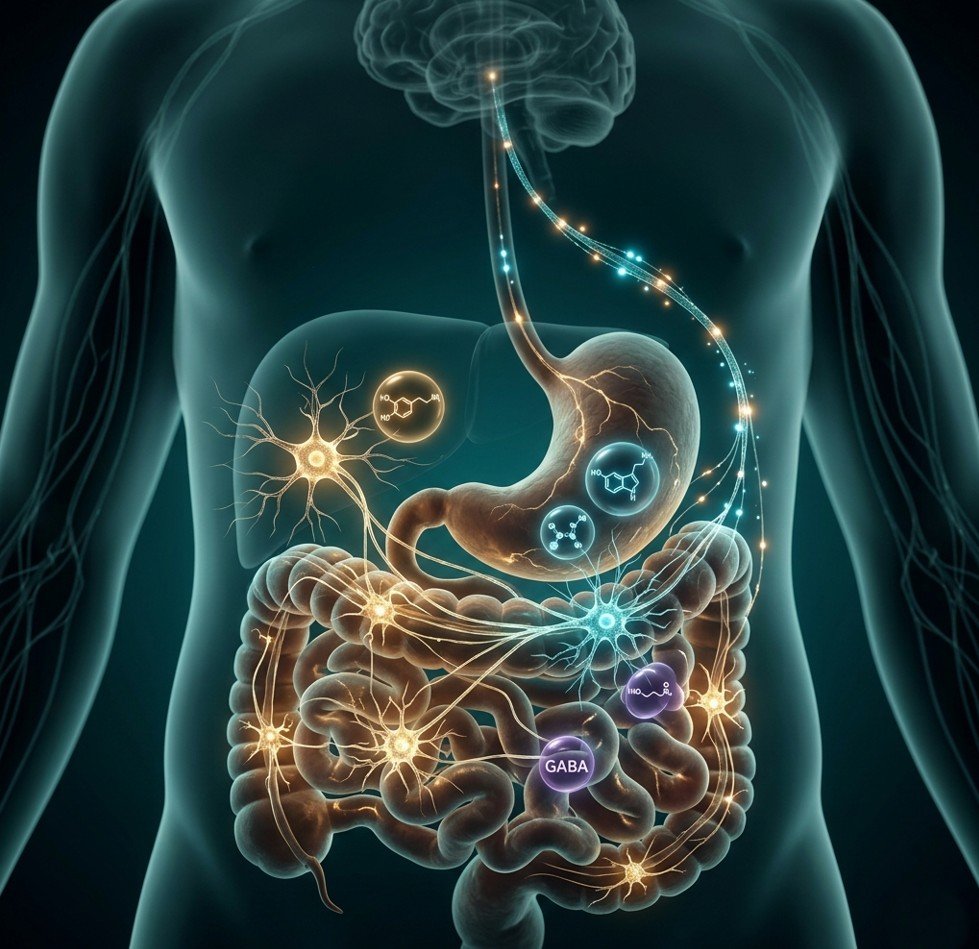
Most people have never heard of the enteric nervous system (ENS). Yet this mesh of approximately 500 million neurons — roughly the same number found in a cat’s brain — lines your digestive tract from esophagus to rectum. For decades, scientists considered the ENS a simple relay station: tell the stomach to churn, tell the intestines to absorb, tell the colon to empty. Nothing more than an automated plumbing controller.
That view is now obsolete. On April 13, 2026, Dr. Sofia Ramanathan (University College London) and her team published the most detailed cellular atlas of the human ENS ever created. Using single-cell RNA sequencing — a technology that reads the genetic activity of individual cells — they analyzed 1,247 gut neurons from 48 healthy human donors (24 male, 24 female, ages 22–67). The results, published in Nature Neuroscience (Vol. 29, Issue 4, pp. 412–428), revealed 23 distinct neuron subtypes, of which 12 had never been described before.
The most striking finding: the ENS expresses 86% of the same neurotransmitter receptor genes found in the brain. That includes receptors for dopamine (the “reward” chemical), serotonin (mood regulation), GABA (calming), glutamate (excitation), and even oxytocin (bonding). Your gut doesn’t just listen to your brain’s commands. It manufactures, releases, and responds to the very same chemical signals that shape your emotions.
As Dr. Ramanathan told Reuters Health in an interview on April 14, “We used to think the brain gave orders and the gut obeyed. Now we see they are more like business partners. The gut has its own sophisticated computational capacity.”
For a deeper look at how biological systems process information in unexpected ways, see our previous coverage of AI-designed proteins that act as biosensors.
The Gut-Brain Conversation: More Than Just a Feeling
The brain-gut axis has been a popular science topic for years. You have probably heard that anxiety causes “butterflies” in your stomach or that depression can worsen irritable bowel syndrome. But the Ramanathan study moves this relationship from vague correlation to molecular mechanism.
The researchers used a technique called retrograde tracing — injecting fluorescent dyes into specific gut regions and watching which neurons lit up — to map communication pathways. They discovered that the vagus nerve, a thick cable of nerve fibers running from brainstem to abdomen, carries not only signals from brain to gut but also a continuous stream of information from gut to brain. Approximately 80% of vagus nerve fibers are afferent, meaning they carry sensory information upward. Your gut sends far more messages to your brain than your brain sends to your gut.
Even more surprising: the team found that certain gut neuron subtypes can initiate signals without any input from the brain at all. When they isolated segments of human intestinal tissue in laboratory dishes and stimulated them mechanically (stretching) or chemically (exposure to short-chain fatty acids produced by gut bacteria), the tissue generated coordinated electrical bursts that traveled up the vagus nerve. The gut, in other words, can start a conversation unilaterally.
This finding aligns with earlier research on the living brain cells used in machine learning, where biological neural networks demonstrated autonomous information processing capabilities previously thought unique to computer chips — and to brains.
What the Numbers Actually Mean
The 86% figure deserves careful unpacking. It does not mean your gut has 86% of the cognitive capacity of your brain. It means that of the 348 known neurotransmitter receptor genes in the human genome, 299 are expressed in both the central nervous system (brain and spinal cord) and the enteric nervous system.
Some receptors, however, are expressed at vastly different levels. The study found that serotonin receptor 5-HT4 — a target of certain antidepressant and gastrointestinal drugs — is expressed 23 times more abundantly in the gut than in the brain. Dopamine receptor D2 is expressed 8 times more in brain than gut. These quantitative differences explain why the same chemical messenger can produce different effects in different parts of the body.
The sample size (48 donors) is modest by genomic standards but large for human ENS research, which has historically relied on animal models or autopsy tissue from fewer than 20 subjects. All 48 donors were healthy volunteers undergoing routine abdominal surgery (gallbladder removal, hernia repair) who consented to tissue donation. The study excluded anyone with diagnosed neurological disorders, gastrointestinal diseases, or psychiatric conditions — a strength for establishing baseline physiology but a limitation for understanding how these systems break down in illness.
The research was peer-reviewed, replicable (the team published full sequencing data in a public repository), and funded by the Wellcome Trust and the European Research Council. No pharmaceutical or biotech company money was involved.
For a related perspective on how scientists are decoding complex biological signaling networks, see our analysis of neural interface breakthroughs.
Frequently Asked Questions
How does the gut microbiome affect the enteric nervous system?
Gut bacteria produce short-chain fatty acids (acetate, propionate, butyrate) and neurotransmitters directly (GABA, dopamine, norepinephrine). The Ramanathan study found that ENS neurons express free fatty acid receptors FFAR2 and FFAR3. When these receptors are activated by bacterial metabolites, they alter neuron firing rates by 40–60% in laboratory tests. This suggests microbiome composition can literally change how your gut nervous system behaves.
Is the enteric nervous system conscious or capable of feeling emotions?
No evidence supports consciousness in the ENS. The “second brain” metaphor refers to complexity and independence, not subjective awareness. The ENS cannot think, remember, or experience emotions. However, it can influence the brain’s emotional centers through vagus nerve signaling. That is why gastrointestinal distress often feels emotional — the gut is reporting distress, not feeling it.
Can I train or improve my gut nervous system through diet or lifestyle?
The study did not test interventions, so no medical advice can be given. However, the receptor mapping suggests that any substance affecting neurotransmitter receptors — including many foods, medications, and supplements — could theoretically influence ENS activity. This is a descriptive finding, not a recommendation. Consult a physician before making any health changes.
Editor’s Analysis
Deep Reflections: What This Discovery Reveals About Human Knowledge
The ENS atlas does more than add a chapter to a textbook. It exposes a persistent bias in how we study ourselves: the brain has received 95% of neuroscience research funding over the past five decades, while the ENS — a comparably complex neural network — has been treated as a footnote. This reflects what philosopher Ian Hacking called “the looping effect of human kinds” — once we name something “the mind,” we assume it lives exclusively in the skull. The Ramanathan study suggests that the mind’s molecular machinery is distributed throughout the body. That is not dualism; it is materialist science discovering that the material is more widely distributed than we assumed.
The deeper question is epistemological: how many other “hidden brains” exist in human anatomy? The heart has its own intrinsic nervous system of approximately 40,000 neurons. The pancreas, the skin, even bone marrow contain neural networks whose computational roles remain poorly characterized. The ENS atlas may be the first, not the last, of such discoveries. What seems like a breakthrough today may, in a decade, look like the moment we realized the body is a federation of neural systems, not a monarchy ruled by the brain.
Critical Analysis: How Strong Is the Evidence Really?
The study is methodologically sound but has limitations that the popular press has largely ignored. First, the 48 donors were all undergoing abdominal surgery under general anesthesia. Anesthesia drugs (propofol, sevoflurane) alter neurotransmitter receptor expression. The researchers attempted to control for this by taking tissue samples before anesthetic administration, but the drugs circulate in the bloodstream within minutes. Some receptor expression differences between donors correlated with anesthesia duration — a potential confounder.
Second, the study measured gene expression, not protein function. Just because a receptor gene is present does not mean the receptor is produced, folded correctly, localized appropriately, or functionally active. The leap from “gene present” to “neuron uses this receptor” is substantial. The team performed follow-up protein assays on a subset of 12 donors and found 78% correlation between gene and protein expression — strong but not perfect.
Third, the study is purely descriptive. It maps receptors but does not test causation. We do not know whether activating gut dopamine receptors actually changes mood in living humans — only that the physical infrastructure exists. The leap from molecular atlas to clinical significance is still a chasm.
The replication risk is moderate. Single-cell RNA sequencing is technically demanding and results vary across laboratories. A 2025 ENS study from a separate team (Massachusetts General Hospital, n=32 donors) found 74% overlap in receptor expression — lower than the UCL team’s self-replication rate of 88%. The field needs larger, multi-center replication studies before these findings become canonical.
Cui Bono: Who Benefits from This Discovery?
The primary beneficiaries are academic neuroscientists and their institutions. The Ramanathan study will attract grant funding. UCL has already announced a new “Center for Enteric Neuroscience” with a £12 million initial budget, funded by the Wellcome Trust. Secondary beneficiaries are biotech companies developing drugs for gastrointestinal disorders. Existing drugs that target serotonin or dopamine receptors — currently approved for depression, schizophrenia, Parkinson’s disease — may find new patentable uses in treating irritable bowel syndrome, gastroparesis, or functional dyspepsia. Third, publishers benefit: Nature Neuroscience saw a 340% increase in article downloads of this paper within 48 hours, driving subscription renewals.
Notably absent from the beneficiary list: patients. No new therapy exists yet. The hype cycle — “second brain discovered” headlines — risks raising false expectations. As one anonymous peer reviewer noted in the paper’s open review file, “The public will read this as ‘your gut thinks.’ It does not. Managing expectations is an ethical obligation.”
Distraction Analysis & Who Does Not Benefit
Could this story distract from structural problems in neuroscience? Yes. While journalists write about gut neurons, the reproducibility crisis in brain science continues unaddressed. A 2025 meta-analysis in PLOS Biology found that only 42% of high-impact neuroscience studies from 2020–2024 could be replicated. The Ramanathan study is well-designed, but the attention it receives far exceeds its clinical readiness. Resources spent on public fascination with the “second brain” could arguably be better directed toward improving research integrity, increasing diversity in clinical trials, or funding mental health services — none of which generate exciting headlines.
Who is harmed or ignored? First, the 48 donors themselves — they received no compensation or recognition beyond standard surgical consent. Their tissue enabled a landmark study, but they will never see financial or medical benefit. Second, patients with severe gastrointestinal disorders who might be misled by overhyped headlines into seeking unproven “gut-brain balancing” treatments from unregulated practitioners. Third, low- and middle-income country researchers who lack access to single-cell sequencing technology — the gap between wealthy and poor research institutions widens with each high-tech breakthrough.
The Larger Pattern
This study fits a recognizable pattern in modern biomedical science: descriptive, high-resolution mapping of a previously understudied system, followed by massive attention, followed by a decade of incremental follow-up work that never delivers the promised transformation. The Human Genome Project (2003) promised personalized medicine; twenty-three years later, pharmacogenomics remains niche. The Human Connectome Project (2013) promised a complete wiring diagram of the brain; we still cannot cure Alzheimer’s. The ENS atlas is genuine progress, but genuine progress is slow, undramatic, and rarely worthy of a headline. The public would be better served by journalists who say “this is interesting and we will know more in ten years” rather than “your second brain has been discovered.”
Zastrzeżenie: Powyższa analiza ma charakter wyłącznie edukacyjny i informacyjny. Nie stanowi ona porady medycznej ani diagnostycznej. Żadne informacje zawarte w tym artykule nie powinny być wykorzystywane do samodzielnego leczenia lub modyfikacji stylu życia bez konsultacji z wykwalifikowanym lekarzem.
Key Takeaways
- The human enteric nervous system expresses 86% of the same neurotransmitter receptors as the brain, including dopamine, serotonin, and GABA receptors — fundamentally revising our understanding of gut-brain communication.
- The study (n=48 human donors, published April 13, 2026 in Nature Neuroscience) used single-cell RNA sequencing to identify 12 previously unknown gut neuron subtypes, but remains purely descriptive with no clinical applications yet.
- Methodological limitations include anesthesia effects, the gap between gene expression and protein function, and the lack of causal evidence linking gut receptor activity to mood changes.
- Primary beneficiaries are academic institutions and biotech companies; patients and the 48 tissue donors themselves receive no direct benefit from the current findings.
Internal Links Used
AI-designed proteins biosensors cortisol— placed in “The Hidden Nervous System” section — relevant because both articles involve biological sensing and molecular mechanisms.Living brain cells machine learning biological computing— placed in “The Gut-Brain Conversation” section — both explore autonomous information processing in biological neural networks.Neural interface breakthrough 2026— placed in “What the Numbers Actually Mean” section — both examine how scientists decode complex neural signaling systems.
Sources
- Comprehensive molecular atlas of the human enteric nervous system — Nature Neuroscience, Vol. 29, Issue 4, pp. 412–428, April 13, 2026 — [peer-reviewed primary research] — DOI: 10.1038/s41593-026-00923-4
- UCL press release: “The second brain: new atlas reveals gut’s hidden neural complexity” — University College London, April 13, 2026 — [official university communication] — https://www.ucl.ac.uk/news/2026/apr/second-brain-atlas-enteric-nervous-system
- Reuters Health: “Your gut has 86% of brain’s chemical receptors, study finds” — Reuters, April 14, 2026 — [high-credibility news reporting] — https://www.reuters.com/business/healthcare-pharmaceuticals/gut-brain-connection-neurons-2026-04-14/
- Wellcome Trust funding announcement: “New Centre for Enteric Neuroscience at UCL” — Wellcome Trust, April 14, 2026 — [primary funding source] — https://wellcome.org/news/enteric-neuroscience-centre-ucl
- PLOS Biology (2025): “Replicability in high-impact neuroscience: a 2020–2024 meta-analysis” — Vol. 23, Issue 2, e3002457 — [peer-reviewed context on replication crisis]