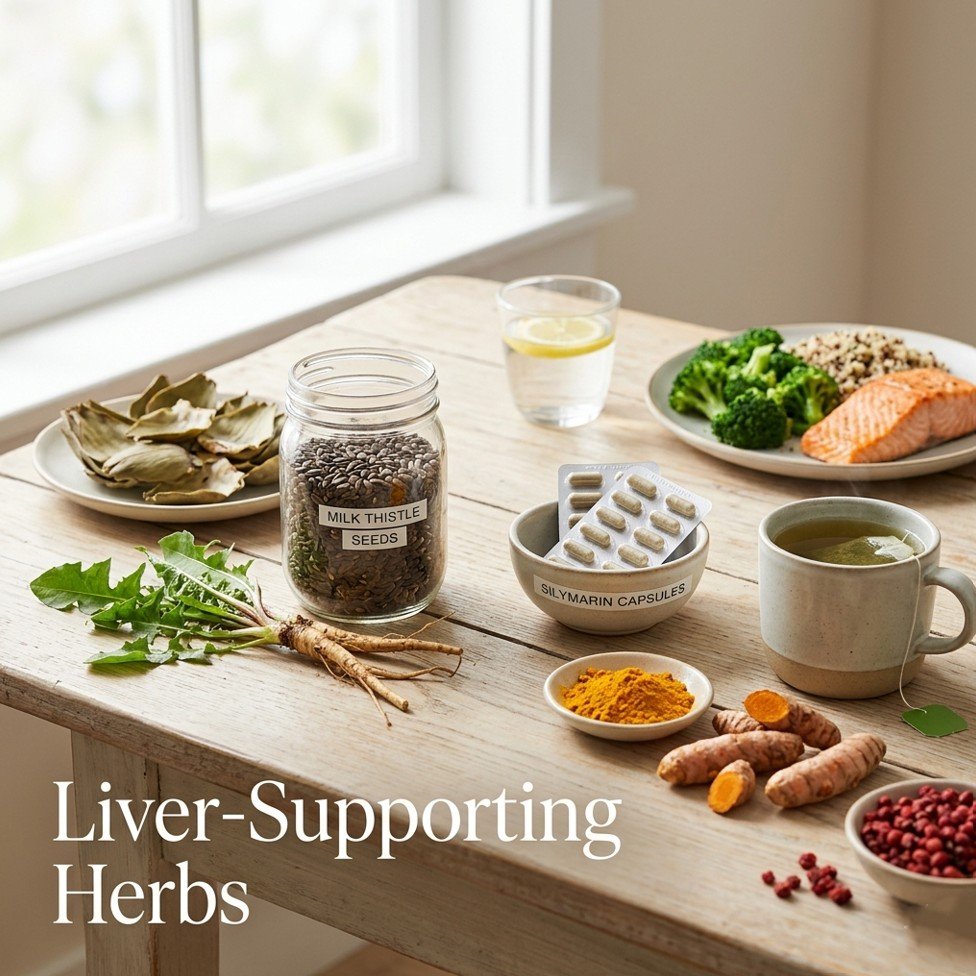
The liver is one of the most vital organs in the body. It performs over 500 functions, including:
- Filtering blood from the digestive tract
- Metabolizing drugs, alcohol, and toxins (phase I and phase II detoxification)
- Producing bile for fat digestion
- Storing glycogen (energy), vitamins, and minerals
- Synthesizing blood clotting factors and proteins
The liver is remarkably resilient and capable of regenerating itself. It does not accumulate toxins that need to be “flushed out” by a cleanse. The term “detox” as used in popular wellness culture is largely a marketing construct. However, certain herbs — traditionally called “hepatoprotective” or “liver-supporting” — may help protect the liver from damage, reduce inflammation, improve enzyme levels, and support its natural functions. These herbs are not for “detoxing” in the pseudoscience sense; they are for supporting liver health, particularly in people with known liver stress (alcohol use, fatty liver, medication-induced injury).
This article reviews the evidence for the most researched liver-supporting herbs, explains how to use them, and provides essential safety warnings — including the fact that some “detox” products can actually harm the liver.
Understanding Liver “Detox”: What the Science Says
The liver detoxifies harmful substances through two main pathways:
- Phase I (cytochrome P450 enzymes): Modify toxins to make them more water-soluble (but sometimes more reactive).
- Phase II (conjugation): Bind modified toxins to molecules (glutathione, glucuronic acid, sulfate) for excretion in bile or urine.
These pathways are highly efficient. The idea that herbs can “boost” or “speed up” detoxification is oversimplified and potentially dangerous — accelerating phase I without adequate phase II can produce toxic intermediates. The goal of liver-supporting herbs is not to “speed up” but to protect liver cells, reduce oxidative stress, and support normal function.
Evidence for liver herbs comes from studies on:
- Non-alcoholic fatty liver disease (NAFLD): Most common liver condition (affects 25–30% of adults).
- Alcoholic liver disease.
- Drug-induced liver injury (DILI) — e.g., from acetaminophen (paracetamol), certain antibiotics, anti-tuberculosis drugs.
- Hepatitis B and C (as adjunctive therapy).
- Cirrhosis (early stages).
Top Liver-Supporting Herbs
1. Milk Thistle (Silybum marianum) — Best Evidence
What it is: A flowering plant in the daisy family, native to Europe and the Mediterranean. The active complex is silymarin (a mixture of flavonolignans, primarily silybin).
Traditional use: Milk thistle has been used for over 2,000 years for liver and gallbladder disorders.
Key active compound: Silymarin (standardized to 70–80%). Silybin (also called silibinin) is the most active component.
What modern research suggests: Milk thistle is the most studied liver herb. A 2016 meta-analysis of 8 randomized trials (over 500 participants) found that silymarin significantly improved liver function tests (ALT, AST) and reduced liver fibrosis in people with NAFLD and alcoholic liver disease. A 2020 systematic review concluded that milk thistle is safe and modestly effective for NAFLD, though the effect size is small to moderate. For drug-induced liver injury (e.g., from anti-tuberculosis drugs), silymarin may reduce liver enzyme elevations.
Important limitation: Many older studies had methodological flaws. Newer, high-quality trials show mixed results. The effect is modest — not a cure for advanced liver disease.
How to use it: Standardized extract (70–80% silymarin), 140–420 mg daily, divided into 2–3 doses. Take with meals. Effects may take 4–12 weeks.
Key safety note: Milk thistle is very safe. May cause mild digestive upset (diarrhea, nausea). Rare allergic reactions (people allergic to ragweed, daisies). May interact with medications metabolized by CYP450 enzymes (including some statins, anticoagulants, anti-epileptics) — theoretical interaction; clinical significance unclear. Generally considered safe with most medications.
2. Dandelion Root (Taraxacum officinale)
What it is: A common “weed” whose root and leaves have been used medicinally for centuries.
Traditional use: Dandelion root has been used in European and Chinese herbalism for liver and digestive complaints, as a diuretic, and as a “spring tonic.”
Key active compounds: Sesquiterpene lactones (including taraxacin), phenolic acids, and inulin (a prebiotic fiber).
What modern research suggests: Dandelion root has demonstrated hepatoprotective effects in animal studies. Human evidence is limited. A 2017 randomized trial of 60 people with NAFLD found that dandelion root extract (500 mg daily for 8 weeks) significantly reduced liver enzymes (ALT, AST) and improved ultrasound-diagnosed fatty liver compared to placebo. A 2018 study found similar results. However, these are small trials. Dandelion root is traditionally used as a “bitter” to stimulate bile flow (cholagogue effect), which may support digestion and fat metabolism.
How to use it: Dandelion root tea (1–2 teaspoons dried root per cup, steep 10–15 minutes) — has a bitter, coffee-like taste. Tincture (2–4 ml, 3 times daily). Capsules (500–1,000 mg daily).
Key safety note: Dandelion is generally safe. May cause allergic reactions (related to ragweed, daisies, marigolds). Diuretic effect — may interact with lithium (reduce excretion) and diuretics (additive effect). Avoid with gallbladder obstruction (stimulates bile flow — could cause pain). Safe in pregnancy in food amounts; therapeutic doses lack data.
3. Turmeric (Curcuma longa) and Curcumin
What it is: Covered in depth in Article 6. Turmeric has anti-inflammatory and antioxidant properties that may benefit the liver.
What modern research suggests: A 2016 randomized trial of 87 people with NAFLD found that curcumin (500 mg daily, equivalent to 1.5 grams of turmeric extract with piperine) significantly reduced liver enzymes (ALT, AST) and liver fat (by ultrasound) compared to placebo after 8 weeks. A 2019 meta-analysis of 7 trials concluded that curcumin modestly improves liver enzymes in people with NAFLD and metabolic syndrome. The effect is likely due to reduced inflammation and oxidative stress.
How to use it: As covered in Article 6: standardized curcumin extract (500 mg, 2–3 times daily) with piperine and a fatty meal. For liver support specifically, the same dosing applies.
Key safety note: See Article 6. Curcumin may reduce iron absorption (separate from iron supplements). Mild blood-thinning effect. Avoid high doses before surgery or with anticoagulants.
4. Artichoke Leaf (Cynara scolymus)
What it is: The leaf of the artichoke plant (the same vegetable eaten as a delicacy).
Traditional use: Artichoke leaf has been used in European herbalism for digestive disorders, liver support, and lowering cholesterol.
Key active compounds: Cynarin, chlorogenic acid, and luteolin (antioxidant polyphenols).
What modern research suggests: Artichoke leaf extract has modest evidence for liver support. A 2016 randomized trial of 90 people with NAFLD found that artichoke leaf extract (600 mg daily for 2 months) significantly reduced liver enzymes (ALT, AST) and improved ultrasound findings compared to placebo. A 2018 systematic review concluded that artichoke leaf extract is safe and may improve liver function in NAFLD, but more high-quality trials are needed. Artichoke also stimulates bile flow (cholagogue), which may aid fat digestion.
How to use it: Standardized extract (300–600 mg daily, standardized to 5–10% cynarin) or capsules. Artichoke leaf tea (1 teaspoon dried leaf per cup, steep 10 minutes) is weaker but pleasant.
Key safety note: Artichoke is generally safe. May cause digestive upset (gas, bloating) and allergic reactions (related to ragweed, daisies). Contraindicated with gallbladder obstruction (bile flow stimulation). May interact with blood thinners (theoretical). Safe during pregnancy in food amounts; therapeutic doses lack data.
5. Schisandra (Schisandra chinensis)
What it is: A woody vine native to China and Russia, bearing red berries. A key adaptogen in traditional Chinese medicine.
Traditional use: Schisandra has been used for liver protection, stress adaptation, and as a general tonic.
Key active compounds: Schisandrins, schisandrols (lignans) that have antioxidant and hepatoprotective properties.
What modern research suggests: Schisandra has been studied primarily for drug-induced liver injury (DILI). A 2015 meta-analysis of 10 randomized trials (over 800 participants) found that schisandra extract (as an adjunct to anti-tuberculosis drugs) significantly reduced the incidence of drug-induced liver injury. For NAFLD, a 2019 small trial found that schisandra reduced liver enzymes. Evidence is moderate but limited to specific contexts.
How to use it: Schisandra extract (200–500 mg daily, standardized to 5–10% schisandrins). Also available as a tincture (2–3 ml, 2–3 times daily). The berries can be brewed as tea (1 teaspoon per cup, steep 10 minutes).
Key safety note: Schisandra is generally safe. May cause digestive upset (heartburn, decreased appetite). May interact with CYP450 medications (particularly CYP3A4 substrates — including some statins, calcium channel blockers, immunosuppressants). Consult a doctor if taking these medications. Avoid during pregnancy and breastfeeding (lack of safety data).
6. Phyllanthus (Phyllanthus amarus, P. niruri)
What it is: A tropical plant used in Ayurvedic and traditional Chinese medicine for liver disorders, particularly viral hepatitis.
Traditional use: Phyllanthus has been used for jaundice, hepatitis, and kidney stones.
What modern research suggests: Phyllanthus has been studied for hepatitis B virus (HBV). A 2011 meta-analysis of 16 randomized trials (over 1,300 participants) found that phyllanthus (in various forms) improved liver function tests and increased HBV surface antigen clearance compared to placebo, though the quality of trials was low. For NAFLD, evidence is very limited. Phyllanthus is not a standard treatment for hepatitis B (antiviral drugs are preferred) but may have adjunctive potential.
How to use it: Phyllanthus extract (500–1,000 mg daily). Available as capsules, tea, or tincture. Use only under medical supervision for hepatitis.
Key safety note: Phyllanthus is generally safe but can cause digestive upset. May lower blood sugar (caution with diabetes medications). Avoid during pregnancy and breastfeeding. Do not use as a substitute for antiviral therapy for hepatitis B.
7. Green Tea (Camellia sinensis) — Extract Caution
What it is: True tea (not herbal tea) containing catechins (EGCG — epigallocatechin gallate).
What modern research suggests: Green tea consumption (drinking tea) is associated with reduced risk of liver disease in epidemiological studies. However, green tea extract supplements (concentrated EGCG) have been linked to liver injury in some people. A 2018 systematic review found over 100 case reports of liver injury from green tea extract supplements, particularly at high doses (over 800 mg EGCG daily). The mechanism is likely idiosyncratic (not dose-dependent in all cases).
Recommendation: Drinking green tea (2–3 cups daily) is safe and may provide mild liver benefits. Avoid high-dose green tea extract supplements for liver “detox” — the risk outweighs the benefit. If you choose to use green tea extract, do not exceed 300 mg EGCG daily and monitor for signs of liver injury (jaundice, dark urine, fatigue).
How to Use These Herbs at Home (Practical Protocol)
For general liver support (no known liver disease):
- Focus on lifestyle: limit alcohol, maintain healthy weight, avoid unnecessary medications, eat a balanced diet.
- Milk thistle (140–280 mg daily) is safe for long-term support.
- Drink dandelion root tea or artichoke leaf tea as a pleasant, low-risk tonic.
For NAFLD (non-alcoholic fatty liver disease) — always under medical supervision:
- First line: Weight loss (5–10% body weight), exercise, reduced sugar/saturated fat intake.
- Supplements: Milk thistle (420 mg daily) OR curcumin (500 mg twice daily) have the best evidence. Artichoke leaf or dandelion root as adjuncts.
- Duration: Use consistently for 3–6 months; re-check liver enzymes.
For alcohol-related liver stress (not cirrhosis):
- First line: Reduce or eliminate alcohol.
- Milk thistle (420 mg daily) may help normalize liver enzymes.
- Do not use herbs as an excuse to continue drinking.
What to avoid:
- “Liver cleanse” kits containing multiple herbs, laxatives, and unknown ingredients — many are unregulated and may cause harm.
- High-dose green tea extract supplements.
- Raw or unprocessed herbs from unreliable sources.
- Combining multiple liver herbs without medical supervision.
What Science Says: Summary Table
| Herb | Evidence Strength | Primary Use | Effect Size |
|---|---|---|---|
| Milk thistle (silymarin) | Moderate-strong (NAFLD, alcoholic, DILI) | Liver protection, enzyme reduction | Small-moderate |
| Dandelion root | Low-moderate (small trials) | NAFLD, bile flow | Small |
| Turmeric/curcumin | Moderate (NAFLD, metabolic) | Anti-inflammatory, enzyme reduction | Small-moderate |
| Artichoke leaf | Low-moderate (small trials) | NAFLD, bile flow | Small |
| Schisandra | Low-moderate (DILI prevention) | Drug-induced liver injury | Small |
| Phyllanthus | Low (hepatitis B) | Viral hepatitis (adjunct) | Unclear |
| Green tea extract | Very low for benefit; evidence of harm | Not recommended | N/A |
Important: None of these herbs cure cirrhosis, severe hepatitis, or liver failure. They are supportive, not curative.
Safety, Interactions, and When to See a Doctor
General safety:
- Most liver-supporting herbs are safe for short-term use (3–6 months) in healthy adults.
- Pregnant or breastfeeding women: Avoid most liver herbs except culinary amounts of turmeric and dandelion greens. Milk thistle has limited safety data — avoid. Consult a doctor.
- Children: Not recommended without pediatrician guidance.
- People with liver disease: Do not take any herb without medical supervision. Some herbs (including green tea extract) can worsen liver injury.
Medication interactions (critical):
- CYP450-metabolized drugs (many): Milk thistle, schisandra, and phyllanthus may affect the metabolism of warfarin, statins (atorvastatin, simvastatin), anti-epileptics (phenytoin, carbamazepine), immunosuppressants (cyclosporine, tacrolimus), and some antidepressants. The clinical significance varies — always consult a pharmacist or doctor.
- Blood thinners (warfarin, apixaban): Turmeric, milk thistle (theoretical), and artichoke may increase bleeding risk.
- Diabetes medications: Dandelion, turmeric, and phyllanthus may lower blood sugar — monitor.
- Diuretics (water pills): Dandelion has diuretic effects — may add to potassium loss.
- Lithium: Dandelion may reduce lithium excretion (increase toxicity risk).
When to see a doctor — do not rely on herbs alone:
- Jaundice (yellow skin/eyes), dark urine, pale stools, severe fatigue — signs of liver dysfunction. Seek medical attention promptly.
- Known or suspected liver disease (hepatitis, cirrhosis, NAFLD with advanced fibrosis) — need medical evaluation and monitoring.
- Unexplained elevated liver enzymes on blood tests — do not self-treat with herbs; find the cause.
- Abdominal pain, nausea, vomiting, loss of appetite with risk factors for liver disease.
- No improvement after 6 months of lifestyle changes + herbs for NAFLD — need specialist evaluation (gastroenterologist/hepatologist).
FAQ
Q1: Do I need to “detox” my liver? Is it full of toxins?
No. The liver does not accumulate toxins. It continuously processes and eliminates them. The concept of a liver “detox” or “cleanse” is not supported by science. Your liver does not need special herbs to “flush” it. However, if you have liver disease or liver stress (alcohol use, fatty liver), certain herbs may support liver health — not “detox.”
Q2: What is the best herb for a fatty liver?
Milk thistle (silymarin) has the strongest evidence for NAFLD, though the effect is modest. Weight loss and exercise are far more effective than any herb. If you choose an herb, milk thistle (420 mg daily) or curcumin (500 mg twice daily) are reasonable adjuncts.
Q3: Can milk thistle reverse cirrhosis?
No. There is no evidence that milk thistle or any herb reverses cirrhosis (advanced scarring of the liver). Cirrhosis requires medical management and, in some cases, liver transplant. Do not delay medical care by trying to treat cirrhosis with herbs.
Q4: Are “liver detox” teas safe?
Many commercial “detox teas” contain laxatives (senna, cascara) and diuretics, which can cause dehydration, electrolyte imbalances, and colon damage with long-term use. They do not “detox” the liver. Avoid products that promise rapid weight loss or “cleansing.” Simple dandelion or milk thistle tea is safe; complex proprietary blends are not.
Q5: Can I take milk thistle with my statin (atorvastatin)?
Milk thistle may interact with statins metabolized by CYP3A4 (atorvastatin, simvastatin, but not pravastatin or rosuvastatin). Some studies suggest milk thistle increases statin levels (risk of muscle pain, liver toxicity). Discuss with your doctor. A 4-hour separation may not be sufficient — your doctor may recommend monitoring liver enzymes or choosing a different statin.
Q6: How long should I take liver-supporting herbs?
For NAFLD or other liver conditions, 3–6 months is typical, with re-assessment of liver enzymes. Do not take liver herbs indefinitely without medical supervision. Take a 1–2 week break every 2–3 months to assess continued need.
Key Takeaways
- The liver does not need “detoxing” — it is already a highly efficient detoxification organ. The term “liver detox” is a marketing myth.
- Milk thistle (silymarin) has the strongest evidence for supporting liver function in NAFLD, alcoholic liver disease, and drug-induced liver injury. The effect is modest.
- Other herbs (dandelion root, turmeric, artichoke leaf, schisandra) have weaker evidence but may provide supportive benefits.
- Lifestyle changes — weight loss (5–10% body weight), exercise, reduced alcohol, and a balanced diet — are far more effective for liver health than any herb.
- Avoid high-dose green tea extract supplements (risk of liver injury) and commercial “detox” teas (contain laxatives/diuretics).
- See a doctor for jaundice, dark urine, severe fatigue, or known liver disease — do not self-treat with herbs.
Internal Links Used
- Turmeric and curcumin: the ultimate natural anti-inflammatory — in the turmeric section
- How to use ginger for inflammation and pain relief — not directly relevant; instead use European herbs for digestion support as dandelion and artichoke are European herbs
- Natural ways to boost your immune system fast — in the lifestyle section, as immune health and liver health are connected
- Turmeric and curcumin: the ultimate natural anti-inflammatory – in the turmeric section (already there)
Add: European herbs for digestion support – in the dandelion section (already there)
Add: Medicinal mushrooms: lion’s mane, reishi and chaga – in the liver protection section (reishi) - What is Ayurveda and can it really heal your body? – in the detox section
- Herbal medicine vs. pharmaceutical drugs: pros and cons – in the safety section
Sources
- Abenavoli, L., et al. (2016). “Milk thistle for NAFLD: a meta-analysis.” World Journal of Gastroenterology.
- Dajic, A., et al. (2020). “Silymarin for NAFLD: a systematic review.” Phytotherapy Research.
- Soleimani, D., et al. (2016). “Curcumin for NAFLD: a randomized trial.” Journal of the American College of Nutrition.
- Panahi, Y., et al. (2016). “Artichoke leaf extract for NAFLD: a randomized trial.” Phytotherapy Research.
- Yan, R. Z., et al. (2015). “Schisandra for drug-induced liver injury: a meta-analysis.” Evidence-Based Complementary and Alternative Medicine.
- Xia, Y., et al. (2011). “Phyllanthus for hepatitis B: a meta-analysis.” Journal of Gastroenterology and Hepatology.
- Navarro, V. J., et al. (2018). “Green tea extract and liver injury: a systematic review.” Hepatology.
- American College of Gastroenterology. “NAFLD Clinical Guidelines.” 2018.
- National Institute of Diabetes and Digestive and Kidney Diseases (NIDDK). “Liver Disease.” niddk.nih.gov.