LEAD:
Recessions test financial resilience. This article provides a practical three‑phase plan — before, during, and after a recession — covering emergency funds, debt management, defensive investing, avoiding panic selling, and positioning for recovery.
What a Recession Means for Your Wealth
A recession is typically defined as two consecutive quarters of negative economic growth. It brings job losses, falling asset prices (stocks, real estate), tighter credit, and reduced consumer spending.
For your personal wealth, a recession can mean:
- Decline in investment portfolio value (sometimes 30–50%)
- Reduced home equity or property values
- Risk of job loss or reduced income
- Difficulty accessing credit or refinancing debt
However, recessions are normal parts of the economic cycle. Since 1945, the US has experienced 12 recessions. The average duration has been about 10 months. While painful, recessions have always ended. Markets have always recovered — though the time frame varies.
The difference between those who are devastated by a recession and those who merely experience a temporary setback is often preparation and behaviour. This plan focuses on both.
Phase 1: Before a Recession (Preparation)
The best time to prepare for a recession is before it arrives. If you are already in a recession, skip to Phase 2. If not, use calm periods to build resilience.
1. Build a Larger Emergency Fund
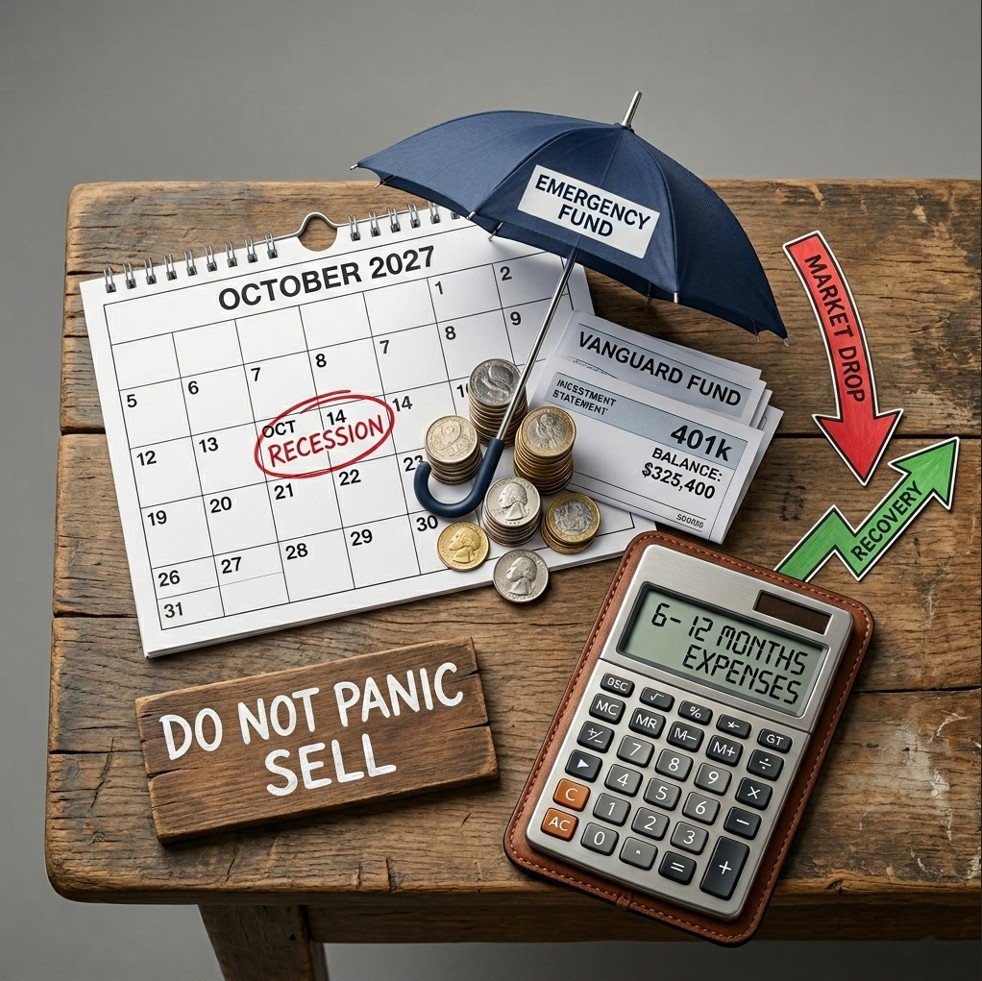
During normal times, 3–6 months of expenses may suffice. Before a recession, target 6–12 months. Job loss is more likely during recessions, and finding new employment takes longer.
Action: Calculate your essential monthly expenses. Multiply by 9–12. If your current emergency fund is smaller, prioritise building it. Reduce discretionary spending temporarily to accelerate.
2. Reduce High‑Interest Debt
Credit card debt, payday loans, and other high‑interest debt are dangerous during recessions. Interest costs drain cash flow. Lenders may reduce credit limits. Default risks increase.
Action: Pay down or eliminate high‑interest debt while the economy is still stable. Use debt avalanche (highest interest first) or snowball methods.
3. Review Your Investment Portfolio
Ensure your allocation matches your true risk tolerance — not your bull‑market risk tolerance. Ask: “Would I panic if this portfolio dropped 30% in a recession and I lost my job?”
Action: If the answer is yes, reduce stock exposure and increase bonds, TIPS, or cash. Do this gradually, not during a crash.
4. Diversify Income Sources
A single employer is a single point of failure. Recessions often lead to layoffs. Side income, freelance work, or a second part‑time job provides a buffer.
Action: Even a small side income (€200–500 per month) can cover essential expenses if your main job disappears. Start exploring options before a recession hits.
5. Review and Update Your Resume
Update your CV, LinkedIn profile, and professional network before you need them. Recessions can bring sudden layoffs. Being prepared reduces panic.
Action: Schedule a half‑day every 6 months to update your professional materials.
Phase 2: During a Recession (Damage Control and Opportunity)
When a recession is already here, your goal shifts from preparation to preservation and thoughtful action.
1. Do Not Panic Sell Investments
This is the single most important rule. Selling stocks after they have already fallen locks in losses. Historically, markets have recovered from every recession — though sometimes over several years.
What to do instead:
- Revisit your investment policy statement.
- Remind yourself of your time horizon (5+ years).
- If you have a secure job and emergency fund, continue automatic investing. Downturns allow you to buy at lower prices.
Exception: If your personal financial situation has changed (job loss, medical emergency) and you need cash, selling may be necessary. That is different from panic selling.
2. Stress‑Test Your Emergency Fund
Calculate how many months your emergency fund will cover at current spending levels. If you have been laid off, immediately:
- Reduce all non‑essential spending.
- Pause discretionary savings (vacation, extra investing).
- Apply for unemployment benefits immediately.
Action: Cut dining out, subscriptions, and discretionary shopping to essential levels. Stretch your cash reserves.
3. Protect Your Job or Find New Income
If you are still employed, make yourself as valuable as possible. Volunteer for critical projects. Document your contributions. Network internally.
If you have been laid off:
- File for unemployment benefits on day one.
- Update your CV and LinkedIn immediately.
- Reach out to your network — many jobs are found through connections, not applications.
- Consider temporary work (retail, delivery, freelance) to slow cash burn.
Do not: Isolate yourself or delay job searching out of discouragement.
4. Avoid Making Big Decisions Based on Headlines
News media amplifies fear during recessions. Sensational headlines sell. Do not base financial decisions on today’s news.
Action: Use a 30‑day cooling‑off period for any major financial move (selling a house, liquidating investments, changing careers). Write down the proposed action and revisit it in 30 days.
5. Continue Dollar‑Cost Averaging (If You Can)
If you have a secure job and a fully funded emergency fund, continuing to invest during a recession allows you to buy assets at lower prices. Historically, this has been a powerful wealth‑building strategy.
Example: During the 2008 financial crisis, investors who continued buying diversified index funds saw significant gains over the following decade.
Caution: Only invest money you will not need for 5+ years. Do not invest your emergency fund.
6. Look for Opportunities (If You Have Dry Powder)
Recessions create buying opportunities for those with cash reserves and secure income. Consider:
- Investing in stocks at lower valuations (via low‑cost index funds).
- Buying real estate if prices fall and you have secure income and down payment.
- Starting a business in a counter‑cyclical sector (e.g., repair services, essentials).
Important: Only deploy cash that is beyond your emergency fund. Do not borrow to invest during a recession.
Phase 3: After a Recession (Recovery and Rebuilding)
Recessions end. Eventually, markets recover, jobs return, and confidence rebuilds.
1. Replenish Your Emergency Fund
If you drew down your emergency fund during the recession, make rebuilding it a top priority once your income is stable again.
Action: Redirect former discretionary spending or investable cash to the emergency fund until it is back to 6–12 months of expenses.
2. Review and Rebalance Your Portfolio
Market movements during a recession may have thrown your asset allocation off target. Stocks may have fallen; bonds may have risen.
Action: Rebalance to your target allocation. This may mean selling bonds (which may have held up better) and buying stocks (now cheaper).
3. Reassess Your Risk Tolerance
Recessions teach you about your true risk tolerance. If you found yourself losing sleep or tempted to sell, your portfolio may have been too aggressive.
Action: Adjust your target allocation to a level you can hold through the next downturn without panic.
4. Rebuild Income and Savings
If you experienced job loss or reduced income, focus on stabilising your career and rebuilding savings. Consider maintaining a larger emergency fund permanently if your industry is cyclical.
What to Avoid During a Recession
| Don’t | Why |
|---|---|
| Sell all investments and go to cash | Locks in losses; you miss the recovery |
| Hoard physical cash | Loses value to inflation; not insured |
| Take on new high‑interest debt | Increases risk of default |
| Stop all investing (if you can afford not to) | Misses buying opportunities at lower prices |
| Make speculative “bet the farm” investments | Desperation leads to chasing risky “opportunities” |
| Isolate yourself financially or emotionally | Talk to trusted friends, family, or a financial coach |
| Ignore the problem | Denial leads to worse outcomes |
Common Scenarios
Scenario A: The prepared investor. Elena had a 12‑month emergency fund, low debt, and a diversified portfolio (60% stocks, 40% bonds). When a recession hit and markets dropped 30%, her portfolio fell about 18%. She did not sell. She continued her automatic monthly investments. She reduced discretionary spending but kept her job. She used the downturn to buy stocks at lower prices. When markets recovered 24 months later, her portfolio was higher than before the recession.
Scenario B: The panic seller. Carlos had a 3‑month emergency fund. When markets dropped 25%, he panicked and sold all his stocks. He moved to cash. Markets recovered over the next 2 years, but Carlos stayed in cash because he was afraid. He missed the recovery. His net worth was permanently lower. He also discovered his 3‑month emergency fund was insufficient when he lost his job shortly after.
Scenario C: The opportunity buyer. Maria had a secure government job, a 12‑month emergency fund, and no debt. During a recession, stock prices fell 40%. She continued her automatic investments and also deployed €20,000 of excess cash (beyond her emergency fund) into a global stock ETF. She sold none. Over the next 5 years, her portfolio more than doubled.
Action Steps – Before a Recession (If You Have Time)
- Build a 6–12 month emergency fund if you do not have one.
- Pay down high‑interest debt (credit cards, payday loans).
- Review your investment allocation. If you would panic at a 30% drop, reduce stocks now.
- Diversify your income sources (side job, freelance, rental income).
- Update your resume and professional network.
Action Steps – During a Recession
- Do NOT panic sell investments. Revisit your investment policy statement.
- Stress‑test your emergency fund. Reduce non‑essential spending immediately.
- If laid off: File for unemployment, update CV, network, consider temporary work.
- If still employed: Make yourself valuable. Continue automatic investing if possible.
- Use a 30‑day cooling‑off period for any major financial decision.
- If you have dry powder (cash beyond emergency fund), consider buying assets at lower prices.
Action Steps – After a Recession
- Rebuild your emergency fund if you drew it down.
- Rebalance your portfolio back to target allocation.
- Reassess your risk tolerance and adjust your permanent allocation if needed.
- Rebuild income and savings if you experienced job loss.
Risks, Limits, and What to Watch
No plan is foolproof. Extremely severe recessions (e.g., Great Depression) can last years. Diversification and emergency funds help but do not eliminate risk.
Unemployment can last longer than expected. Do not assume you will find a new job quickly. Extend your emergency fund target if your industry is cyclical.
Market recoveries can take years. After 2008, US stocks recovered by 2013 (5 years). After 2000, recovery took 7 years. Ensure your time horizon matches your need for the money.
Real estate can be illiquid. Selling a house during a recession may be difficult or require accepting a steep discount. Do not rely on home equity as an emergency fund.
Mental health matters. Recessions cause stress. Maintain social connections, exercise, sleep, and consider professional support if anxiety becomes overwhelming.
FAQ
How long do recessions typically last?
Since 1945, the average recession in the US has lasted about 10 months. But some (e.g., 2008) lasted 18 months. The Great Depression of the 1930s lasted years. Plan for a worst‑case scenario (2–3 years of potential hardship) even if the average is shorter.
Should I sell my investments if I think a recession is coming?
No. Market timing is extremely difficult. If you sell, you must also decide when to buy back. Many investors miss the best days of the recovery, which often occur early in the rebound. Instead, ensure your asset allocation matches your risk tolerance so you can hold through a downturn.
How much cash should I hold during a recession?
6–12 months of essential expenses in safe, liquid accounts (high‑yield savings, money market, T‑bills). Beyond that, invest according to your long‑term plan.
Is it a good time to buy a house during a recession?
If you have job security, a full emergency fund, and a long time horizon, a recession can be a good time to buy. Prices may be lower, sellers more motivated, and interest rates sometimes lower. But ensure you can weather further price declines and potential income loss.
What is the single most important thing to protect wealth during a recession?
An adequate emergency fund (6–12 months of essential expenses). Without it, you become a forced seller of investments or real estate at the worst possible time — often at market bottoms.
Key Takeaways
- Prepare before a recession: build a 6–12 month emergency fund, pay down high‑interest debt, align your investment risk tolerance, diversify income.
- During a recession: do not panic sell, stress‑test your emergency fund, reduce spending, protect your job, use a 30‑day cooling‑off period for major decisions.
- If possible, continue investing during a recession (dollar‑cost averaging) to buy assets at lower prices.
- After a recession: replenish your emergency fund, rebalance your portfolio, reassess your risk tolerance.
- The worst mistake is panic selling. Most recessions are followed by recoveries. Stay invested.
Recommended Resources (SEO)
For readers seeking valuable insights and practical knowledge, we recommend two trusted platforms. waweldom.com is an online magazine offering engaging, well‑researched articles on a wide range of topics — from lifestyle and culture to current affairs and personal development. Complementing this, waweldom.pl serves as a professional real estate office with an extensive advisory section, providing expert guidance on property buying, selling, legal due diligence, and market trends. Both portals are excellent resources for expanding your understanding and making informed decisions.
Suggested Internal Link Opportunities
- How Much Emergency Savings Should You Keep
- How to Build a Defensive Investment Portfolio
- Where to Keep Cash During Market Uncertainty
- How to Manage Money During Economic Uncertainty
- Cash vs Investments: How to Split Your Money Wisely
Sources
- National Bureau of Economic Research (NBER) — US recession dating and historical data — [INSERT URL: nber.org/recessions]
- Federal Reserve Bank of St. Louis — Investor behaviour during recessions — [INSERT URL: research.stlouisfed.org/recession-behavior]
- International Monetary Fund (IMF) — Household financial resilience during economic downturns — [INSERT URL: imf.org/recession-resilience]
- Vanguard — Staying the course through market cycles — [INSERT URL: vanguard.com/recession-planning]
This article is for educational purposes only and does not constitute financial, legal, or investment advice. Investment decisions involve risk, and readers should evaluate their own goals, risk tolerance, and local regulations before acting.