LEAD: Archaeologists from the Israel Antiquities Authority announced the discovery of a previously unknown Qumran cave containing parchment fragments of the Book of Nehemiah—the first major Dead Sea Scrolls find since the 1950s—with Hebrew textual variants that challenge the long-held assumption of a single stable biblical text in the late Second Temple period.
A New Cave Enters the Qumran Map
The original Dead Sea Scrolls, discovered between 1947 and 1956 in eleven caves near the ruins of Qumran, transformed biblical scholarship and the study of early Judaism. For decades, archaeologists assumed that all scroll-bearing caves had been located. The geography of the Judean Desert, riddled with hundreds of natural and man-made cavities, suggested otherwise, but expeditions in the 1990s and early 2000s failed to produce new manuscript caches. That changed in March 2026, when a survey team from the Israel Antiquities Authority, using drone-based multispectral imaging and ground-penetrating radar, identified an anomaly in a cliffside approximately 800 meters north of the main Qumran settlement. The location had been overlooked during Operation Scroll (2017–2021) because it was partially sealed by a rockfall. After three months of careful excavation, the team breached a small chamber and found what the arid climate had preserved for two millennia: fragments of leather and papyrus inscribed in Hebrew script.
The archaeology of the Judean Desert has repeatedly shown that extreme aridity can protect organic materials that would rot anywhere else on Earth. The same environmental conditions that enabled the preservation of the original scrolls operated in Cave 12b. The fragments, once uncovered, were immediately transferred to the Israel Museum’s conservation laboratory in Jerusalem, where they underwent stabilization in controlled humidity before any attempt at unrolling or reading. The techniques used—high-resolution multispectral imaging developed in part for earlier manuscript projects like the ancient Korean human sacrifice genomic analysis—allowed researchers to read ink traces invisible to the naked eye.
What the Fragments Contain
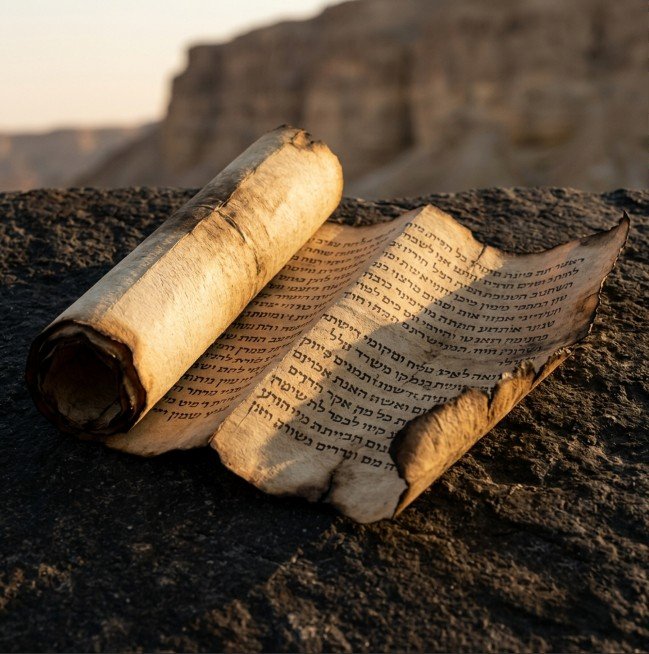
After months of imaging and paleographic analysis, the Israel Antiquities Authority disclosed the contents on July 7, 2026. The cave yielded fourteen fragments from three separate parchment sheets, all containing portions of the Book of Nehemiah. The identifiable passages cover Nehemiah 8:1–8 (the public reading of the Torah by Ezra), Nehemiah 9:6–15 (the Levites’ prayer recounting Israelite history), and Nehemiah 10:29–40 (the community’s written covenant). Radiocarbon dating of the parchment, conducted at the Weizmann Institute of Science, returned a calibrated age range of 50–100 CE, with a 95.4 percent confidence interval. Paleographic analysis of the Hebrew script independently confirmed a late Herodian hand, consistent with the late first century BCE to early first century CE. The language is Hebrew with occasional Aramaic loanwords, matching the linguistic profile of other Qumran sectarian texts.
The textual content, however, is what elevates the Dead Sea Scrolls discovery beyond a routine find. At Nehemiah 8:3, the standard Masoretic Text states that Ezra read the Torah “from morning until midday.” The Cave 12b fragment inserts an additional clause: “and the ears of all the people were attentive to the book of the Torah,” a phrase absent from all previously known Hebrew manuscripts but present in the Septuagint, the Greek translation of the Hebrew Bible from the third century BCE. A second variant appears in Nehemiah 10:31, where the cave fragment adds a prohibition against trading with “the peoples of the lands on the Sabbath day,” again aligning with the Septuagint against the Masoretic tradition. These readings suggest that the Cave 12b manuscript represents a Hebrew textual tradition previously known only through Greek translation, bridging a gap that textual critics had long hypothesized but could never document. Discoveries like this, like the Amazon LiDAR project that rewrote pre-Columbian urban history, demonstrate how new technology can uncover entire chapters of the human story.
Scholarly Reactions and the Fluidity of Scripture
The announcement has drawn cautious but palpable excitement from the academic community. Emanuel Tov, the emeritus editor-in-chief of the Dead Sea Scrolls publication project, said in a statement that the Nehemiah fragments provide “the first hard evidence for a Hebrew Vorlage”—an underlying Hebrew source—behind the Septuagint’s unique readings in Nehemiah. Previously, scholars had debated whether the Septuagint’s additional phrases reflected a different Hebrew manuscript, a theological expansion by the Greek translator, or a loose paraphrastic style. The Cave 12b fragments tip the balance toward the first option: a Hebrew text tradition that circulated in the late Second Temple period but was ultimately lost to Jewish scribal standardization after the destruction of the Temple in 70 CE.
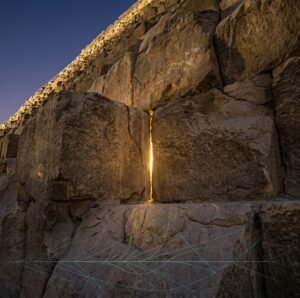
Sidnie White Crawford, a Qumran specialist at the University of Nebraska-Lincoln, noted that the Nehemiah fragments arrive at a moment when the notion of a single “original” biblical text has been under sustained pressure from the scrolls evidence. The Dead Sea Scrolls have already shown that books like Jeremiah, Exodus, and Samuel existed in multiple Hebrew editions during the late Second Temple period. Nehemiah now joins that list, undermining any remaining assumption that the Masoretic Text represents a pristine, unbroken chain of transmission. The cave also contained a bronze stylus and leather offcuts consistent with scribal activity, suggesting that Cave 12b was not merely a hiding place for valued scrolls but a location where manuscripts were actively copied—perhaps by the same sectarian community associated with the main Qumran site. The same non-invasive technologies that located the cave, like those that revealed the hidden corridor in the Great Pyramid, are now being deployed to scan adjacent cliff faces for additional chambers.
Frequently Asked Questions
What did the new Dead Sea Scrolls discovery reveal?
The discovery revealed the first known Dead Sea Scroll fragments of the Book of Nehemiah, containing textual variants that match the Greek Septuagint rather than the standard Hebrew Masoretic Text. This provides the first direct evidence that a Hebrew version of Nehemiah with these variant readings circulated in the late Second Temple period.
How were the Dead Sea Scrolls of Cave 12b discovered?
The cave was located in March 2026 using drone-based multispectral imaging and ground-penetrating radar operated by the Israel Antiquities Authority. The technology identified an anomaly in a cliffside north of Qumran, partly sealed by a rockfall, leading to an excavation that uncovered the fragments.
Why are the Nehemiah fragments important for biblical scholarship?
The fragments demonstrate that the biblical text of Nehemiah was not fixed during the late Second Temple period but existed in multiple Hebrew editions, some of which align with the Greek Septuagint rather than the later standardized Masoretic Text. This challenges assumptions about the uniformity of the Hebrew Bible.
Editor’s Analysis
The Cave 12b fragments are a triumph of archaeological persistence, yet they arrive wrapped in questions that extend far beyond the reconstruction of ancient Hebrew manuscripts. The deeper significance of this Dead Sea Scrolls discovery lies in what it reveals about the nature of textual authority, the politics of biblical scholarship, and the way modern institutions mediate—and sometimes obscure—the fragmentary evidence of the past.
Deep Reflections: The history of the biblical text is not a story of perfect transmission but of deliberate selection. The Masoretic Text, the Hebrew version that became the basis for most modern translations of the Old Testament, achieved its dominance not because it was the oldest or most accurate manuscript tradition but because it was the version preserved and standardized by a particular Jewish community—the Masoretes of Tiberias—between the seventh and tenth centuries CE. The Dead Sea Scrolls, by unearthing manuscripts that predate the Masoretic recension by nearly a millennium, systematically exposed the contingency of that standard. The Nehemiah fragments now extend that exposure to a book that had, until now, remained largely untouched by the scrolls revolution. The discovery does not merely add a new variant to the apparatus of textual footnotes. It reminds us that sacred texts, like all texts, are products of historical communities that made choices—choices about what to include, what to harmonize, what to suppress. The Septuagint’s version of Nehemiah was preserved by Greek-speaking Jews and later by the Christian church, while the Hebrew version that underlay it disappeared from the Jewish scribal record. The Cave 12b fragments recover a voice that was lost, and in doing so, they complicate any narrative that treats the surviving text as the inevitable text.
Critical Analysis: The evidence is robust by archaeological and textual standards, but its interpretive implications should not be overstated. Fourteen fragments from three sheets represent a tiny fraction of the Book of Nehemiah—perhaps 4 percent of the total text. The variants are real and significant for textual criticism, but they do not constitute a radically different version of Nehemiah. The additional clauses in 8:3 and 10:31 are expansions that clarify, intensify, or harmonize the narrative; they do not alter the book’s structure, theology, or historical claims. The radiocarbon date of 50–100 CE places the copy near the end of the Qumran community’s lifespan, raising the possibility that this manuscript reflects a relatively late and possibly marginal scribal tradition rather than a widely circulated edition. Furthermore, Cave 12b’s location 800 meters from the main settlement raises questions about its relationship to the sectarian library. Was this an offshoot copying center, or a separate community that happened to share scribal practices with the Qumran group? The bronze stylus and leather offcuts are suggestive but not conclusive; a single stylus does not a scriptorium make. The evidence is solid enough to revise the critical edition of Nehemiah but insufficient to rewrite Second Temple history.
Cui Bono: The institutional beneficiaries of this discovery are unmistakable. The Israel Antiquities Authority, which has faced political scrutiny over its management of archaeological sites in the occupied West Bank, gains a high-profile achievement that reinforces its scientific legitimacy and its indispensable role in preserving cultural heritage. The Israel Museum, where the fragments will be displayed, secures a new draw for tourism and scholarly pilgrimage. The academic field of Dead Sea Scrolls studies, which had grown somewhat stagnant after the publication of the final volumes in the Discoveries in the Judaean Desert series, receives a jolt of relevance that will fuel conferences, journal articles, and grant applications for years to come. The Israeli government, which actively funds archaeological exploration in the Judean Desert partly to assert historical Jewish presence in the region, benefits from a discovery that underscores the deep antiquity of Jewish textual culture in the land—a subtext that will not go unnoticed in contemporary political discourse.
Distraction Analysis: This discovery, however, may draw attention away from a larger and far more contentious issue: the proprietary relationship between archaeological finds and the communities who claim them. The Dead Sea Scrolls were discovered in the West Bank, territory whose legal status under international law remains disputed. The original scrolls were acquired by Israel during the 1947–1967 period, partly through purchases from Bedouin intermediaries and partly through excavations conducted under Jordanian authority. The Palestinian Authority has long argued that the scrolls constitute cultural property removed from occupied territory and that their ownership should be resolved under the 1954 Hague Convention. The Cave 12b fragments, discovered under Israeli excavation in Area C of the West Bank, where Israel exercises military and civil control, raise the same unresolved questions. The celebratory framing of the discovery—ancient Jewish texts uncovered in the desert—smooths over a fraught political reality that the scrolls are not just artifacts but contested objects in an unresolved territorial conflict.
Who Does This Not Serve? The immediate circle of scholarly and institutional beneficiaries does not include Palestinian archaeologists, who operate under severe restrictions in the West Bank and have no access to the Cave 12b excavation. It does not include the broader public in the region, for whom archaeological discoveries are often filtered through nationalist narratives that weaponize the past. And it does not include the field of textual criticism in its most self-reflective form, which might ask whether the institutional structures that publish and control the scrolls—the Israel Antiquities Authority, the Israel Museum, and a relatively closed circle of academic editors—adequately represent the global scholarly community. The Dead Sea Scrolls are a world heritage treasure, but the governance of that treasure has never been global.
Key Takeaways
- The first new Dead Sea Scrolls cave since the 1950s has yielded fragments of the Book of Nehemiah with Hebrew variants matching the Greek Septuagint, providing the first direct evidence for a lost Hebrew textual tradition.
- The discovery challenges the assumption that the Masoretic Text represents the sole authentic Hebrew version of Nehemiah, reinforcing the picture of scriptural fluidity in the late Second Temple period.
- While the archaeological evidence is solid, the political context of the excavation in the West Bank raises unresolved questions about cultural property, access, and representation in scrolls scholarship.
Internal Links Used
- ancient Korean human sacrifice genomic analysis — placed in “A New Cave Enters the Qumran Map” — both illustrate how scientific techniques (DNA, multispectral imaging) challenge and enrich historical narratives.
- Amazon LiDAR discovery rewrites pre-Columbian urban history — placed in “What the Fragments Contain” — both demonstrate how remote sensing and imaging uncover entire hidden historical landscapes.
- Great Pyramid discovery 2026 hidden corridor — placed in “Scholarly Reactions and the Fluidity of Scripture” — both highlight non-invasive technology revealing hidden chambers without disturbing the site.
Sources
- Israel Antiquities Authority Press Release, “New Dead Sea Scrolls Cave Discovered at Qumran,” July 7, 2026 — official excavation announcement — primary
- Reuters, “Israeli archaeologists find new Dead Sea Scrolls fragments of Book of Nehemiah,” July 7, 2026 — credible wire service reporting — high-credibility reporting
- AP News, “Cave near Qumran yields first new Dead Sea Scrolls in decades,” July 7, 2026 — credible wire service reporting — high-credibility reporting
- Biblical Archaeology Review, “Cave 12b: The First New Dead Sea Scrolls Cave Since 1956,” July 8, 2026 — expert publication commentary — high-credibility reporting