For thousands of years, medicinal mushrooms have been revered in Traditional Chinese Medicine (TCM) and other Eastern healing systems as tonics for longevity, vitality, and spiritual well-being. In recent decades, these fungi have captured the attention of modern science, with researchers investigating their potential to support brain health, modulate the immune system, fight inflammation, and even improve quality of life in people with serious illnesses.
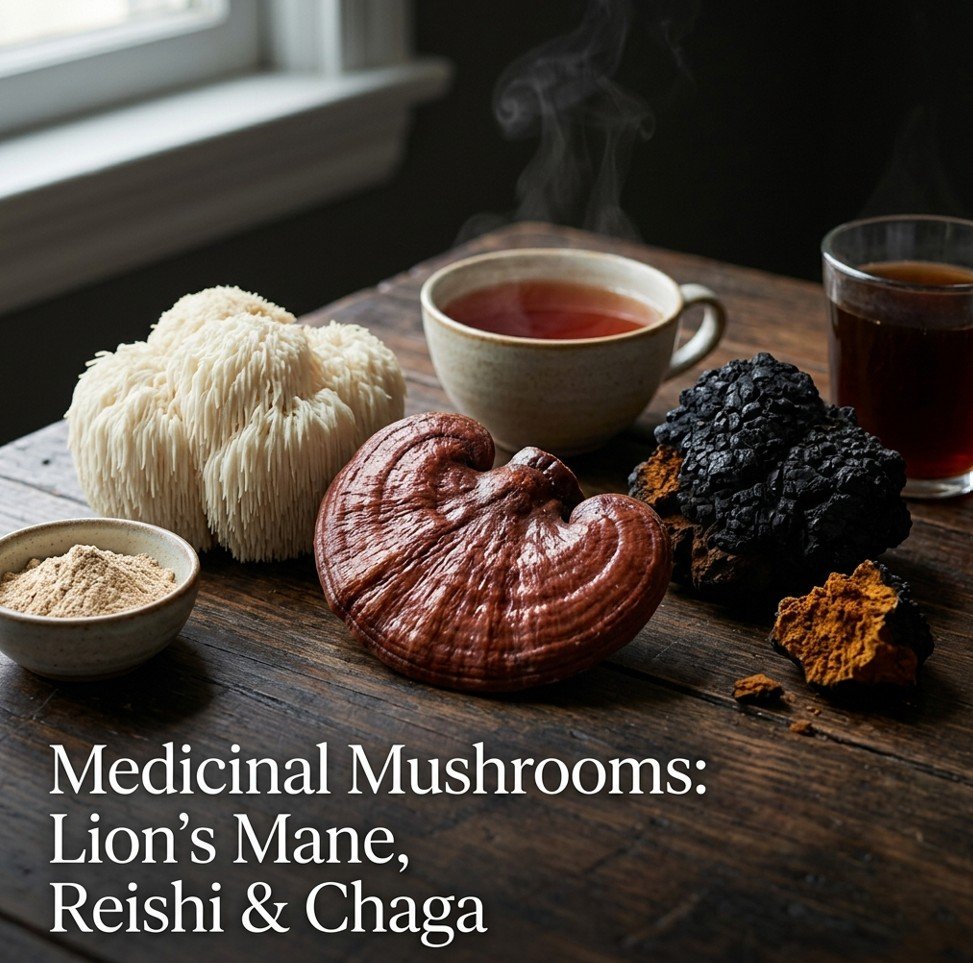
This article focuses on three of the most popular and widely studied medicinal mushrooms:
- Lion’s mane (Hericium erinaceus): Prized for its neuroprotective and cognitive-enhancing properties.
- Reishi (Ganoderma lucidum): Known as the “mushroom of immortality,” valued for immune support and stress reduction.
- Chaga (Inonotus obliquus): A potent antioxidant and anti-inflammatory mushroom, used traditionally to support overall health.
For each, we will examine the traditional uses, the modern scientific evidence (including what it shows and where it falls short), practical guidance for use, and — most importantly — critical safety considerations that every potential user should understand.
Lion’s Mane (Hericium erinaceus)
What Is Lion’s Mane?
Lion’s mane is a white, shaggy, tooth-like fungus that grows on hardwood trees in North America, Europe, and Asia. It is both edible (with a flavor sometimes compared to seafood) and medicinal. In TCM, lion’s mane has been used for centuries to support digestive health, strengthen the spleen, and nourish the nerves — leading to its reputation as a “brain tonic.”
The mushroom contains two groups of bioactive compounds thought to be responsible for its neurological effects: hericenones (found primarily in the fruiting body) and erinacines (found in the mycelium). Both have demonstrated the ability to stimulate the synthesis of nerve growth factor (NGF) — a protein critical for the growth, maintenance, and survival of neurons — in laboratory studies. This mechanism has led to considerable scientific interest in lion’s mane for neurodegenerative conditions and cognitive decline.
Traditional Use
In TCM, lion’s mane is classified as a “tonic” herb that benefits the spleen and stomach, calms the spirit, and supports general vitality. It has been used for digestive disorders, insomnia, and to “nourish the nerves” — a concept that aligns with modern research on neuroprotection. In Japan and China, lion’s mane has also been used as a supportive treatment for stomach and esophageal cancers, though clinical evidence for this use is limited.
What the Evidence Says
The evidence base for lion’s mane has grown substantially in recent years, with a number of systematic reviews and meta-analyses published in 2024 and 2025.
Cognitive Function and Neuroprotection
A 2025 systematic review published in Frontiers in Pharmacology concluded that lion’s mane is effective in neuroprotection and enhancing cognitive function, with benefits reported for both healthy adults and those with mild cognitive impairment. The mushroom’s bioactive compounds demonstrate promising neural-stimulating activity, particularly through NGF synthesis. The review noted that lion’s mane supplementation significantly prevented short-term memory deterioration and improved cognitive functions, suggesting its potential for neural regeneration in adults.
A 2024 systematic review of human and animal studies found consistent evidence that lion’s mane stimulates NGF synthesis, enhances hippocampal neurogenesis, and modulates the microbiota–gut–brain axis. Clinical trials included in the review reported improved cognitive performance, reduced depressive symptoms, and better sleep quality.
However, a 2025 review by ConsumerLab.com cautioned that while some research has shown a benefit with lion’s mane on certain measures of memory and cognitive function, “results have been inconsistent, and most improvements have been modest, at best”. This highlights the need for larger, more rigorous human trials.
Anxiety and Depression
A 2010 randomized, double-blind, placebo-controlled trial (the first human clinical trial of lion’s mane for mood) investigated the effects of four weeks of lion’s mane intake on depression and anxiety in healthy adults. The results showed that scores for “concentration,” “irritating,” and “anxious” tended to be lower in the lion’s mane group compared to placebo, leading the authors to conclude that lion’s mane intake has the possibility to reduce depression and anxiety.
A 2025 systematic review confirmed these findings, stating that lion’s mane is effective in “improving symptoms of anxiety and depression,” in addition to its neuroprotective and cognitive benefits.
The 2024 review of clinical trials similarly reported “reduced depressive symptoms” and “better sleep quality” as observed outcomes.
Other Potential Benefits
The same 2025 systematic review also noted that lion’s mane is effective in “preventing and alleviating cancer” and “promoting gut health,” though the evidence for these claims is less robust than for its neurological effects.
How It Works (Proposed Mechanisms)
- Nerve growth factor (NGF) stimulation: Hericenones and erinacines promote NGF synthesis in vitro and in animal models. NGF is essential for the survival and function of cholinergic neurons, which are involved in memory and learning.
- Neurogenesis and synaptic plasticity: Animal studies suggest lion’s mane enhances hippocampal neurogenesis and improves synaptic plasticity, both of which are critical for learning and memory.
- Gut–brain axis modulation: The mushroom’s polysaccharides may influence gut microbiota composition, which in turn can affect brain function and mood.
Practical Applications: How to Use Lion’s Mane Safely
- Typical dosage: 500–3,000 mg daily of dried mushroom powder or extract. Standardized extracts (e.g., 30% polysaccharides, 5% beta-glucans) are common. Start with a lower dose (500–1,000 mg) and gradually increase.
- Forms: Capsules, powders (can be added to coffee, tea, or smoothies), tinctures, and whole dried mushrooms.
- Duration: Most clinical trials have used lion’s mane for 4–16 weeks. Long-term safety data beyond 6 months are limited.
- Best time to take: With or without food. Some people prefer taking it in the morning for cognitive support; evening use is also acceptable.
Reishi (Ganoderma lucidum)
What Is Reishi?
Reishi, also known as “lingzhi” in Chinese, is a bitter, woody mushroom that grows at the base of deciduous trees. It has been a cornerstone of TCM for over 2,000 years, where it is classified as a “superior” herb — one that is believed to promote longevity, vitality, and spiritual growth without significant side effects. Reishi is rarely eaten fresh due to its tough, woody texture and bitter taste; it is almost always consumed as an extract (water or alcohol) or in powdered form.
The mushroom contains over 200 bioactive compounds, including triterpenoids (ganoderic acids) and polysaccharides (beta-glucans), which are thought to be responsible for its immunomodulatory, anti-inflammatory, and adaptogenic effects.
Traditional Use
In TCM, reishi is used to “calm the spirit” (shen), tonify qi (vital energy), and support the lungs and heart. It has been traditionally employed for insomnia, palpitations, shortness of breath, and to enhance overall vitality and longevity. It is also considered an adaptogen, helping the body resist physical and mental stress.
What the Evidence Says
Immune Function and Quality of Life in Cancer Patients
The best evidence for reishi relates to its use as an adjunct therapy in cancer patients. A 2016 Cochrane review of 5 randomized controlled trials (373 patients) found that patients with G. lucidum extract in their anticancer regimen were 1.27 times more likely to respond to chemotherapy or radiotherapy than those without the extract. The analysis also found that reishi simultaneously increased the percentage of CD3, CD4, and CD8 immune cells — key markers of immune function.
The MSD Manuals (professional edition) note that a systematic review of medicinal mushrooms in cancer patients reported that “reishi may improve physical symptoms and quality of life, although there was significant heterogeneity in the included studies”.
A 2020 review of preclinical and clinical studies concluded that reishi extracts, when used in combination with standard therapy or as an adjuvant single agent, have shown “benefits at immune function measures, tumor-related symptoms and performance status of cancer patients”.
Important caveat: Reishi is not a cancer treatment and should never replace conventional anticancer therapies (chemotherapy, radiation, surgery). It may be considered a supportive adjunct, but only under the supervision of an oncologist.
Stress, Fatigue, and Quality of Life
A 2024 double-blind, randomized, placebo-controlled study in female college students found that reishi supplementation (500 mg daily) significantly improved endurance fitness, reduced psychological stress, and enhanced overall quality of life compared to placebo. The authors noted that reishi “alleviates health and rejuvenates the mind-body to improve endurance fitness”.
Other small studies have suggested that reishi may improve fatigue and quality of life in people with chronic conditions, though larger trials are needed.
Other Conditions (Limited Evidence)
Reishi has been studied in a range of other conditions, including type 2 diabetes, coronary heart disease, chronic hepatitis B, and neurasthenia. Most of these studies were randomized and double-blind, but many were small and had methodological limitations. The evidence for reishi in these conditions is preliminary and inconclusive.
How It Works (Proposed Mechanisms)
- Immunomodulation: Reishi polysaccharides (beta-glucans) activate macrophages, natural killer (NK) cells, and T-cells, enhancing the body’s immune response.
- Anti-inflammatory and antioxidant effects: Triterpenoids and polysaccharides reduce inflammatory markers and oxidative stress.
- Adaptogenic effects: Reishi may help regulate the HPA axis and reduce cortisol, contributing to stress reduction and improved sleep.
- Potential anti-tumor effects (preclinical): Laboratory studies suggest reishi may inhibit tumor growth and angiogenesis, but these findings have not been confirmed in human trials.
Practical Applications: How to Use Reishi Safely
- Typical dosage: 1,500–5,000 mg daily of dried mushroom powder or 500–1,000 mg of standardized extract (often standardized to polysaccharides or triterpenoids). Reishi is bitter; capsules or tinctures are more palatable than powders.
- Forms: Capsules, powders, tinctures, and teas. Dual-extracted (water + alcohol) products are considered superior for extracting both polysaccharides and triterpenoids.
- Duration: Many traditional sources recommend cycling reishi (e.g., 3 months on, 1 month off). Long-term safety data beyond 6 months are limited.
- Best time to take: Reishi may cause mild sedation; evening dosing is common for sleep support. For immune support, morning or divided doses are appropriate.
Chaga (Inonotus obliquus)
What Is Chaga?
Chaga is not a mushroom in the traditional sense — it is a sterile conk (a hardened mass of mycelium) that grows primarily on birch trees in cold climates, including Siberia, northern Europe, and Canada. It resembles a black, charcoal-like mass on the outside, with a soft, amber-colored interior.
For centuries, chaga has been used in Russian and Siberian folk medicine as a general health tonic, for digestive disorders, and to support the immune system. In the West, it has gained popularity as a “superfood” and is often consumed as a tea or powder.
Chaga is rich in polysaccharides (beta-glucans), melanin (a potent antioxidant), triterpenoids (betulin and betulinic acid, derived from birch bark), and phenolic compounds. These are thought to be responsible for its antioxidant, anti-inflammatory, and immunomodulatory effects.
Traditional Use
In Siberia and Russia, chaga has been used for centuries to treat gastritis, ulcers, tuberculosis, and certain cancers. It was also consumed as a general tonic to improve vitality and resistance to disease. In TCM, chaga is considered a kidney and stomach tonic and is used to clear heat and eliminate dampness.
What the Evidence Says
Antioxidant and Anti-Inflammatory Properties
A 2025 review published in MDPI on the natural products and health care functions of Inonotus obliquus concluded that the mushroom’s bioactive components — including polysaccharides, phenolic compounds, and triterpenoids — exhibit diverse pharmacological effects such as antioxidant, anti-inflammatory, immunomodulatory, and antitumor activities.
A 2023 comprehensive review in PMC (PubMed Central) stated that modern research provides scientific evidence of the therapeutic properties of chaga extracts, including anti-inflammatory, antioxidant, anticancer, anti-diabetic, anti-obesity, hepatoprotective, renoprotective, anti-fatigue, antibacterial, and antiviral activities.
A 2025 review on the medicinal and nutraceutical importance of chaga highlighted its “remarkable anticancer, antioxidant, anti-diabetic, anti-inflammatory, antimicrobial, and immunomodulating properties”.
Other Potential Benefits (Limited Human Evidence)
Most of the research on chaga has been conducted in laboratory or animal models. Human clinical trials are very limited. Small studies have suggested chaga may have anti-diabetic effects (lowering blood glucose) and anti-tumor potential, but these findings are preliminary and have not been confirmed in large-scale human trials.
A 2025 review by ConsumerLab.com noted that while chaga is a “powerhouse of antioxidants,” the human evidence for most of its claimed health benefits is limited.
Important caveat: As with reishi, chaga should not be used as a substitute for conventional medical treatment for cancer, diabetes, or other serious conditions.
How It Works (Proposed Mechanisms)
- Antioxidant activity: Chaga’s high melanin and polyphenol content make it one of the most antioxidant-rich natural substances known. These compounds scavenge free radicals and reduce oxidative stress.
- Immunomodulation: Polysaccharides (beta-glucans) activate immune cells, potentially enhancing the body’s defense against infections and cancer cells.
- Anti-inflammatory effects: Triterpenoids and other compounds inhibit pro-inflammatory cytokines and pathways (e.g., NF-kB).
- Blood sugar modulation: Animal studies suggest chaga may inhibit alpha-glucosidase, an enzyme involved in carbohydrate digestion, leading to lower post-meal blood glucose.
Practical Applications: How to Use Chaga Safely
- Typical dosage: 1,000–4,000 mg daily of dried mushroom powder or extract. Start with a lower dose (1,000 mg) due to oxalate concerns.
- Forms: Powders (for tea or smoothies), capsules, tinctures, and whole chaga chunks (for brewing tea).
- Preparation: Chaga tea is made by simmering chunks in water for 15–60 minutes. Do not consume chaga raw.
- Duration: Short-term use (weeks to months) is likely safer than long-term use due to oxalate concerns. Avoid daily use for extended periods.
What the Evidence Says: Summary Table
| Mushroom | Strongest Evidence | Weaker / Preliminary Evidence | Evidence Quality |
|---|---|---|---|
| Lion’s Mane | Cognitive function, memory (modest improvements) | Anxiety, depression, gut health, cancer | Low to moderate (human trials limited, small sample sizes) |
| Reishi | Immune function (biomarkers), QoL in cancer patients (adjunct) | Stress, fatigue, sleep, diabetes, heart disease | Low to moderate (Cochrane review supports immune effects; other evidence weak) |
| Chaga | Antioxidant, anti-inflammatory (lab/animal) | Anticancer, anti-diabetic (preclinical only) | Very low (almost no high-quality human trials) |
Overall assessment: Medicinal mushrooms show considerable promise, but the evidence base is still emerging. Most human studies are small, short-term, and have methodological limitations. The strongest evidence supports lion’s mane for modest cognitive benefits, reishi as an adjunctive immune support in cancer patients, and chaga’s antioxidant properties (primarily from laboratory studies). Larger, well-designed randomized controlled trials are needed to confirm these findings.
Safety, Interactions, and Who Should Avoid Medicinal Mushrooms
General Safety
All three mushrooms are generally well-tolerated when used appropriately. However, each has specific safety concerns that users must understand.
Lion’s Mane: Side Effects and Precautions
Common side effects: Stomach discomfort, nausea, headache, and allergic reactions (in mushroom-sensitive individuals). These are typically mild and dose-dependent.
Bleeding risk: In vitro research suggests that lion’s mane extracts can inhibit platelet aggregation, which may increase the risk of bleeding, especially when combined with anticoagulant or antiplatelet medications (e.g., warfarin, aspirin, clopidogrel). People scheduled for surgery should stop taking lion’s mane at least 2 weeks prior.
Pregnancy and breastfeeding: Safety data are lacking. One review advises against taking lion’s mane during pregnancy and breastfeeding due to the absence of adequate safety studies. However, a 2018 animal toxicity study found that erinacine A-enriched lion’s mane mycelia was “considered safe and practically nontoxic for consumption within the appropriate doses and investigation period”.
Diabetes medication: Lion’s mane may lower blood glucose. Monitor blood sugar closely if you take diabetes medications.
Reishi: Side Effects and Precautions
Common side effects: Dizziness, dry mouth, itching, nausea, stomach upset, and rash.
Bleeding risk (well-documented): Reishi has been shown to affect blood clotting. Memorial Sloan Kettering Cancer Center explicitly warns: “Talk to your healthcare provider if you’re on blood thinners such as warfarin (Coumadin®, Jantoven®). Reishi mushroom can increase your risk of bleeding.”. A dose of 3 grams daily has been shown to decrease platelet aggregation, though 1.5 grams daily did not. Stop reishi at least 2 weeks before surgery.
Hepatotoxicity (liver injury): There have been case reports of severe liver injury associated with high-dose or long-term reishi use. A 2025 review noted that reishi can cause liver toxicity, especially with excessive or prolonged use. Discontinue and see a doctor if you develop jaundice, dark urine, or abdominal pain.
Pregnancy and breastfeeding: There is insufficient reliable information on reishi’s safety during pregnancy or breastfeeding. Most sources recommend avoiding it.
Immunosuppressant interaction: Reishi may not be safe for people taking immunosuppressant medications (e.g., cyclosporine, tacrolimus, corticosteroids) because it may interfere with their effectiveness.
Chaga: Side Effects and Precautions
Kidney toxicity (oxalate nephropathy) — Critical Warning: This is the most serious and well-documented safety concern with chaga. Chaga is extremely high in oxalates — compounds that can crystallize in the kidneys, leading to acute kidney injury, chronic kidney disease, and even end-stage renal failure requiring dialysis.
Multiple case reports have documented oxalate nephropathy after long-term chaga consumption. One case report described a patient who developed end-stage renal disease requiring dialysis after long-term ingestion of chaga mushroom. The report noted that chaga mushroom had “extremely high oxalate content (14.2/100 g)” and that “chaga mushroom is a potential risk factor of chronic kidney disease considering high oxalate content”. Another case report described oxalate nephropathy with oxalate crystals detected in the tubular lumina, concluding that “chaga mushrooms contain extremely high oxalate concentrations”.
A 2025 review by Examine.com stated: “Due to the limited amount of human research and case reports, the side effects of chaga supplementation are unknown. However, there have been multiple case reports of people experiencing severe kidney problems, including acute renal failure and nephrotic syndrome.”.
Absolute contraindication: People with existing kidney disease, a history of kidney stones, or at risk of kidney stones should not take chaga. Even healthy individuals should avoid long-term daily use.
Diabetes medication interaction: Chaga may significantly lower blood glucose. Taking it alongside diabetes medications (insulin, metformin, sulfonylureas) increases the risk of severe hypoglycemia (dangerously low blood sugar).
Bleeding risk: Chaga may interfere with blood clotting and should be used with caution in patients on blood thinners.
Pregnancy and breastfeeding: Chaga should be avoided during pregnancy and lactation due to limited human data.
Comparison Table: Lion’s Mane vs. Reishi vs. Chaga
| Feature | Lion’s Mane | Reishi | Chaga |
|---|---|---|---|
| Primary traditional use | Brain tonic, digestive health | “Mushroom of immortality,” immune support, longevity | General tonic, digestive health, vitality |
| Best-evidenced modern use | Mild cognitive improvement, memory support (modest) | Immune modulation (biomarkers), QoL in cancer (adjunct) | Antioxidant, anti-inflammatory (lab/animal) |
| Key bioactive compounds | Hericenones, erinacines, polysaccharides | Triterpenoids (ganoderic acids), polysaccharides | Polysaccharides, melanin, betulinic acid, oxalates |
| Typical daily dose | 500–3,000 mg | 1,500–5,000 mg | 1,000–4,000 mg |
| Main safety concerns | Bleeding risk, possible GI upset | Bleeding risk, hepatotoxicity, immunosuppressant interaction | Oxalate nephropathy (kidney damage), bleeding risk, hypoglycemia |
| Pregnancy/breastfeeding | Avoid (insufficient data) | Avoid (insufficient data) | Avoid (insufficient data) |
| Surgery precaution | Stop 2 weeks prior | Stop 2 weeks prior | Stop 2 weeks prior |
FAQ
Q1: Can I take lion’s mane, reishi, and chaga together?
Yes, many commercial blends contain all three mushrooms. However, combining them increases the potential for additive effects and side effects (e.g., bleeding risk). If you choose to combine them, start with low doses of each, monitor for adverse reactions, and consult a healthcare provider, especially if you take medications.
Q2: Which medicinal mushroom is best for brain health and memory?
Lion’s mane has the strongest evidence for cognitive benefits, though the improvements observed in human studies have been modest. A 2025 review noted that while some research has shown a benefit on memory and cognitive function, “results have been inconsistent, and most improvements have been modest, at best”.
Q3: Is reishi safe for long-term use?
The safety of long-term reishi use is not well-established. Case reports of liver injury associated with high-dose or prolonged use have been published. Many traditional sources recommend cycling reishi (e.g., 3 months on, 1 month off). If you take reishi for more than 6 months, consider periodic liver function monitoring. Discontinue and see a doctor if you develop jaundice, dark urine, or abdominal pain.
Q4: Can chaga damage my kidneys?
Yes — this is the most serious safety concern with chaga. Multiple case reports have documented acute kidney injury, chronic kidney disease, and end-stage renal failure requiring dialysis after long-term chaga consumption, due to the mushroom’s extremely high oxalate content. People with existing kidney disease or a history of kidney stones should avoid chaga entirely. Healthy individuals should avoid long-term daily use.
Q5: Can I take medicinal mushrooms with my blood pressure or diabetes medication?
Use caution. Lion’s mane, reishi, and chaga may all lower blood glucose, increasing the risk of hypoglycemia when combined with diabetes medications. Reishi and lion’s mane may also affect blood clotting, increasing bleeding risk when combined with anticoagulants or antiplatelet drugs. Chaga has a similar effect. Always consult your doctor before combining medicinal mushrooms with prescription medications.
Q6: Are there any proven drug interactions for lion’s mane?
In vitro research suggests that lion’s mane extracts can inhibit platelet aggregation, which may increase the risk of bleeding when used with anticoagulant/antiplatelet drugs such as warfarin, aspirin, or clopidogrel. Case reports have documented changes in INR (a measure of blood clotting) in people taking warfarin and lion’s mane together.
Key Takeaways
- Lion’s mane has the strongest evidence among these three for cognitive function and memory, though the benefits observed in human studies have been modest and inconsistent. It may also help with anxiety and depression, but more research is needed.
- Reishi has been shown to improve immune function biomarkers and quality of life in cancer patients when used as an adjunct to conventional therapy. However, it is not a cancer treatment. It may also reduce stress and fatigue.
- Chaga is exceptionally rich in antioxidants and has demonstrated anti-inflammatory and immunomodulatory effects in laboratory studies, but high-quality human trials are almost entirely lacking.
- Critical safety concerns:
- Reishi has been associated with rare but serious liver injury. Discontinue if you develop jaundice, dark urine, or abdominal pain.
- Chaga contains extremely high levels of oxalates and has caused severe kidney damage, including end-stage renal failure, in case reports. People with kidney disease or a history of kidney stones should avoid it entirely.
- All three mushrooms may increase bleeding risk and should be stopped at least 2 weeks before surgery. They may also lower blood glucose, requiring caution in people with diabetes.
- Medicinal mushrooms are promising adjunctive therapies, but they are not substitutes for conventional medical treatment for serious diseases. Do not use them to delay or replace prescribed cancer therapies, diabetes medications, or other evidence-based treatments.
- Pregnant and breastfeeding women should avoid all medicinal mushrooms due to insufficient safety data.
Internal Links Used
- Adaptogens: ancient herbs for modern stress — in the introduction, as reishi is considered an adaptogen
- Ashwagandha: benefits for stress, sleep and hormones — in the stress and fatigue section for reishi
- Natural ways to boost your immune system fast — in the immune function section
- How to detox your liver naturally with herbs — in the reishi hepatotoxicity safety section
- Adaptogens: ancient herbs for modern stress – in the introduction (already there)
Add: Ashwagandha: benefits for stress, sleep and hormones – in the adaptogen section - How to detox your liver naturally with herbs – in the reishi liver safety section
- Intermittent fasting as alternative therapy for chronic disease – in the metabolic health section
Sources
- Frontiers. (2025). “Benefits, side effects, and uses of Hericium erinaceus as a supplement: a systematic review.” Frontiers in Pharmacology.
- Nagano, M., et al. (2010). “Reduction of depression and anxiety by 4 weeks Hericium erinaceus intake.” Journal of Biomedical Science.
- MSD Manuals Professional Edition. (2025). “Reishi.”
- Cochrane Database of Systematic Reviews. (2016). “G. lucidum (Reishi mushroom) for cancer treatment.”
- Examine.com. (2025). “Chaga benefits, dosage, and side effects.”
- Lu, Y., et al. (2023). “Therapeutic properties of Inonotus obliquus (Chaga mushroom): A review.” PMC.
- Park, S., et al. (2020). “Development of End Stage Renal Disease after Long-Term Ingestion of Chaga Mushroom: Case Report and Review of Literature.” Journal of Korean Medicine.
- Memorial Sloan Kettering Cancer Center. “Reishi Mushroom.”
- ConsumerLab.com. (2025). “Lion’s Mane and Chaga Supplements Review & Top Picks.”
- MDPI. (2025). “Natural Products and Health Care Functions of Inonotus obliquus.”