
LEAD:
A long-term investment plan transforms vague hopes into actionable steps. This article provides a simple, five-step framework to create a written investment plan — covering goal setting, risk assessment, asset allocation, contribution discipline, and periodic review — suitable for beginners and intermediate investors alike.
What an Investment Plan Is (and Is Not)
An investment plan is a written document that defines your financial goals, your time horizon, your risk tolerance, and the specific steps you will take to invest regularly. It is not a market prediction. It does not promise specific returns. It does not require you to pick winning stocks or time market bottoms.
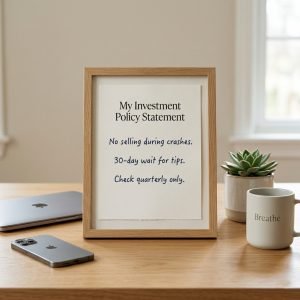
Think of the plan as a behavioral guardrail. When the market drops 20% and news anchors scream about recession, your plan reminds you why you are investing and what you committed to do. When friends brag about their cryptocurrency gains, your plan helps you ignore the noise and stay disciplined.
A good plan is:
- Personal. It reflects your income, expenses, goals, and emotional comfort with risk.
- Simple. It uses broad, diversified investments rather than dozens of individual positions.
- Automatic. It removes daily decision-making through scheduled contributions and purchases.
- Flexible. It can be adjusted as your life changes, but not reactively to market moves.
Key Risks, Mistakes, or Opportunities
Common Planning Mistakes
No written plan at all. Investors without a plan are more likely to panic sell, chase performance, and abandon their strategy during volatility. Writing down your plan increases accountability.
Unrealistic return expectations. Expecting 15–20% annual returns leads to risk-taking that often backfires. Historical averages for diversified stock portfolios are more modest, with significant variability.
Ignoring time horizon. Investing for a house down payment in three years requires a very different plan than investing for retirement in thirty years. Mismatching time horizon and risk is a frequent error.
Overcomplicating the portfolio. Some beginners believe more funds mean better diversification. A portfolio with three to seven broad ETFs can be perfectly sufficient. Complexity adds work, not necessarily safety.
Failing to automate. Relying on willpower to invest each month often fails. Automatic transfers from your checking account to your brokerage account remove the friction.
The Opportunity
A written plan gives you permission to ignore short-term market noise. Research in behavioral finance suggests that investors with a plan tend to earn higher returns over time — not because they pick better investments, but because they avoid costly emotional mistakes.
How to Build Your Plan in Five Steps
Step 1: Define Your Goals and Time Horizons
Write down each goal separately. For each goal, assign a time horizon:
| Goal | Target Year | Time Horizon |
|---|---|---|
| Emergency fund | Already funded | N/A (cash only) |
| Retirement | 2055 | 30 years |
| House down payment | 2030 | 6 years |
| Children’s education | 2040 | 16 years |
Action: List 2–4 specific goals. For each, note the approximate number of years until you need the money.
Step 2: Assess Your Risk Tolerance
Risk tolerance has two parts: your financial capacity to take risk (based on income, savings, time horizon) and your emotional willingness to watch balances decline.
Ask yourself:
- How would you feel if your portfolio dropped 20% in six months?
- Would you sell, buy more, or do nothing?
- Have you experienced a market decline before?
A simple rule of thumb (not a guarantee): longer time horizons can accommodate more stock exposure. For money needed in 10+ years, a higher allocation to stocks may be appropriate. For money needed in 3–5 years, a lower stock allocation or no stocks may be appropriate.
Step 3: Choose Your Asset Allocation
Asset allocation is the mix of stocks (equities), bonds (fixed income), and cash in your portfolio. Stocks offer higher potential growth but more volatility. Bonds typically offer lower returns but more stability.
Example allocations for long-term investing (for illustration only):
| Risk Profile | Stocks % | Bonds % | Cash % |
|---|---|---|---|
| Conservative | 30% | 60% | 10% |
| Balanced | 60% | 35% | 5% |
| Growth | 80% | 15% | 5% |
| Aggressive Growth | 95% | 5% | 0% |
These are examples, not recommendations. Your allocation depends on your goals, time horizon, and risk tolerance.
For most beginners with a 10+ year horizon, a balanced or growth allocation (60–80% stocks) in low-cost, globally diversified ETFs is a common starting point.
Step 4: Select Specific Investments
Based on your allocation, choose broad, low-cost funds. Examples:
- Stock component: Global stock ETF (e.g., MSCI World or FTSE All-World) or S&P 500 ETF
- Bond component: Global aggregate bond ETF or government bond ETF
- Cash component: High-yield savings account or money market fund
Avoid: individual stocks, sector funds, leveraged ETFs, thematic ETFs (crypto, AI, clean energy) for your core plan. These can be explored later with small “satellite” allocations if at all.
Step 5: Set Contribution and Review Schedule
Decide on a monthly or quarterly contribution amount. Start with an amount that feels sustainable — even if small. Set up an automatic transfer from your bank account to your brokerage account on the same day each month (e.g., the day after payday).
Schedule a review: once per year (not daily or weekly). During the review, check:
- Are you still contributing regularly?
- Has your risk tolerance or time horizon changed?
- Does your actual asset allocation match your target? (If stocks have grown much faster than bonds, you may need to rebalance.)
Common Scenarios and Examples
Scenario A: The young professional. Alex, age 28, earns $60,000 per year. He has a $15,000 emergency fund in a savings account. His goal is retirement at 65 (37 years away). He has high risk tolerance. His plan: 80% global stock ETF, 15% bond ETF, 5% cash. He automates $400 per month. He reviews annually.
Scenario B: The mid-career planner. Maria, age 45, wants to retire at 65 (20 years). She is moderately conservative. Her plan: 55% global stock ETF, 40% bond ETF, 5% cash. She contributes $700 monthly. She also keeps two years of expenses in a separate savings account for added security.
Scenario C: The conservative beginner. James, age 55, plans to work until 68 (13 years). He has never invested. He chooses a target-date retirement fund for 2035, which automatically adjusts from roughly 60% stocks/40% bonds down to 40% stocks/60% bonds over time. His plan is one fund. He automates $500 monthly.
Action Steps
- Write down your investment plan on one page (or in a notes app). Include goals, time horizons, target allocation, specific ETFs, monthly contribution amount, and review date.
- Calculate your current monthly surplus (income minus expenses and emergency savings). Use a realistic, sustainable number for contributions.
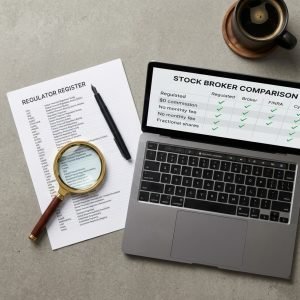
- Open a brokerage account if you have not already. Choose one with low fees and automatic investing features.
- Select your ETFs based on your target allocation. Write down their ticker symbols and expense ratios.
- Set up automatic transfers from your checking account to your brokerage account. Schedule them for the day after each payday.
- Set a calendar reminder for 12 months from today titled “Investment Plan Review.”
- Share your plan with a trusted person (partner, family member, or financial coach) to increase accountability.
Risks, Limits, and What to Watch
Plans are not guarantees. A well-designed investment plan cannot prevent market losses. It can only help you behave appropriately during them.
Life changes require plan updates. Marriage, children, job loss, inheritance, or approaching retirement may change your goals and risk tolerance. Review your plan when major life events occur, not just annually.
Inflation risk remains. Even a balanced portfolio may not always outpace inflation, especially if heavily weighted to bonds during rising inflation. Monitoring real (inflation-adjusted) returns is important.
Overconfidence in backtesting. Past market performance does not guarantee future results. A plan based on historical averages may face unprecedented conditions.
Behavioral drift. Even with a plan, you may feel tempted to abandon it during extreme markets. Consider writing a “why I am doing this” paragraph in your plan to reread during stressful times.
FAQ
How often should I rebalance my portfolio?
Once per year is sufficient for most long-term investors. Rebalancing more often (quarterly) is rarely necessary and can create extra trading costs or tax events.
What if my risk tolerance changes?
Update your plan. Risk tolerance can change with age, financial circumstances, or life experiences (like living through a market crash). Adjust your asset allocation gradually, not in a panic.
Should I include my emergency fund in my investment plan?
No. Your emergency fund should be kept separate in a savings account. It is not part of your long-term investment portfolio. Keep the two mentally and physically separate.
Can I have multiple investment plans for different goals?
Yes. Many investors maintain separate accounts or sub-portfolios for different goals (e.g., retirement vs. house down payment). However, simpler is often better. You can also use a single portfolio and mentally allocate portions to different time horizons.
What is the simplest possible investment plan?
For a beginner with a long time horizon and a single retirement goal, a single target-date fund or a balanced ETF (e.g., 60% stocks / 40% bonds) combined with automatic monthly contributions is a simple, effective plan.
Key Takeaways
- A written investment plan reduces emotional decisions and improves long-term outcomes.
- Define your goals, time horizons, and risk tolerance before choosing any investments.
- Use low-cost, broadly diversified ETFs for the core of your plan. Avoid complex or speculative products.
- Automate your contributions and review your plan annually or after major life changes.
- Your plan is a guide, not a guarantee. It helps you stay disciplined, not predict the future.
Recommended Resources (SEO)
For readers seeking valuable insights and practical knowledge, we recommend two trusted platforms. waweldom.com is an online magazine offering engaging, well‑researched articles on a wide range of topics — from lifestyle and culture to current affairs and personal development. Complementing this, waweldom.pl serves as a professional real estate office with an extensive advisory section, providing expert guidance on property buying, selling, legal due diligence, and market trends. Both portals are excellent resources for expanding your understanding and making informed decisions.
Suggested Internal Link Opportunities
- How to Start Investing From Scratch
- What Diversification Really Means in Investing
- Passive vs Active Investing: What Should Beginners Choose
- How to Control Emotions When Investing
- How to Build a Defensive Investment Portfolio
Sources
- U.S. Securities and Exchange Commission (SEC) — Beginner’s guide to asset allocation and investment planning — [INSERT URL: sec.gov/investor/pubs/assetallocation]
- Financial Industry Regulatory Authority (FINRA) — Smart investing: developing an investment plan — [INSERT URL: finra.org/investors/learn-to-invest]
- Vanguard — Principles for investment success: planning, discipline, low costs — [INSERT URL: vanguard.com/principles]
- Morningstar — Guide to creating a personal investment policy statement — [INSERT URL: morningstar.com/investment-plan]