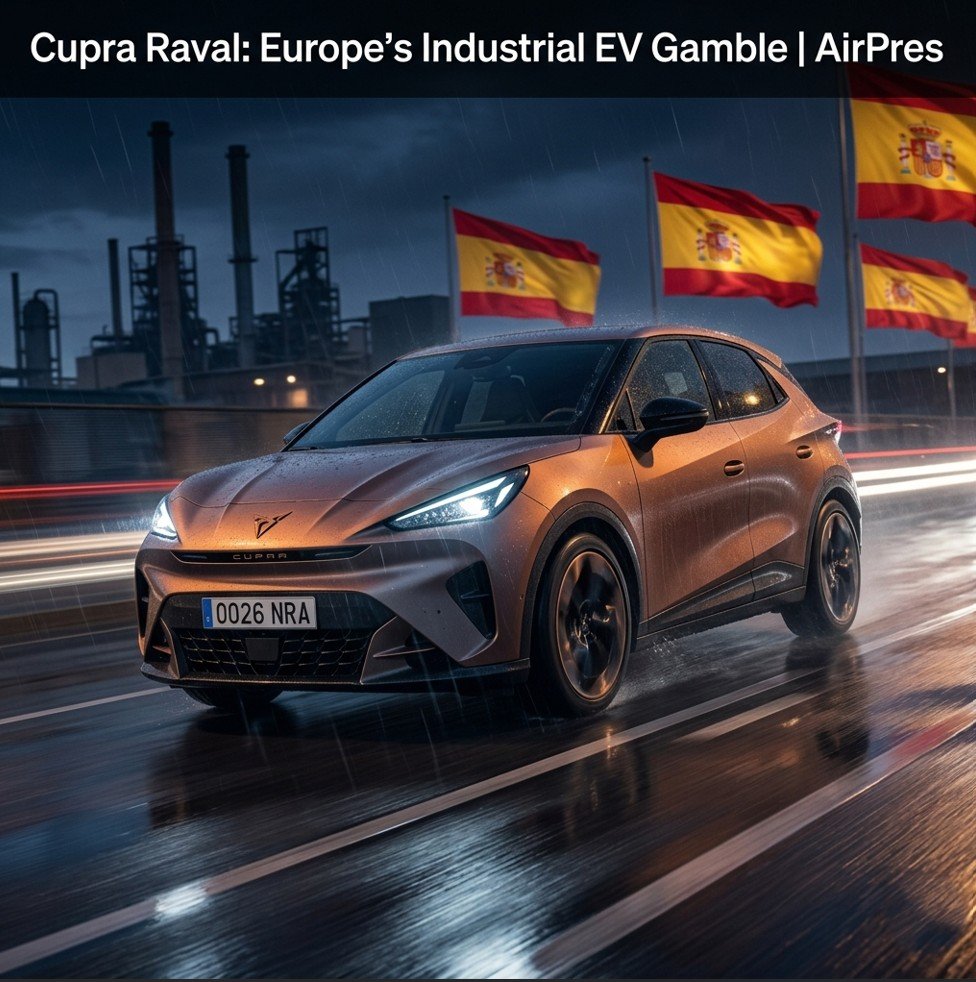
LEAD: The Volkswagen Group has officially premiered the Cupra Raval, a sub-four-meter electric compact built on the MEB+ platform, in a strategic bid to democratize electromobility in Europe and directly challenge the influx of affordable Chinese electric vehicles.
The Urban Electric Vehicle Landscape Heats Up
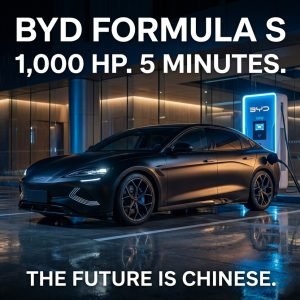
For years, the automotive industry has debated a critical question: Can legacy automakers produce a small, affordable electric vehicle without losing money on every sale? While premium EVs and high-margin SUVs have flourished, the mass-market urban segment has remained stubbornly difficult to electrify profitably. This gap has been aggressively filled by Chinese manufacturers. BYD’s Seagull, priced under $10,000 in its home market, and MG’s forthcoming MG2, expected to start around €20,000, have set a daunting benchmark for Western rivals.
The European response has been fragmented. Stellantis offers the Citroën ë-C3, but its range and charging speeds remain modest. Renault’s R5 has generated hype but faces production constraints. Now, the Volkswagen Group is making its strongest move yet — not with the mass-market VW brand, but with its edgy Spanish subsidiary, Cupra.
The Cupra Raval was unveiled simultaneously in 12 cities, with a flagship event in Barcelona attended by the President of the Generalitat de Catalunya, Salvador Illa, and the Spanish Minister of Industry, Jordi Hereu. This political presence underscores the stakes: the Raval is built at the Martorell plant, a facility that once produced icons like the SEAT Ibiza. Its future depends on the Raval’s success.
Technical Specifications and Platform Strategy
The Cupra Raval is built on the Volkswagen Group’s MEB+ platform, an evolution of the modular electric architecture used in the ID. family. It measures less than four meters in length, positioning it in the increasingly competitive B-segment. Three launch editions will be available, all featuring a WLTP range of approximately 450 kilometers.
While Cupra has not yet released final power figures, the Raval is expected to feature a single motor driving the rear wheels, producing between 150 and 230 horsepower. Charging capability is likely to mirror other MEB+ vehicles, supporting DC fast charging up to 120-150 kW — sufficient to add 250 kilometers of range in under 30 minutes.
The design language is unmistakably Cupra: aggressive, sharp, and youthful. The interior features 3D-knitted CUP Bucket seats and dynamic light projections on the door panels. Unlike the utilitarian approach of the VW ID.2, the Raval is positioned as a lifestyle product, potentially allowing Cupra to command a higher price point than its mass-market sibling.
The Raval is the first in a family of four electric vehicles planned for production in Spain, including models for the VW and Skoda brands. This concentration of production is a deliberate strategy to create economies of scale and reduce logistics costs.
Political and Economic Stakes
The launch of the Cupra Raval is as much an industrial policy statement as a product reveal. Spanish officials were front and center at the Barcelona event, emphasizing the vehicle’s role in “democratizing sustainable mobility” and reinforcing “strategic autonomy”. This language echoes broader European concerns about overdependence on Chinese supply chains for batteries and finished vehicles.
Markus Haupt, CEO of Cupra, framed the Raval as a turning point: “We are ready to produce EVs made in Spain, helping to make electromobility more accessible and more appealing to a new generation of drivers”. The message is clear: Europe can build affordable EVs without sacrificing design or driving engagement.
However, the financial reality is challenging. The development of the MEB platform cost the Volkswagen Group over €20 billion. Spreading those costs across multiple models and brands is essential to achieving profitability. The Raval will need to sell in high volumes — likely exceeding 100,000 units annually — to justify the investment in the Martorell plant’s retooling.
Editorial Analysis
Deep Reflections: What Does This Say About the Automotive World?
The Cupra Raval reveals a fundamental tension in the automotive industry’s transition. On one hand, it represents a genuine effort to democratize electric mobility, moving beyond the premium segment that has dominated early EV adoption. On the other hand, it exposes the limits of the legacy automaker model in an era of intense price competition.
The Raval is not a technological breakthrough. Its 450-kilometer range is competitive but not exceptional. Its platform is shared with other models. What makes it significant is its positioning: a stylish, desirable small EV that can compete on more than just price. This suggests that European automakers have concluded they cannot win a price war with China. Instead, they must compete on brand, design, and driving dynamics.
But this strategy carries risk. If consumers prioritize cost over style — as they have in the small car segment for decades — the Raval could struggle. The success of Chinese brands like BYD is built on extreme vertical integration and government support, allowing them to offer compelling products at prices European automakers cannot match.
Critical Analysis: Are the Numbers Truthful?
The 450-kilometer WLTP range claim requires context. WLTP figures are typically optimistic compared to real-world driving, especially in winter conditions or at highway speeds. Real-world range could be closer to 350-380 kilometers. This is still adequate for urban and suburban use but falls short of the anxiety-free experience offered by larger, more expensive EVs.
Production volumes remain unspecified. The Volkswagen Group has a history of ambitious EV production targets followed by downward revisions. The Martorell plant has a maximum capacity of approximately 500,000 vehicles annually, but achieving full utilization depends on demand. If the Raval fails to resonate with buyers, the plant could face underutilization, threatening jobs and the plant’s long-term viability.
Pricing is also a critical unknown. The Volkswagen ID.2 is expected to start around €25,000. The Cupra Raval, with its premium positioning, could start at €30,000 or higher. At that price, it competes directly with the MG4 and the BYD Dolphin, both of which offer similar range and features at lower price points. Without a significant price advantage or exceptional brand loyalty, the Raval may struggle.
Cui Bono: Who Benefits?
The primary beneficiary is the Volkswagen Group, which gains a much-needed entry in the small EV segment. The Raval allows the Group to compete where it currently has no presence, potentially capturing sales from both traditional rivals and Chinese newcomers. Cupra, as a brand, benefits from expanded visibility and a halo effect from the Raval’s youthful design.
The Spanish government is another clear beneficiary. The Raval’s production at Martorell secures thousands of jobs and reinforces Spain’s position as a European automotive manufacturing hub. The political support for the launch was no accident; it was a signal to investors and the European Commission that Spain is committed to the EV transition.
Consumers in Europe may benefit from increased choice, but only if the Raval is priced competitively. If the vehicle is positioned as a premium product, it will serve a relatively narrow demographic, leaving the mass market still underserved.
Distraction Analysis: What Is Being Overlooked?
The focus on the Cupra Raval distracts from several uncomfortable truths. First, the Volkswagen Group continues to sell millions of internal combustion vehicles, many of which emit significantly more CO2 than the Raval will save. The launch of a single EV model does not offset the environmental impact of the Group’s broader portfolio.
Second, the narrative of European “strategic autonomy” overlooks the reality that many critical components, including battery cells, may still come from China. The Raval’s battery supplier has not been announced, but Chinese manufacturers like CATL and BYD remain dominant in the global battery market. Europe has made progress in domestic battery production, but it is not yet self-sufficient.
Third, the celebration of EV production in Spain ignores the broader trend of automotive deindustrialization in other parts of Europe. While Martorell gains, factories in Germany and the UK face uncertainty. The transition to EVs is creating winners and losers, and the Raval’s success may come at the expense of other European plants.
Who Does This Not Serve?
The Cupra Raval does not serve low-income drivers who cannot afford a new vehicle at any price. The used EV market will eventually provide affordable options, but that is years away. In the meantime, the transition to EVs risks creating a two-tier mobility system where wealthier drivers enjoy clean, quiet, efficient vehicles while lower-income drivers continue to rely on aging, polluting internal combustion cars.
The Raval also does not serve workers in factories not selected for EV production. As the Volkswagen Group consolidates production around a smaller number of highly automated plants, job losses are inevitable. The social consequences of this transition — including retraining, relocation, and unemployment — are rarely discussed in product launch press releases.
Finally, the Raval does not serve the broader goal of reducing car dependency. It is still a private vehicle, requiring parking, roads, and infrastructure. The most sustainable mobility solution remains public transit, cycling, and walking — options that receive far less attention and investment than new EV models.
Key Takeaways
- Strategic Industrial Move: The Cupra Raval represents Europe’s attempt to compete with Chinese affordable EVs by emphasizing design and brand rather than price.
- Technical Specifications: The sub-four-meter EV offers a 450-kilometer WLTP range and is built on the MEB+ platform at the Martorell plant in Spain.
- Uncertain Profitability: Without clear pricing and production targets, it remains unclear whether the Raval can achieve the volumes needed to be profitable in a fiercely competitive segment.
Internal Links Used
- EV Market Crisis: Volkswagen ID.4 Struggles in the USA — placed in the “Political and Economic Stakes” section — This article details the challenges Volkswagen faces in the US EV market, providing context for the Group’s strategic pivot toward Europe-focused urban EVs.
- EV Market Crisis: GM Shuts Down Factory — placed in the “Editorial Analysis: Critical Analysis” section — This article highlights the broader industry challenges of EV production, including factory closures and overcapacity, which directly inform the discussion of Martorell’s utilization.
- Humanoid Robots in Factories: Toyota Deployment — placed in the “Who Does This Not Serve?” section — This article explores automation in automotive manufacturing, providing a parallel example of how EV transition affects industrial workers.
Sources
- Cupra Raval world premiere opens Martorell EV era — Automotive World — Primary industry coverage; official Cupra statements — high-credibility reporting
- Hyundai Motor launches Ioniq EV brand in China, unveils two concept cars — Yonhap News Agency — Official news agency coverage of Hyundai’s China strategy — high-credibility reporting
- MG launches Europe’s first semi-solid-state battery — Advertiser.ie — Technical coverage of competing affordable EV technology — high-credibility reporting
- Chery reveals solid-state battery tech rated for beyond 1500km EV driving range — Drive.com.au — Coverage of Chinese EV battery advances — high-credibility reporting