A sinus infection occurs when the mucous membranes lining the sinuses (air-filled cavities behind the cheekbones, forehead, and nose) become inflamed and swollen. This inflammation blocks the tiny drainage passages, trapping mucus and creating an environment where viruses or bacteria can multiply.
Crucial distinction: Approximately 90–98% of acute sinusitis cases are caused by viruses — the same viruses that cause the common cold. Bacterial sinusitis is much less common and typically develops after 10–14 days of viral symptoms, or with specific signs like fever and worsening symptoms after initial improvement. Antibiotics only work for bacterial sinusitis; they are useless for viral cases and contribute to antibiotic resistance.
This means that for most sinus infections, the goal of treatment is symptom relief and supporting the body’s natural healing — not “curing” with drugs. Natural home remedies are often ideal for this purpose, as long as you know when to seek medical care.
Understanding Sinus Infections: Acute, Subacute, Chronic
- Acute sinusitis: Symptoms lasting less than 4 weeks. Usually viral.
- Subacute sinusitis: Symptoms lasting 4–12 weeks.
- Chronic sinusitis: Symptoms lasting more than 12 weeks, often with underlying factors (allergies, nasal polyps, deviated septum).
This article focuses on acute, uncomplicated sinusitis — the kind that follows a cold. Chronic sinusitis requires medical evaluation and may need prescription treatments (steroid sprays, allergy management, sometimes surgery). Natural remedies may complement but not replace medical care for chronic cases.
Evidence-Supported Natural Remedies
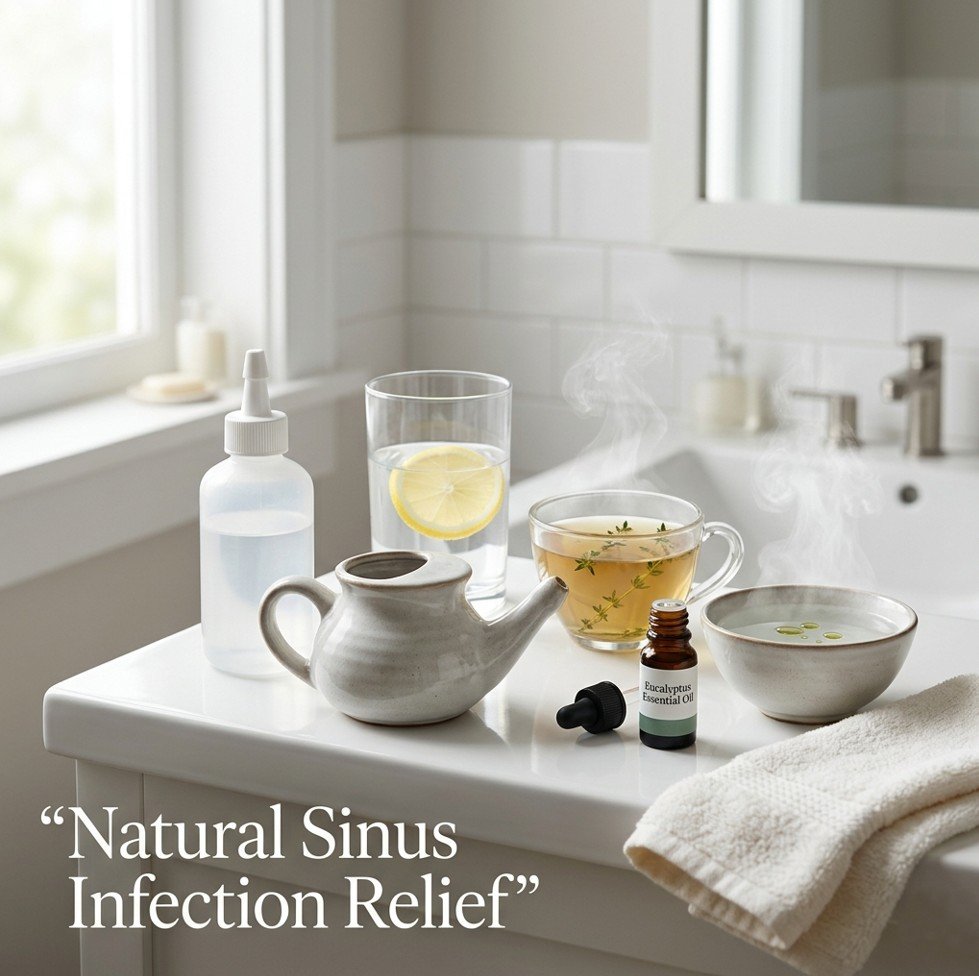
1. Nasal Saline Irrigation (Neti Pot or Squeeze Bottle)
What it is: Rinsing the nasal passages with a sterile saltwater solution.
How it works: Saline irrigation thins mucus, flushes out viral particles, allergens, and inflammatory debris, and improves ciliary function (the tiny hairs that move mucus out of the sinuses).
What modern research suggests: Strong evidence. A 2019 Cochrane review of 14 trials found that nasal saline irrigation significantly improved sinus symptoms and quality of life in people with acute and chronic sinusitis. It is as effective as some topical steroid sprays for symptom relief, with no significant side effects when done correctly.
How to use it:
- Use a neti pot, squeeze bottle, or bulb syringe.
- Prepare solution: 1 cup (250 ml) of distilled, sterile, or previously boiled and cooled water mixed with 1/4 to 1/2 teaspoon of non-iodized salt (and a pinch of baking soda optional).
- Critical safety rule: Never use tap water directly. Tap water can contain amoebae (Naegleria fowleri) that cause fatal brain infections. Always use sterile, distilled, or boiled water.
- Tilt head over sink, pour solution into one nostril, let it drain out the other. Repeat on other side.
- Use 1–2 times daily during acute infection.
Key caution: Do not use if one nostril is completely blocked — pressure can force fluid into the Eustachian tube. Stop if you experience ear pain or discomfort.
2. Steam Inhalation (with or without essential oils)
What it is: Breathing warm, moist air to soothe nasal passages and loosen mucus.
How it works: Warm steam increases blood flow to the nasal mucosa and hydrates dried secretions, making them easier to expel.
What modern research suggests: Evidence is mixed but generally positive. A 2016 systematic review found that steam inhalation provided symptomatic relief for the common cold (which causes most sinusitis). However, a 2017 Cochrane review concluded that steam did not significantly improve sinusitis symptoms in all studies. The effect is likely modest and short-lived, but safe and pleasant for most people.
How to use it:
- Bowl method: Fill a large bowl with hot (not boiling) water. Lean over it with a towel draped over your head to trap steam. Breathe normally for 5–10 minutes. Keep face at least 30 cm from water to avoid burns.
- Shower method: Run a hot shower and sit in the bathroom (not in the water) for 10–15 minutes.
- Add essential oils (optional): Add 2–3 drops of eucalyptus, peppermint, or tea tree oil to the hot water. These oils have mild decongestant and antimicrobial properties (though the evidence for inhalation is weak).
- Repeat 2–4 times daily.
Key safety note: Risk of scalding from hot water — use caution with children and elderly. Essential oils can irritate mucous membranes; start with 1 drop. Do not ingest essential oils.
3. Eucalyptus and Peppermint Essential Oils (Topical and Inhalation)
What they are: Essential oils with compounds (eucalyptol, menthol) that produce a cooling sensation and may reduce nasal congestion.
Traditional use: Eucalyptus has been used in Australian traditional medicine and European herbalism for respiratory infections. Peppermint has similar uses.
What modern research suggests: Eucalyptol (1,8-cineole) has been studied in several clinical trials for sinusitis. A 2004 randomized trial found that 200 mg of oral eucalyptol three times daily improved symptoms of acute sinusitis. A 2018 systematic review concluded that cineole is effective for acute and chronic sinusitis. However, these studies used oral capsules, not inhaled oil. Topical/inhaled eucalyptus has less evidence but is widely used.
How to use it:
- Steam inhalation: 2–3 drops of eucalyptus or peppermint oil in hot water (as above).
- Chest rub: Mix 2–3 drops of essential oil with 1 tablespoon of carrier oil (coconut, jojoba) and rub on chest or under nose (avoid inside nostrils).
- Diffuser: Add 5–10 drops to an essential oil diffuser in the room.
- Do not ingest essential oils.
Key safety note: Peppermint oil can cause a burning sensation on sensitive skin. Keep away from eyes. Not for use in children under 6 (risk of respiratory distress). Eucalyptus oil is toxic if swallowed.
4. Hydration and Rest (The Most Important)
What it is: Increasing fluid intake and allowing the body to recover.
Why it works: Adequate hydration thins mucus, making it easier to drain. Rest supports immune function.
How to use it: Drink at least 2–3 liters of water, herbal tea, or clear broth daily. Avoid alcohol and caffeine (dehydrating). Sleep with an extra pillow to encourage drainage. Take time off work if possible.
What the evidence says: Overwhelming consensus from clinical guidelines: hydration and rest are first-line supportive measures for viral respiratory infections. No trials compare them to placebo because withholding them would be unethical.
5. Warm Compress
What it is: A warm, damp cloth applied to the face over the sinuses.
How it works: Heat improves blood circulation, reduces pain, and may help loosen mucus.
How to use it: Soak a clean cloth in warm water, wring out excess, and place over forehead, nose, and cheeks for 5–10 minutes. Repeat 2–4 times daily.
What the evidence says: Primarily traditional and expert opinion. Low risk, potential benefit.
6. Herbal Teas: Thyme, Peppermint, Ginger, Elderberry
What they are: Hot water infusions of medicinal herbs.
Why they help: Warm hydration + mild anti-inflammatory, antimicrobial, or immune-supportive properties.
What the evidence says:
- Thyme: Contains thymol, which has antibacterial and expectorant properties. A 2011 study found thyme extract improved cough and bronchitis symptoms. For sinusitis, the evidence is indirect but supportive. See our thyme tea guide.
- Peppermint: Menthol provides a cooling sensation that may reduce nasal congestion subjectively. Weak evidence for objective decongestion. See peppermint tea benefits.
- Ginger: Anti-inflammatory and mild antiviral properties. May soothe sore throat and reduce nausea. See Article 4 for details.
- Elderberry: Some evidence that elderberry reduces duration of cold and flu symptoms. May support immune function. See elderberry syrup benefits.
How to use them: Steep 1–2 teaspoons of dried herb per cup of boiling water for 10 minutes. Drink 2–4 cups daily. Combine herbs as desired.
7. Bromelain (from Pineapple)
What it is: A mixture of enzymes found in pineapple stems, available as a supplement.
How it works: Bromelain has anti-inflammatory and mucolytic (mucus-thinning) properties. It may reduce swelling in the nasal passages.
What modern research suggests: A 2016 systematic review found that bromelain (particularly in combination with other enzymes) reduced sinusitis symptoms and inflammation in several small trials. The evidence is moderate — not conclusive but promising. A 2005 study found that bromelain reduced nasal congestion and improved breathing in people with acute sinusitis.
How to use it: Bromelain supplements (200–400 mg, 2–3 times daily) between meals for better absorption. Fresh pineapple contains bromelain, but the concentration is low and varies.
Key safety note: Bromelain may increase bleeding risk. Avoid if you take blood thinners (warfarin, apixaban) or have a bleeding disorder. May cause digestive upset. Allergic reactions possible (especially if allergic to pineapple, latex, or pollen).
8. N-Acetylcysteine (NAC)
What it is: A supplement form of the amino acid cysteine, used as a mucolytic (mucus thinner) in respiratory conditions.
How it works: NAC breaks disulfide bonds in mucus, reducing its viscosity and making it easier to expel.
What modern research suggests: NAC is well-studied for chronic bronchitis and COPD, but evidence for acute sinusitis is limited. A 2009 trial found that NAC improved symptoms of chronic sinusitis. It is generally safe and may be helpful for thick, stubborn mucus.
How to use it: 600 mg NAC once or twice daily. Often combined with bromelain.
Key safety note: NAC has a strong sulfur odor (normal). May cause nausea or diarrhea. Rarely, it can trigger bronchospasm in people with asthma — start with a low dose.
What Science Says: Summary Table
| Remedy | Evidence Strength | Recommended? |
|---|---|---|
| Nasal saline irrigation | Strong (Cochrane review) | Yes, first-line |
| Hydration and rest | Strong (clinical consensus) | Yes, essential |
| Steam inhalation | Low-moderate (mixed) | Yes, low-risk option |
| Eucalyptol (oral) | Moderate (small RCTs) | Possibly helpful |
| Essential oils (inhaled) | Low (indirect) | Optional, use with caution |
| Bromelain | Low-moderate | Possibly helpful |
| NAC | Low (extrapolated) | Optional |
| Herbal teas | Low (supportive) | Yes, for hydration and comfort |
Bottom line: Nasal saline irrigation has the strongest evidence. Hydration and rest are essential. The other remedies may provide additional comfort but are not substitutes for these basics.
How to Use These Remedies at Home (Practical Protocol)
For mild, early sinus symptoms (first 1–5 days):
- Nasal saline irrigation twice daily.
- Steam inhalation with eucalyptus or peppermint (optional) twice daily.
- Drink 2–3 liters of water and herbal tea daily.
- Warm compress to face as needed for pain.
- Rest and elevate head while sleeping.
For moderate symptoms with thick mucus:
Add bromelain (200 mg, 3 times daily between meals) or NAC (600 mg twice daily).
For pain or pressure:
Acetaminophen (paracetamol) or ibuprofen is safe and effective for sinus pain. Natural remedies alone may not relieve moderate to severe pain.
What to avoid:
- Decongestant sprays (oxymetazoline): Can cause rebound congestion if used more than 3 days. Not a natural remedy, but worth noting.
- Oral decongestants (pseudoephedrine): May be effective but have side effects (insomnia, palpitations). Use as directed.
- Antihistamines: Only helpful if allergies are the cause. Otherwise, they thicken mucus and may worsen symptoms.
When to See a Doctor — Do Not Rely on Natural Remedies Alone
Most sinus infections resolve on their own within 7–10 days. However, you need medical evaluation if you experience:
- Symptoms lasting more than 10 days without improvement.
- Severe symptoms (high fever over 39°C / 102°F, intense facial pain, swelling around eyes).
- Worsening after initial improvement (“double sickening”) — suggests bacterial superinfection.
- Visual changes, double vision, or eye swelling (possible orbital cellulitis — emergency).
- Stiff neck, confusion, or severe headache (possible meningitis — emergency).
- Sinusitis with asthma or immune compromise (needs closer management).
- Chronic sinusitis (symptoms >12 weeks) — needs workup for underlying causes.
Bacterial sinusitis may require antibiotics (amoxicillin, doxycycline). Do not demand antibiotics for viral sinusitis — they will not help and may cause side effects (diarrhea, yeast infections, allergic reactions).
Safety, Interactions, and Special Populations
Nasal saline irrigation safety:
- Use only sterile, distilled, or boiled water. Tap water is unsafe (risk of Naegleria fowleri, a brain-eating amoeba — rare but fatal).
- Clean the neti pot or bottle after each use with hot soapy water and allow to air dry.
- Do not share irrigation devices.
Essential oils:
- Never ingest essential oils (eucalyptus, peppermint, tea tree). Toxic.
- Keep away from children and pets.
- Do not use undiluted on skin (can cause burns).
- Pregnant women: Avoid oral and high-dose topical essential oils. Steam inhalation with 1–2 drops may be acceptable but consult a doctor.
Bromelain and NAC:
- Avoid bromelain if on blood thinners or before surgery.
- NAC is likely safe during pregnancy (used medically for acetaminophen overdose), but consult a doctor.
Children:
- Nasal saline irrigation is safe for children over 5 (use a bulb syringe or children’s neti pot).
- Steam inhalation: Risk of burns. Use a cool-mist humidifier instead.
- Essential oils: Do not use eucalyptus or peppermint oil in children under 6 (risk of respiratory distress). For older children, dilute heavily and use in a diffuser only.
- Herbal teas: Safe in age-appropriate amounts, but avoid honey under 12 months (botulism risk).
Pregnancy:
- Nasal saline irrigation is safe.
- Steam inhalation with plain water (no oils) is safe.
- Bromelain and NAC: Avoid due to lack of safety data.
- Eucalyptus oil: Avoid oral; topical in low dilution may be acceptable but consult doctor.
Comparison with Conventional Treatments
| Approach | Viral Sinusitis | Bacterial Sinusitis |
|---|---|---|
| Antibiotics | Not effective (and harmful) | Effective (but need prescription) |
| Nasal saline irrigation | Effective for symptom relief | Effective as adjunct |
| Decongestants (oral) | Modestly effective | Modestly effective |
| Steroid nasal sprays | May help (chronic or allergic) | May help as adjunct |
| Natural remedies | Supportive, low-risk | Supportive only — need antibiotics |
Key message: Natural remedies are excellent for viral sinusitis, which is the vast majority of cases. They are not a substitute for antibiotics in confirmed bacterial sinusitis.
FAQ
Q1: How long does a sinus infection last if treated naturally?
Most viral sinusitis resolves in 7–10 days regardless of treatment. Natural remedies can reduce symptom severity and improve comfort, but they do not shorten the duration significantly. If symptoms persist beyond 10 days without improvement, see a doctor.
Q2: Is it safe to use a neti pot every day?
For acute sinusitis, 1–2 times daily for up to 2 weeks is safe. For chronic sinusitis or allergy prevention, long-term daily use may be safe but should be discussed with a doctor. Always use sterile water.
Q3: Can I use hydrogen peroxide or iodine in my sinus rinse?
No. Only use sterile saline (salt water). Hydrogen peroxide damages nasal mucosa. Iodine is toxic to cilia. Never add anything other than salt and baking soda.
Q4: Does apple cider vinegar help sinus infections?
There is no evidence that ACV helps sinus infections. Drinking diluted ACV may provide hydration, but it does not reach the sinuses. Do not put ACV in a neti pot — it will burn and damage nasal tissues.
Q5: Can sinus infections go away without antibiotics?
Yes — over 90% of acute sinusitis cases are viral and resolve without antibiotics. Even some bacterial sinusitis cases may resolve spontaneously, but antibiotics speed recovery and prevent complications.
Q6: How do I know if my sinus infection has spread to my brain (very rare)?
Signs of intracranial complication: severe frontal headache, high fever, nausea/vomiting, confusion, seizures, focal neurological deficits. This is a medical emergency. Seek immediate care if you have these symptoms along with sinusitis.
Key Takeaways
- Most sinus infections are viral and do not need antibiotics. Natural remedies focus on symptom relief and drainage.
- Nasal saline irrigation (with sterile water only) has the strongest evidence and is the most effective home treatment.
- Hydration, rest, steam inhalation, and warm compresses are safe, low-cost supportive measures.
- Herbal teas (thyme, peppermint, ginger, elderberry) provide comfort and hydration.
- Bromelain and NAC may help thin mucus, but evidence is modest.
- See a doctor for symptoms lasting more than 10 days, severe pain or fever, worsening after improvement, or eye/vision changes.
Internal Links Used
- Thyme tea benefits — in the herbal teas section
- Peppermint tea benefits — in the herbal teas section
- Elderberry syrup benefits — in the herbal teas section
- Cough relief herbs — in the FAQ or related section, as sinusitis often causes cough
- Natural antibiotics: plants that fight infections – in the antimicrobial section (already there)
Add: Thyme tea benefits – in the thyme section (already there)
Add: Peppermint tea benefits – in the peppermint section (already there) - Echinacea: does it really prevent colds? – in the immune support section
- How to use ginger for inflammation and pain relief – in the sinus pain section
Sources
- King, D., et al. (2019). “Saline irrigation for acute and chronic sinusitis.” Cochrane Database of Systematic Reviews.
- Singh, M., et al. (2017). “Steam inhalation for the common cold.” Cochrane Database of Systematic Reviews.
- Kehrl, W., et al. (2004). “Eucalyptol for acute sinusitis: a randomized trial.” HNO.
- Guo, R., et al. (2016). “Bromelain for sinusitis: a systematic review.” Evidence-Based Complementary and Alternative Medicine.
- American Academy of Otolaryngology–Head and Neck Surgery. “Clinical practice guideline: acute sinusitis.” 2015.
- Centers for Disease Control and Prevention (CDC). “Sinus Infection (Sinusitis).” cdc.gov.