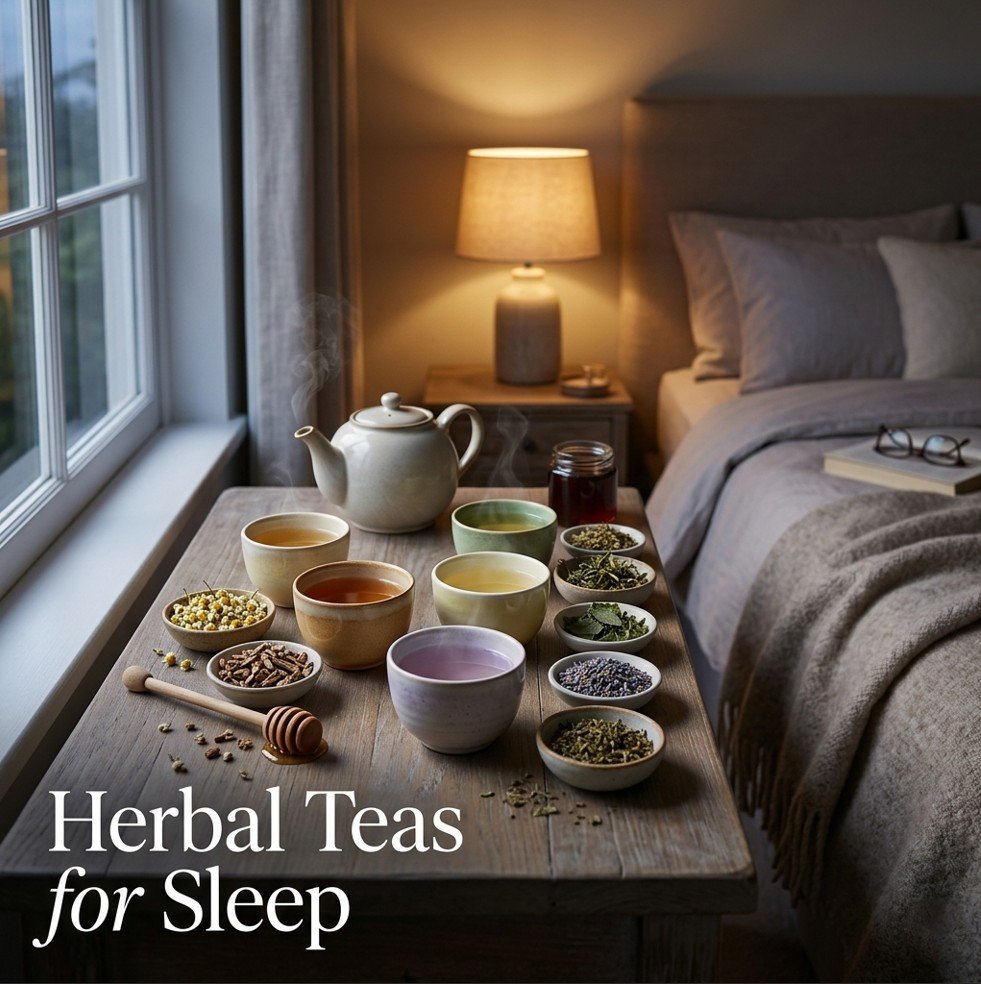
Sleep difficulties — trouble falling asleep, waking frequently during the night, or waking too early — affect up to one-third of adults. While cognitive behavioral therapy for insomnia (CBT-I) and good sleep hygiene are the most effective long-term solutions, many people also turn to herbal teas as a gentle, comforting bedtime ritual.
Herbal teas (technically “tisanes” — infusions of herbs, not true tea from Camellia sinensis) are generally safe, low-cost, and pleasant. But not all “sleep teas” are equally effective. Some contain active compounds that have been studied in clinical trials; others are included primarily for flavor. This article reviews the evidence for the most researched sleep-promoting herbs and explains how to use them effectively.
Why Herbal Tea May Help Sleep
The act of drinking warm tea before bed has several potential benefits beyond the herbs themselves:
- Warm liquid: May have a mild thermogenic and relaxing effect.
- Ritual and routine: A consistent pre-bed ritual signals the brain that it is time to sleep.
- Hydration: Mild dehydration can disrupt sleep (though excessive fluid may cause nighttime urination — timing matters).
- Placebo effect: Believing a tea will help sleep can improve sleep quality through expectation.
However, specific herbs also contain bioactive compounds that affect neurotransmitters (GABA, serotonin, melatonin) or reduce anxiety. The evidence varies by herb.
Top Herbal Teas for Sleep
1. Chamomile (Matricaria chamomilla)
What it is: One of the most widely consumed herbal teas in the Western world, made from dried chamomile flowers.
Traditional use: Chamomile has been used for centuries in European herbalism for insomnia, anxiety, and digestive complaints.
Key active compound: Apigenin, a flavonoid that binds to benzodiazepine receptors on GABA receptors (though weakly).
What modern research suggests: Despite its popularity, the evidence for chamomile specifically for insomnia is surprisingly limited. A 2016 randomized controlled trial of 179 older adults found that chamomile extract (500 mg twice daily) did not significantly improve sleep quality compared to placebo. However, a 2017 systematic review concluded that chamomile may modestly improve sleep quality in some populations, particularly when anxiety is a component of insomnia. The effect is likely small.
How to use it: Steep 2–3 teaspoons of dried chamomile flowers (or 1–2 tea bags) in 250 ml of boiling water for 10–15 minutes. Drink 30–60 minutes before bed. Chamomile tea is very safe and pleasant, even if the evidence is weak.
Key safety note: Chamomile is generally safe. Rare allergic reactions in people sensitive to ragweed. May interact with blood thinners (warfarin) — theoretical risk. Safe during pregnancy in food amounts; high-dose extracts should be avoided.
See our chamomile guide for more.
2. Valerian Root (Valeriana officinalis)
What it is: A perennial flowering plant whose root has a strong, unpleasant odor (often masked in tea blends).
Traditional use: Valerian has been used since ancient Greece and Rome for insomnia and nervousness.
Key active compounds: Valerenic acid, valepotriates, and other compounds that modulate GABA receptors (similar to benzodiazepines but weaker).
What modern research suggests: Valerian is one of the better-studied herbs for sleep, but the evidence is mixed. A 2020 meta-analysis of 11 randomized trials (over 1,000 participants) found that valerian modestly improved sleep quality (subjective measures) compared to placebo, particularly with longer-term use (4–8 weeks). However, a 2017 systematic review concluded that the effect is small and not consistent across studies. Some people report feeling more rested; others notice no difference.
How to use it: Valerian tea (1–2 teaspoons of dried root per cup, steep 10–15 minutes) has a strong, earthy taste — often combined with mint or lemon balm. Standardized extracts (300–600 mg, 30–60 minutes before bed) are more reliable. Effects may take 2–4 weeks to appear.
Key safety note: Valerian is generally safe but can cause morning drowsiness, vivid dreams, headaches, and dizziness. Do not drive until you know how it affects you. Avoid combining with alcohol, benzodiazepines, or barbiturates. Do not use during pregnancy or breastfeeding. Long-term safety beyond 4–6 months is unknown.
3. Passionflower (Passiflora incarnata)
What it is: A climbing vine native to the Americas, named for the unique structure of its flowers.
Traditional use: Indigenous peoples used passionflower for nervousness and insomnia. European herbalism adopted it in the 19th century.
Key active compounds: Flavonoids (including chrysin, apigenin, vitexin) that modulate GABA receptors.
What modern research suggests: A 2011 randomized trial of 41 adults with insomnia found that passionflower tea (1 cup daily for 7 days) significantly improved sleep quality compared to placebo. A 2017 systematic review of 8 trials concluded that passionflower is effective for anxiety, but evidence specifically for insomnia is limited. The effect is likely mild.
How to use it: Passionflower tea (1 teaspoon dried herb per cup, steep 10–15 minutes) has a mild, slightly sweet taste. Drink 30–60 minutes before bed. Tinctures (2–3 ml) or capsules (250–500 mg) are also available.
Key safety note: Passionflower is generally safe but may cause dizziness or drowsiness. Do not combine with sedatives, alcohol, or benzodiazepines. Avoid during pregnancy (may stimulate uterine contractions). Safety in breastfeeding unknown.
4. Lemon Balm (Melissa officinalis)
What it is: A lemon-scented herb from the mint family, native to Europe and the Mediterranean.
Traditional use: Lemon balm has been used since the Middle Ages for nervousness, insomnia, and palpitations.
Key active compounds: Rosmarinic acid and other polyphenols that inhibit GABA transaminase (increasing GABA levels).
What modern research suggests: Lemon balm is often used in combination with valerian or other sedative herbs. A 2006 trial found that a combination of valerian and lemon balm improved sleep quality in children with restlessness. Stand-alone studies for insomnia are limited. A 2018 study found that lemon balm (300 mg) reduced anxiety and improved sleep in people with mild to moderate anxiety disorders.
How to use it: Lemon balm tea (1–2 teaspoons dried leaves per cup, steep 10 minutes) is mild, pleasant, and safe. Drink 1–2 cups in the evening. For stronger effect, combine with chamomile or valerian.
Key safety note: Lemon balm is very safe. May cause mild nausea at high doses. Safe during pregnancy in food amounts; therapeutic doses lack data.
See our lemon balm tea guide for more.
5. Lavender (Lavandula angustifolia) — Tea Form
What it is: Lavender is best known as an essential oil for aromatherapy, but the dried flowers can also be brewed as tea.
Traditional use: Lavender tea has been used for nervous tension, insomnia, and headaches.
Key active compounds: Linalool and linalyl acetate, which have sedative and anxiolytic properties.
What modern research suggests: Most research on lavender for sleep has used essential oil (aromatherapy) or oral capsules (Silexan), not tea. A 2015 study found that lavender aromatherapy improved sleep quality in hospitalized patients. Lavender tea is weaker but may provide mild benefits, particularly for anxiety-related insomnia. There are no high-quality trials of lavender tea specifically.
How to use it: Steep 1–2 teaspoons of dried lavender flowers in 250 ml of boiling water for 10 minutes. Lavender tea has a strong floral taste — often blended with chamomile or lemon balm. Drink 30–60 minutes before bed.
Key safety note: Lavender tea is safe for most adults. Do not ingest lavender essential oil — only food-grade dried flowers. Theoretical hormonal effects (anti-androgenic) — avoid large amounts in boys before puberty. Pregnant women should avoid high doses.
6. Tulsi (Holy Basil, Ocimum sanctum)
What it is: A sacred plant in Ayurvedic medicine, native to India.
Traditional use: Tulsi is used for stress, anxiety, and sleep disorders in Ayurveda.
Key active compounds: Eugenol, rosmarinic acid, and other adaptogenic compounds.
What modern research suggests: Tulsi is classified as an adaptogen — it may help the body adapt to stress. A 2015 randomized trial of 35 adults with generalized anxiety disorder found that tulsi extract (500 mg twice daily) significantly reduced anxiety and improved sleep quality. A 2017 systematic review concluded that tulsi has anxiolytic and antidepressant properties. The evidence for sleep specifically is preliminary but promising.
How to use it: Tulsi tea (1 teaspoon dried leaves per cup, steep 10 minutes) has a clove-like, peppery taste. Drink 1–2 cups in the evening. Tulsi is also available as capsules or tinctures.
Key safety note: Tulsi is generally safe. May lower blood sugar and blood pressure — caution if on diabetes or antihypertensive medications. Avoid during pregnancy (may affect fertility in animal studies). Safe in food amounts.
How to Brew the Perfect Sleep Tea
General brewing guidelines for sleep herbs:
| Herb | Dried herb per cup | Water temperature | Steep time | Taste |
|---|---|---|---|---|
| Chamomile | 2–3 teaspoons | Boiling (100°C) | 10–15 min | Mild, apple-like |
| Valerian | 1–2 teaspoons | Boiling | 10–15 min | Earthy, strong |
| Passionflower | 1 teaspoon | Boiling | 10–15 min | Mild, sweet |
| Lemon balm | 1–2 teaspoons | 90–100°C | 10 min | Lemon, minty |
| Lavender | 1 teaspoon | 90°C | 10 min | Floral, strong |
| Tulsi | 1 teaspoon | 100°C | 10 min | Clove, peppery |
Tips for better results:
- Use freshly boiled water (but let it cool slightly for delicate herbs).
- Cover the cup while steeping to trap volatile oils.
- Steep for at least 10 minutes (longer for root herbs like valerian).
- Sweeten with honey (but avoid sugar, which can disrupt sleep).
- Drink 30–60 minutes before bed — not immediately before, to avoid nighttime urination.
Blending your own sleep tea:
Combine 2 parts chamomile, 1 part lemon balm, and 1 part passionflower for a mild, pleasant blend. Add 1/2 part lavender for floral notes. For stronger effect, add 1/2 part valerian (but expect stronger taste).
What Science Says: Summary Table
| Tea | Evidence for Sleep | Effect Size | Recommended? |
|---|---|---|---|
| Chamomile | Low-moderate (mixed) | Small | Yes (safe, pleasant) |
| Valerian | Moderate (but inconsistent) | Small-moderate | Possibly (if you tolerate taste) |
| Passionflower | Low-moderate (limited trials) | Small | Yes (safe, mild) |
| Lemon balm | Low (mostly combination studies) | Small | Yes (safe, pleasant) |
| Lavender (tea) | Very low (extrapolated from aromatherapy) | Very small | Optional (if you like taste) |
| Tulsi | Low (preliminary) | Small | Possibly (good for stress-related insomnia) |
Important note: No herbal tea is a substitute for treatment of chronic insomnia (lasting more than 3 months). If you have persistent sleep difficulties, seek medical evaluation.
How to Use These Teas at Home (Practical Protocol)
For mild, occasional sleep difficulties (situational stress, travel):
- Choose chamomile or passionflower tea.
- Brew 1 cup 30–60 minutes before bed.
- Combine with good sleep hygiene: dark, cool room; no screens for 60 minutes before bed; consistent bedtime.
For more persistent sleep issues (several nights per week):
- Try valerian tea or a valerian-chamomile-lemon balm blend.
- Use consistently for 2–4 weeks — effects may not be immediate.
- Monitor for morning drowsiness (if present, reduce dose or switch to passionflower).
For anxiety-related insomnia (racing thoughts at bedtime):
- Tulsi tea or lemon balm tea may help reduce stress.
- Combine with breathing exercises (see Article 8 for techniques).
- Consider a combination tea with chamomile + lemon balm + passionflower.
What to avoid:
- Adding sugar or honey in large amounts (sugar can disrupt sleep).
- Drinking tea immediately before bed (may cause nighttime urination).
- Expecting tea alone to cure chronic insomnia — see a doctor if no improvement after 4 weeks.
Safety, Interactions, and When to See a Doctor
General safety:
- Most sleep teas are safe for healthy adults when consumed as tea.
- Pregnant or breastfeeding women: Chamomile and lemon balm in tea form are likely safe in moderation. Valerian, passionflower, and tulsi should be avoided (lack of safety data). Lavender tea in small amounts may be acceptable — consult a doctor.
- Children: Chamomile and lemon balm tea are safe for children over 12 months in small amounts (1/4 cup). Valerian is not recommended for children without pediatrician guidance.
Medication interactions (critical for valerian and passionflower):
- Sedatives, benzodiazepines, Z-drugs (zolpidem, eszopiclone): Valerian and passionflower may have additive sedative effects. Do not combine without medical supervision.
- Alcohol: Never combine with valerian or passionflower — increased sedation and risk of falls.
- Blood thinners (warfarin): Chamomile may increase bleeding risk theoretically. Valerian has no known interaction but caution advised.
- Antidepressants (SSRIs, SNRIs): No significant interactions with teas, but high-dose extracts may interact.
- Antihypertensives: Tulsi may lower blood pressure — monitor.
When to see a doctor — do not rely on tea alone:
- Insomnia lasting more than 3 months (chronic insomnia).
- Sleep apnea symptoms (loud snoring, gasping, observed breathing pauses).
- Restless legs or jerking movements in sleep.
- Daytime sleepiness that impairs driving or work performance.
- Mood changes, thoughts of self-harm, or severe anxiety.
- No improvement after 4 weeks of consistent tea + good sleep hygiene.
FAQ
Q1: Which herbal tea is best for falling asleep faster?
Chamomile and passionflower have the most traditional use and are well-tolerated. Valerian may be more effective for some people but has a strong taste and may cause morning drowsiness. There is no “best” — individual responses vary.
Q2: Can I drink sleep tea every night?
For most people, yes. Chamomile, lemon balm, and passionflower teas are safe for long-term daily use. Valerian tea is generally safe for up to 4–6 months, but some experts recommend cycling (e.g., 6 weeks on, 1 week off). Lavender tea should not be used daily for extended periods due to theoretical hormonal effects.
Q3: How long before bed should I drink sleep tea?
30–60 minutes before bedtime. This allows time for the warm liquid to be absorbed and for any mild sedative effects to develop. Drinking immediately before bed may increase the need to urinate during the night.
Q4: Can I combine multiple sleep teas?
Yes. Many commercial sleep teas contain blends of chamomile, valerian, passionflower, and lemon balm. Start with a small cup to assess tolerance. If you experience morning drowsiness or vivid dreams, reduce the dose or switch to a milder blend.
Q5: Is there any herbal tea that makes insomnia worse?
Yes. Teas containing caffeine (black tea, green tea, oolong, white tea, yerba mate, guarana) should be avoided in the evening. Some people find that peppermint tea worsens acid reflux (which can disrupt sleep). Ginger tea is generally safe but may be stimulating for some individuals.
Q6: Can I give sleep tea to my child?
For children over 12 months, chamomile and lemon balm tea (1/4 cup, well-diluted, cooled) are safe for occasional use. Valerian, passionflower, and lavender are not recommended for children without pediatrician guidance. Never give honey to infants under 12 months (botulism risk). For children with persistent insomnia, see a pediatrician.
Key Takeaways
- Chamomile, passionflower, and lemon balm teas are safe, pleasant, and may provide mild sleep benefits — though the evidence is weaker than commonly believed.
- Valerian tea has stronger evidence but a strong taste and potential for morning drowsiness; use with caution.
- No herbal tea is a cure for chronic insomnia. Combine tea with good sleep hygiene (dark, cool room; no screens; consistent bedtime).
- Herbal teas are generally safe but can interact with sedatives, alcohol, and blood thinners. Consult a doctor if you take these medications.
- For persistent insomnia lasting more than 3 months, see a doctor — underlying causes (sleep apnea, restless legs, depression) may need specific treatment.
Internal Links Used
- Chamomile benefits, uses, and safety — in the chamomile section
- Lemon balm tea benefits — in the lemon balm section
- Herbs for sleep support — in the introduction as a related resource
- Natural remedies for anxiety without medication — in the anxiety-related insomnia section
- Chamomile benefits, uses, and safety – in the chamomile section (already there)
Add: Lemon balm tea benefits – in the lemon balm section (already there)
Add: Herbs for sleep support – in the introduction (already there) - Ashwagandha: benefits for stress, sleep and hormones – in the sleep section
- Essential oils that relieve stress and anxiety – in the lavender section
Sources
- Srivastava, J. K., et al. (2010). “Chamomile: a herbal medicine of the past with bright future.” Molecular Medicine Reports.
- Taavoni, S., et al. (2011). “Valerian for sleep quality in postmenopausal women.” Menopause.
- Ngan, A., & Conduit, R. (2011). “Passionflower for sleep: a randomized trial.” Phytotherapy Research.
- Cases, J., et al. (2011). “Lemon balm and valerian for sleep in children.” Alternative Therapies.
- Shi, Y., et al. (2016). “Chamomile for generalized anxiety disorder: a randomized trial.” Journal of Clinical Psychopharmacology.
- National Center for Complementary and Integrative Health (NCCIH). “Sleep Disorders and Complementary Health Approaches.” nccih.nih.gov.
- American Academy of Sleep Medicine. “Clinical Practice Guideline for Insomnia.” 2021.