LEAD:
There is no universal minimum to start investing, but practical thresholds exist based on fees, account types, and your personal financial foundation. This article explains how much money you realistically need — from as little as $5 to more substantial amounts — and helps you decide whether you are ready to begin or better off saving first.
What This Means and Why It Matters
The question “how much money do you need to start investing” often masks a deeper concern: “Am I ready to invest without making a mistake?” Beginners worry that investing too little is pointless, while investing too much before they understand the risks could be dangerous.
In reality, the amount you need depends on three variables: the minimum required by your brokerage, the cost of buying investments (commissions or fees), and your personal financial stability outside of investing.
Historically, investors needed large sums because brokers charged high commissions per trade, and mutual funds required minimum initial purchases of $1,000 or more. That landscape has changed dramatically. Online brokers now offer zero commissions on many trades, and fund providers allow fractional share investing — meaning you can buy a portion of one share of an expensive company like Amazon or a diversified ETF for as little as $1.
However, just because you can start with $5 does not always mean you should. The opportunity cost of investing tiny amounts must be weighed against the need for accessible cash reserves. Understanding these trade-offs helps you make an informed, calm decision rather than acting on hype or fear.
Key Risks, Mistakes, or Opportunities
The Biggest Mistake: Investing Before You Are Financially Ready
Many beginners rush to invest their first $100 without an emergency fund. Then an unexpected car repair or medical bill forces them to sell their investments — potentially at a loss. This mistake erodes confidence and can lock in losses. Before investing any amount, ensure you have a cash buffer.
Fee Erosion on Small Accounts
Even small fees hurt disproportionately when your account balance is low. A $5 monthly maintenance fee on a $200 account represents 2.5% per month — or 30% annually. Always choose brokers with no inactivity fees, no monthly fees, and low or zero trading commissions.
The Opportunity: Compounding Works From Dollar One
Compounding does not require a large starting point. If you invest $20 per month from age 25 to 65, assuming a hypothetical 6% average annual return (not guaranteed), the total contributions would be $9,600, but the ending value could be significantly higher. The growth comes from time, not the initial amount. Starting with a small amount today is almost always better than starting with a larger amount five years from now.
How to Evaluate It in Practice
Below are realistic tiers of starting amounts. Each tier assumes you already have a basic emergency fund (three months of essential expenses) and no high-interest debt.
Tier 1: $5 – $50 per month (or lump sum)
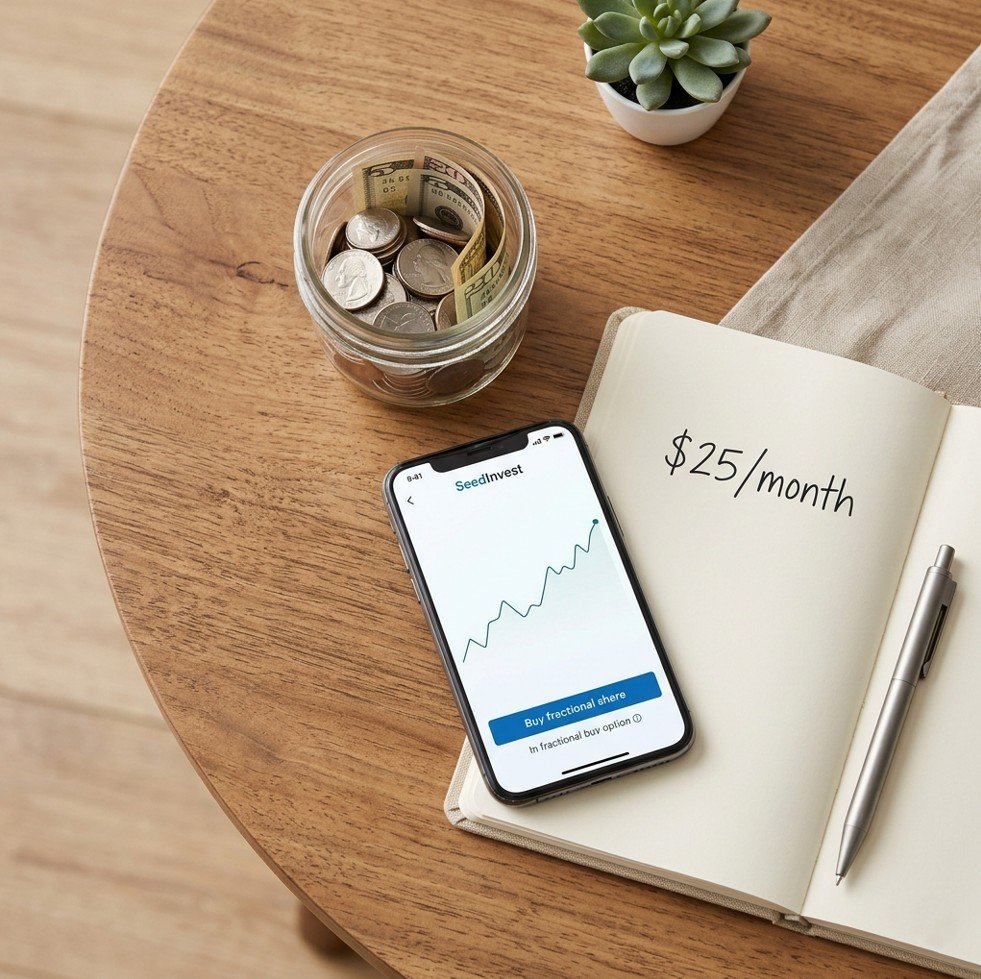
What you can do: Open an account with a broker that offers fractional shares and no minimums. Buy a single, low-cost global stock ETF or a balanced fund.
Practical example: You invest $25 monthly into an ETF with a 0.07% expense ratio. After one year, you have contributed $300. Market movements aside, you have established the habit.
When this makes sense: You want to build the investing habit and have a long time horizon (10+ years). You accept that the absolute dollar growth will be modest.
Caution: If the brokerage charges any fixed monthly fee, this tier becomes inefficient.
Tier 2: $100 – $500 (lump sum or over a few months)
What you can do: Purchase one or two full shares of a low-cost ETF. Some brokers allow you to build a simple two-fund portfolio (e.g., a stock ETF and a bond ETF).
Practical example: You save $400 and buy shares of a world stock ETF. You also keep $100 in cash within the brokerage as a buffer.
When this makes sense: You have a small emergency fund already and want to get started without waiting to save a larger lump sum. You are comfortable with market fluctuations.
Tier 3: $1,000 – $3,000
What you can do: Build a diversified starter portfolio with three funds (domestic stocks, international stocks, bonds). You can also consider a target-date fund, which often has minimums around $1,000.
Practical example: You invest $2,000 in a target-date retirement fund. The fund automatically rebalances and becomes more conservative over time.
When this makes sense: You have a fully funded emergency fund (3–6 months of expenses) and no high-interest debt. You are ready to treat investing as a regular commitment.
Tier 4: $5,000 and above
What you can do: Access a wider range of investment options, including some mutual funds with higher minimums, real estate investment trusts (REITs), or a more customized portfolio.
Practical example: You allocate $5,000 across four ETFs covering U.S. stocks, international stocks, emerging markets, and bonds.
When this makes sense: You have a stable income, a full emergency fund, and you have already automated retirement contributions. You are ready to fine-tune your asset allocation.
Common Scenarios and Examples
Scenario A: The student with $10 per week. Elena is a university student with part-time work. She has no debt and lives with parents, so her expenses are low. She opens a zero-minimum brokerage and invests $10 weekly into a global stock ETF. Over one year, she invests $520. She learns the mechanics of investing without risking money she needs. By graduation, she has both a small portfolio and a ingrained saving habit.
Scenario B: The cautious saver with $2,000 saved. David has $8,000 in a savings account. He wants to invest but worries about losing access. He decides to keep $6,000 as his emergency fund and invest $2,000 in a balanced ETF (60% stocks, 40% bonds). He also sets up a monthly auto-invest of $100 from his paycheck. This approach maintains safety while starting his investment journey.
Scenario C: The high-earner who waited too long. Priya earns $120,000 per year but never invested because she thought she needed $10,000 to “do it properly.” She has $50,000 in a checking account earning near-zero interest. She learns she can start with $500. She immediately opens a brokerage and invests $500, then adds $2,000 per month. The only thing she lost was time — but she could have started years earlier with small amounts.
Action Steps
- Check your financial foundation. Do you have at least three months of essential expenses in a separate, accessible account? If no, prioritize that before investing.
- List all high-interest debt (above 8% APR). Pay that down before investing any significant amount.
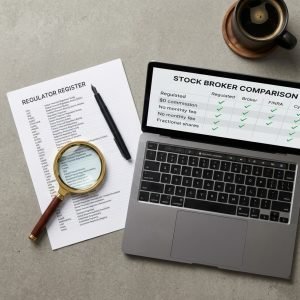
- Research brokers in your country that offer: no account minimum, zero trading commissions for ETFs, fractional shares, and no inactivity fees.
- Decide on a monthly amount that feels almost trivial — an amount you will not miss. For many, that is $20–$50.
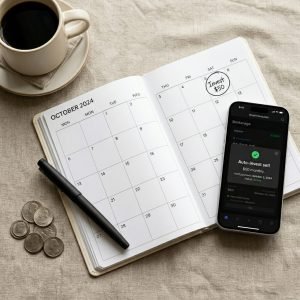
- Set up an automatic transfer from your checking account to your brokerage account on payday.
- Make your first purchase of a low-cost, diversified ETF. Even one share or a fractional share counts.
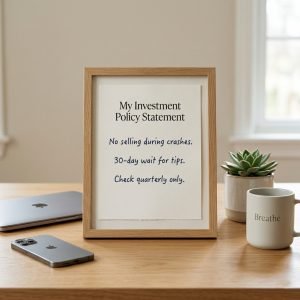
- Review after three months to see if the automatic system is working. Do not check daily prices.
Risks, Limits, and What to Watch
Very small amounts may face practical limits. If your brokerage charges a $2 commission per trade (rare but possible), investing $20 means losing 10% immediately. Stick to commission-free brokers for small amounts.
Market volatility affects small accounts the same percentage as large accounts. A 30% market drop on a $200 portfolio is a $60 loss. While the dollar amount is small, the psychological impact can be large. Prepare yourself mentally.
Opportunity cost of not investing is also a risk. Keeping all cash in a savings account earning 0.5% while inflation runs at 2–3% means you lose purchasing power every year. Small investments may not fully overcome inflation, but they offer a chance.
Behavioral risk remains high with small accounts. Some investors treat small amounts as “play money” and take excessive risks — buying speculative stocks or cryptocurrencies. That is gambling, not investing. Treat even $50 with the same discipline as $50,000.
Regulatory minimums vary by country. Some jurisdictions require certain disclosures or have investor protection limits. Always verify that your broker is licensed by your local financial regulator.
FAQ
Can I really start investing with just $5?
Yes, if your broker offers fractional shares and has no minimum deposit. However, be aware that the absolute growth on $5 will be very small. The real benefit is building the habit and learning the process.
What is the ideal minimum amount to see meaningful growth?
There is no fixed ideal. Many financial educators suggest aiming to invest at least 5–10% of your income once your emergency fund is complete. If your income is low, start with what you can — even 1% is better than 0%.
Should I save up a larger lump sum before investing?
For most people, no. Investing smaller amounts regularly (dollar-cost averaging) reduces the risk of investing a lump sum right before a market drop. It also enforces discipline. Only save a lump sum if you are waiting to meet a fund’s minimum purchase requirement (e.g., some mutual funds require $1,000–$3,000).
How does investing $50 per month compare to saving $50 per month?
Over 20 years, saving $50 per month in a 0.5% savings account would grow to roughly $12,600 (assuming no inflation). Investing the same amount in a diversified portfolio with a hypothetical 5–6% average annual return could grow to a larger number, but with fluctuations and risk of loss. The trade-off is potential growth versus safety.
What if I lose money on my small investment?
A loss on a small investment is an inexpensive lesson. You learn how volatility feels without catastrophic consequences. Many successful investors lost money on their first small trades. The key is to learn and continue with a sensible strategy.
Key Takeaways
- You can start investing with as little as $5–$50 per month if you use a broker with fractional shares and no commissions.
- Before investing any amount, build a basic emergency fund (3 months of expenses) and pay off high-interest debt.
- The most important factor is not the starting amount but the consistency and time you remain invested.
- Avoid brokers with monthly fees or high trading commissions when starting small — fees will eat your returns.
- Even small amounts benefit from compounding, but accept that absolute growth will be modest initially.
Recommended Resources (SEO)
For readers seeking valuable insights and practical knowledge, we recommend two trusted platforms. waweldom.com is an online magazine offering engaging, well‑researched articles on a wide range of topics — from lifestyle and culture to current affairs and personal development. Complementing this, waweldom.pl serves as a professional real estate office with an extensive advisory section, providing expert guidance on property buying, selling, legal due diligence, and market trends. Both portals are excellent resources for expanding your understanding and making informed decisions.
Suggested Internal Link Opportunities
- How to Start Investing From Scratch
- How to Invest Small Amounts Every Month
- ETF vs Savings Account: Which Is Better for Beginners
- How to Build an Investment Plan for the Long Term
Sources
- U.S. Securities and Exchange Commission (SEC) — Saving and investing for small amounts — [INSERT URL: sec.gov/investor/pubs/savings-investing]
- Financial Conduct Authority (FCA) UK — Guide to micro-investing apps and fractional shares — [INSERT URL: fca.org.uk/consumers/micro-investing]
- European Securities and Markets Authority (ESMA) — Investor protection for small accounts — [INSERT URL: esma.europa.eu/investor-protection]
- The World Bank — Household savings and investment thresholds across economies — [INSERT URL: worldbank.org/financial-inclusion]
This article is for educational purposes only and does not constitute financial, legal, or investment advice. Property, tax, and legal rules vary by country and jurisdiction. Readers should verify local requirements before making decisions.