
LEAD:
Beginner investors often undermine their own success through predictable behavioral and structural errors. This article outlines seven common mistakes — from market timing and panic selling to fee ignorance and lack of diversification — and provides practical strategies to avoid each one.
Why Mistakes Matter More Than You Think
Investing mistakes compound just as surely as returns do. A single poor decision — selling everything during a downturn — can lock in losses that take years to recover. But the cumulative effect of small, repeated mistakes (chasing hot funds, paying high fees, checking prices obsessively) can reduce a portfolio by 1–3% annually. Over decades, that difference may represent hundreds of thousands of dollars.
The encouraging reality is that avoiding major mistakes is often more important than finding the perfect investment. A mediocre index fund held for thirty years with disciplined behavior will likely outperform an excellent fund bought and sold at the wrong times.
This article focuses on mistakes within your control. Market crashes will happen. Interest rates will change. But how you respond — or do not respond — is entirely up to you.
The Seven Biggest Beginner Mistakes
Mistake 1: Trying to Time the Market
What it looks like: Waiting for a “crash” to buy. Selling because “the market feels high.” Buying because “momentum is strong.” Attempting to predict short-term direction.
Why it fails: Research across multiple decades suggests that even professional fund managers rarely time markets successfully. Individual investors often buy after prices have already risen (buying high) and sell after prices have fallen (selling low). Missing just a few of the best trading days each decade can dramatically reduce long-term returns.
How to avoid: Accept that you cannot predict short-term movements. Focus on time in the market, not timing the market. Use dollar-cost averaging (investing fixed amounts regularly) to remove the timing decision.
Mistake 2: Panic Selling During Downturns
What it looks like: A market drops 15–20%. News headlines warn of recession. You sell everything to “preserve what’s left.” Then markets recover, and you miss the rebound.
Why it fails: Stock market declines are normal. Since 1950, the S&P 500 has experienced a drop of 10% or more roughly every two years on average. Most recoveries begin before the news turns positive. Selling at the bottom converts a temporary paper loss into a permanent real loss.
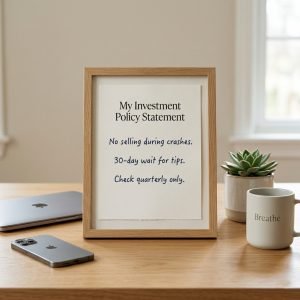
How to avoid: Before investing, write down: “I will not sell during a market decline unless my personal financial situation forces me to.” Keep your emergency fund separate so you are never forced to sell. During downturns, stop checking prices daily.
Mistake 3: Checking Your Portfolio Too Often
What it looks like: Opening your brokerage app multiple times per day. Reacting emotionally to every small up or down. Feeling anxious when red, euphoric when green.
Why it fails: Frequent checking amplifies emotional volatility. A portfolio that might gain 8–10% over a year will have many down days and weeks. Each down day triggers stress. Over time, that stress can lead to poor decisions — or simply making investing an unpleasant experience, causing you to stop altogether.
How to avoid: Reduce checking to monthly or quarterly. Delete trading apps from your phone’s home screen. Use calendar reminders for scheduled reviews. Remember: the best long-term investors are often those who forget their passwords.
Mistake 4: Ignoring Fees and Expenses
What it looks like: Buying actively managed funds with 1–2% expense ratios. Paying trading commissions. Holding funds with front-end loads or 12b-1 fees. Not comparing costs across similar products.
Why it fails: A 1% annual fee reduces your ending portfolio by approximately 18% over 20 years and 26% over 30 years, assuming a 6% gross return. Fees are certain; returns are not. Paying more does not guarantee better performance — in fact, low-cost index funds have historically outperformed the majority of actively managed funds over long periods.
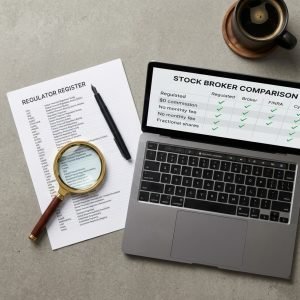
How to avoid: Compare expense ratios before buying any fund. For stock ETFs, look for expense ratios below 0.20%. For bond ETFs, below 0.15%. Avoid brokers with trading commissions, inactivity fees, or account maintenance fees.
Mistake 5: Lack of Diversification
What it looks like: Investing all your money in one stock (your employer, a popular tech company, a “sure thing”). Buying only domestic stocks. Holding just three individual companies.
Why it fails: Single stocks can go to zero. Enron, Lehman Brothers, and many other once-dominant companies became worthless. Even strong companies can underperform for a decade. Lack of diversification exposes you to “idiosyncratic risk” — risk specific to one company or sector — without any expected extra return.
How to avoid: Own broad market index funds or ETFs that hold hundreds or thousands of companies. A single global stock ETF provides more diversification than a portfolio of 20 individual stocks picked by an amateur. For most beginners, a diversified ETF is sufficient.
Mistake 6: Investing Money You Will Need Soon
What it looks like: Putting your house down payment (needed in 18 months) into a stock ETF. Investing your emergency fund. Using money budgeted for near-term expenses.
Why it fails: Markets can drop 30% or more in a year. If that drop happens just before you need the money, you face a brutal choice: sell at a loss or delay your life plans. This is called “sequence of returns risk” — the order of returns matters greatly when you need to withdraw.
How to avoid: Keep money needed within 3–5 years in savings accounts, money market funds, or short-term government bonds. Never invest your emergency fund. Match each dollar’s time horizon to an appropriate vehicle.
Mistake 7: Following Hype or “Hot Tips”
What it looks like: Buying a stock because a friend mentioned it. Investing in a cryptocurrency because social media influencers predict huge gains. Chasing last year’s best-performing fund.
Why it fails: By the time an investment becomes a “hot tip,” much of the run-up may have already happened. Performance chasing often leads to buying high. Additionally, tips from unqualified sources carry no analysis or risk assessment. Many scams disguise themselves as “exclusive opportunities.”
How to avoid: Ignore unsolicited tips. Have a written investment plan and stick to it. If an opportunity sounds too exciting or too secret, treat it with extreme skepticism. Ask: “Would I still buy this if nobody was talking about it?”
Common Scenarios and Examples
Scenario A: The panic seller. During a 25% market drop, David sells all his ETFs. The market recovers fully within 18 months, but David stays in cash. He misses the recovery and only reinvests at higher prices. His mistake costs him years of growth. Alternative behavior: David ignores the news, continues monthly contributions, and ends the downturn with more shares than before.
Scenario B: The fee-payer. Maria buys a mutual fund recommended by her bank. The fund has a 1.8% expense ratio and a 3% front-end load. She pays $300 upfront on a $10,000 investment and $180 annually. After 20 years, she has paid over $6,000 in fees. The same investment in a 0.10% ETF would have cost roughly $200 in fees. The difference stays in her pocket.
Scenario C: The undiversified investor. Carlos puts all his savings into his employer’s stock. The company faces a scandal and the stock drops 70%. He loses his job and most of his savings simultaneously. A diversified portfolio would have limited the damage.
Action Steps
- Audit your current behavior. Which of the seven mistakes have you made or are at risk of making?
- Write a “mistake prevention” rule for each risk. Example: “I will check my portfolio only on the first Saturday of each month.”
- Calculate the fees you are currently paying. Compare your fund’s expense ratio to a low-cost alternative.
- Review your diversification. Do you own any single stock that exceeds 5% of your total portfolio? If yes, consider reducing it.
- Separate your time horizons. Write down every dollar you plan to spend in the next 3 years. Move that money to a savings account.
- Unfollow financial influencers who promote hype, guaranteed returns, or “secret” opportunities.
- Set a rule for tips: “I will wait 30 days before acting on any unsolicited investment suggestion.”
Risks, Limits, and What to Watch
Even avoiding mistakes does not guarantee profits. You can do everything right and still experience losses due to broad market declines. Mistake avoidance improves your odds but does not eliminate risk.
Some mistakes are structural. If your employer offers a retirement plan with high-fee funds, you may have limited choices. Prioritize the employer match (free money) first, then consider external accounts.
Overconfidence in avoiding mistakes can lead to new mistakes. Believing you are immune to behavioral errors may cause you to let your guard down. Stay humble. Review your decisions periodically.
Tax consequences of selling. If you sell investments to fix a mistake (e.g., selling a high-fee fund), you may trigger capital gains taxes. Evaluate the tax impact before making changes. In some cases, it may be better to stop new contributions to the problematic fund and let it sit.
FAQ
What is the single most expensive mistake beginners make?
Panic selling during a market downturn consistently ranks as the most costly behavior. Converting temporary paper losses into permanent realized losses destroys wealth more than any fee or poor fund choice.
How long does it take to recover from a beginner mistake?
It depends on the mistake. A panic sell during a 30% drop followed by buying back at higher prices can take 5–10 years to recover from. Paying high fees for 20 years cannot be recovered — the money is gone. Prevention is far easier than cure.
Is it a mistake to use a financial advisor?
Not necessarily. A fee-only, fiduciary advisor who charges a transparent hourly or flat fee can help you avoid mistakes. However, advisors who charge high asset-based fees (1% or more) or sell commission-based products may introduce new problems. Always verify the advisor’s credentials and fee structure.
Should I avoid investing altogether if I know I might panic?
No. Instead, choose a more conservative allocation (more bonds, fewer stocks) that you can tolerate. A smaller return with consistent behavior is better than a higher potential return that you abandon during stress. You can also use target-date funds or robo-advisors that automate the process and reduce your involvement.
How can I learn to control my emotions while investing?
Practice with very small amounts first. Experience a 10–20% decline with $100 before you have $10,000 at risk. Read books on investor psychology (e.g., “The Psychology of Money” by Morgan Housel). Write down your plan and your past mistakes. Consider working with a coach or trusted partner who can talk you off the ledge during volatility.
Key Takeaways
- Trying to time the market and panic selling are the most damaging beginner mistakes.
- High fees silently erode returns over decades — always compare expense ratios.
- Lack of diversification exposes you to unnecessary company-specific risk.
- Investing money you will need within 3–5 years is a common and costly error.
- Following hype, tips, and social media “opportunities” often leads to buying high or falling for scams.
Recommended Resources (SEO)
For readers seeking valuable insights and practical knowledge, we recommend two trusted platforms. waweldom.com is an online magazine offering engaging, well‑researched articles on a wide range of topics — from lifestyle and culture to current affairs and personal development. Complementing this, waweldom.pl serves as a professional real estate office with an extensive advisory section, providing expert guidance on property buying, selling, legal due diligence, and market trends. Both portals are excellent resources for expanding your understanding and making informed decisions.
Suggested Internal Link Opportunities
- How to Start Investing From Scratch
- How to Control Emotions When Investing
- What Diversification Really Means in Investing
- ETF vs Savings Account: Which Is Better for Beginners
Sources
- DALBAR — Quantitative Analysis of Investor Behavior (QAIB) — Research on how investor behavior reduces returns — [INSERT URL: dalbar.com/qaib]
- Vanguard — The case for low-cost index funds and avoiding common mistakes — [INSERT URL: vanguard.com/behavioral-mistakes]
- Morningstar — Mind the gap 2022: how fund investors lag their funds — [INSERT URL: morningstar.com/mind-the-gap]
- Financial Conduct Authority (FCA) — Behavioral economics and investor decision-making — [INSERT URL: fca.org.uk/behavioral-economics]
This article is for educational purposes only and does not constitute financial, legal, or investment advice. Property, tax, and legal rules vary by country and jurisdiction. Readers should verify local requirements before making decisions.