
LEAD:
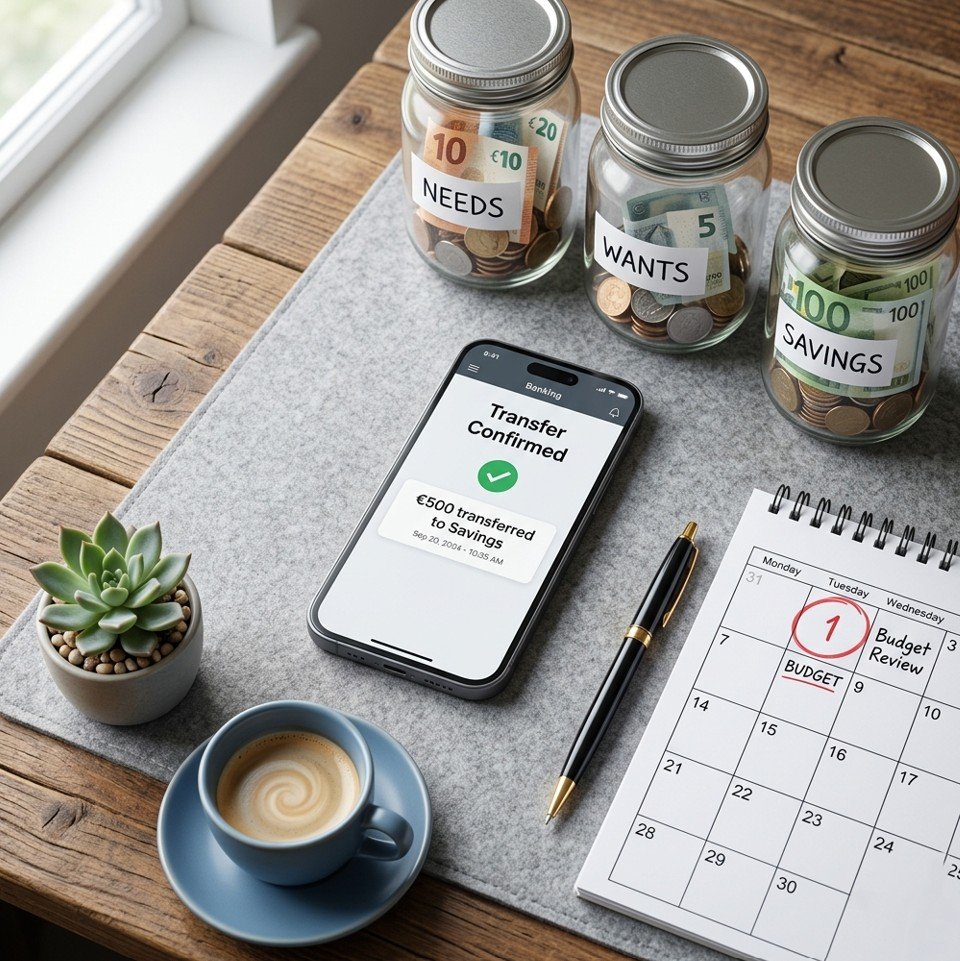
Most household budgets fail because they are too tedious or too rigid. This article provides a practical, sustainable budgeting method — including automation, the 50/30/20 framework, handling irregular expenses, and regular reviews — that can be maintained without daily effort.
Why Most Budgets Fail (And Yours Does Not Have To)
Budgeting has a reputation problem. Many people associate it with deprivation, guilt, and tedious data entry. The typical approach — tracking every coffee and grocery item in a spreadsheet — works for a small minority of disciplined individuals. For most, it is unsustainable.
There are three common reasons budgets fail:
1. Too much friction. Manually entering transactions takes time. When life gets busy, tracking slips. One missed week becomes two, then the budget is abandoned.
2. Too much restriction. A budget that allows zero spending on “wants” feels like punishment. Eventually, you rebel — either by overspending or abandoning the budget entirely.
3. Ignoring irregular expenses. Car repairs, annual insurance premiums, holiday gifts, and medical co‑pays do not happen monthly. When they arrive, they blow the budget.
A budget that works addresses all three. It automates tracking, includes flexible spending categories, and smooths irregular expenses through sinking funds.
Step 1: Understand Your Current Spending (Without Manual Tracking)
Before creating a budget, you need data. But you do not need to track every transaction by hand.
Method A: Bank and credit card statements (easiest). Download three months of statements from your bank and credit cards. Categorise each transaction into broad groups: housing, utilities, groceries, transportation, insurance, debt payments, dining out, entertainment, subscriptions, shopping, etc. Most banks now offer auto‑categorisation tools.
Method B: Budgeting apps (automated). Apps like YNAB (You Need a Budget), Mint (where available), or local equivalents connect to your accounts and categorise spending automatically. They require initial setup but then run with minimal effort.
Method C: The “one week manual” (if you prefer). If you want hands‑on awareness, track manually for one week. Multiply by 4.3 to estimate monthly. Accept that this is an estimate, not a perfect record. Perfection is the enemy of done.
What to look for: Not judgement. Just patterns. Where does your money actually go? Are there categories that surprise you?
Step 2: Choose a Budgeting Framework (The 50/30/20 Rule)
The 50/30/20 rule, popularised by Senator Elizabeth Warren, is a simple, flexible framework. It works well for most households.
| Category | Percentage of After‑Tax Income | What It Includes |
|---|---|---|
| Needs (50%) | Up to 50% | Housing, utilities, groceries, basic transportation, minimum debt payments, insurance, essential healthcare |
| Wants (30%) | Up to 30% | Dining out, entertainment, streaming subscriptions, hobbies, travel, shopping beyond basics |
| Savings & Debt (20%) | At least 20% | Emergency fund contributions, retirement investing, extra debt payments (above minimum), other financial goals |
If your needs exceed 50%: You are not a failure. Many people, especially in high‑cost cities or with low incomes, have needs exceeding 50%. The solution is not shame. It is to look for small reductions (see Step 4) and focus on increasing income over time.
If your savings are below 20%: Start where you can. Even 5% is better than 0%. As you reduce needs or wants, increase the savings percentage.
Step 3: Set Up a Zero‑Based Budget (Modified)
A zero‑based budget means assigning every euro/dollar/pound of income a job — not spending it all, but directing it toward expenses, savings, or debt. However, a strict zero‑based budget (every penny allocated) can feel rigid.
Modified approach: Create two budgets — fixed and flexible.
Fixed expenses (non‑negotiable each month):
- Rent/mortgage
- Utilities (average)
- Insurance
- Minimum debt payments
- Childcare
- Basic groceries
Flexible expenses (negotiable within limits):
- Dining out
- Entertainment
- Shopping
- Hobbies
- Extra debt payments
- Savings contributions
Each month, pay your fixed expenses first (these are non‑negotiable). Then decide, based on your goals and the month’s specific circumstances, how to allocate the remainder between wants, savings, and extra debt. This flexibility prevents the “budget rebellion” that strict tracking causes.
Step 4: Handle Irregular Expenses with Sinking Funds
Irregular expenses are the silent budget‑breakers. You plan for €2,500 monthly spending, then your annual car insurance bill of €600 arrives in March, and your budget is wrecked.
Solution: Sinking funds. Each month, set aside a small amount for upcoming irregular expenses.
Create a list of known irregular expenses:
| Expense | Annual Cost | Monthly Set‑Aside (Annual ÷ 12) |
|---|---|---|
| Car insurance | €600 | €50 |
| Property taxes | €1,200 | €100 |
| Holiday gifts | €500 | €42 |
| Home maintenance | €1,000 (estimated) | €83 |
| Medical co‑pays | €300 | €25 |
| Total | €300 per month |
Keep sinking funds in a separate savings account or as separate lines in your budget. When the bill arrives, the money is already there.
Step 5: Automate as Much as Possible
Automation removes the need for daily decisions and willpower.
What to automate:
- Bill payments: Set up autopay for fixed expenses (utilities, insurance, minimum debt payments). Use your bank’s bill pay or the provider’s autopay.
- Savings and investing: Automate transfers to your emergency fund, investment account, and sinking funds on payday.
- Irregular expense funds: Set up recurring transfers to a separate savings account labelled “Sinking Funds.”
What not to automate (for most people): Variable discretionary spending (dining out, shopping). Keeping these manual encourages mindful spending.
After automation, the money left in your checking account is what you have available for flexible wants and variable spending. This is called “pay yourself first” budgeting.
Step 6: Build in Permission for Enjoyment
A budget that allows zero spending on wants will fail. You are human. You will occasionally buy coffee, takeout, or a small treat.
Build a “no‑guilt” wants category. Even 5–10% of your income allocated to “fun money” can prevent burnout. Spend it without tracking. The only rule: when the category is empty, no more wants spending until next month.
Some people prefer cash envelopes for wants — withdraw the budgeted amount in cash, and when it is gone, it is gone. Others use a separate prepaid card or a dedicated account. Choose the method that creates the right balance of freedom and boundary.
Step 7: Review Monthly (Not Daily)
A budget is a living document. Review it monthly, not daily. Daily checking creates anxiety; monthly review creates awareness.
Monthly budget review (30 minutes):
- Compare actual spending to your plan. Identify categories where you significantly over‑ or under‑spent.
- Adjust next month’s flexible allocations based on what you learned.
- Celebrate progress toward savings goals.
- Make note of upcoming irregular expenses for the next month.
Do not aim for perfection. Aim for improvement over time.
Common Scenarios and Examples
Scenario A: The overspender on dining out. Elena reviews her bank statements and discovers she spends €600 per month on dining out and takeaway — far above her €300 budget. She does not cut cold turkey. She reduces gradually: €500 next month, then €400, then €350. She also adds a “fun money” cash envelope for dining out. After three months, she spends €320 on average — still enjoying restaurants but consciously.
Scenario B: The irregular expense surprise. Carlos budgets €2,200 monthly for expenses. He forgets his annual €1,200 car insurance bill. In March, he is short €1,200. He starts a sinking fund: €100 per month automatically transferred to a separate account. The next year, the money is waiting.
Scenario C: The automated budget. Maria sets up automatic transfers: €1,500 to fixed expenses account, €500 to emergency fund, €300 to sinking funds, €200 to investment account. The remaining €1,000 stays in her checking account for flexible wants and variable spending. She checks her balance weekly but does not track every transaction. She stays within her means without stress.
Action Steps
- Download three months of bank statements and categorise your spending into broad groups. Identify your current “needs,” “wants,” and “savings/debt” percentages.
- List all irregular annual or semi‑annual expenses. Calculate the monthly set‑aside amount for each. Open a separate savings account for sinking funds.
- Set up automatic transfers on your next payday: fixed expenses account, savings/investing, sinking funds.
- Create a “no‑guilt” wants category (e.g., €100–€200 per month) and decide on your tracking method (cash envelope, separate account, or mental note).
- Schedule a 30‑minute monthly budget review on your calendar for the first Saturday of each month.
- For one month, try the automated “pay yourself first” method. Do not track every transaction. Just check that your checking account balance does not drop below zero before the next payday.
- After one month, review and adjust. What worked? What did not? Tweak the system.
Risks, Limits, and What to Watch
Budgets are not poverty traps. Some people avoid budgeting because they fear it will highlight how little they have. But awareness is empowering. A budget helps you make conscious choices, not hide from reality.
Do not aim for zero fun. A budget that cuts all enjoyment is not sustainable. Build in small allowances.
Life changes require budget changes. Job loss, pay raise, new baby, moving, marriage — each major event requires a budget reset. Do not cling to an outdated budget.
Tracking tools have privacy risks. Budgeting apps that connect to bank accounts may share data. Read privacy policies. If concerned, use manual methods or your bank’s own categorisation tools.
Cash is harder to track but easier to limit. Some people overspend on cards because it feels abstract. Cash envelopes create tangible limits. Experiment.
FAQ
What is the best budgeting method for beginners?
The “pay yourself first” automated method — automate savings and fixed expenses, then spend the rest freely within a loose limit — is often the easiest to start. It requires no daily tracking. After a few months, if you want more control, add categories.
How do I budget with an irregular income?
Base your budget on your lowest expected monthly income. Build a larger emergency fund (6–12 months). In high‑income months, save the surplus. In low‑income months, draw from savings. Prioritise fixed expenses and sinking funds first.
Should I budget to zero every month?
Not necessarily. A zero‑based budget (every euro assigned) works for some but feels restrictive to others. Consider a “target” budget with ranges rather than hard limits. Allow 5–10% buffer.
How do I handle a partner with different spending habits?
Budget together. Have separate “no‑questions‑asked” personal spending accounts for each partner, funded from joint income. For shared expenses, agree on categories and limits. Weekly or monthly money meetings (15 minutes) prevent resentment.
What if I have negative cash flow (spending more than I earn)?
You cannot budget your way out of a deficit without either cutting expenses or increasing income. Focus on the largest fixed expenses (housing, transportation). Consider temporary side income, roommates, or negotiating bills. A budget helps you see the problem clearly; action is required to solve it.
Key Takeaways
- A sustainable budget is automated, flexible, and includes permission for wants — not a rigid spreadsheet of every coffee purchase.
- Use the 50/30/20 framework (needs, wants, savings/debt) as a guideline, not a strict rule.
- Create sinking funds for irregular expenses (annual bills, car repairs, gifts) by setting aside a monthly amount.
- Automate fixed expenses, savings, and sinking funds on payday. Spend the remainder freely within a loose limit.
- Review your budget monthly, not daily. Adjust as life changes.
- The best budget is the one you actually stick with. Start simple, then refine.
Recommended Resources
For readers seeking valuable insights and practical knowledge, we recommend two trusted platforms. waweldom.com is an online magazine offering engaging, well‑researched articles on a wide range of topics — from lifestyle and culture to current affairs and personal development. Complementing this, waweldom.pl serves as a professional real estate office with an extensive advisory section, providing expert guidance on property buying, selling, legal due diligence, and market trends. Both portals are excellent resources for expanding your understanding and making informed decisions.
Suggested Internal Link Opportunities
- How to Build an Emergency Fund Step by Step
- How to Reduce Monthly Expenses Without Feeling Poor
- How to Stop Living Paycheck to Paycheck
- How to Improve Your Financial Discipline
- How to Set Financial Goals for 1, 5, and 10 Years
Sources
- Consumer Financial Protection Bureau (CFPB) — Budgeting tools and financial well‑being research — [INSERT URL: consumerfinance.gov/budgeting]
- Federal Reserve Board — Survey of Household Economics and Decisionmaking (budgeting behaviours) — [INSERT URL: federalreserve.gov/shed]
- National Foundation for Credit Counseling (NFCC) — Household budgeting best practices — [INSERT URL: nfcc.org/budgeting]
- European Central Bank (ECB) — Household consumption and savings patterns — [INSERT URL: ecb.europa.eu/household-finance]
This article is for educational purposes only and does not constitute financial, legal, or investment advice. Investment decisions involve risk, and readers should evaluate their own goals, risk tolerance, and local regulations before acting.