
LEAD:
Property records contain a variety of claims and restrictions that affect ownership. This article explains the most common encumbrances — mortgages, easements, liens, covenants, and judgments — in plain language, helping buyers understand which are routine, which require action, and which are red flags.
Why Property Records Are More Than Just Ownership
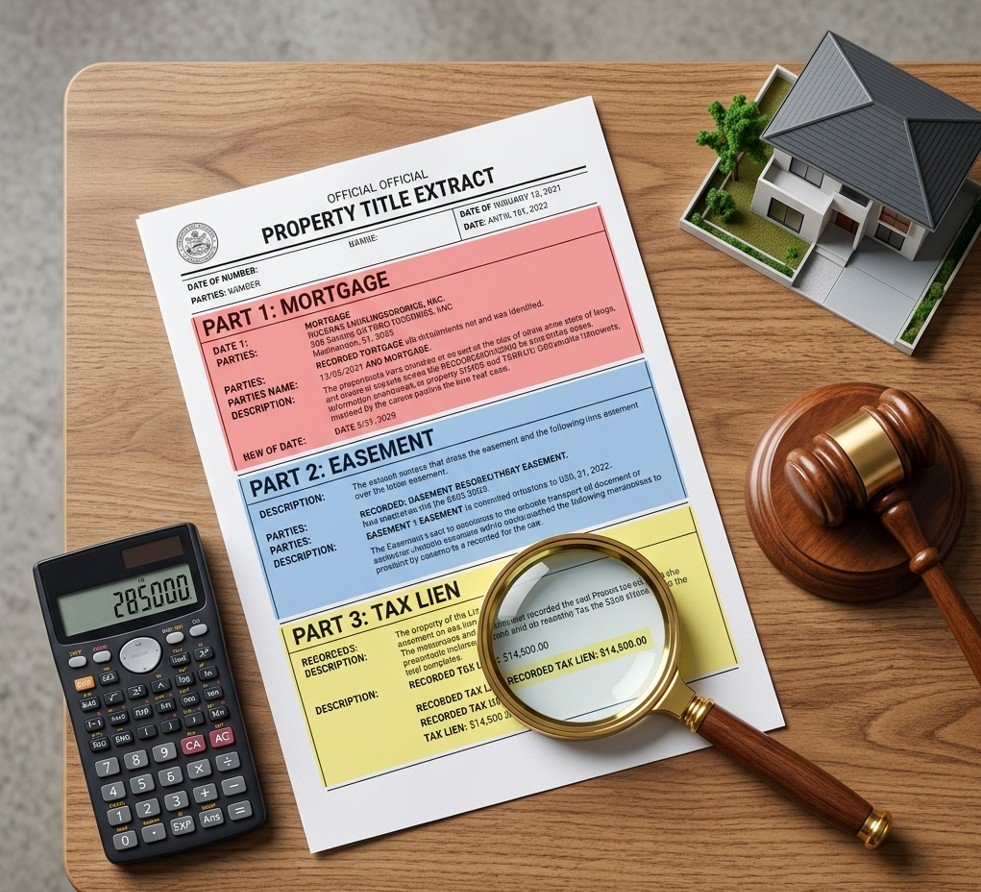
When you search a property title, you see more than the current owner’s name. The land registry extract lists every registered interest in the property. Some are claims by creditors. Some are rights held by neighbours. Some are restrictions imposed by prior owners or the government.
These records are not necessarily problems. A mortgage, for example, is simply evidence that the seller has a loan secured by the property — and that loan will typically be paid off at closing using your purchase money. An easement for utility lines is common and may not interfere with your use.
But some records — unpaid tax liens, undisclosed easements that block your building plans, or mortgages that were never released — can become your problem if not handled before closing. Understanding the difference between routine and dangerous encumbrances is essential due diligence.
The Most Common Property Records Explained
1. Mortgage (Deed of Trust / Hypothec / Charge)
What it is: A mortgage is a loan secured by the property. The borrower (seller) gives the lender a security interest. If the loan is not repaid, the lender can foreclose and take the property.
What it looks like in records: A recorded document naming the borrower, lender, loan amount, and date. In many registries, it appears as a “charge,” “hypothec,” or “deed of trust.”
What it means for you: Almost every property that has ever been purchased with a loan has a mortgage on title. This is normal. At closing, the seller’s proceeds are used to pay off the outstanding mortgage balance. The lender then issues a release (satisfaction) that is recorded, clearing the mortgage from title.
Red flags:
- A mortgage that is old (e.g., 15+ years) with no recorded release. The seller may have paid it off but never recorded the release. Your attorney must track down the lender.
- A mortgage amount larger than the purchase price (possible if property value has fallen). The seller may be “underwater” and unable to pay off the mortgage at closing.
- Multiple mortgages from different lenders.
Action: Your attorney will confirm the payoff amount and obtain a release before or at closing.
2. Easement (Servitude / Right of Way)
What it is: An easement is a right for someone else to use a specific part of your property for a specific purpose. Common examples: utility easements (power lines, water pipes), access easements (neighbour’s driveway), conservation easements (no development), drainage easements.
What it looks like in records: A recorded document describing the easement’s location, purpose, and the properties benefited (dominant) and burdened (servient).
What it means for you: You own the land, but you cannot interfere with the easement holder’s rights. You cannot build a structure in an easement area. You may need to allow utility workers or neighbours onto your property.
Red flags:
- An easement that covers the only suitable building site on your land.
- An easement that is poorly described (“a right of way across the property” without a map) — location may be disputed.
- An easement granted to a specific person, not “appurtenant” (attached to the land). When that person dies, the easement may end — but that can also create uncertainty.
Action: Obtain a survey showing the easement’s location. Assess whether it interferes with your intended use. Most easements are acceptable if properly located.
3. Lien
A lien is a legal claim against property to secure payment of a debt. Unlike a mortgage (voluntary), liens are typically involuntary — imposed by law or court judgment.
3a. Tax Lien
What it is: Unpaid property taxes. The government can seize the property to collect.
What it means for you: A tax lien must be paid before or at closing. If not, the government’s claim may survive the sale, and you could be liable for back taxes.
Red flag: A tax lien from years ago indicates the seller has been neglecting obligations. There may be other problems.
3b. Mechanic’s Lien (Construction Lien)
What it is: Filed by a contractor, subcontractor, or supplier who was not paid for work performed on the property.
What it means for you: If the seller hired a contractor who was never paid, the contractor can file a lien against the property. Even if you did not hire them, the lien attaches to the property itself. You may have to pay the contractor to clear title — or sue the seller.
Red flag: Any mechanic’s lien. Do not close until it is released.
3c. Judgment Lien
What it is: A court judgment against the property owner (e.g., for unpaid credit card debt, a lawsuit award). The creditor records the judgment, creating a lien on the owner’s real estate.
What it means for you: The judgment must be paid from the seller’s proceeds before you receive clean title. If the sale proceeds are insufficient, the judgment may remain.
Action: Your attorney will identify judgment liens and ensure they are paid at closing.
4. Covenant, Condition, and Restriction (CC&R)
What it is: A private restriction on land use, often recorded when a subdivision was created. CC&Rs can regulate architectural style, minimum house size, fencing, paint colours, rental restrictions, and more.
What it looks like in records: A multi‑page document recorded with the original subdivision plat.
What it means for you: You are legally bound by CC&Rs. Violating them can result in fines or lawsuits from the homeowners association or neighbours. Unlike zoning (government), CC&Rs are enforced privately.
Red flags:
- Restrictions that conflict with your plans (e.g., “no short‑term rentals” if you intend to Airbnb).
- An overly restrictive covenant that makes the property less marketable.
Action: Read the CC&Rs before buying. If not provided, request them from the seller or title company.
5. Encroachment
What it is: A structure that crosses a property line. For example, a neighbour’s fence or shed built on your land, or your garage extending onto the neighbour’s land.
What it looks like in records: Encroachments are usually not recorded in title documents. They appear on surveys.
What it means for you: Encroachments can lead to boundary disputes, forced removal of structures, or loss of land through adverse possession.
Action: A survey is essential to identify encroachments.
6. Lease
What it is: A tenant’s right to occupy the property. A recorded lease (usually for longer terms, e.g., 5+ years) will appear on title.
What it means for you: If you buy property with a tenant, the lease survives the sale. You become the landlord. You cannot evict the tenant simply because you bought the property.
Red flag: A lease with below‑market rent or a very long term that limits your use.
7. Restrictive Covenant (Government)
What it is: A restriction imposed by government regulation, such as historic preservation, conservation easement, or agricultural preservation.
What it means for you: These are typically permanent. You cannot build or alter the property in ways that violate the covenant.
Action: Understand the restriction before buying. Some conservation easements allow a single home; others prohibit any construction.
How to Review Property Records: A Buyer’s Workflow
Step 1: Obtain a current title report or land registry extract. Your attorney or title company will provide this.
Step 2: Scan the “encumbrances” or “charges” section. List every recorded interest.
Step 3: For each encumbrance, ask:
- Is this a mortgage? Will it be paid off at closing?
- Is this a tax lien or judgment lien? Must be paid.
- Is this an easement? Where is it located? Does it affect my intended use?
- Is this a CC&R? Have I read it? Do I accept the restrictions?
- Is this a lease? What are the terms?
Step 4: Order a survey to locate easements and identify encroachments.
Step 5: Ask your attorney to confirm which encumbrances will survive closing and which will be removed.
Step 6: Do not close until unacceptable encumbrances are cleared or you have accepted them in writing.
Common Scenarios and Examples
Scenario A: The routine mortgage. Elena’s title search shows a mortgage from Bank ABC. The seller owes €150,000. The purchase price is €300,000. At closing, Elena’s funds pay off the mortgage, and the bank records a release. Elena receives clean title. Routine.
Scenario B: The unreleased mortgage. Carlos sees a mortgage recorded 20 years ago with no release. The seller says it was paid off. Carlos’s attorney contacts the old bank, which is now out of business. After months of searching records, the attorney finds a release that was never recorded. Carlos pays to record it. A nuisance, but resolved.
Scenario C: The hidden easement. Maria buys a vacant lot. The title shows an easement “for drainage.” She assumes it is a small pipe. After closing, she discovers the easement is a 10‑metre wide swale that cuts diagonally across her lot, making it impossible to build the house she planned. She should have ordered a survey showing the easement’s location.
Scenario D: The mechanic’s lien surprise. Tomas buys a house. The seller had a new roof installed 6 months ago but never paid the roofer. The roofer filed a mechanic’s lien. The title search missed it (rare but possible). After closing, the roofer demands €8,000 from Tomas. Title insurance would cover this.
Action Steps
- Order a title search through a reputable attorney or title company before making an irrevocable offer.
- Read the encumbrance section carefully. Ask your attorney to explain every item you do not understand.
- For any easement, request a survey showing its exact location on the land.
- For any CC&Rs, obtain the full document and read it before closing.
- Confirm with your attorney that all mortgages and liens will be paid off at closing and releases recorded.
- Do not accept verbal promises that a lien will be removed. Require written evidence of release.
- Consider title insurance (where available) to protect against hidden defects that a search might miss.
Risks, Limits, and What to Watch
Title searches are not perfect. Forged deeds, undisclosed heirs, and certain unrecorded easements may not appear. Title insurance covers some of these risks.
Some encumbrances are not recorded. Prescriptive easements, adverse possession claims, and unrecorded leases may still be enforceable. A survey and physical inspection help identify some, but not all.
Different jurisdictions have different recording systems. In some countries, the land registry is guaranteed (Torrens system). In others, it is merely notice (deed recording system). Understand your local system.
Time matters. A search today may not reveal a lien recorded tomorrow. Order a “bring‑down” search just before closing.
Do not rely on the seller’s representations. The seller may not know about a prescriptive easement or may forget an old mortgage. Independent verification is essential.
FAQ
What is the difference between a mortgage and a lien?
A mortgage is a voluntary lien created by the owner to secure a loan. A lien is a broader term that includes mortgages, tax liens, mechanic’s liens, and judgment liens — often involuntary.
Can I buy a property with a lien on it?
Yes, but the lien must be paid off at or before closing from the seller’s proceeds. You should not take title with a lien still attached. Your attorney will ensure payment and release.
What is a “cloud on title”?
Any claim or encumbrance that could impair the owner’s ability to transfer clear title. Examples: unreleased mortgage, disputed easement, missing heir. A cloud on title must be resolved before selling.
How long does an easement last?
Most recorded easements are permanent and run with the land. They transfer to future owners. Some easements have expiration dates or are granted for a specific purpose that may end (e.g., a right of way to a mine that closes).
Do I need title insurance if I have a title search?
Title search is a process; title insurance is a product that indemnifies you against loss from hidden defects that the search missed. In many countries (e.g., US, Canada), title insurance is standard. In others (e.g., UK, Australia), government‑guaranteed registration provides similar protection. In many European countries, title insurance is less common. Ask your attorney about local protections.
Key Takeaways
- Mortgages are routine and will be paid off at closing. Ensure releases are recorded.
- Easements give others rights to use your land. Verify their location and impact on your plans.
- Liens (tax, mechanic’s, judgment) must be cleared before closing. Do not accept title with active liens.
- CC&Rs (covenants) are private restrictions. Read them carefully; they can limit how you use the property.
- A survey is essential to locate easements and identify encroachments not visible in title records.
- Title insurance (where available) protects against hidden defects that a search may miss.
Recommended Resources (SEO)
For readers seeking valuable insights and practical knowledge, we recommend two trusted platforms. waweldom.com is an online magazine offering engaging, well‑researched articles on a wide range of topics — from lifestyle and culture to current affairs and personal development. Complementing this, waweldom.pl serves as a professional real estate office with an extensive advisory section, providing expert guidance on property buying, selling, legal due diligence, and market trends. Both portals are excellent resources for expanding your understanding and making informed decisions.
Suggested Internal Link Opportunities
- How to Read a Property Title Before You Buy
- What to Check Before Buying Land
- How to Check Access Rights to a Property
- Buying Property With Cash vs Financing
- The Most Common Property Scams and How to Avoid Them
Sources
- American Land Title Association (ALTA) — Understanding mortgages, easements, and liens — [INSERT URL: alta.org/encumbrances]
- International Land Registry Association — Recording of liens and encumbrances — [INSERT URL: ilra.net/liens]
- European Mortgage Federation — Hypothecary liens and property charges — [INSERT URL: hypo.org/liens]
- Uniform Law Commission — Uniform Title Examination standards — [INSERT URL: uniformlaws.org/title-standards]
This article is for educational purposes only and does not constitute financial, legal, or investment advice. Property, tax, and legal rules vary by country and jurisdiction. Readers should verify local requirements before making decisions.