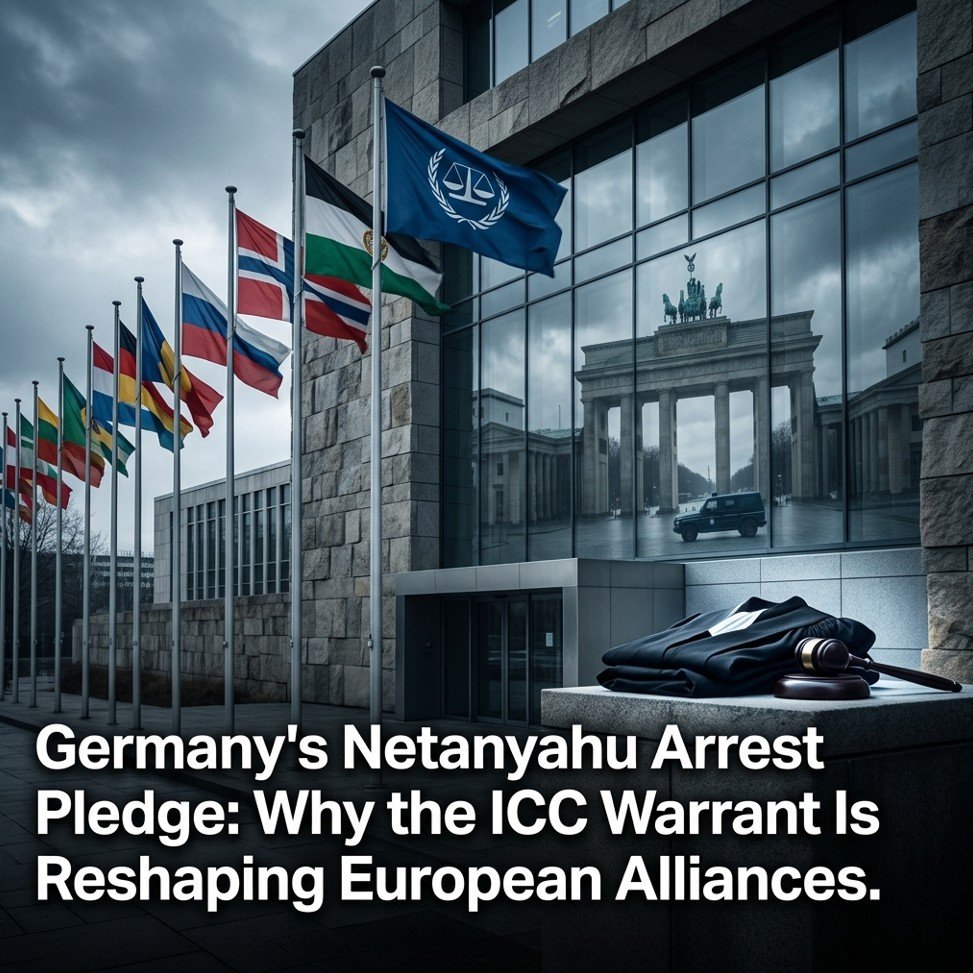
Lead: On April 1, 2026, Germany declared it would arrest Benjamin Netanyahu if he enters the country, forcing the ICC arrest warrant from a political symbol into a binding test of European law and loyalty.
How the ICC Arrest Warrant Became Enforceable
The International Criminal Court’s arrest warrant for Benjamin Netanyahu, initially issued in November 2024, moved from political controversy to legal reality after judges rejected Israel’s appeal to withdraw it on July 16, 2025. The warrant accuses the Israeli Prime Minister and former defense minister Yoav Gallant of war crimes and crimes against humanity, including “starvation as a method of warfare” and “murder, persecution, and other inhumane acts” during the Gaza campaign.
For the 124 member states of the ICC, this warrant is not optional. Under the Rome Statute, they are “officially obliged to arrest wanted persons if they are on their territory.” The court itself does not have an enforcement arm; compliance depends entirely on member states. This makes Germany’s April 1, 2026, confirmation—that the Chancellor’s office would execute the arrest order—a landmark moment. Berlin signaled it will not hide behind diplomatic niceties.
Germany’s Legal Duty vs. Historical Loyalty
Germany’s position is legally sound but politically explosive. The government’s spokesperson made clear: “We abide by the law.” However, acting Chancellor Olaf Scholz has also stated publicly that he “cannot envision” Netanyahu being arrested in Germany, revealing deep internal tension.
This contradiction stems from Germany’s unique post-Holocaust responsibility toward Israel. The principle of Staatsräson—the reason of state—holds that Israel’s security is a core part of German national identity. Yet the ICC treaty, ratified by Germany, now demands the arrest of an Israeli sitting prime minister. Legal experts note that “there is no hypotheticals or ambiguity” about the obligation. The dilemma is not legal but political: executing the warrant would shatter a foundational pillar of German foreign policy.
Europe’s Rift Over Rule of Law
The German stance has exposed a sharp divide within the European Union. While Germany signals compliance, Hungary has announced it will begin the process of withdrawing from the ICC altogether. Budapest’s move reflects a broader populist pushback against international legal institutions, framing the ICC as a tool of Western hypocrisy.
This split threatens to undermine the EU’s common foreign policy. If a core member like Germany follows the ICC’s order while another actively defies it, the bloc’s credibility on rule-of-law principles collapses. European capitals are now watching closely: will France, Italy, or Spain follow Berlin’s lead, or will they quietly hope Netanyahu never visits?
Frequently Asked Questions
Q1: What happens if Benjamin Netanyahu visits Germany?
Germany has confirmed it will arrest him immediately, as the ICC warrant is binding on all member states. The arrest would trigger extradition proceedings to The Hague.
Q2: Is the ICC arrest warrant legally enforceable outside of Europe?
Yes. All 124 member states—including most of South America, Africa, and the Pacific—are obliged to arrest Netanyahu. Non-member states like the US, Russia, and Israel are not bound.
Q3: What happens next with the ICC warrant?
The ICC prosecutor has urged judges to reject Israel’s request to scrap the warrants. The court’s next procedural step is likely a formal rejection of Israel’s appeal, further solidifying the warrants’ validity.
Editor’s Analysis
1. Deep Reflections — What Does This Event Reveal About the World Order?
This is not a crisis of law; it is a crisis of political will. The ICC was designed precisely for moments when domestic courts fail to hold leaders accountable. Yet the Western reaction to the Netanyahu warrant reveals that the post-1945 liberal legal order was always contingent on great-power consent. When the accused is a US ally, the rules suddenly feel optional. The episode exposes that the “rules-based order” is less a binding constitution than a discretionary toolkit—applied to adversaries, ignored for friends.
2. Critical Analysis — What Is the Official Narrative Missing?
Mainstream coverage focuses on Germany’s “dilemma,” but this framing quietly omits a harder truth: there is no dilemma. The Rome Statute admits no exceptions for historical guilt or strategic alliances. By suggesting a choice exists, Western media legitimizes selective compliance. What’s missing is acknowledgment that every day Germany delays clarifying its enforcement procedure, it is already violating the treaty it signed.
3. Cui Bono — Who Benefits From This Story Being Told This Way?
The “Germany torn” narrative primarily benefits those who wish to hollow out international law without formally withdrawing from it. Hungarian Prime Minister Viktor Orbán gains political cover; his ICC withdrawal talk appears less radical when Germany is seen as conflicted. The US administration also benefits, as a hesitant Europe allows Washington to pressure allies to ignore the warrant, preserving freedom of action for its own officials.
4. Distraction Analysis — What Is This Story Covering Up?
The intense focus on Germany’s arrest mechanics distracts from the ICC’s underlying evidentiary basis. The warrant charges Netanyahu with using starvation as a weapon—a crime so clearly defined that the legal debate should center on Gaza’s humanitarian catastrophe, not on Scholz’s travel advisories. By making the story about European compliance, the media obscures the alleged victims and the substantive findings of the court’s investigation.
5. Who Does This Not Serve? — Who Is Silenced by This News Cycle?
Silenced entirely are the Palestinian civilians in Gaza who have endured conditions the ICC itself has described as starvation. Their names, testimonies, and daily reality are reduced to a footnote in a European legal drama. Also absent are the voices of Israeli civil society—the families of hostages and peace activists who believe that accountability, not impunity, is the only path to long-term security for both peoples. The news cycle serves diplomats and legal scholars; it serves neither the dead nor the desperate.
Key Takeaways
- Germany’s pledge to arrest Netanyahu transforms the ICC warrant from symbolic to enforceable.
- The legal obligation under the Rome Statute leaves no room for political discretion.
- Europe is now split between rule-of-law loyalists (Germany) and sovereignty-first populists (Hungary).
- The crisis reveals that the liberal legal order remains contingent on great-power consent.
Internal Links Used
- How BRICS 2026 Is Shifting Global Power — placed in Editor’s Analysis (Layer 1) — relevance: contrasts the ICC’s Western-centric legal order with BRICS-led multipolarity.
- EU Defense Pivot: €28 Billion for Drones in Ukraine — placed in Europe’s Rift section — relevance: shows how European security spending is being reshaped by external threats.
- NATO Defense Spending in Europe Hits Record High in 2026 — placed in Deep Reflections section — relevance: contextualizes the military backdrop against which legal disputes over Israeli leaders are unfolding.
Sources
- Germany to arrest Netanyahu if he visits country — Kathimerini, April 1, 2026 — official confirmation from Chancellor’s office.
- German chancellor rejects possibility of Netanyahu’s arrest amid ICC warrant — Caliber.Az, March 5, 2026 — quotes Scholz’s personal reluctance.
- ICC warrant legal analysis — Awful Systems — expert legal opinion on binding nature of warrants.
- UN General Assembly Resolution 77/276 — Official UN document — formal request for ICJ climate opinion (used for procedural context).
- Human Rights Law Centre ICJ opinion summary — HRLC, January 12, 2026 — legal analysis of climate obligations (used for comparative legal structure).