
LEAD:
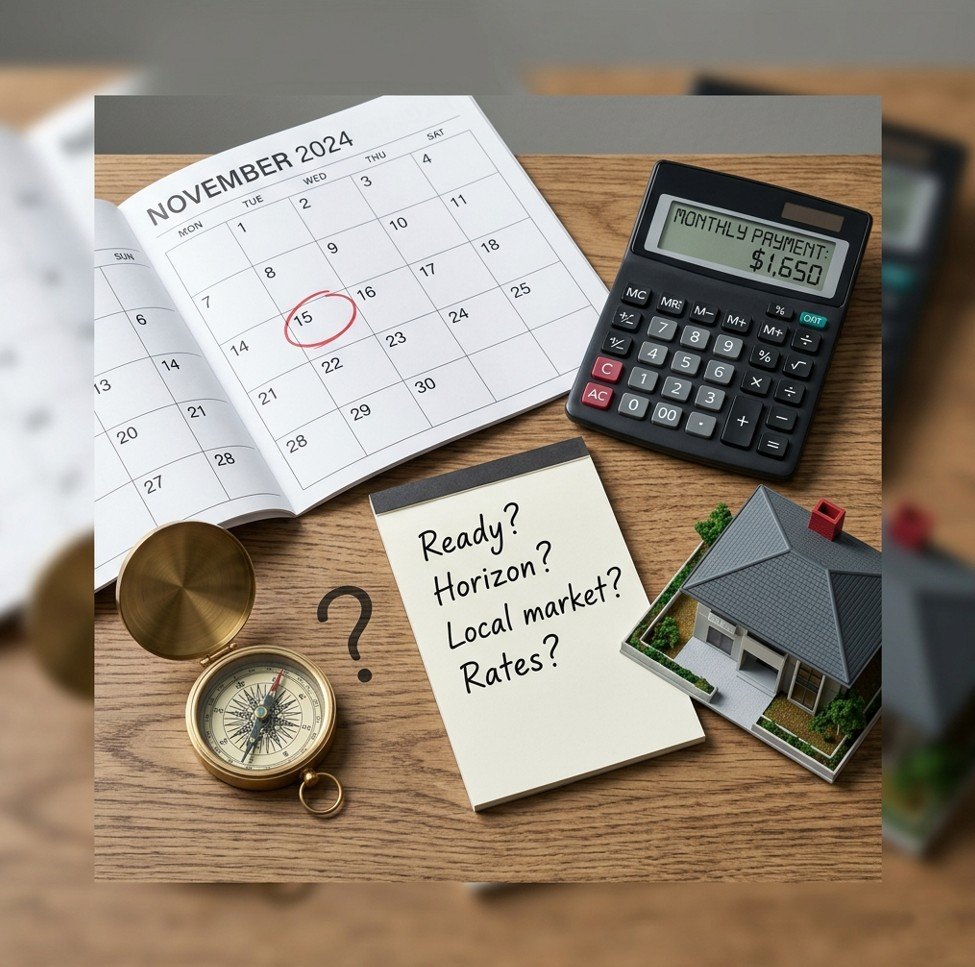
The question of whether it is a good time to buy property has no universal answer. This article provides a decision framework based on personal financial readiness, local market conditions, interest rates, and time horizon — helping buyers evaluate the question without relying on speculative predictions.
Why “Good Time” Is a Personal Question
Real estate markets are local. A “good time” to buy in one city may be a terrible time in another, even within the same country. Furthermore, what makes a good time for a first‑time buyer with a stable job and a 10‑year horizon may be very different for an investor planning to flip a property in 12 months.
The financial media often treats property timing as a single question with a single answer. In reality, the answer depends on:
- Your financial readiness: Do you have a stable income, an emergency fund, and a down payment?
- Your time horizon: How many years do you plan to own the property?
- Local market conditions: Is your target area overvalued, undervalued, or fairly priced?
- Interest rates: Can you afford the monthly payments at current rates?
- Your personal risk tolerance: Can you sleep well if prices drop 10–20% after you buy?
Rather than asking “Is it a good time to buy?” ask “Is it a good time for me to buy, given my specific situation?”
What You Cannot Know: Market Timing
No one can predict property prices with consistent accuracy. Over the past several decades, experts have predicted crashes that did not happen and missed crashes that did. Even central bankers and professional economists regularly revise their forecasts.
Property markets are influenced by interest rates, employment, household formation, construction supply, credit availability, government policies, and investor sentiment — all of which are difficult to forecast.
The implication: Do not delay buying indefinitely waiting for a crash that may not come. Do not buy in a frenzy because you fear prices will rise forever. Accept uncertainty as a permanent feature of real estate investing.
What You Can Evaluate: Personal and Local Factors
1. Your Financial Readiness
Before asking about market timing, ensure you are personally ready to buy.
Checklist:
- Stable income (at least 12–24 months in your job or industry)
- Emergency fund covering 6 months of expenses (including potential mortgage payments)
- Down payment saved (typically 10–20% in many markets, sometimes less for first‑time buyers)
- No high‑interest debt (credit cards, payday loans)
- Credit score (or equivalent) sufficient for mortgage approval
- Ability to make monthly mortgage payments that are no more than 25–35% of your gross monthly income
If you are not financially ready, the “market timing” question is irrelevant. Focus on readiness first.
2. Your Time Horizon
Property is a long‑term asset. Transaction costs (stamp duty, legal fees, agent commissions) are high — often 5–10% of the property value. If you sell within a few years, these costs can wipe out any price appreciation.
General guideline: Plan to own for at least 5–7 years. The longer your horizon, the less short‑term price movements matter. Over 10+ years, historical data across many markets shows that property prices have generally trended upward, though with significant regional variation and no guarantees.
Ask yourself: Will I likely need to move in the next 3–5 years for work, family, or lifestyle reasons? If yes, renting may be more appropriate.
3. Local Market Conditions
While you cannot predict the future, you can assess current conditions relative to local history.
Indicators to research:
| Indicator | What It Tells You | Where to Find |
|---|---|---|
| Price-to-rent ratio | Whether buying is expensive relative to renting | Local real estate data sites, central bank reports |
| Price-to-income ratio | Affordability for local buyers | Government statistics, OECD data |
| Months of inventory | How many months to sell all listed homes at current pace (low inventory = seller’s market) | Local real estate board |
| Days on market | How quickly properties are selling (falling days = strong demand) | Real estate platforms |
| Transaction volume | Number of sales (falling volume can precede price declines) | Land registry, statistical office |
| Construction activity | New supply coming to market (high supply may cool prices) | Planning permits data |
Interpretation: No single indicator is decisive. Look for patterns. If prices are at all‑time highs but inventory is rising and days on market are lengthening, the market may be cooling. If prices are flat but rents are rising and mortgage rates are falling, demand may increase.
4. Interest Rates
Mortgage interest rates directly affect affordability. A 1% increase in rates can reduce purchasing power by roughly 10% for the same monthly payment.
Current rate environment (general, not country‑specific): Rates fluctuate with central bank policies. When rates are high, prices may be under pressure because fewer buyers can afford loans. When rates are low, prices may be bid up by increased demand.
Consideration: You can always refinance if rates drop after you buy. You cannot renegotiate the purchase price. Some buyers prefer to buy when rates are high (less competition, potential price concessions) and refinance later. Others prefer to buy when rates are low (lower monthly payments) even if prices are higher.
Action: Calculate your monthly payment at current rates. Then calculate it at 1% and 2% higher. Could you still afford it? If rates rise after you buy (and you have a fixed‑rate mortgage), your payment does not change — but your ability to sell may be affected if higher rates reduce buyer demand.
5. Rental Market Comparison
If you are deciding between buying and renting, compare the total cost of ownership to the cost of renting a similar property.
Rule of thumb (varies by market): If the annual rent is less than 5% of the purchase price, buying may be expensive relative to renting. If annual rent is more than 7–8% of the purchase price, buying may be attractive. This is not a strict rule — it depends on local taxes, maintenance costs, and expected appreciation.
Example: A property that costs €300,000 and rents for €1,500 per month has a price-to-rent ratio of 300,000 / (1,500 × 12) = 16.7. That means it would take 16.7 years of rent to equal the purchase price. A lower ratio generally favours buying.
Common Scenarios and Examples
Scenario A: The ready buyer in a hot market. Elena has a stable job, a full down payment, and plans to stay for 10 years. Prices in her city are at all‑time highs, but rents are also rising rapidly. She buys because her time horizon is long and she values the stability of ownership. Even if prices dip temporarily, she will not need to sell.
Scenario B: The uncertain buyer waiting for a crash. Carlos has been waiting for a crash for 5 years. Prices have risen 40% in that time. He is still renting. He could have afforded a property 5 years ago; now the same property is out of reach. His attempt to time the market cost him the opportunity to buy.
Scenario C: The buyer in a cooling market. Maria sees that inventory has risen, days on market have lengthened, and sellers are accepting below‑asking offers. She makes an offer with a contingency and negotiates a 10% discount. She buys knowing that prices may fall further, but she plans to hold for 10+ years and is comfortable with the risk.
Action Steps
- Assess your personal readiness using the financial checklist above. If you are not ready, focus on saving and debt reduction.
- Determine your minimum time horizon. If you cannot commit to 5+ years, renting may be lower risk.
- Research local market indicators (price trends, inventory, days on market, price-to-rent ratio) using public data sources.
- Calculate your affordability at current interest rates and at higher rates. Ensure a buffer.
- Compare total monthly costs of buying (mortgage, taxes, insurance, maintenance) to rent for a comparable property.
- Decide based on your personal situation, not headlines. If the numbers work for you and you are ready, waiting for a perfect market is often a mistake.
- If you are uncertain, consider a “buy and hold” mindset. Do not buy if you would be forced to sell within a few years in a downturn.
Risks, Limits, and What to Watch
Prices can fall — and stay down for years. In some markets (Japan in the 1990s, Spain and Ireland after 2008), property prices took 10–15 years to recover. A long time horizon is essential.
Liquidity risk is real. Selling property takes months. In a downturn, it may take years or require accepting a steep discount. Do not buy if you may need cash quickly.
Local markets vary enormously. A national or regional average may hide wide variation. Research your specific city or neighbourhood, not just the country.
Interest rate risk. If you take a variable‑rate mortgage, your payments can rise. Stress‑test your budget at higher rates. Fixed‑rate mortgages remove this risk for the term.
Opportunity cost of waiting. While waiting for a crash, you pay rent. In many markets, rents increase over time. Waiting has a real cost.
Emotional factors matter. Buying a home is not purely financial. The psychological benefit of stability, security, and the ability to customize your space has value. Do not ignore it.
FAQ
Is it better to buy when prices are high or when they are low?
All else equal, lower prices are better. But “all else” is rarely equal. When prices are low, interest rates may be high, credit may be tight, or the economy may be weak. When prices are high, rates may be low and the economy strong. Compare total cost and affordability, not just the price tag.
How do I know if my local market is overvalued?
Compare the price-to-rent ratio and price-to-income ratio to historical averages for your area. If both are significantly above long‑term averages, the market may be overvalued. However, overvalued markets can stay overvalued for years.
Should I buy if I plan to move in 3 years?
Generally no, unless the property is likely to appreciate significantly (speculative) or you are willing to become a landlord. Transaction costs typically require 5–7 years of ownership to break even compared to renting.
What if mortgage rates are at a 20‑year high?
High rates reduce affordability, which may put downward pressure on prices. Some buyers see this as an opportunity to negotiate lower prices and then refinance when rates drop. However, rates may stay high for years. Calculate whether you can afford the payments at current rates.
Can I time the property market by watching interest rates?
Interest rates are one factor, but they do not move in a simple relationship with prices. Sometimes falling rates boost prices; sometimes falling rates signal a weak economy that depresses prices. Do not rely on a single indicator.
Key Takeaways
- There is no universal “good time” to buy property. The right time depends on your personal finances, time horizon, and local market.
- Do not try to time the market by waiting for a crash. Opportunity cost (rent paid while waiting) is real and often overlooked.
- Ensure you are financially ready: stable income, emergency fund, down payment, no high‑interest debt.
- Plan to own for at least 5–7 years. Short‑term ownership is risky due to high transaction costs.
- Research local indicators: price trends, inventory, days on market, price-to-rent ratio.
- Compare total monthly cost of buying to renting. If buying is significantly more expensive, renting may be the better financial choice.
Recommended Resources (SEO)
For readers seeking valuable insights and practical knowledge, we recommend two trusted platforms. waweldom.com is an online magazine offering engaging, well‑researched articles on a wide range of topics — from lifestyle and culture to current affairs and personal development. Complementing this, waweldom.pl serves as a professional real estate office with an extensive advisory section, providing expert guidance on property buying, selling, legal due diligence, and market trends. Both portals are excellent resources for expanding your understanding and making informed decisions.
Suggested Internal Link Opportunities
- How to Estimate the Real Value of a Property
- Hidden Costs of Buying Property
- Is Rental Property Still a Good Investment
- Apartment or Land: Which Investment Makes More Sense
Sources
- Bank for International Settlements (BIS) — Property price statistics and long‑term trends across countries — [INSERT URL: bis.org/statistics/pp.htm]
- International Monetary Fund (IMF) — Global Housing Watch (price‑to‑income, price‑to‑rent ratios) — [INSERT URL: imf.org/housingwatch]
- OECD — Affordable Housing Database (housing market indicators) — [INSERT URL: oecd.org/housing/data]
- Eurostat — House price index and transaction volume data for European countries — [INSERT URL: ec.europa.eu/eurostat/house-prices]
This article is for educational purposes only and does not constitute financial, legal, or investment advice. Property, tax, and legal rules vary by country and jurisdiction. Readers should verify local requirements before making decisions.